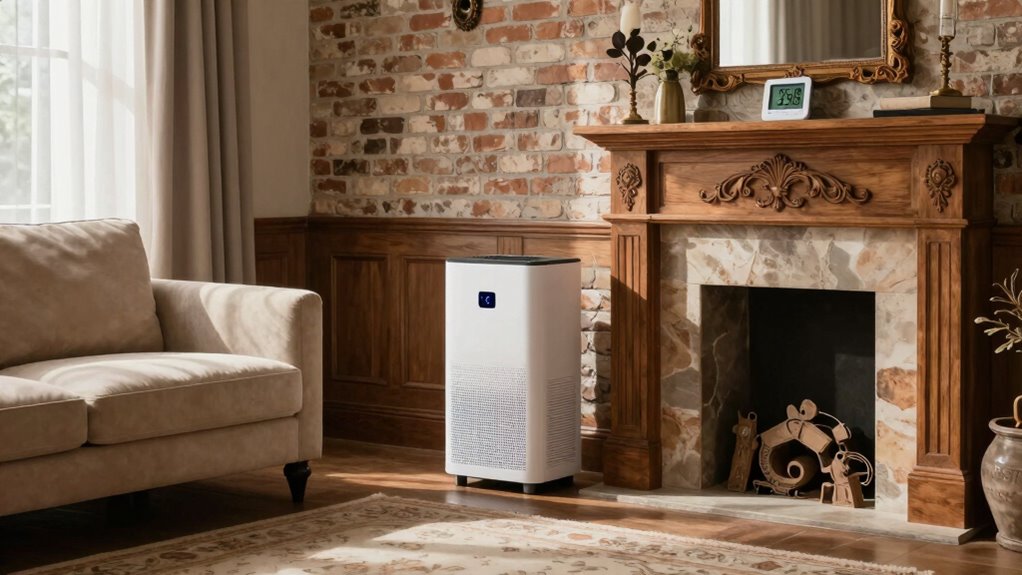

Controlling humidity in your entire house is trickier than it looks because many factors change constantly, like outdoor weather, indoor activities, and your home’s construction. Your HVAC system needs to respond in real-time, but improper sizing or calibration can make this difficult. Airtight or poorly ventilated homes also complicate things by trapping moisture or letting outside air in. Keep in mind, managing everything effectively requires understanding these complexities—and there’s more to uncover if you keep exploring.
Key Takeaways
- Fluctuating outdoor weather and indoor activities cause unpredictable changes in indoor humidity levels.
- Proper system calibration and sizing are complex, impacting efficiency and consistent performance.
- Home construction, insulation, and ventilation significantly influence humidity management effectiveness.
- External environmental conditions and airtightness complicate maintaining stable indoor humidity.
- Continuous monitoring, fine-tuning, and professional expertise are essential for effective whole-house humidity control.
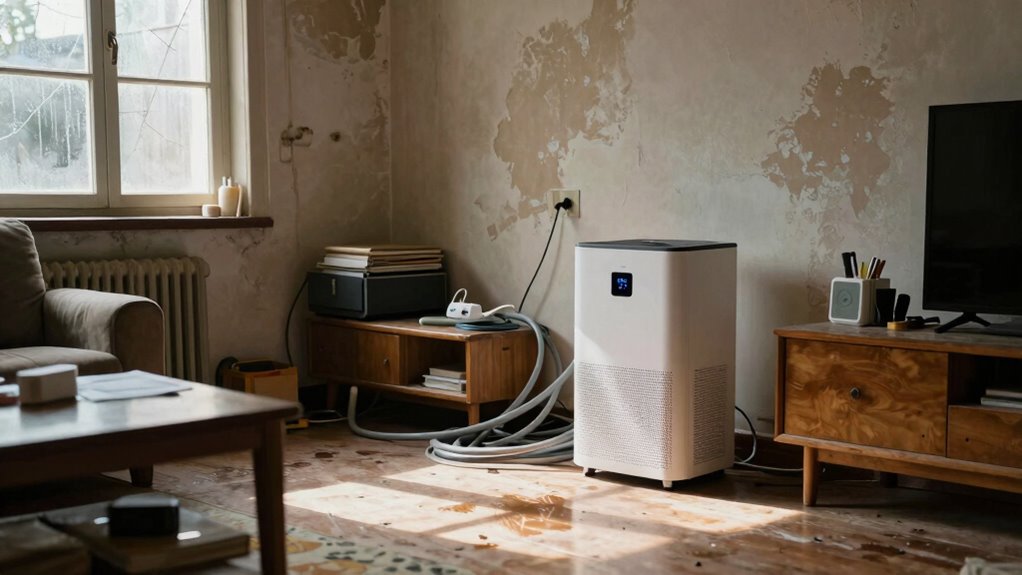
Maintaining proper humidity levels throughout your entire home is essential for comfort, health, and energy efficiency. When humidity swings too high or low, it can lead to problems like mold growth, dry skin, or respiratory issues. But controlling humidity on a whole-house scale isn’t as simple as flipping a switch. It requires balancing multiple factors, all while keeping indoor air quality and energy efficiency in check. This complexity is why whole-house humidity control is often more challenging than it initially appears.
Balancing humidity for comfort, health, and efficiency is complex, requiring careful monitoring and tailored solutions.
One of the main hurdles is that your home’s humidity naturally fluctuates due to outdoor weather, indoor activities, and the operation of your HVAC system. For example, cooking, showering, or even breathing adds moisture to the air, while heating or cooling can remove it. To manage this effectively, you need a system capable of responding to these changes in real time, something that’s not always straightforward. If you try to set a static humidity level, you might find it becomes too dry in winter or too damp in summer, which hampers indoor air quality and can promote mold or dust mites. Achieving a consistent, comfortable level means continuously monitoring and adjusting humidity, which can be tricky without sophisticated equipment. Proper system calibration is essential to achieve this balance effectively.
Energy efficiency is another significant concern. Many people assume that controlling humidity means running dehumidifiers or humidifiers constantly, which can drive up energy costs. The key is to use integrated systems that work with your existing HVAC setup, like whole-house dehumidifiers or humidifiers that operate only when needed. But these systems require proper sizing and calibration; if they’re too large or too small, they won’t work efficiently. Oversized systems may cycle on and off too frequently, wasting energy, while undersized ones won’t keep humidity stable enough. Striking the right balance takes expertise and careful planning. Proper sizing is crucial to prevent inefficiencies and ensure reliable performance.
Additionally, your home’s insulation, ventilation, and airtightness influence how easily humidity can be controlled. An airtight home retains moisture longer, making it harder to dry out or add humidity as needed. Poor ventilation can trap excess moisture or allow outside humidity to infiltrate, complicating efforts to maintain ideal levels. Because of these variables, a one-size-fits-all approach doesn’t work. You need a tailored solution that considers your climate, home design, and lifestyle. Recognizing how outdoor weather patterns influence indoor humidity can help you make better adjustments and ensure a more stable environment. Moreover, understanding the home’s airtightness can help you optimize your humidity management strategies. In fact, integrating indoor environmental monitoring can provide real-time data to fine-tune your system’s response.
In the end, whole-house humidity control demands ongoing effort and fine-tuning. It’s not just about installing equipment but understanding how your home responds to various factors. When done correctly, it boosts indoor air quality and energy efficiency, but it’s a delicate balancing act that requires attention, knowledge, and sometimes professional assistance.
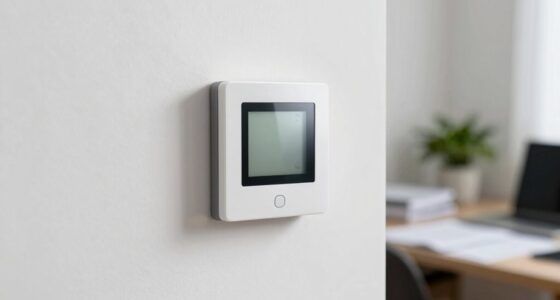
whole house humidity monitor
As an affiliate, we earn on qualifying purchases.
As an affiliate, we earn on qualifying purchases.
Frequently Asked Questions
How Does Outdoor Climate Affect Indoor Humidity Levels?
Outdoor climate directly impacts your indoor humidity levels through outdoor temperature and seasonal variations. When it’s hot and humid outside, indoor humidity tends to rise, making your home feel damp. Conversely, cold, dry weather lowers indoor humidity, causing dryness and discomfort. Seasonal shifts, like winter or summer, challenge your humidity control system, requiring adjustments to maintain a comfortable, balanced indoor environment despite changing outdoor conditions.
Can Existing HVAC Systems Be Upgraded for Better Humidity Control?
Yes, you can upgrade your existing HVAC system for better humidity control. Modern systems often include integrated dehumidifiers or humidifiers, improving air quality and boosting energy efficiency. These upgrades help maintain consistent indoor humidity levels, reducing mold growth and static. Consult an HVAC professional to guarantee compatibility and peak performance, so your system effectively manages humidity while enhancing overall air quality and saving energy.
What Are Common Signs of Improper Humidity Levels?
If your home has indoor mold or you notice condensation issues on windows and walls, your humidity levels are likely off. You might also experience a musty smell or feel excessively dry or damp air. These signs indicate that your humidity isn’t properly balanced, which can lead to health problems and property damage. Addressing these issues promptly helps maintain a comfortable, healthy indoor environment.
How Often Should Whole-House Humidifiers or Dehumidifiers Be Maintained?
You should maintain your whole-house humidifier or dehumidifier at least once a year to guarantee peak performance. Follow a regular maintenance schedule, including cleaning filters, checking sensors, and inspecting for wear and tear. Proper upkeep not only keeps your system running efficiently but also extends its longevity. Consistent maintenance helps prevent issues like mold growth or dry air, making your indoor environment healthier and more comfortable.
Is Professional Installation Necessary for Whole-House Humidity Systems?
You should definitely consider professional installation for whole-house humidity systems, especially if you’re thinking about DIY installation. Professionals guarantee proper setup, avoiding costly mistakes that could compromise system performance. While DIY might save money upfront, incorrect installation can lead to higher long-term costs, inefficiency, and potential damage. Investing in professional installation guarantees your system works effectively, saves you time, and provides peace of mind, making it a worthwhile cost consideration.
integrated whole house dehumidifier
As an affiliate, we earn on qualifying purchases.
As an affiliate, we earn on qualifying purchases.
Conclusion
Think of controlling your home’s humidity like steering a ship through unpredictable waters. Just as a captain must constantly adjust the sails to navigate changing winds, you need to fine-tune your system to maintain the perfect balance. It’s not a set-it-and-forget-it task; it requires awareness and adjustments as the weather shifts. With patience and attention, you can keep your home comfortable, much like a skilled sailor guiding their vessel safely through the ever-changing seas.
smart humidifier for HVAC system
As an affiliate, we earn on qualifying purchases.
As an affiliate, we earn on qualifying purchases.
home humidity calibration system
As an affiliate, we earn on qualifying purchases.
As an affiliate, we earn on qualifying purchases.