📊 Full opportunity report: Vertigo relief app on IdeaNavigator AI — validation score, market gap, and execution plan.

Prime made for students and young adults
- Fast, free delivery for dorm and study essentials
- Prime Video and Amazon Music included
- Member-only deals
TL;DR
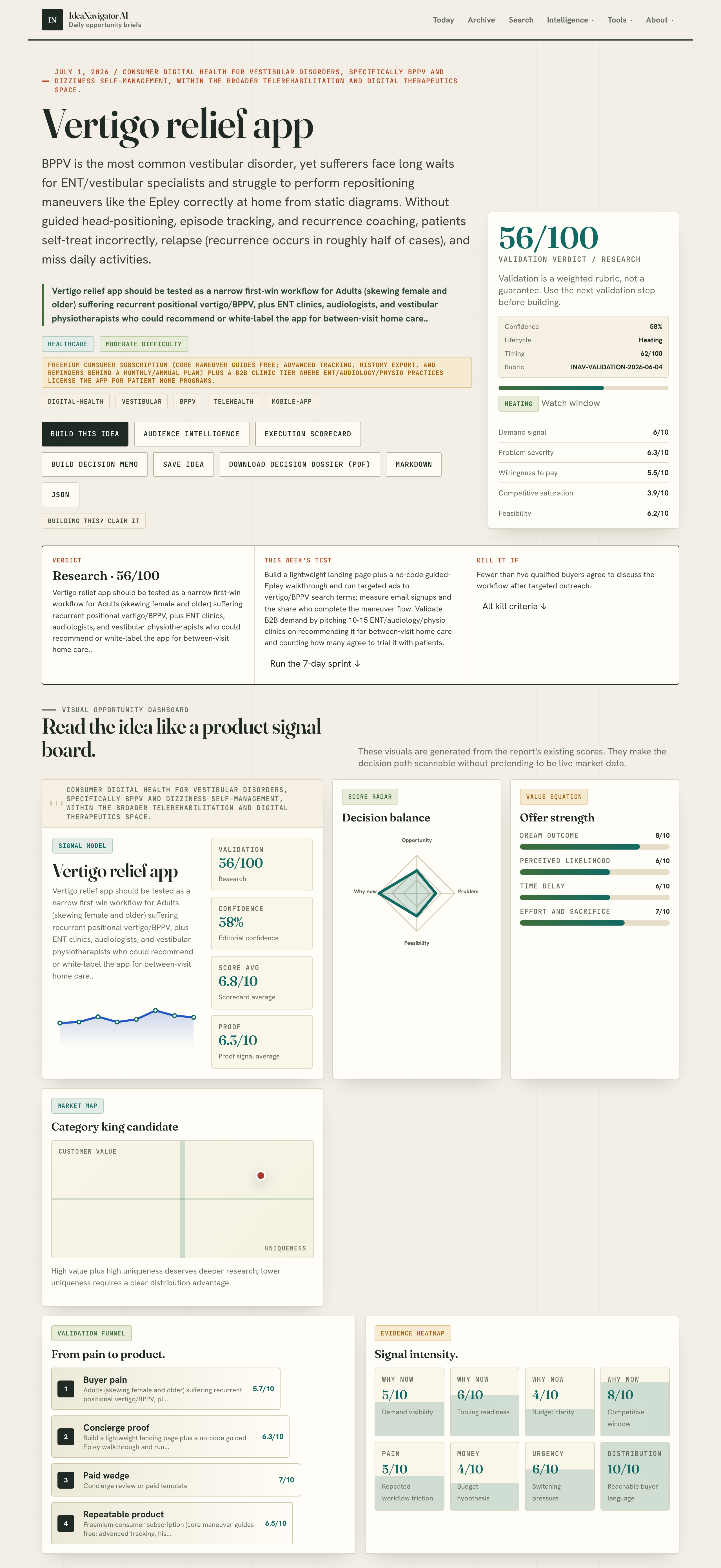
A new mobile app designed to help adults with benign paroxysmal positional vertigo (BPPV) manage symptoms at home is in development. It uses motion sensors and guided maneuvers to improve self-treatment, with potential for clinic integration. The app’s launch aims to address long wait times and improve patient outcomes.
A new vertigo relief app is in development to assist adults suffering from recurrent benign paroxysmal positional vertigo (BPPV), targeting primarily women and older individuals. The app aims to enable self-treatment through guided maneuvers and symptom tracking, and could be recommended by ENT clinics, audiologists, and vestibular physiotherapists for between-visit care.
The app is designed as an iOS and Android platform that screens users for BPPV, guides them through repositioning maneuvers like the Epley and Brandt-Daroff with animated and audio cues, and uses gyroscope sensors to provide real-time head-angle feedback. It also logs dizziness episodes, triggers, and severity, offering a comprehensive self-management tool.
Developers plan to test the app via a landing page with a guided demo and targeted ads to vertigo-related search terms, measuring signups and maneuver completion rates. They also aim to validate demand among ENT, audiology, and physiotherapy clinics by pitching the app for patient home use, with the goal of integrating it into clinical workflows. They also aim to validate demand among ENT, audiology, and physiotherapy clinics by pitching the app for patient home use, with the goal of integrating it into clinical workflows.
The app will feature a freemium model for consumers, with basic maneuver guides free and advanced features like history export and reminders behind a subscription. A B2B licensing tier is also planned for clinics to recommend the app as part of their patient care programs.
Potential Impact on Vertigo Self-Management
This app could significantly improve self-treatment accuracy for BPPV, reducing relapse rates that occur in about half of cases. It addresses long-standing barriers such as difficulty performing maneuvers correctly at home and long wait times for specialist care. Its integration into clinical practice could streamline patient management and expand access to vestibular rehabilitation, especially as telehealth and digital therapeutics become more mainstream.
As an affiliate, we earn on qualifying purchases.
Growing Demand for Digital Vertigo Solutions
The market for digital vestibular rehabilitation is expanding, with estimates near USD 498 million in 2024 and a projected compound annual growth rate of approximately 13.5% through 2033. COVID-19 accelerated the shift toward telehealth, creating an environment conducive to remote self-care tools for conditions like BPPV. Current treatment relies heavily on in-person maneuvers, which many patients struggle to perform correctly without guidance.
Existing self-treatment resources are mainly static diagrams, which can lead to incorrect execution and relapse. The new app aims to leverage smartphone sensors and real-time feedback to improve outcomes, aligning with broader trends toward digital health solutions for vestibular disorders.
“The app’s guided approach could help patients perform maneuvers more accurately at home, potentially reducing recurrence and improving quality of life.”
— an anonymous researcher
As an affiliate, we earn on qualifying purchases.
Uncertainties About App Effectiveness and Adoption
It is not yet clear how effective the app will be in reducing relapse rates compared to traditional in-clinic treatment, as clinical validation is still pending. Additionally, the level of adoption among clinics and patients remains uncertain until pilot testing and user feedback are completed.
As an affiliate, we earn on qualifying purchases.
Next Steps for Testing and Market Validation
The development team plans to launch a landing page and run targeted ads to measure interest and maneuver completion rates. They will also conduct pilot trials with ENT, audiology, and physiotherapy clinics to assess clinical integration and patient outcomes. Based on these results, further refinements and regulatory considerations will follow before broader rollout.
home vertigo repositioning maneuvers guide
As an affiliate, we earn on qualifying purchases.
As an affiliate, we earn on qualifying purchases.
Key Questions
When will the vertigo relief app be available to the public?
There is no confirmed release date yet. The app is currently in development, with pilot testing planned in the coming months to validate its effectiveness and usability.
Will the app replace in-clinic treatment for BPPV?
No. The app is intended as a supplementary tool to improve self-management and assist clinicians, not as a substitute for professional medical advice or treatment.
How will the app ensure safety during self-treatment?
The app will include screening questions, clear instructions, and a prominent disclaimer advising users to consult a healthcare professional if red-flag symptoms occur. It will also prompt users to seek medical attention if necessary.
Can clinics white-label or customize the app for their patients?
Yes, a licensing model for clinics is planned, allowing ENT, audiology, and physiotherapy practices to recommend or white-label the app for patient use between visits.
What features will be available in the paid subscription?
Premium features will include advanced symptom tracking, history export, reminders, and possibly personalized coaching, while basic maneuver guides will remain free.
Source: IdeaNavigator AI
Halloween Picks
halloween
As an affiliate, we earn on qualifying purchases.