📊 Full opportunity report: Stenvrik: News as Geography on ThorstenMeyerAI.com — validation score, market gap, and execution plan.

Prime made for students and young adults
- Fast, free delivery for dorm and study essentials
- Prime Video and Amazon Music included
- Member-only deals
TL;DR
Stenvrik has launched a new news platform that visualizes live stories on a 3D globe, pinning them to 49 city hubs. The system combines a trend engine with a geographic interface, offering a novel way to explore current events by location. It operates at a minimal cost, making it a sustainable innovation in news aggregation.
Stenvrik has launched a new news visualization platform that presents live stories pinned to 49 city hubs on a rotating 3D globe, providing a geographic perspective on current events. This innovation is significant because it shifts the typical news feed into a spatial format, offering users a new way to understand where news is happening and how trends develop across regions.
The platform displays approximately 1,700 live stories, automatically clustered and pinned to specific city hubs, including Tokyo, Berlin, and others. It operates through an autonomous trend engine that continuously surfacing and grouping stories without human intervention, ensuring real-time updates across the globe. The system is built with a focus on cost efficiency, running client-side rendering and a trend detection engine on owned infrastructure, resulting in a near-zero monthly operational cost.
Originally developed as a Claude Design demo, the platform was quickly transitioned into a production product without significant rebuilds, demonstrating a prototype-to-market pathway driven by minimal infrastructure costs. The trend engine not only powers the visual interface but also feeds signals into the broader content network, providing strategic market intelligence based on regional story clusters and emerging trends. The platform is currently in closed beta, with limited availability and potential for future feature adjustments.
Stenvrik — news as geography
Not what is the news — where is it happening. ~1,700 live stories pinned to 49 city hubs on a rotating globe, with an autonomous trend engine that also feeds the network.
Spin the world; the news sorts itself.
A 60fps 3D globe where every story is pinned to the city it belongs to. Clusters, gaps, regions heating up — context a vertical feed throws away.
Independent commentary, produced with AI assistance under human editorial oversight. The views are the author’s own and may change. Stenvrik is in closed beta; features, availability, and behavior may change and it is provided without guarantee of uptime or fitness for a particular purpose. The autonomous trend engine clusters and places stories programmatically and may contain errors, mis-placements, or omissions — verify independently before relying on any of it. Product and company names are trademarks of their respective owners; mention does not imply endorsement.
Implications of Geographic News Visualization
This development matters because it introduces a fundamentally different way of consuming and analyzing news—by location rather than just chronological order. It offers users a spatial understanding of current events, which can reveal regional trends and clusters that are otherwise hidden in traditional feeds. For news organizations and content strategists, the trend engine’s data provides early signals of regional demand and emerging stories, potentially shaping coverage priorities and market responses. Its low operational cost also demonstrates a sustainable model for innovative news products that combine user engagement with strategic insights, especially in a crowded and commoditized news landscape.
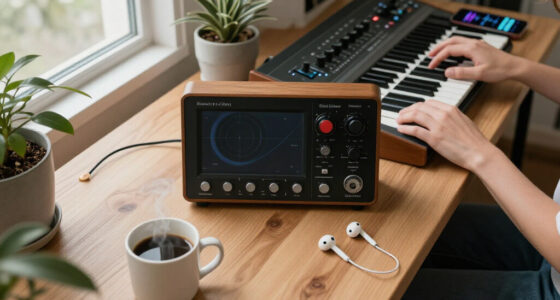
3D globe news visualization device
As an affiliate, we earn on qualifying purchases.
As an affiliate, we earn on qualifying purchases.
Background and Evolution of Geo-Based News Tools
Traditional news feeds have become increasingly uniform, often presenting stories in a list sorted by recency, which can obscure the spatial relationships between events. The idea of mapping news geographically is not new, but prior implementations have often been limited or static. Stenvrik’s approach leverages a real-time trend engine that continuously detects story clusters and maps them onto a globe, offering a dynamic and interactive visualization. The project originated as a low-cost prototype, highlighting how innovative ideas can be rapidly developed and scaled when infrastructure costs are minimized. This approach aligns with broader trends toward data-driven content strategies and spatial analysis in journalism and market intelligence.
“By organizing news geographically, Stenvrik offers a new lens for understanding current events, revealing regional clusters and emerging trends that traditional feeds miss.”
— Thorsten Meyer, founder of ThorstenMeyerAI.com
As an affiliate, we earn on qualifying purchases.
Unconfirmed Aspects and Future Developments
It is not yet clear how widely available the platform will become after the closed beta, or how it will be integrated into mainstream news consumption. The long-term impact on user habits and whether geographic visualization will significantly change news engagement remains uncertain. Additionally, the robustness of the trend engine and its ability to accurately detect emerging stories across diverse regions are still being evaluated, and potential scalability or feature enhancements are not yet confirmed.
As an affiliate, we earn on qualifying purchases.
Next Steps and Potential Expansion Plans
The platform is currently in a limited beta phase, with plans to gather user feedback and refine its features. Future developments may include expanding the number of city hubs, integrating more data sources, and enhancing interactivity. There is also potential for the platform to serve as a strategic tool for newsrooms and market analysts, leveraging its real-time trend signals for editorial and business decisions. The company has indicated that further updates will be announced as the product matures and moves toward broader availability.
As an affiliate, we earn on qualifying purchases.
Key Questions
How does the geographic news platform differ from traditional news feeds?
Unlike traditional feeds that list stories chronologically, Stenvrik’s platform visualizes news by location on a 3D globe, revealing regional clusters and trends in real time.
Is this platform available to the public now?
The platform is currently in closed beta with limited access. Broader availability has not yet been announced.
How does the trend detection engine work?
The engine continuously surfaces and clusters stories based on location and emerging patterns, feeding signals into the broader content network for strategic use.
What are the costs associated with running this platform?
The system operates at a near-zero monthly cost because rendering is client-side and the trend engine runs on owned infrastructure, minimizing expenses.
Could this approach change how people consume news?
Potentially, by providing a spatial perspective, it could help users better understand regional developments and how local events connect globally, though its impact remains to be seen.
Source: ThorstenMeyerAI.com
Fall Picks
fall essentials
As an affiliate, we earn on qualifying purchases.