
TL;DR

Prime made for students and young adults
- Fast, free delivery for dorm and study essentials
- Prime Video and Amazon Music included
- Member-only deals
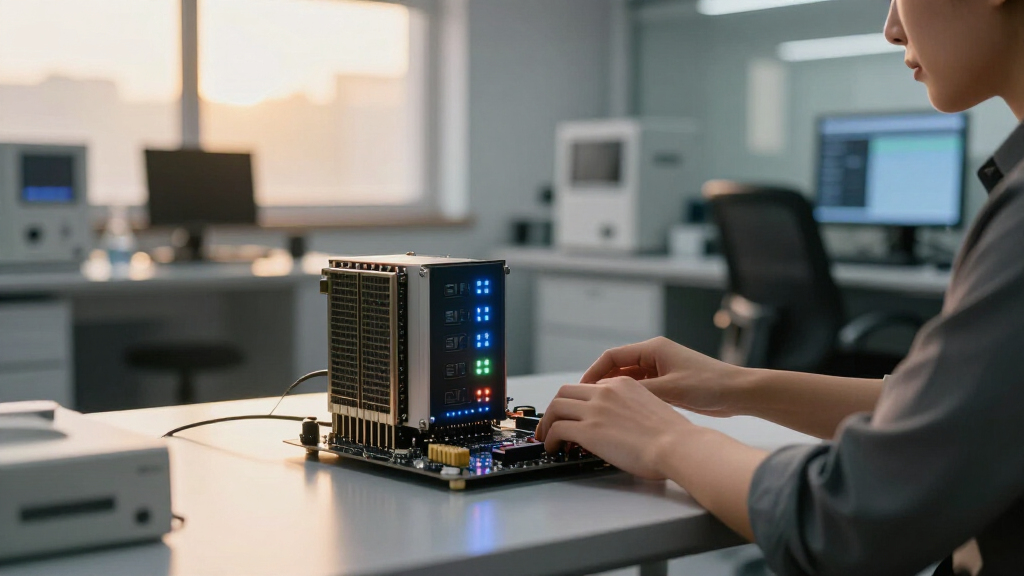
In 2026, ten AI processors are emerging as key players shaping the future of AI computing. This report details confirmed models, their capabilities, and why they matter for AI development.
Multiple companies are unveiling new AI processors in 2026, with at least ten models gaining industry attention for their potential to advance AI capabilities. These processors are expected to influence AI research, deployment, and hardware design, making them critical for the future of AI technology.
Industry sources confirm that several major chipmakers, including AMD, Intel, NVIDIA, and emerging players, are launching new AI-specific processors this year. Notably, the NVIDIA H100 and AMD MI300 are among the most anticipated, designed to support large-scale AI training and inference tasks. These processors feature innovations such as increased core counts, enhanced tensor cores, and improved energy efficiency, aiming to meet the rising demands of AI workloads.
While some models, like the NVIDIA H100, are already in deployment at major data centers, others are still in development or early testing phases. For insights into the top options, see the best desktop processors for 2026. Industry insiders suggest that these processors will push AI capabilities further, enabling more complex models and faster training times. It is also confirmed that many of these processors will support advanced interconnects and memory architectures to facilitate scalability.
The 10 picks
- 1
 AMD Ryzen 9 9950X 16-Core Desktop ProcessorView on Amazon →
 - 2
 AMD Ryzen 7 9800X3D 8-Core, 16-Thread Desktop ProcessorView on Amazon →
 - 3
 AMD Ryzen 7 5800X3D 8-core, 16-thread Desktop Processor with AMD 3D V-Cache T…View on Amazon →
 - 4
 AMD Ryzen 7 7800X3D 8-Core, 16-Thread Desktop ProcessorView on Amazon →
 - 5
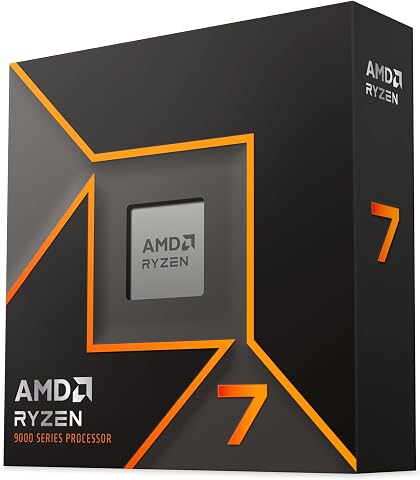 AMD Ryzen 7 9700X 8-Core, 16-Thread Unlocked Desktop ProcessorView on Amazon →
 - 6
 AMD Ryzen 7 5800XT 8-Core, 16-Thread Desktop ProcessorView on Amazon →
 - 7
 AMD Ryzen 7 7700X 8-Core, 16-Thread Unlocked Desktop ProcessorView on Amazon →
 - 8
 Intel Core Ultra 5 Desktop Processor 225, 10 cores (6 P-cores + 4 E-cores), u…View on Amazon →
 - 9
 AMD Ryzen 5 9600X 6-Core, 12-Thread Unlocked Desktop ProcessorView on Amazon →
 - 10
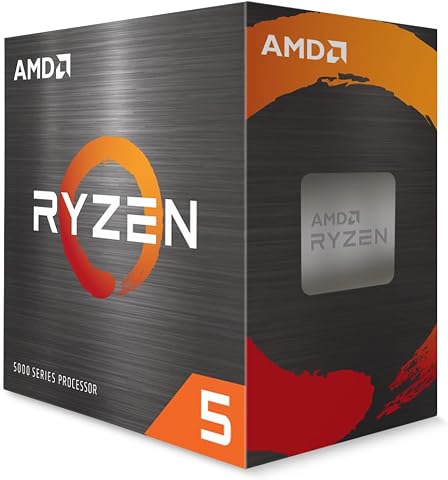 AMD Ryzen 5 5500 6-Core Desktop Processor with Wraith Stealth CoolerView on Amazon →
Impact of 2026’s Top AI Processors on the Industry
The release of these ten processors signals a significant leap forward in AI hardware, enabling more powerful, efficient, and scalable AI systems. This development is crucial for AI research, large-scale data analysis, autonomous systems, and real-time AI applications. The advancements could lower costs, improve energy efficiency, and accelerate AI innovation across multiple sectors, including healthcare, automotive, and finance.
2026 AI Processor Developments in Industry Timeline
Over the past few years, AI hardware has rapidly evolved, with NVIDIA’s A100 and AMD’s MI250 setting benchmarks in 2022 and 2023. The industry has seen a shift toward specialized AI chips, with companies investing heavily in next-generation architectures. The upcoming models in 2026 are expected to build on this momentum, incorporating features like larger tensor cores, better interconnects, and enhanced power efficiency. These developments follow a broader trend of AI hardware becoming more integrated into mainstream computing infrastructure, driven by surging AI demand.
Unconfirmed Models and Performance Expectations
While several processors like the NVIDIA H100 and AMD MI300 are confirmed and in deployment, details about the performance of some upcoming models remain unverified. It is not yet clear how these processors will compare in real-world benchmarks or how quickly they will be adopted across different sectors. Additionally, some claims about energy efficiency and scalability are based on early specifications and are subject to change.
Upcoming Launches and Industry Adoption Milestones
The next steps involve the official launches of the remaining processors, with industry testing and early deployment expected throughout 2026. Analysts anticipate that performance benchmarks and real-world case studies will emerge within the year, providing clearer insights into their capabilities. Further, adoption rates in data centers, AI research labs, and enterprise applications will serve as indicators of these processors’ impact.
Key Questions
Which AI processors are confirmed for 2026?
The NVIDIA H100 and AMD MI300 are among the most confirmed and widely anticipated AI processors for 2026, with others still in development or early testing phases.
Why do these processors matter for AI development?
They offer increased computational power, energy efficiency, and scalability, enabling more complex AI models, faster training, and broader deployment across industries.
What challenges remain in adopting these new processors?
Potential challenges include integration with existing hardware, software compatibility, cost, and ensuring that performance gains translate into real-world applications.
How will these processors impact AI research and industry?
They are expected to accelerate AI innovation, reduce training times, and expand the scope of feasible AI applications, impacting sectors from healthcare to autonomous vehicles.
Source: ThorstenMeyerAI.com
Fall Picks
fall essentials
As an affiliate, we earn on qualifying purchases.