🔍 Read the full analysis: Need An Ultrawide Monitor For Work And Gaming? Start With These 9 on ThorstenMeyerAI.com

Prime made for students and young adults
- Fast, free delivery for dorm and study essentials
- Prime Video and Amazon Music included
- Member-only deals
TL;DR
A ThorstenMeyerAI.com buying guide compares nine ultrawide monitors for mixed work and gaming, highlighting tradeoffs in screen size, refresh rate, connectivity and ergonomics. It names the Dell S3425DW as its overall pick, but the supplied material does not include prices, test results or detailed specifications for all nine models.
ThorstenMeyerAI.com has published a buying guide to nine ultrawide monitors for people balancing office work and gaming, naming the Dell S3425DW its best overall choice. The guide contrasts that 34-inch model’s USB-C connectivity with options including Samsung’s 49-inch Odyssey G9 and lower-cost, high-refresh-rate displays; the source does not provide prices or full test data for each pick.
The guide says the Dell S3425DW combines a 120Hz refresh rate with a USB-C hub and power delivery, which it presents as useful for laptop users who want to connect with fewer cables. Samsung’s 49-inch Odyssey G9 is the guide’s choice for maximizing screen space: its 5120-by-1440 Dual QHD resolution supplies a broad workspace, but the source warns that its 1000R curve may not suit shallow desks.
The 9 picks
- 1
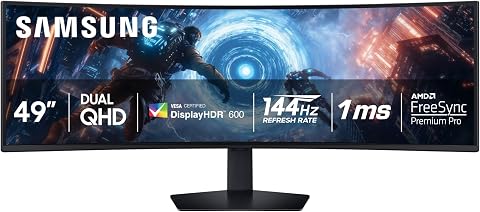 Samsung 49-Inch Odyssey G9 Curved Dual QHD Gaming Monitor, 144Hz, FreeSync Pr…View on Amazon →
- 2
 Z-Edge UG49W 49-Inch Curved Ultrawide Monitor, 5120×1440, 165HzView on Amazon →
- 3
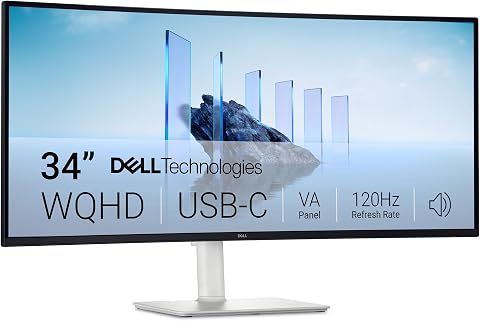 Dell 34 Plus USB-C Curved Monitor (S3425DW) – 34" WQHD, 120Hz, FreeSync PremiumView on Amazon →
- 4
 LG 34WR55QK-B 34-Inch Curved UltraWide WQHD MonitorView on Amazon →
- 5
 Samsung 34-inch ViewFinity S50GC Ultra-WQHD MonitorView on Amazon →
- 6
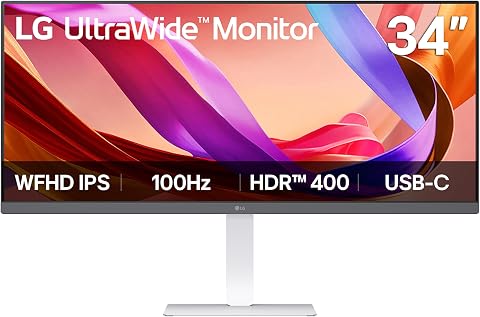 LG 34-inch UltraWide WFHD IPS Monitor, 100Hz, DisplayHDR 400, USB-C, HDMI and…View on Amazon →
- 7
 SANSUI 34-Inch Curved UWQHD Gaming Monitor (3440 x 1440, 200Hz)View on Amazon →
- 8
 CRUA 34-inch WQHD 165Hz Ultrawide Curved Gaming Monitor (1500R, FreeSync)View on Amazon →
- 9
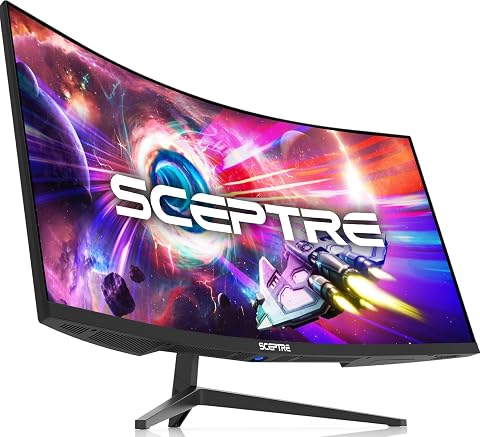 Sceptre 34-inch Curved Ultrawide WQHD Monitor (3440 x 1440), 180Hz, 1ms, Disp…View on Amazon →
Dell S3425DW: Best Overall
The guide favors the Dell for a mix of gaming and productivity, a balance also explored in other ultrawide monitor picks. Its cited advantages are a 120Hz refresh rate and USB-C hub with power delivery. The supplied material does not specify the power-delivery wattage for this model, so laptop compatibility should be checked against the monitor’s official specifications.
Popular right now

iRobot Roomba 105 Combo Robot Vacuum & Mop with AutoEmpty Dock

KitchenAid Artisan Series 5-Quart Tilt-Head Stand Mixer, Milkshake

Bose QuietComfort Wireless Noise-Cancelling Over-Ear Headphones, Twilight Blue
As an affiliate, we earn on qualifying purchases.
Samsung Odyssey G9: Maximum Screen Space
At 49 inches, the Odyssey G9 offers substantially more horizontal workspace than the 34-inch models described. The guide identifies its 1000R curve as a potential fit issue: shoppers should check desk depth and viewing distance before choosing it, alongside other gaming-monitor considerations. It also says the higher resolution can place greater demands on a gaming PC.
CRUA 34-inch WQHD: Budget Gaming
The CRUA is presented as a lower-entry-price option with a high refresh rate. The guide groups it among budget displays running at 165Hz to 180Hz, but does not state the exact rate for this specific model or provide a price. It cautions that less expensive picks may give up some color uniformity and stand adjustment.
Sceptre: Lower-Cost High Refresh
Sceptre is the other budget brand named in the guide’s high-refresh-rate category. The source does not give a specific model name or individual specifications, making it difficult to compare directly with the CRUA or determine which Sceptre display is intended.
LG 34-inch WFHD IPS: Wide Viewing Angles
The LG is identified as the only pick with both a white chassis and an IPS panel. The guide says IPS can offer wider viewing angles and color reproduction, while typically providing less contrast than VA. It does not supply this LG model’s precise resolution, color measurements or refresh rate.
Five More Picks: Model Details Missing
The source says the guide covers nine monitors, but the supplied text names only Dell, Samsung, CRUA, Sceptre and LG. It contains no names or specifications for the other four selections. Readers cannot verify their features or compare them on equal terms using the material provided.
Matching Screen Specs to Daily Use
Ultrawides can combine gaming and productivity, but the compromises vary by model. A USB-C connection with power delivery may matter more to a laptop worker than a top gaming refresh rate, while screen size and resolution can determine whether a display fits a desk or a computer can run games smoothly.
The guide’s comparisons also show why headline specifications are not enough. A 1000R curve may feel enveloping in games but less natural for straight-line work; VA panels can offer stronger contrast, while IPS panels tend to preserve color and viewing angles. These are selection tradeoffs, not independent test findings in the supplied source.
The Guide’s Selection Criteria
ThorstenMeyerAI.com says it weighed refresh rate and response time for gaming, and color coverage and connectivity for productivity. Its stated criteria also include panel type, ergonomics and value, with height, tilt and swivel adjustments treated as advantages for comfort.
The guide describes 34-inch WQHD displays at 3440-by-1440 as a balance of sharpness and graphics demand, compared with 49-inch Dual QHD at 5120-by-1440 for a larger workspace. It also notes that USB-C can carry video, data and power, but the wattage varies by monitor; the source’s general reference to delivery levels of up to 90W or 100W should not be read as a specification for every pick.
“The Dell S3425DW wins on versatility, offering a USB-C power delivery hub that reduces cable clutter for laptop users.”
— ThorstenMeyerAI.com buying guide
Missing Models and Test Data
The source material does not name four of the nine advertised picks, nor does it include a complete ranking, prices, retailer availability or model-by-model measurements. It also does not document a testing protocol or provide measured color accuracy, response time or stand-adjustment results, despite listing those as selection criteria.
Some claims are general rather than model-specific. For example, the source groups CRUA and Sceptre within a 165Hz-to-180Hz range without identifying each monitor’s exact rate. The publication date is also absent, so current pricing and availability cannot be established from this material.
Check Specs Before Buying
Shoppers should confirm the exact model number, current price, USB-C power output, resolution, refresh rate and stand adjustments on the manufacturer’s product page before purchasing. Laptop owners should match power delivery to their computer’s needs, and gamers should check that their graphics hardware can run the chosen resolution at their desired frame rate.
The guide may be more useful for comparison once the missing four models and their specifications are available. No update or publication schedule is given in the source.
Key Questions
Which monitor does the guide recommend overall?
It names the Dell S3425DW, citing its 120Hz refresh rate and USB-C hub with power delivery. The supplied source does not include independent benchmark results.
Is the Samsung Odyssey G9 suitable for every desk?
No. The guide flags its 49-inch size and 1000R curve as reasons to check desk depth and viewing distance before buying. It does not specify a required desk measurement for this model.
What are the named budget choices?
The guide names the CRUA 34-inch WQHD and a Sceptre option, but the provided material does not identify the Sceptre model or give current prices.
Does the source list all nine monitors?
No. It identifies five brands or models—Dell, Samsung, CRUA, Sceptre and LG—but does not name the other four picks in the supplied text.
Source: ThorstenMeyerAI.com