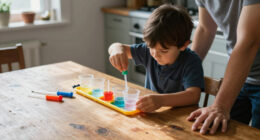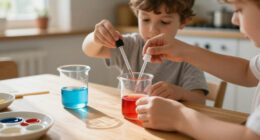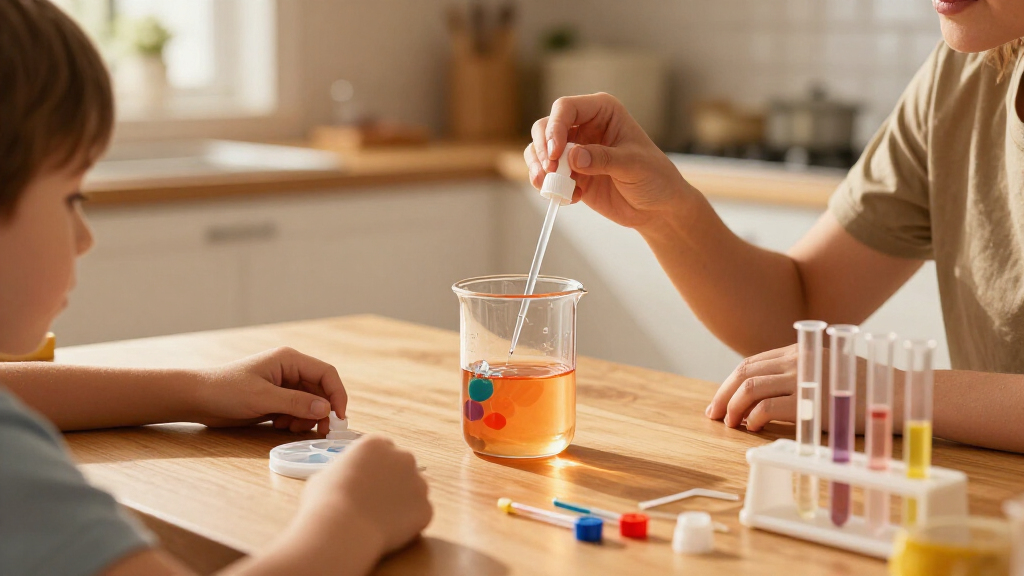

This guide helps parents, teachers, and beginner experimenters choose an educational science experiment kit, prepare a safe workspace, follow an activity, and make sense of the results. You will finish with a completed experiment and a simple record of what you observed. Most activities take 30-90 minutes, though some projects need extra time for waiting, growing, or drying. No advanced science knowledge is required; follow the kit’s age guidance and instructions.

Get school and study supplies delivered free — and shop member deals
- Fast, free delivery on millions of items
- Access to Prime Big Deal Days deals on October 6–7
- Prime Video, Amazon Music and more included
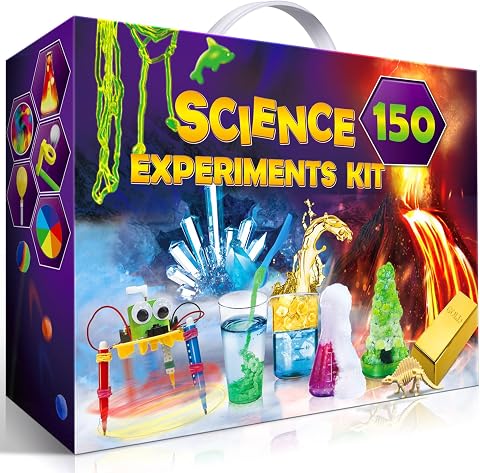
UNGLINGA 150 Experiments Science Kit for Kids
- ✔ Brand: UNGLINGA
- ✔ Experiments: 150
- ✔ Recommended age: 8 years and up
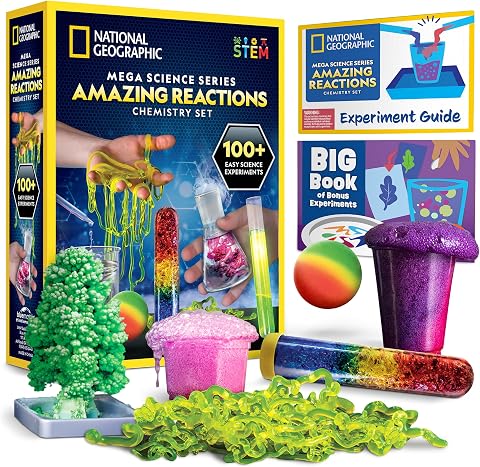
National Geographic Amazing Chemistry Set, 100+ Experiments, Ages 8+
- ✔ Brand: Blue Marble
- ✔ Age range: 8 years and up
- ✔ Experiments: 100+ total

National Geographic Science Magic Kit for Kids, 8+
- ✔ Brand: Blue Marble
- ✔ Age range: 8 years and up
- ✔ Magic experiments: 20 with materials included
Difficulty: Beginner | Time: 30-90 minutes per experiment; allow extra time for setup and cleanup
What You’ll Need
Tools & Materials:
- An educational science experiment kit suited to the participant’s age and interests
- The kit’s instruction booklet and all listed components
- A stable, easy-to-clean work surface
- Safety glasses and any protective gear specified in the kit
- Paper or a notebook and a pencil
- A timer, measuring cup, or other household items only if the instructions request them
- Access to handwashing and a rubbish or recycling container
Knowledge:
- Ability to read and follow the kit instructions, with adult help when needed
- Basic awareness of household safety and the difference between observation and prediction
Check the box for age recommendations, required household supplies, and safety warnings before opening materials. Adult supervision is required whenever the label or instructions request it, and young children should not handle small parts or chemicals without close supervision. Do not eat, drink, or taste experiment materials. Never mix kit substances unless the instructions specifically direct you to do so. Plan enough time to complete the activity and clean up without rushing.
UNGLINGA 150 Experiments Science Kit for Kids
For families seeking one kit that can introduce several areas of science, UNGLINGA’s 150-experiment range gives it the broadest remit in this lineup. Chemistry, physics, earth science, and surface tension offer different ways to keep a curious child engaged, rather than directing every activity toward reactions or tricks. Its illustrated, step-by-step manual also matters: clear sequencing can help children follow a procedure and see how one stage leads to the next, rather than treating each activity as an unexplained spectacle.Compared with the National Geographic Amazing Chemistry Set, UNGLINGA is the better fit for a learner whose interests shift between topics; the latter is more clearly organized around chemistry. It also differs from the Science Magic Kit, which uses performance and surprise as an entry point. UNGLINGA’s tradeoff is that some experiments need common household items, so the headline total should not be read as a promise that every project is ready to start straight from the box. It makes the most sense for an adult willing to check instructions and gather supplies when needed.
Pros:
- Covers chemistry, physics, earth science, and surface tension.
- Illustrated step-by-step instructions support following procedures.
- Includes child-friendly tools and experiment materials.
- Some projects use common household items, extending the activity range.
Cons:
- Some experiments require additional household supplies.
- The broad topic mix may feel less focused to a child interested only in chemistry.
Best for: Children aged 8 and up who want to sample several science subjects and families comfortable supplying occasional household materials.
Not ideal for: Buyers who want a narrowly chemistry-focused kit, or who need every activity to rely only on materials included in the package.
Bottom line: We rank UNGLINGA first for its unusually broad subject mix and guided format, provided families are willing to source a few extra supplies.
“We rank UNGLINGA first for its unusually broad subject mix and guided format, provided families are willing to source a few extra supplies.”
National Geographic Amazing Chemistry Set, 100+ Experiments, Ages 8+
Children captivated by crystals, color changes, and visible reactions may get more from this set than from a wider but less specialized sampler. The chemistry-first focus gives the activities a common thread, while test tubes, beakers, and pipettes make the work feel closer to handling basic lab equipment. The kit includes materials for 15 experiments, including crystal-growing and color-changing activities, so there is a defined group of projects tied to supplied materials.The advertised 100+ total requires a closer look: 85 additional experiments use common household items. That makes this a collection of chemistry prompts as well as a boxed set, not 100+ fully provisioned activities. UNGLINGA offers more subject variety and a higher stated experiment count, while the Science Magic Kit uses performance to draw children in. This set is the more direct choice when the learner specifically wants chemistry, but less suitable when families expect most listed activities to be ready without gathering anything else.
Pros:
- Chemistry theme gives the activities a clear learning focus.
- Includes materials for 15 experiments.
- Supplies tools such as test tubes, beakers, and pipettes.
- Offers 85 additional experiment ideas using household items.
Cons:
- Most of the 85 bonus experiments require household supplies.
- Its chemistry emphasis provides less subject variety than UNGLINGA.
Best for: Ages 8 and up who are especially interested in chemical reactions, crystal growing, and using simple lab-style tools.
Not ideal for: Children seeking a mix of physics and earth science, or families looking for a large number of activities with all materials supplied.
Bottom line: We recommend this set over the broader alternatives when chemistry is the child’s main interest and the family understands the split between supplied and household-material activities.
“We recommend this set over the broader alternatives when chemistry is the child’s main interest and the family understands the split between supplied and household-material activities.”
National Geographic Science Magic Kit for Kids, 8+
This kit makes its strongest case through presentation and participation: chemistry activities are framed as magic experiments, giving children a reason to demonstrate what they are doing to someone else. It includes materials for 20 magic experiments and a booklet with more than 85 additional experiments, combining a supplied set of activities with a larger collection of ideas. For a child who is less drawn to conventional lab-style projects but enjoys tricks and surprises, that framing may help make science feel approachable.Compared with the Amazing Chemistry Set, this is less explicitly centered on a sequence of chemistry activities and more oriented toward entertainment-led engagement. UNGLINGA is the stronger choice for broad subject coverage and clearly described step-by-step instruction; the Science Magic Kit instead trades some of that breadth-led appeal for a distinctive hook. The description does not specify how many of the bonus booklet activities require household supplies, so we would check the instructions before planning a long run of projects. Choose it for a child who likes performing, not for a buyer whose main criterion is a carefully bounded set of chemistry lessons.
Pros:
- Combines magic presentation with chemistry and hands-on STEM activities.
- Includes materials for 20 magic experiments.
- Adds a booklet with more than 85 additional experiments.
- Performance-style activities can give children a social way to share science.
Cons:
- Its magic-led format is less suited to buyers seeking broad coverage across science subjects.
- The supplied description does not clarify material requirements for the additional booklet experiments.
Best for: Children aged 8 and up who enjoy magic tricks, demonstrations, and sharing hands-on activities with others.
Not ideal for: Learners who prefer a systematic, broad-topic science sampler or families who want detailed information on the supplied materials for every bonus activity before choosing.
Bottom line: We place this kit third overall because its magic theme is more specialized, but it may be the best match for a child motivated by tricks and demonstrations.
“We place this kit third overall because its magic theme is more specialized, but it may be the best match for a child motivated by tricks and demonstrations.”
As an Amazon Associate we earn from qualifying purchases.
Before You Start
Read the entire activity once before beginning. Check that you have every listed component and supply, and note any steps that require waiting or advance preparation. Keep food and drinks away from the workspace. Use only the amounts and combinations specified by the kit; do not substitute ingredients or use a kit component for another activity. If packaging is damaged, a substance is leaking, or the instructions are missing, pause and contact the manufacturer rather than guessing.
Step-by-Step Instructions
Step 1: Choose an appropriate kit
Select a kit that matches the participant’s age, reading ability, interests, and available supervision. Read the age label and activity descriptions, then check whether the project uses small parts, heat, sharp tools, chemicals, or electricity. Choose a simpler activity if it requires equipment or adult support you do not have. Review the contents list and confirm the kit includes the materials needed for at least one complete experiment.
Tip:For a first project, prefer a kit with clear instructions, reusable equipment, and several short activities. An adult should handle any step involving a flame, hot water, sharp tools, or substances labeled as hazardous.
Check: You can name the activity you plan to do, confirm it fits the participant, and identify any extra supplies or supervision it requires.
Step 2: Check the instructions and materials
Place the instruction booklet and kit contents on the work surface. Match each required item to the contents list and set aside materials for the chosen experiment. Read the safety directions, quantity measurements, and disposal instructions. Put away components not used in this activity so they cannot be mistaken for ingredients. If an item is missing or damaged, stop and contact the kit maker before starting.
Tip:Keep labels attached to containers. Do not pour substances into unmarked cups or bottles, even temporarily.
Check: Every item listed for the activity is present, identifiable, and in usable condition, and you know what to do with leftovers.
Step 3: Prepare a safe workspace
Clear a stable table with enough room for the instructions, materials, and observation notes. Protect the surface with a washable tray or covering if the kit recommends it. Move food, drinks, pets, and unrelated objects away. Put on the safety gear named in the instructions, tie back long hair, and wash your hands before handling materials. Keep an adult nearby when supervision is required.
Tip:Set out only the tools needed for this experiment. A crowded workspace makes spills and mix-ups more likely.
Check: The work area is uncluttered, the required protective gear is on, and handwashing or first-aid supplies are accessible.
Step 4: Make a prediction and set up your notes
Write the experiment’s question or goal at the top of a page. Before changing or mixing anything, record a prediction about what you think will happen and why. Add the date and note any starting conditions the instructions ask you to track, such as quantities, temperature, or elapsed time. A simple table with columns for time, observation, and measurement can help you compare results.
Tip:A prediction is a testable guess, not a promise that the result will match. Record what you actually observe, even if it differs from your expectation.
Check: Your notes show the question, a prediction, and a place to record observations or measurements.
Step 5: Carry out the experiment in order
Follow the activity instructions one step at a time. Measure with the supplied tools, use only the stated quantities, and wait for any reaction or settling period the booklet specifies. Do not skip steps, combine materials early, or add extra ingredients to make a result appear stronger. Ask an adult to perform any step marked for adult handling. If the activity behaves differently from the instructions, stop and check the troubleshooting guidance before continuing.
Tip:Read each instruction before acting on it. This helps prevent missed waiting periods and accidental mixing.
Check: You have completed the listed procedure without changing the quantities or sequence, and the experiment is in the state the instructions describe.
Step 6: Observe and record the results
Look closely at the experiment at the times stated in the booklet. Write down visible changes, measurements, and timing rather than relying on memory. Use specific descriptions, such as “three bubbles formed” or “the liquid changed from clear to cloudy,” instead of only writing “it worked.” If the instructions ask for a photo or repeated measurement, take it from the same position or at the same intervals each time.
Tip:Keep observations separate from explanations. First record what you saw; then write what you think caused it.
Check: Your notes contain observations tied to the procedure, including relevant measurements or waiting times.
Step 7: Compare the outcome with the question
Read your prediction and observations side by side. Note whether the result matched your prediction, what changed, and which conditions may have affected the outcome. Use the kit’s explanation to connect the observation to the science concept, but do not claim more than the experiment shows. If the result was unclear, record that honestly and identify one condition to check in a later attempt.
Tip:A different result does not automatically mean you did something wrong. Small measurement or temperature differences can affect some activities.
Check: You can describe the result using your notes and explain, in your own words, what the activity demonstrated or what remains uncertain.
Step 8: Clean up and store the kit
Follow the booklet’s cleanup and disposal directions for each material. Do not pour substances down a drain or put them in household rubbish unless the instructions allow it. Ask an adult to handle disposal when directed. Wash reusable equipment as instructed, dry it fully, return components to their labeled containers, and store the kit where children and pets cannot reach it. Clean the work surface and wash hands.
Tip:Keep leftover mixtures separate from unused materials. Never return a used substance to its original container.
Check: Used materials have been disposed of as directed, reusable parts are clean and dry, and the kit is stored safely.
Common Mistakes to Avoid
- Starting before checking the age guidance, safety warnings, or required supplies. — Review the box and full activity instructions before opening or mixing materials. Arrange adult supervision and missing household items in advance.
- Changing quantities, skipping a waiting period, or doing steps out of order. — Measure carefully and follow the printed sequence. Use a timer when the instructions specify a duration.
- Treating a prediction as a result or writing observations from memory later. — Write your prediction before starting and record visible changes when they happen, including unexpected outcomes.
- Putting leftover materials in a sink or household rubbish without checking. — Use the kit’s disposal directions and ask an adult to handle any material with special disposal instructions.
Troubleshooting
Problem: A listed item is missing, leaking, or damaged.
Solution: Do not substitute a different substance or continue with an incomplete setup. Keep the item away from children and pets, follow the package safety directions, and contact the manufacturer for replacement parts or guidance.
Problem: The expected reaction does not happen.
Solution: Pause and compare your measurements, order of steps, temperature conditions, and waiting time with the instructions. Do not add more material unless directed. Record what happened, then repeat only if the booklet allows it and the setup can be reset safely.
Problem: The result is difficult to see or measure.
Solution: Check the instructions for the recommended lighting, measurement method, or observation interval. Use the supplied measuring tool and record small changes rather than adding ingredients or handling the mixture differently.
Problem: A spill occurs or a participant gets material on skin or in eyes.
Solution: Stop the activity and follow the kit’s first-aid and spill directions. Tell an adult immediately. Rinse affected skin or eyes as directed on the label, and contact local poison control or emergency services if the label calls for it or symptoms occur.
What Success Looks Like
The experiment is complete when you have followed the kit’s procedure and safety directions, recorded the observations or measurements, and can describe how the outcome relates to the activity’s question. The workspace should be clean, materials should be disposed of or stored as directed, and reusable equipment should be ready for its next use. A result that differs from the expected outcome still counts as a completed experiment if you recorded it accurately and can identify possible reasons.
Next Steps
Save your notes with the kit so you can compare results if you repeat the activity. Repeat an experiment only when the instructions permit it, changing one test condition at a time so you can tell what affected the outcome. Check the kit before each later use for dried, expired, damaged, or missing components. For activities involving hazards, unclear disposal directions, or a reaction not described by the booklet, stop and ask the manufacturer or a qualified adult for help.
Frequently Asked Questions
Can I use household materials instead of a missing kit component?
Only if the kit instructions name that household item as an acceptable substitute. Similar-looking materials can react differently or create a safety risk. If a required component is missing, pause and ask the manufacturer whether a replacement or substitute is suitable.
What should I do if my result does not match the picture in the booklet?
Compare your steps, quantities, timing, and conditions with the instructions. Record the actual result rather than trying to force it to match. Some activities vary with temperature or measurement accuracy; contact the kit maker if the difference suggests a damaged component or unclear directions.
Can a child use a science kit alone?
Follow the age label and supervision directions on the kit. Many activities need an adult for measuring, cleanup, or handling specific tools and substances. Even when independent use is allowed, keep small parts and materials away from younger children and pets.
How should I dispose of leftover experiment materials?
Use the disposal directions in the booklet or on the product labels. Do not assume that a small amount is safe to pour into a sink or throw in household rubbish. If directions are missing or unclear, seal and set the material aside safely while you contact the manufacturer or an appropriate local authority.
Halloween Picks
halloween
As an affiliate, we earn on qualifying purchases.