TL;DR

Prime made for students and young adults
- Fast, free delivery for dorm and study essentials
- Prime Video and Amazon Music included
- Member-only deals
Four volunteers emerged from NASA’s CHAPEA Mars habitat on Oct. 31, 2026, after spending 378 days in a simulated Mars mission at Johnson Space Center. The crew conducted simulated surface operations and gathered health and performance data to inform planning for future human exploration; NASA has not yet reported the study’s findings.
Four volunteers completed 378 days inside NASA’s simulated Mars habitat at Johnson Space Center in Houston, emerging on Oct. 31 after the agency’s second yearlong CHAPEA mission. The crew carried out simulated Marswalks, robotic operations, habitat maintenance and crop experiments while researchers collected health and performance data intended to inform future exploration missions.
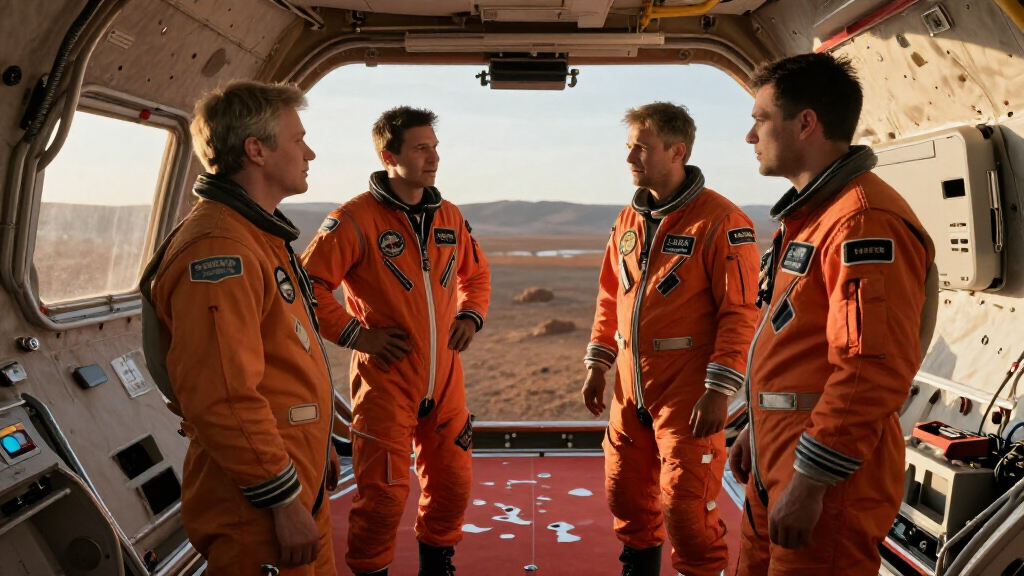
The crew — Ross Elder, Ellen Ellis, James Spicer and Matthew Montgomery — entered the roughly 1,700-square-foot, 3D-printed Mars Dune Alpha habitat on Oct. 19, 2025. During the mission, they lived under constraints designed to approximate aspects of a Mars surface expedition, including limited resources and communication delays of up to 22 minutes each way. They did not have windows, outside-world sounds or real-time calls with family and friends, according to NASA.
Inside the habitat, the volunteers conducted simulated surface tasks and supported research on crew health and performance. They remotely operated a drone and rover to survey terrain and identify or collect rock samples, maintained habitat systems, exercised and cultivated crops. The crew also tracked supplies, from food and water to routine items such as dish soap and respirator filters.
NASA said the mission was supported by researchers and ground teams across the agency. At the crew’s departure, Johnson Space Center Director Vanessa Wyche said the work was intended to build knowledge about protecting crew health and performance during human exploration beyond Earth. NASA has not provided results from the research in its account of the crew’s reflections.
Lessons for Long-Duration Mars Crews
The simulation offers NASA a way to study how people manage prolonged confinement, restricted supplies, demanding work and delayed communication without sending a crew to Mars. The volunteers’ accounts point to practical questions that mission planners must address: how much time and energy surface operations require, how supplies are managed over an extended period, and how crews work with support teams on Earth when conversations cannot happen in real time.
The experience also underscores that a mission depends on more than the people inside a habitat. Ellis, the crew’s medical officer, said the mission showed her that a future Mars crew would need a highly integrated ground team. NASA has not yet released data showing what the study found or how its results will change mission plans, so the crew’s reflections are experience reports rather than published research conclusions.
Popular right now

LG S90TR 7.1.3‑Channel OLED Evo TV Matching Home Theater Soundbar (Black)

Sony WH-1000XM6 Wireless Noise-Canceling Headphones, Black

Vitamix 64 oz Low-Profile Blender Container with SELF-DETECT, BPA-Free
As an affiliate, we earn on qualifying purchases.
A Controlled Mars Habitat at Johnson
CHAPEA stands for Crew Health and Performance Exploration Analog. NASA designed the program to examine human health and performance in a ground-based environment that simulates selected conditions of a Mars mission. Mission 2 was the program’s second yearlong simulation, conducted in the Mars Dune Alpha habitat at Johnson Space Center.
The crew’s year took place as NASA’s broader human spaceflight program continued beyond the habitat. NASA astronaut Jack Hathaway noted that while the volunteers were isolated, he completed a 237-day mission aboard the International Space Station and returned to Earth. NASA also marked 25 years of continuous human presence aboard the station on Nov. 2, 2025. Those events provide a timeline comparison; they do not mean the CHAPEA volunteers traveled to space. Their mission was a ground-based simulation.
“When I look back on the mission, the most salient point I’ve learned is that a future Mars crew requires a highly integrated ground team.”
— Crew member Ellen Ellis
Research Findings Still Await Release
NASA’s account describes the mission activities and crew members’ impressions but does not report specific research findings, measurements or analysis from the 378-day study. It is not yet clear what conclusions researchers will draw, when results will be published, or which findings could affect future mission procedures.
The habitat simulated selected conditions rather than reproducing every aspect of a Mars expedition. The source material does not specify how researchers will compare the crew’s data with other studies or how closely particular tasks and constraints matched a future mission. The volunteers’ observations about teamwork, isolation, exercise and resource management should not be treated as proof of outcomes for astronauts on Mars.
NASA’s Analysis Comes Next
Researchers will need to analyze the health and performance information gathered during the mission before NASA can report what the study indicates. The agency’s account does not give a publication schedule or identify a next milestone for releasing results. Until that information is available, the confirmed development is the crew’s completion of the simulation and the data collection, not a final conclusion about its effects.
NASA’s stated aim is to use CHAPEA research to support planning for future human exploration. The next public update to watch for is an agency release describing the findings, their limitations and whether they have implications for crew health, surface operations or support from Earth.
Key Questions
What was CHAPEA Mission 2?
CHAPEA Mission 2 was a yearlong, ground-based simulation of aspects of a Mars surface mission, conducted by four volunteers in the Mars Dune Alpha habitat at NASA’s Johnson Space Center.
When did the crew enter and leave the habitat?
The four crew members entered the habitat on Oct. 19, 2025, and emerged on Oct. 31, 2026, after 378 days, according to NASA.
Did the volunteers travel to Mars or space?
No. The mission took place in a 3D-printed habitat at Johnson Space Center. It was a simulation, not a spaceflight or a trip to Mars.
What did the crew do during the simulation?
The crew conducted simulated Marswalks, operated a drone and rover remotely, maintained habitat systems, exercised, cultivated crops and collected data for health and performance research.
Have NASA’s research results been released?
NASA’s report describes the mission and the crew’s reflections, but does not provide specific findings or a release timetable for the research results.
Source: nasa.gov