TL;DR

Prime made for students and young adults
- Fast, free delivery for dorm and study essentials
- Prime Video and Amazon Music included
- Member-only deals
Europe is currently the fastest-warming continent, with temperatures rising more rapidly than global averages. Experts attribute this to regional atmospheric patterns and geographical features, highlighting urgent climate risks.
Recent climate data shows that Europe is warming at a faster rate than any other continent, with temperatures rising approximately 0.5°C per decade over the past 50 years, according to the European Environment Agency. This accelerated warming increases risks of heatwaves, droughts, and other climate-related impacts across the region.
Multiple climate studies, including recent reports from the European Environment Agency, confirm that Europe’s temperature increase surpasses the global average of about 0.2°C per decade. Experts attribute this trend to regional atmospheric phenomena such as persistent heat domes and specific geographical factors like the continent’s complex topography and land use patterns.
Researchers note that heat domes—large, high-pressure systems trapping warm air—have become more frequent and intense over Europe, contributing to prolonged heatwaves. According to Dr. Maria Lopez, a climate scientist at the University of Madrid, “The combination of atmospheric stability and regional geography amplifies heat retention, making Europe particularly vulnerable to rapid temperature increases.” Learn more about Europe’s heatwave impacts.
Climate models project that if current trends continue, Europe could see temperature rises exceeding 2°C by the end of the century, with some regions experiencing even higher increases. These projections raise concerns about the region’s ability to adapt to escalating climate impacts.
Implications of Accelerated Warming for Europe’s Climate and Society
The faster warming of Europe has significant implications for public health, agriculture, water resources, and infrastructure. Increased frequency and severity of heatwaves can lead to health crises, especially among vulnerable populations, while droughts threaten water supply and crop yields. The trend underscores the urgency for region-specific climate adaptation and mitigation strategies, as well as global efforts to reduce greenhouse gas emissions.
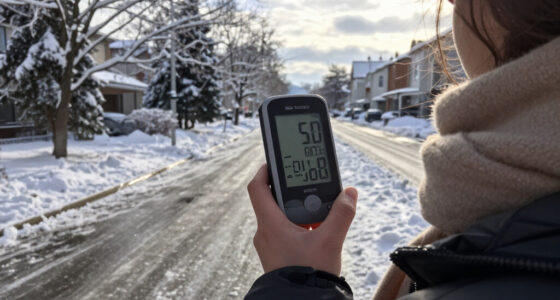
personal weather station outdoor
As an affiliate, we earn on qualifying purchases.
As an affiliate, we earn on qualifying purchases.
Regional Climate Patterns and Factors Behind Europe’s Rapid Warming
Europe’s rapid warming is linked to a combination of atmospheric and geographical factors. Over recent decades, the frequency of heat domes—large, persistent high-pressure systems—has increased, trapping warm air and intensifying heatwaves. Additionally, Europe’s complex topography, including mountain ranges and varied land cover, influences local climate dynamics.
Historically, Europe’s climate has been moderated by the Atlantic Ocean and the Gulf Stream, but recent changes in ocean currents and atmospheric circulation patterns have reduced this buffering effect. The Intergovernmental Panel on Climate Change (IPCC) has highlighted these regional variations as key factors in the continent’s accelerated warming.
“The combination of atmospheric stability and regional geography amplifies heat retention, making Europe particularly vulnerable to rapid temperature increases.”
— Dr. Maria Lopez, University of Madrid
As an affiliate, we earn on qualifying purchases.
Uncertainties in Future Climate Projections for Europe
While current data confirms Europe is warming faster than other continents, the precise future trajectory depends on global emission scenarios and regional climate feedbacks. Variability in atmospheric patterns like heat domes and ocean currents introduces uncertainties in long-term projections, making it difficult to predict exact temperature increases or the severity of future impacts. Follow live updates on Europe’s heat situation.
Scientists acknowledge that ongoing research is needed to refine models and better understand regional climate feedback mechanisms, especially related to land use changes and atmospheric circulation shifts.
As an affiliate, we earn on qualifying purchases.
Next Steps in Monitoring and Addressing Europe’s Rapid Warming
Researchers will continue to monitor climate patterns and refine regional models to improve projections. Policymakers are expected to strengthen climate adaptation strategies tailored to Europe’s specific vulnerabilities, including heatwave preparedness and water resource management. International cooperation will be crucial to address the broader global emissions that drive regional warming.
Additionally, scientific efforts will focus on understanding the role of heat domes and other atmospheric phenomena in future climate scenarios, aiming to develop early warning systems and mitigation measures.
As an affiliate, we earn on qualifying purchases.
Key Questions
Why is Europe warming faster than other regions?
Europe’s faster warming is primarily due to regional atmospheric phenomena like heat domes, combined with geographical factors such as topography and land use patterns that amplify heat retention.
What are heat domes, and how do they affect the climate?
Heat domes are large, high-pressure systems that trap warm air over a region, leading to prolonged heatwaves and elevated temperatures, as observed increasingly over Europe.
How might this trend impact European societies?
Accelerated warming could lead to more frequent and severe heatwaves, droughts, and health crises, requiring urgent adaptation measures across sectors like agriculture, health, and infrastructure.
Can global efforts reduce Europe’s rate of warming?
Yes, global reductions in greenhouse gas emissions are essential to slow overall climate change, which would help mitigate the pace of Europe’s warming and its impacts.
Source: google-trends
Fall Picks
fall essentials
As an affiliate, we earn on qualifying purchases.