When choosing between ionizers and filters, you’ll find that ionizers are low-cost, energy-efficient, and easy to maintain, but they don’t remove larger particles and may produce ozone, which can be harmful. Filters, especially HEPA types, physically capture dust, pollen, and bacteria but come with higher ongoing costs for replacement and more maintenance. Both options have safety considerations. To make the best choice for your space, understanding these nuances better will help you optimize your air quality.
Key Takeaways
- Ionizers neutralize small particles through charged ions but may produce ozone, posing health risks, unlike filters that physically trap pollutants.
- HEPA filters require regular replacement and higher ongoing costs, whereas ionizers demand minimal maintenance and have lower operational expenses.
- Filters excel at removing larger particles like dust and pollen, while ionizers are more effective at neutralizing microscopic airborne contaminants.
- Ionizers are compact and suitable for small to medium rooms, but larger spaces benefit more from high-capacity filters with higher CADR ratings.
- Energy efficiency favors ionizers with lower power consumption, but filters often provide higher airflow and filtration capacity for comprehensive cleaning.
How Do Ionizers and Filters Really Clean the Air?
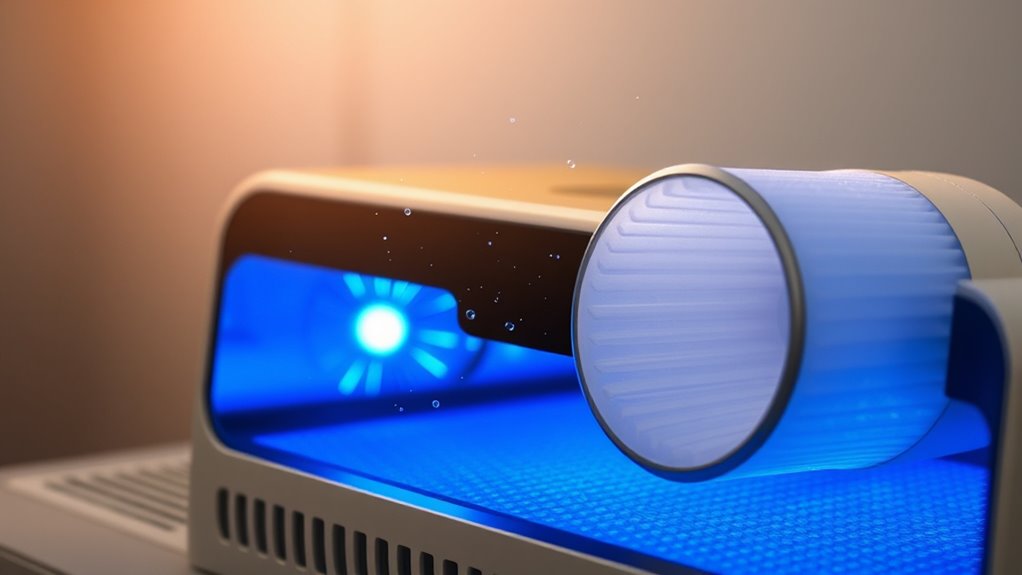
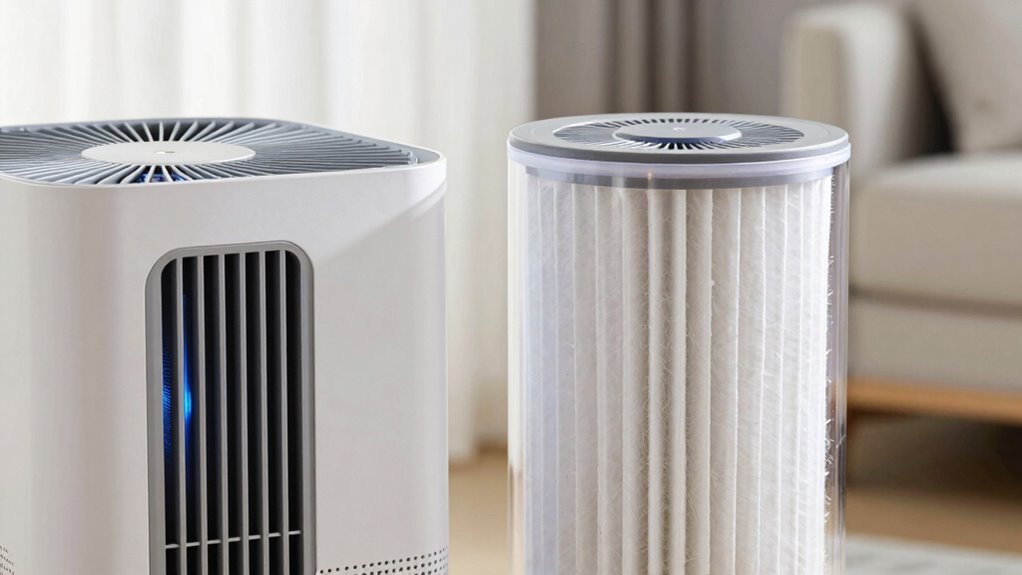
Both ionizers and filters work to improve air quality, but they do so through different mechanisms. Many air purification myths suggest that ionizers can eliminate all airborne pollutants, but this isn’t true. Ionizers release charged particles that cause pollutants to settle or stick to surfaces, but they don’t remove everything from the air. They have technological limitations, such as not effectively filtering out some allergens or volatile organic compounds (VOCs). Filters, especially HEPA types, physically trap particles like dust, pollen, and pet dander, providing a more direct removal method. While ionizers can reduce some airborne particles, they often require additional filtration for exhaustive cleaning. Understanding these differences helps you choose the right device for your needs, avoiding misconceptions about their capabilities. Effective air purification methods require an understanding of how these devices work and their limitations.
Which Pollutants Do Ionizers and Filters Remove Best?
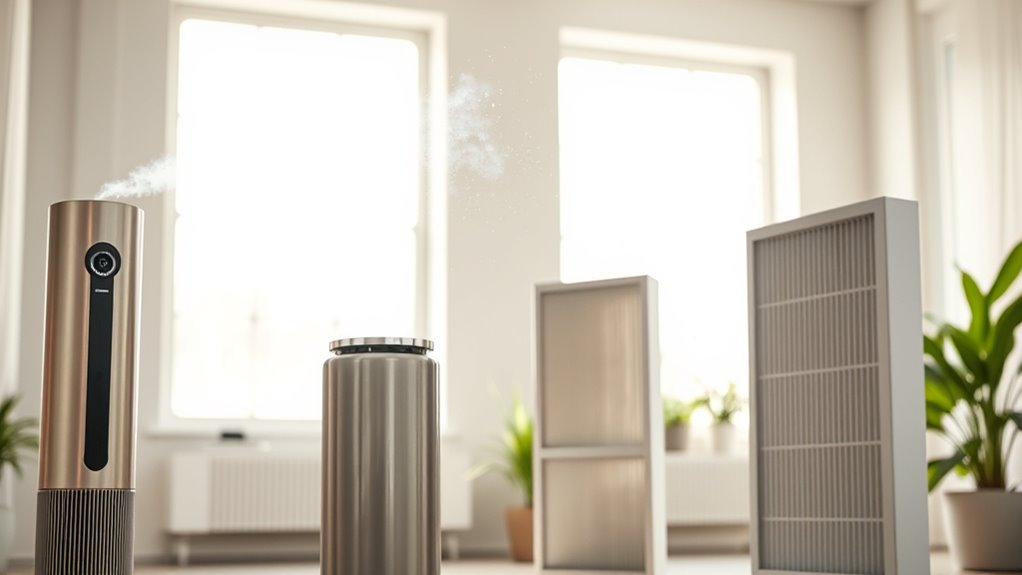
Have you wondered which pollutants ionizers and filters remove most effectively? Ionizers excel at neutralizing airborne particles through chemical reactions, especially tiny pollutants like bacteria, viruses, and some allergens. They generate charged ions that cause particles to clump together and settle out of the air or stick to surfaces. Filters, on the other hand, are better at capturing larger particles such as dust, pet dander, and pollen through physical interception. Effective air circulation enhances each device’s ability to remove pollutants, ensuring contaminated air passes through the ionizer or filter efficiently. While ionizers target microscopic pollutants via chemical reactions, filters rely on physical barriers. Understanding the pollutant removal strengths of each device helps you choose the right one for your specific air quality concerns.
What Are the Real Costs and Maintenance Needs?

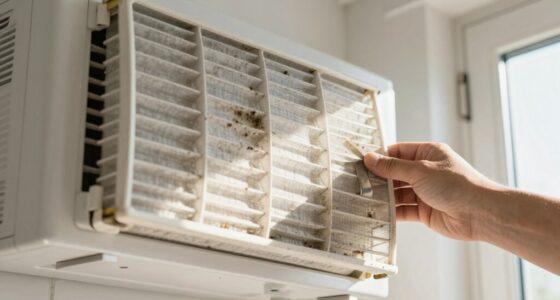
When considering ionizers and filters for your air purifier, it’s important to understand their ongoing costs and maintenance needs. With filters, you’ll need to budget for regular filter replacement—usually every 6 to 12 months—depending on usage and air quality. This adds to the long-term expense and requires you to stay on top of timely changes to maintain efficiency. Ionizer maintenance, on the other hand, is generally minimal; you’ll want to periodically clean or inspect the ionizer components to prevent buildup or decreased performance. While filters have a clear replacement schedule, ionizers tend to be low-maintenance but may need occasional cleaning or checkups. Overall, both systems involve some ongoing costs, but filters often demand more frequent attention and expenses over time. Additionally, understanding air quality science can help you choose the most effective and safe option for your specific environment.
Are Ionizers and Filters Safe for Your Health?
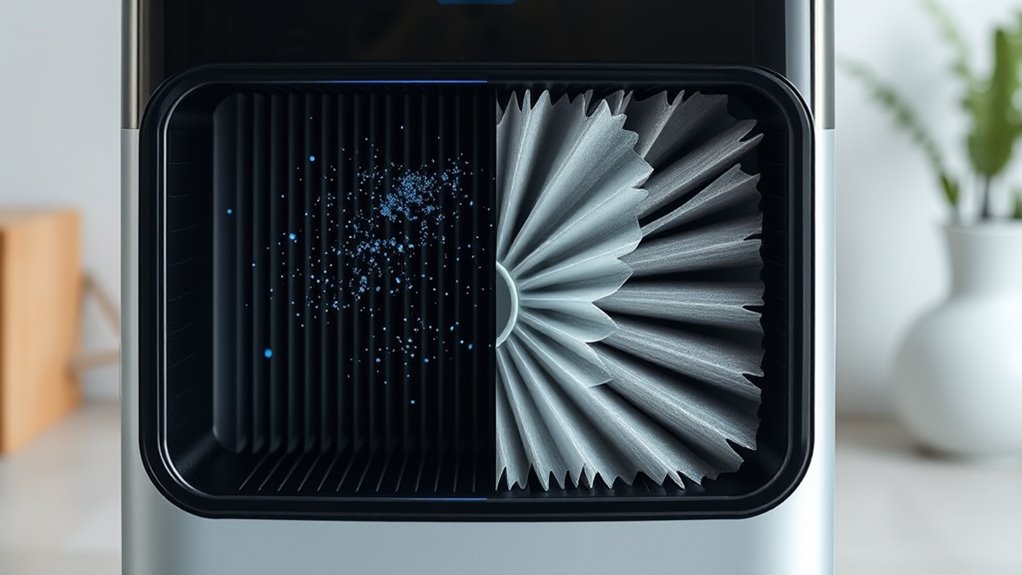
Understanding the safety of ionizers and filters is essential before choosing an air purifier, as their impact on your health can vary. Ionizers can produce ozone, which poses health risks, especially for those with respiratory issues or asthma. Long-term safety concerns include potential lung irritation and the buildup of ozone indoors. Filters, particularly HEPA ones, are generally safe, but they can trap dust and allergens that may cause breathing problems if not maintained properly. Overall, ionizers may carry more health risks over time, while filters tend to be safer for long-term use. However, it’s important to choose reputable models, keep them clean, and monitor air quality to ensure your health remains protected. Additionally, understanding ionizer technology can help you make a more informed decision about which air purification method best suits your needs.
Which Is More Cost-Effective and Energy-Friendly?
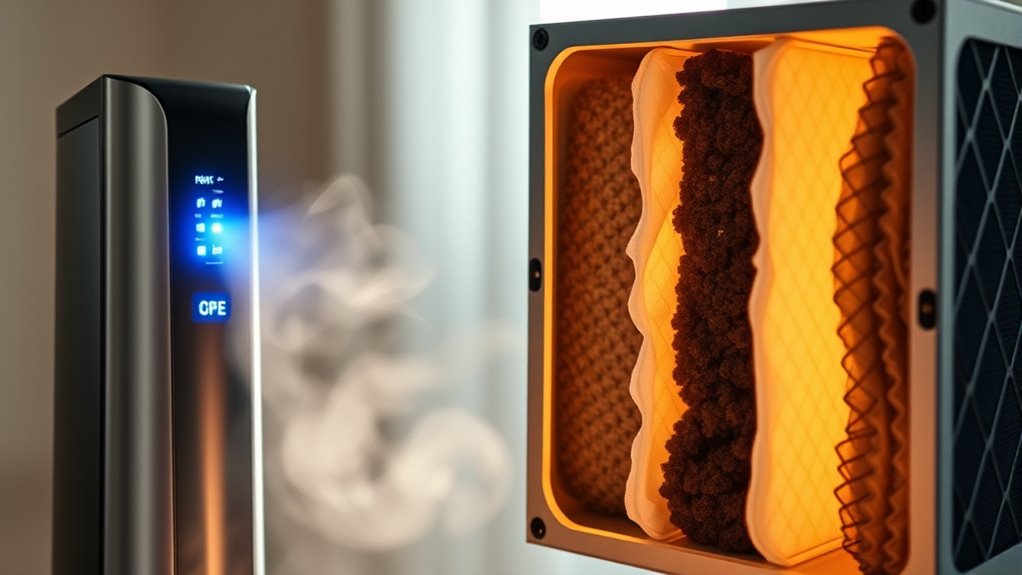
When comparing ionizers and filters, you’ll want to contemplate their ongoing costs and energy use. Ionizers typically have lower operational expenses but may consume more electricity over time, while filters often need frequent replacements. Understanding these factors helps you choose the option that saves money and energy in the long run. Additionally, considering the maintenance requirements of each system ensures optimal performance and longevity.
Operational Expenses Comparison
Ionizers tend to have lower operational costs compared to filters, primarily because they consume less energy and require fewer replacement parts over time. When doing a cost analysis, you’ll find that their maintenance expenses remain relatively stable, with minimal replacement costs for parts like filters or HEPA media. Over the long term, this makes ionizers more budget-friendly. Additionally, their compatibility with European cloud innovations ensures they align with sustainable and energy-efficient solutions.
Key points to contemplate include:
- Lower energy bills due to energy-efficient operation
- Fewer replacement parts needed
- Reduced maintenance time and costs
- Less frequent need for professional servicing
Energy Consumption Levels
Determining which air purification system is more cost-effective and energy-friendly depends largely on their power consumption during operation. Ionizers generally consume less energy due to minimal moving parts, making them more energy-efficient. Filters, especially HEPA models, often require more power to run fans continuously. Here’s a quick comparison:
| System | Power Consumption | Energy Efficiency |
|---|---|---|
| Ionizers | Low (around 10-20W) | High, due to minimal energy use |
| Filters | Moderate to high | Varies, depends on fan power |
Ionizers excel in energy efficiency, saving you money over time. Filters may increase your electricity bill, especially with frequent use. Additionally, electricity consumption can vary based on device settings and usage patterns, influencing overall cost and energy impact. Choosing the right system depends on your energy priorities.
Where Should You Use Ionizers or Filters?

You should consider where to place ionizers or filters based on your indoor air quality needs and room size. If you’re dealing with large spaces, filters might be more effective, while ionizers work well in smaller areas. Also, think about your existing air purifiers to determine whether adding an ionizer or filter will give you the best results. Additionally, understanding the air purification technology can help you make more informed decisions about which device suits your environment better.
Indoor Air Quality
Choosing the right air purification method depends on where you spend most of your time and the specific air quality concerns in that space. If indoor air quality is your priority, consider how ionizers or filters can improve your environment. Ionizers are effective in reducing certain airborne particles and can help with odor elimination, especially in spaces lacking proper ventilation strategies. Filters, on the other hand, excel at trapping dust, allergens, and pollutants, creating cleaner air overall. Think about your needs:
- Addressing persistent odors
- Improving allergy symptoms
- Managing VOCs and chemicals
- Ensuring fresh, well-ventilated spaces
Both options can enhance indoor air quality, but choosing the right one depends on your specific concerns and room conditions. Understanding air purification methods can help you make more informed choices for your indoor environment.
Room Size Compatibility
Selecting an air purification method that suits your room size guarantees ideal performance. For smaller spaces, portable options like compact ionizers or small filters work well, offering flexibility and easy setup. Ionizers are often simple to install, with minimal installation complexity, making them suitable for quick deployment in different rooms. Larger rooms or open-plan areas require more powerful units or multiple devices to ensure effective coverage. Filters with higher CADR ratings are better for bigger spaces, but they may demand more space and installation effort. Ionizers, due to their compact size, are ideal for small to medium rooms, while traditional filters excel in larger areas where more airflow and filtration capacity are necessary. Choosing the right size device prevents inefficiencies and ensures cleaner air throughout your space.
Existing Air Purifiers
When deciding where to place ionizers or filters, consider the specific needs of each space. Existing air purifier types vary, and understanding their benefits helps determine placement. Filters with longer lifespans are ideal for high-traffic areas, reducing maintenance. Ionizers work well in smaller rooms or spaces where minimal airflow disruption is desired. Keep in mind:
- High-traffic areas benefit from filters with extended filter lifespan
- Ionizers are suitable for spaces where airflow is limited
- For rooms with allergy sufferers, HEPA filters are often more effective
- Consider noise levels and maintenance frequency when choosing purifier types
- Additionally, incorporating air quality monitoring can help you make better decisions about purifier placement and operation.
Assess your environment to match the air purifier type with your needs, ensuring clean air without unnecessary hassle or expense.
Frequently Asked Questions
Can Ionizers and Filters Effectively Remove Odors From Indoor Spaces?
Yes, ionizers and filters can effectively remove odors from indoor spaces. Ionizers work by creating chemical reactions that neutralize odor molecules, while filters trap particles through airflow dynamics. You’ll notice fresher air as these devices break down or capture smell-causing compounds. Keep in mind, combining both can maximize odor removal, especially in spaces with persistent smells. Regular maintenance guarantees they keep working efficiently.
How Do Ionizers Impact Allergy Sufferers Differently Than Filters?
As an allergy sufferer, you might find ionizers cause more respiratory impact because they can produce ozone, which irritates sensitive lungs and worsens allergy symptoms. Filters, on the other hand, remove allergens directly without ozone emissions, making them gentler on your respiratory system. If allergy sensitivity is a concern, choosing a high-quality filter may reduce symptoms better and prevent additional irritation, unlike some ionizers that could exacerbate your condition.
Are There Specific Air Quality Conditions That Favor One Device Over the Other?
If you’re dealing with outdoor pollution or industrial settings, filters often work best because they trap larger particles like dust and smoke effectively. Ionizers are better suited for indoor environments with fine airborne particles, but they might struggle with outdoor pollutants. For ideal air quality, consider your specific environment—filters excel in high outdoor pollution areas, while ionizers shine indoors with less particulate load.
Do Ionizers Produce Ozone or Other Secondary Pollutants?
Ionizers definitely produce ozone, which can be a sneaky secondary pollutant. This ozone generation might be more than just a minor side effect, potentially turning your clean air into a health hazard. Secondary pollutants like ozone can irritate your lungs and worsen asthma. So, if you’re sensitive or have respiratory issues, you should be cautious. Always check if your ionizer emits ozone and consider alternatives to keep your air safe and fresh.
How Do Maintenance Costs Compare Over the Long Term for Each Device?
You’ll find that maintenance costs for ionizers tend to be higher over the long term due to their frequent cleaning needs and potential replacement of ionizing wires. Filters usually have a lower cost comparison, requiring regular filter replacements but less frequent overall maintenance. Ionizers may save money upfront but could incur more expenses over time, while filters offer predictable costs with less maintenance frequency.
Conclusion
Choosing between ionizers and filters isn’t just about price or looks—it’s about understanding their hidden truths. Think of it like a dance: each has its rhythm, its strengths, and pitfalls. By weighing the tradeoffs, you can find the perfect partner for your air quality needs. Remember, the best choice isn’t always the flashiest; it’s the one that breathes easier with you, turning your home into a true sanctuary of clean, fresh air.