

TL;DR

Prime made for students and young adults
- Fast, free delivery for dorm and study essentials
- Prime Video and Amazon Music included
- Member-only deals
In 2026, businesses are increasingly adopting AI-driven marketing automation tools to streamline campaigns, generate leads, and improve customer engagement. This shift is supported by recent industry reports, highlighting broad system strategies and platform-neutral approaches. The development underscores a significant evolution in marketing practices, though specific platform implementations remain evolving.
In 2026, companies across industries are increasingly adopting AI-driven marketing automation tools to optimize campaigns, generate leads, and personalize customer engagement, according to recent industry analyses. This trend reflects a strategic shift toward integrating AI systems into core marketing processes, with broad implications for business growth and operational efficiency.
Recent industry reports, including insights from ThorstenMeyerAI.com, confirm that AI-powered marketing automation is becoming a central component of business strategies in 2026. These tools support a wide range of activities—from email campaigns to lead generation—by leveraging AI to automate tasks and improve decision-making. The most effective systems focus on broad workflow coverage, integrating inputs, decision rules, and performance measurement, rather than relying solely on individual prompts or platform-specific instructions. Experts recommend that businesses choose automation approaches aligned with clear marketing goals, emphasizing platform-neutral methods to ensure longevity amid rapid technological change. While many companies are adopting these tools, specific platform implementations and integrations are still evolving, and the precise impact varies by industry and existing infrastructure.The 14 picks
- 1
 AI-Powered Social Media Marketing: Step-by-Step Prompts and Workflows to Grow…View on Amazon →
 - 2
 AI Marketing Automation: The Complete Guide to AI-Powered Business Growth, Ma…View on Amazon →
 - 3
 Zero-Skill AI-Powered SMMA Startup: How To Start And Scale A Social Media Mar…View on Amazon →
 - 4
 AI Powered Marketing Tools Mastery: The Complete Guide to AI Copywriting, Des…View on Amazon →
 - 5
 The AI-Powered Email Marketing Specialist: How to Use ChatGPT, AI Tools and S…View on Amazon →
 - 6
 Claude AI Automation & Monetization: Build AI-Powered Systems, Automate Workf…View on Amazon →
 - 7
 25 AI Tools for Digital Marketing: Powerful AI Tools to Automate Content, SEO…View on Amazon →
 - 8
 AI Automation for Real Estate Agents: A Realtor’s Guide to Systems, Prompts,…View on Amazon →
 - 9
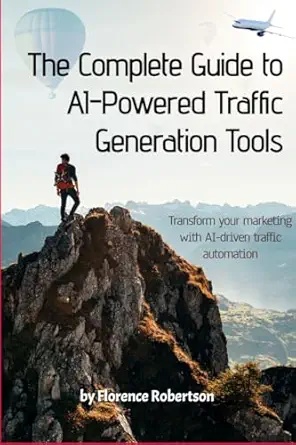 The Complete Guide to AI-Powered Automation Tools: Transform Your Marketing w…View on Amazon →
 - 10
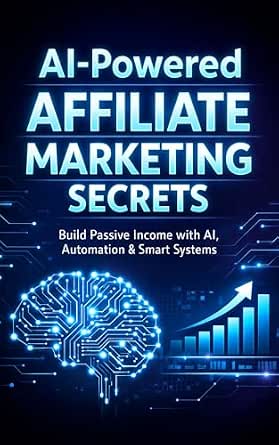 AI-Powered Affiliate Marketing Secrets: Build Passive Income with AI Tools, A…View on Amazon →
 - 11
 AI-Powered Creative Agency: Build, Automate, and Grow a Modern Creative Busin…View on Amazon →
 - 12
 Claude AI for Real Estate Agents: Using One of the World’s Most Powerful AI T…View on Amazon →
 - 13
 Foundations of AI-Powered Marketing: Understanding and Implementing Artificia…View on Amazon →
 - 14
 Agent-Powered Growth: Deploy AI Agents That Build Your Marketing Pipeline 24/7View on Amazon →
Why AI Marketing Automation Is a Game-Changer in 2026
The adoption of AI-driven marketing automation in 2026 signifies a fundamental shift in how businesses approach customer engagement and campaign management. These tools enable companies to operate more efficiently, personalize messaging at scale, and respond swiftly to market changes. For marketers, this means increased productivity and better ROI, while businesses benefit from more consistent lead generation and customer retention. However, the rapid evolution of AI platforms means that strategies must remain adaptable, and understanding the core workflows is critical for sustained success. This shift also raises questions about data privacy, platform dependency, and skill requirements, making it essential for companies to stay informed about emerging best practices.Evolution of AI in Marketing and 2026 Industry Trends
The integration of AI into marketing has been progressing over the past few years, with platforms like ChatGPT and Claude leading the way in automating tasks such as content creation, customer segmentation, and campaign optimization. Industry reports from sources like ThorstenMeyerAI.com highlight that broad workflow coverage—encompassing inputs, decision-making, and measurement—has become the preferred approach for scalable automation. The focus has shifted from individual prompts to comprehensive systems that can adapt to changing market conditions. Companies are increasingly seeking platform-neutral strategies that can be implemented across different AI tools, ensuring flexibility and longevity amid rapid technological updates. This evolution is driven by a need for more efficient, data-driven marketing processes that support business growth in a competitive landscape.“AI-driven marketing tools are transforming how businesses generate leads and personalize customer interactions, making automation indispensable.”
— Industry expert Jane Doe
Unresolved Aspects of AI Automation Adoption in 2026
While adoption rates are rising, it remains unclear how quickly all industries will fully integrate AI-driven marketing automation. Specific platform implementations are still evolving, and the long-term effectiveness of platform-neutral workflows versus platform-specific solutions has yet to be conclusively demonstrated. Additionally, concerns around data privacy, regulatory compliance, and skill gaps persist, potentially slowing widespread adoption or affecting implementation quality.Next Steps for Businesses Implementing AI Marketing Automation
Businesses should focus on defining clear marketing outcomes before selecting automation tools, emphasizing platform-neutral workflows that can adapt to rapid technological changes. Companies are advised to monitor emerging best practices, invest in staff training, and stay informed about evolving AI platforms. Future developments will likely include more integrated, user-friendly automation systems that combine AI with analytics to provide real-time insights and optimization. Industry events and vendor updates in 2026 will offer further guidance on best practices and new tools, shaping the next phase of AI marketing evolution.Key Questions
What are the main benefits of AI-driven marketing automation in 2026?
The main benefits include increased efficiency, personalized customer engagement, improved lead generation, and better campaign performance through automation and data-driven decision-making.
Which AI platforms are most commonly used for marketing automation in 2026?
Platforms like ChatGPT, Claude, and other AI tools are widely adopted, but many companies prefer platform-neutral strategies to maintain flexibility amid rapid updates.
What should businesses consider before adopting AI marketing automation?
Businesses should define specific marketing goals, choose workflows that support those outcomes, and prioritize platform-neutral methods to ensure longevity and adaptability.
Are there risks associated with AI marketing automation?
Yes, including data privacy concerns, reliance on platform-specific features that may become obsolete, and potential skill gaps within teams that need addressing.
How soon will AI marketing automation become standard practice?
While adoption is accelerating in 2026, full integration across all industries will vary; some sectors may adopt widespread automation within the next few years, depending on regulatory and technological developments.
Source: ThorstenMeyerAI.com
Halloween Picks
halloween
As an affiliate, we earn on qualifying purchases.