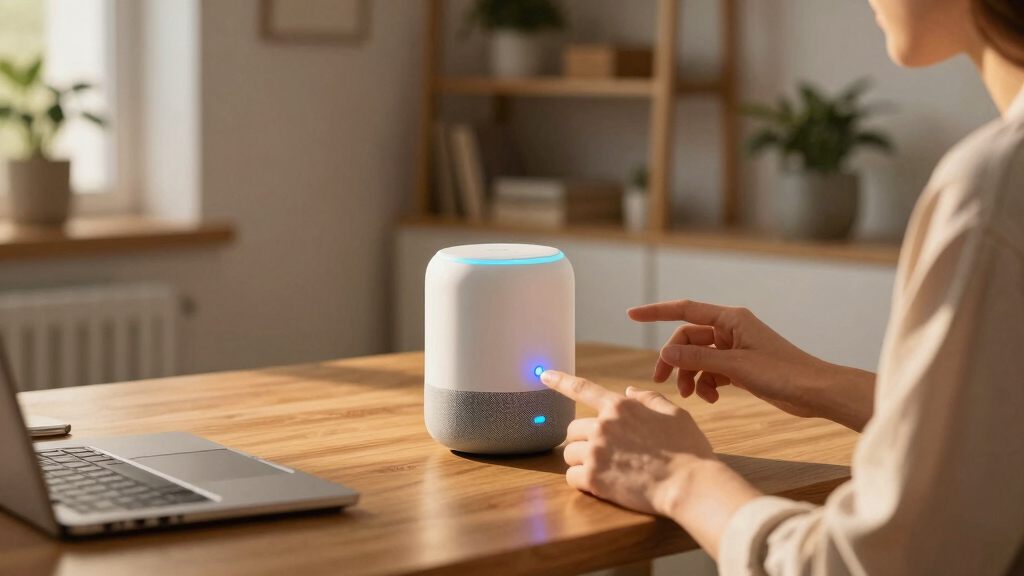

📊 Full opportunity report: The New Personal Agent Layer on ThorstenMeyerAI.com — validation score, market gap, and execution plan.
Listen free for 30 days with Audible
Thousands of audiobooks and originals — cancel anytime.
Start your free trialAs an affiliate, we earn on qualifying purchases.
TL;DR
OpenClaw and Hermes have launched a new layer of persistent personal action agents capable of executing tasks, using tools, and maintaining memory across platforms. This development marks a shift from traditional chatbots to autonomous digital assistants that manage personal and professional workflows.
OpenClaw and Hermes have introduced a new layer of AI technology designed to act as persistent personal agents capable of executing tasks, using tools, and maintaining long-term memory across digital environments. This development signals a significant shift from traditional chatbots towards autonomous, self-managed digital assistants that can operate continuously in private and professional settings. For more on this shift, see The Orchestration Layer Arrives.
OpenClaw is a self-hosted, open-source personal action agent that can manage inboxes, send emails, and handle calendar tasks directly from chat platforms like WhatsApp or Telegram. It is positioned for private use, with a focus on local control and security, making it suitable for individual users, small teams, and innovation labs.
Hermes, by contrast, emphasizes persistent memory and automated skill creation, enabling it to learn and improve over time. It is designed as an open-source, self-improving agent capable of operating across multiple platforms, with applications in long-term personal and work-related workflows. Both tools exemplify a broader trend towards agents that are not just reactive chatbots but active participants in managing digital tasks.
These tools are part of a larger category: persistent personal action agents, which are distinguished by their ability to act, use tools, remember past interactions, and operate across familiar interfaces such as desktop, email, and enterprise systems. The development raises questions about ownership, security, and accountability, especially in sensitive or enterprise environments.
The New Personal Agent Layer.
Agents that remember, use tools, control workflows, and increasingly act across the private and professional digital environment.
This is not a comparison of ordinary chatbots. It is a map of systems that can take action, use browsers and files, connect to calendars or inboxes, build deliverables, and operate across personal, enterprise, and public-use workflows. The core question is not which model is smartest. It is who owns the agent, where it runs, what it can access, and who is accountable when it acts.
Not chatbots. Personal action infrastructure.
The OpenClaw/Hermes bucket is best understood as the agent layer between the user and the software stack: systems that can remember, plan, click, write, retrieve, schedule, summarize, and trigger actions.
Self-hosted personal agents
You run the agent. You control the data path. You also carry the operational responsibility.
Managed work agents
Hosted by providers, easier to adopt, more polished, and better aligned with enterprise procurement.
Memory-first assistants
They focus on personal context: meetings, documents, conversations, tasks, and recall across sessions.
Agent infrastructure
Developer-facing platforms for web action, workflow automation, and enterprise app control.
Capability is not enough. Fit depends on context.
Personal, enterprise, and public use are different markets.
The stronger the agent, the stronger the governance.
Agents are risky because they can read, write, click, execute, remember, and connect systems. That changes the threat model from answer quality to operational control.
- Least privilege Agents should only access what the task requires.
- Human approval Required for sending, deleting, paying, publishing, or changing accounts.
- Audit logs Every meaningful action should be traceable.
- Prompt-injection defense Email, web, and documents are untrusted inputs.
Strategic ranking by category
Best personal agents
- OpenClaw
- Hermes
- Khoj
- TwinMind
- Open Interpreter
Best enterprise agents
- ChatGPT Agent
- Claude Cowork
- Lindy
- Genspark Business
- Adept
Best public-facing tools
- Genspark
- Manus
- ChatGPT Agent
- Khoj
- Claude Cowork
Best infrastructure tools
- MultiOn
- Agent Zero
- AutoGPT
- Hermes
- OpenClaw
The next major AI interface may not be a search box or a chat window. It may be an agent that knows your context, waits in the background, and acts when needed.
Implications for Digital Autonomy and Privacy
This new layer of personal agents could transform how individuals and organizations manage digital workflows, shifting from manual or semi-automated processes to fully autonomous agents. It raises important considerations around data security, permission management, and accountability, particularly as these agents handle sensitive information and operate across private platforms.
For users, this means more seamless and continuous assistance in daily tasks, while for organizations, it introduces new opportunities and risks in automation and security governance. The development underscores the importance of ownership and control over AI agents in personal and enterprise contexts.
As an affiliate, we earn on qualifying purchases.
Evolution of Persistent Personal Action Agents
Until now, AI tools have primarily been reactive, providing answers or automating isolated tasks. The emergence of persistent personal action agents like OpenClaw and Hermes marks a new phase, where AI can take initiative, remember past interactions, and act across multiple platforms in a continuous manner. Learn about the challenges in AI deployment in The Agent Trap.
This shift is part of a broader movement among AI developers to create agents that are not just tools but active digital entities capable of managing complex workflows. Earlier prototypes like AutoGPT and Open Interpreter focused on automation within specific tasks, but the new layer aims for persistent, multi-surface operation with memory and learning capabilities.
While these advancements are promising, they also introduce challenges related to security, permissioning, and accountability, which are still being addressed by developers and early adopters.
“The introduction of persistent personal action layers marks a fundamental shift in how AI integrates with our digital lives, moving from reactive tools to proactive agents that remember, learn, and act across platforms.”
— Thorsten Meyer, AI researcher
self-hosted digital assistant tools
As an affiliate, we earn on qualifying purchases.
As an affiliate, we earn on qualifying purchases.
Security, Ownership, and Accountability Challenges
It remains unclear how widespread adoption will be, especially in enterprise environments where security and compliance are critical. Questions about who owns these agents, how permissions are managed, and who is accountable when they act are still being debated and developed. More on ownership and accountability in AI agents.
Additionally, the long-term reliability of learning and memory functions, as well as safeguarding against misuse or errors, are ongoing concerns that require further validation and regulation.
As an affiliate, we earn on qualifying purchases.
Next Steps in Personal Agent Development and Adoption
Developers are expected to refine security models, improve user control over permissions, and expand capabilities for integration across platforms. Pilot programs and early enterprise implementations will test these agents’ practical utility and safety.
Further research and standardization efforts are likely to emerge, addressing the ethical and operational challenges associated with persistent autonomous agents. Widespread adoption will depend on advances in security, trust, and user control mechanisms.
persistent personal agent platforms
As an affiliate, we earn on qualifying purchases.
As an affiliate, we earn on qualifying purchases.
Key Questions
How do these new personal agents differ from traditional chatbots?
Unlike traditional chatbots that respond to queries, these agents can take actions, remember past interactions, use tools, and operate across multiple platforms continuously.
Are these agents secure for sensitive personal or enterprise data?
Security depends on how they are configured and managed. Self-hosted options like OpenClaw prioritize local control, but risks remain if permissions and access are not carefully handled.
What are the main risks associated with persistent personal agents?
Risks include over-permissioning, data breaches, accountability issues, and potential misuse if security and permission controls are not properly implemented.
Will these agents replace human workers?
They are designed to augment productivity and automate routine tasks, but their role is unlikely to fully replace human judgment or oversight in complex contexts.
When will these tools become widely available for consumers?
Widespread adoption depends on further development, security validation, and regulatory considerations. Pilot deployments are expected in the coming months, with broader availability over the next year.
Source: ThorstenMeyerAI.com
Flea & tick season Picks
flea and tick prevention
As an affiliate, we earn on qualifying purchases.