📊 Full opportunity report: RSVP-and-payment co-host tool for supper club hosts on IdeaNavigator AI — validation score, market gap, and execution plan.

Prime made for students and young adults
- Fast, free delivery for dorm and study essentials
- Prime Video and Amazon Music included
- Member-only deals
TL;DR
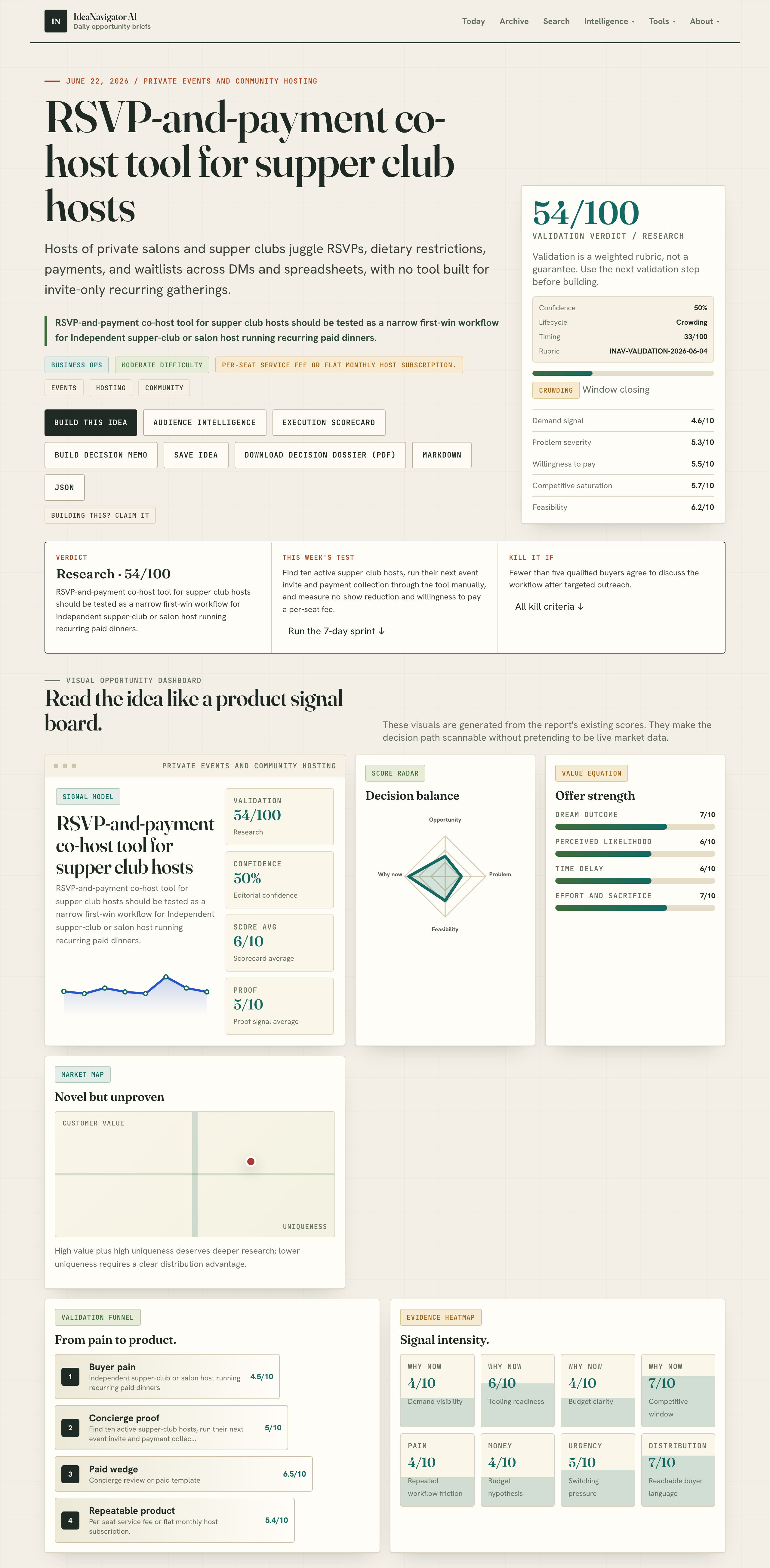
A new tool designed for independent supper club hosts is in testing to simplify RSVP, dietary notes, and payments for recurring private dinners. Its success could transform how small event hosts manage guest lists.
A new RSVP-and-payment co-host tool for independent supper club hosts is currently in testing, aiming to streamline guest management for recurring private dinners. This development could significantly reduce administrative burdens and improve event attendance for small-scale hosts.
The tool is designed specifically for hosts of private salons and supper clubs who run recurring paid dinners. It offers a simple dashboard that sends out invite links collecting RSVPs, dietary restrictions, and payments in a single step. The system then provides hosts with a confirmed guest list and a waitlist, simplifying event management.
According to the developers, the initial focus is on a narrow workflow to serve active supper-club hosts, with plans to validate the tool by running ten events and measuring its impact on no-shows and host willingness to pay a per-seat fee. The revenue model includes per-seat service fees or a flat monthly subscription for hosts.
Potential Impact on Small Event Hosting Efficiency
This tool could significantly ease the administrative burden for independent supper club hosts, allowing them to better manage guest lists, dietary needs, and payments without relying on manual messaging or spreadsheets. If successful, it could lead to higher attendance rates and more sustainable small-scale event hosting, filling a gap left by existing public-ticketing platforms.
RSVP and payment collection tool for private dinners
As an affiliate, we earn on qualifying purchases.
As an affiliate, we earn on qualifying purchases.
Growing Interest in Private Community Dinners
In recent years, in-person community dinners and salons have surged as alternatives to digital socialization, especially amid pandemic-related restrictions. However, existing hosting tools are often fragmented, relying on public ticketing sites or manual communication, which can be inefficient for private, recurring events. The new RSVP-and-payment tool aims to address this gap by offering a dedicated solution tailored for small, invite-only gatherings.
“The goal is to create a simple, integrated workflow that reduces no-shows and administrative hassle for hosts.”
— an anonymous researcher
supper club guest management software
As an affiliate, we earn on qualifying purchases.
As an affiliate, we earn on qualifying purchases.
Unconfirmed Details About Full Launch and Adoption
It is not yet clear when the tool will be fully launched or how widely it will be adopted by the target market. The testing phase is ongoing, and the broader impact remains to be seen as more hosts evaluate its effectiveness and willingness to pay.
As an affiliate, we earn on qualifying purchases.
Next Steps in Validation and Potential Expansion
Developers plan to run the initial test with ten active supper-club hosts, collect data on no-shows and user feedback, and decide on further development or scaling. Success in these early tests could lead to wider beta testing and eventual commercial release, with potential feature expansions based on user needs.
As an affiliate, we earn on qualifying purchases.
Key Questions
Who is the target user for this RSVP-and-payment tool?
The tool is designed for independent supper-club or salon hosts running recurring paid dinners, primarily small-scale, invite-only gatherings.
How does the tool improve event management for hosts?
It consolidates invitations, RSVP collection, dietary notes, and payments into a single workflow, providing hosts with a confirmed guest list and waitlist, reducing manual effort.
Is this tool available for general use now?
The system is currently in a testing phase with a small group of users; a full commercial launch has not yet been announced.
What are the revenue models being considered?
Possible revenue streams include per-seat service fees or a flat monthly subscription for hosts.
What challenges could affect the tool’s success?
Potential challenges include user adoption, integration with existing payment systems, and proving its effectiveness in reducing no-shows.
Source: IdeaNavigator AI
Fall Picks
fall essentials
As an affiliate, we earn on qualifying purchases.