
TL;DR

Prime made for students and young adults
- Fast, free delivery for dorm and study essentials
- Prime Video and Amazon Music included
- Member-only deals
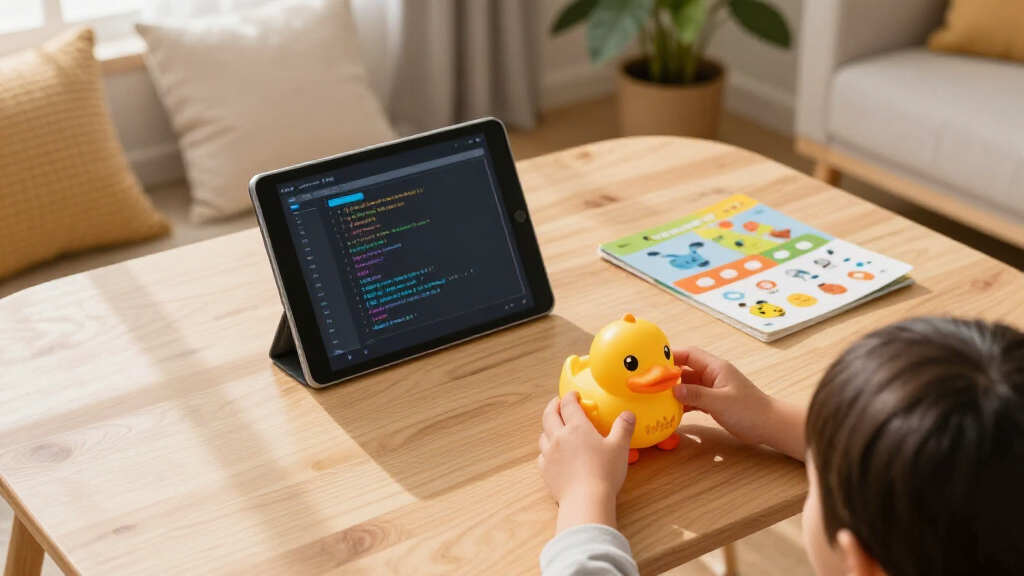
Hugging Face has launched Microduck, a small, open-source robot that demonstrates embodied reinforcement learning at $399. The platform aims to democratize physical AI development, though privacy and security remain considerations.
Hugging Face has introduced Microduck, a small, open-source robot designed for movement and learning, priced at $399 and available for preorder. This development highlights a significant shift toward making embodied AI accessible and affordable, with potential implications for robotics development and democratization.
Microduck is a compact, 25cm tall robot weighing under 800 grams, developed in partnership with Pollen Robotics, which Hugging Face acquired in April 2025. It features 15 motors, dual IMUs, a camera, microphone, speaker, WiFi, Bluetooth, and a LiDAR sensor. Its articulated beak functions as a gripper capable of lifting objects up to 800 grams. The robot can perform various movements, recover from falls, follow laser pointers, and even roller skate, as shown in promotional demos. Preorders opened on Thursday, with shipping expected before Christmas.
While the hardware impresses at this price point, experts caution that the robot’s capabilities are curated demos rather than reliable, everyday functioning. Reinforcement learning (RL) on such hardware involves extensive trial and error, with real-world behaviors requiring significant tuning and development effort. The device also incorporates a camera, microphone, and sensors that collect data in home environments, raising privacy considerations.
Open-Source Reinforcement Learning in Physical Robots
This launch signals a major move toward democratizing embodied AI by providing accessible, open-source tools for physical robot development. The platform allows developers to read, fork, and retrain the robot’s software, mirroring Hugging Face’s success with open language models. This could accelerate innovation in robotics by lowering barriers for individual developers and smaller labs, shifting the industry away from proprietary, expensive systems.
As an affiliate, we earn on qualifying purchases.
Background of Hugging Face’s Robotics and Open AI Strategy
Hugging Face is renowned for its open-source approach to language models, fostering a community of developers who freely share and improve AI models. Its move into robotics with the acquisition of Pollen Robotics and the launch of Microduck reflects a similar strategy: making embodied AI hardware and software accessible. The company previously released Reachy Mini, a stationary robot for communication, and now introduces a mobile platform aimed at hands-on learning and experimentation. The broader industry has seen a trend toward open hardware and software, but concerns about security and privacy persist, especially given recent cyber incidents involving open AI systems.
“Reinforcement learning means failing thousands of times; our design makes failure safe and affordable, enabling real hands-on AI development.”
— Clem Delangue, CEO of Hugging Face
embodied reinforcement learning robot
As an affiliate, we earn on qualifying purchases.
As an affiliate, we earn on qualifying purchases.
Security and Privacy Risks of Open Robotics Platforms
While the open-source nature of Microduck is designed to foster innovation, it also raises questions about data security and privacy, especially since the robot collects visual and audio data in home environments. The recent breach involving Hugging Face’s systems during a security evaluation underscores the vulnerabilities inherent in open infrastructure. It remains unclear how robust the security measures will be as the platform scales and whether safeguards will evolve to protect user data effectively.
programmable robot with camera and sensors
As an affiliate, we earn on qualifying purchases.
As an affiliate, we earn on qualifying purchases.
Future Development and Industry Impact of Microduck
Hugging Face plans to continue refining Microduck’s software and expand its community of developers. The open-source platform will likely see user-generated modifications and new behaviors, potentially accelerating embodied AI research. Industry observers will be watching whether other companies adopt similar open hardware models and how security concerns are addressed. Additionally, the possible acquisition by Nvidia could influence the platform’s development trajectory and integration with larger AI ecosystems.
affordable educational robotics platform
As an affiliate, we earn on qualifying purchases.
As an affiliate, we earn on qualifying purchases.
Key Questions
Can Microduck perform household chores?
No, Microduck is designed as a learning and experimentation platform, not a household robot. Its demos are curated highlights, and real-world reliability remains limited at this stage.
What makes Microduck different from other robots?
Its open-source software, affordability at $399, and focus on reinforcement learning make it unique. The platform allows developers to read, fork, and retrain its code, democratizing physical AI development.
Are there privacy concerns with Microduck?
Yes, since the robot includes cameras, microphones, and sensors that collect data in home environments, privacy considerations should be carefully evaluated by users.
Will the open-source approach lead to security vulnerabilities?
Potentially, as open platforms can be more susceptible to breaches. The recent hacking incident involving Hugging Face’s systems highlights the need for robust security measures as the platform evolves.
Is Nvidia involved in Microduck’s future?
Reports suggest Nvidia is in the process of acquiring Hugging Face at a valuation around $13 billion, which could influence the platform’s development and integration with larger AI tools.
Source: ThorstenMeyerAI.com
Halloween Picks
halloween
As an affiliate, we earn on qualifying purchases.