
📊 Full opportunity report: Incident postmortem builder for managed service providers on IdeaNavigator AI — validation score, market gap, and execution plan.
TL;DR
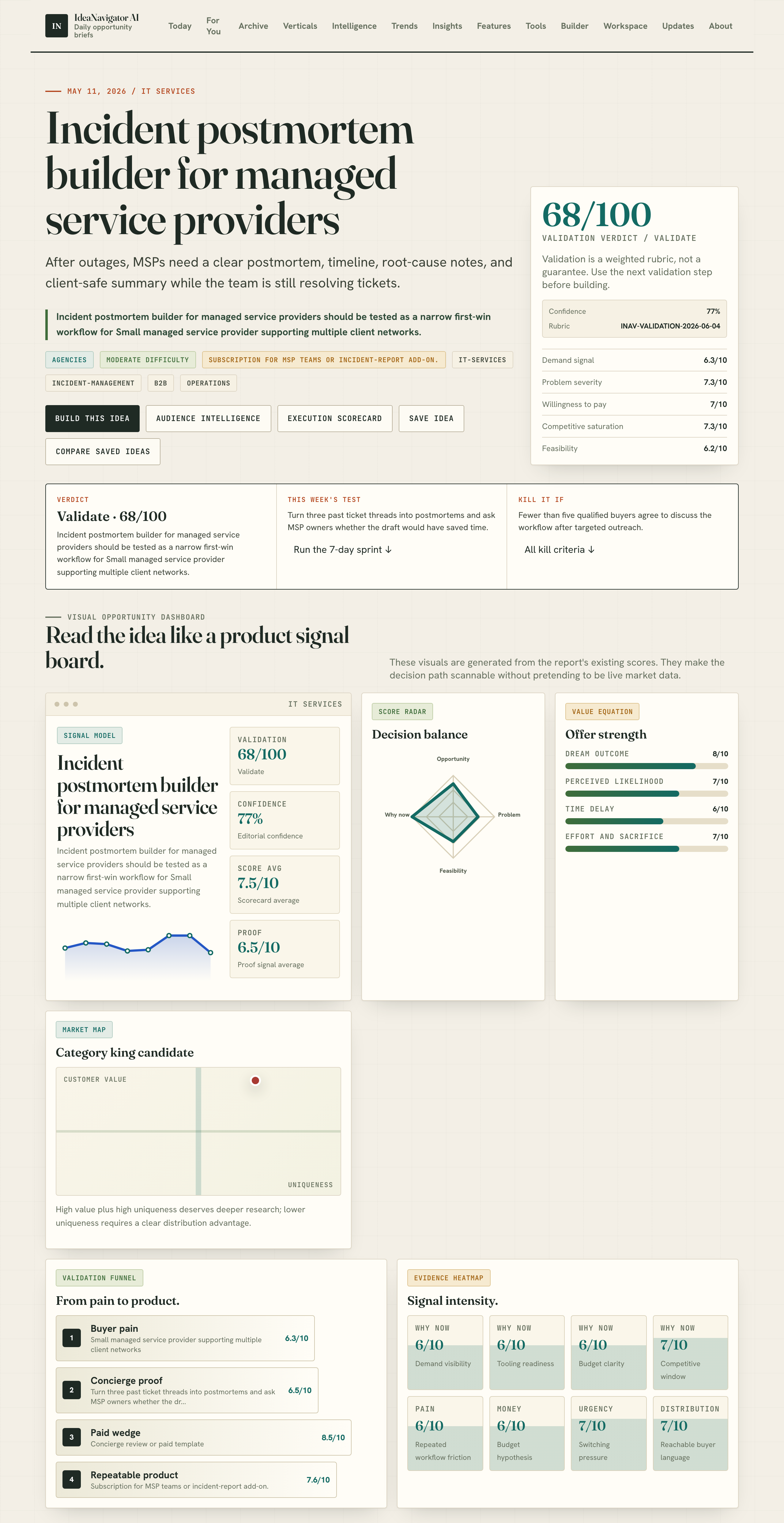
A startup is developing an incident postmortem builder aimed at small MSPs supporting multiple clients. The tool will help automate incident summaries, root cause notes, and next steps, with testing underway. Its success could improve incident communication and save time for MSP teams.
A new incident postmortem builder designed specifically for small managed service providers is in the testing stage, aiming to streamline incident reporting, root cause analysis, and client communication during outages.
The proposed tool targets small MSPs supporting multiple client networks, addressing a common challenge: producing clear, professional incident reports quickly while resolving ongoing tickets. It will import ticket notes, timestamp events, differentiate internal and client-facing language, and generate draft summaries with recommended next actions.
Developers plan to validate the MVP by converting three past ticket threads into postmortem drafts and seeking feedback from MSP owners on whether these drafts would have saved time during real incidents. The tool is expected to be offered via subscription or as an incident-report add-on, providing a new revenue stream for vendors targeting the IT services market.
Why Automated Postmortems Matter for Small MSPs
This development could significantly improve incident management efficiency for small MSPs, enabling faster, more consistent communication with clients during outages. It addresses a critical gap in post-incident reporting, which is often manual and time-consuming for smaller teams. If successful, it may set a new standard for incident documentation and client transparency in the MSP sector, enhancing professionalism and customer satisfaction.
incident management software for MSPs
As an affiliate, we earn on qualifying purchases.
As an affiliate, we earn on qualifying purchases.
Growing Demand for Incident Communication in MSPs
In recent years, clients of managed service providers have come to expect clear, professional incident communication, even from smaller providers. While large MSPs often have dedicated incident response teams and automation, smaller MSPs typically handle incident reports manually, which can delay client updates and impact trust. The current market gap has prompted startups to develop tools that automate parts of incident reporting, with the goal of saving time and improving quality.
This initiative follows broader industry trends toward automation and improved transparency in IT service management, with some vendors already offering incident management tools for larger organizations. The new builder aims to fill a niche for small MSPs, supporting their need for quick, professional incident summaries during outages.
“Automating incident postmortems could dramatically reduce the time MSPs spend on documentation during outages, freeing up resources for resolution.”
— an anonymous researcher
IT incident report automation tool
As an affiliate, we earn on qualifying purchases.
As an affiliate, we earn on qualifying purchases.
Unconfirmed Aspects of the Postmortem Builder’s Effectiveness
It remains unclear how accurately the MVP will replicate the quality of manual postmortems or how well MSPs will adopt the tool in practice. The validation process is still in early stages, and user feedback from initial testing is not yet available. Additionally, the long-term impact on client satisfaction and incident resolution times has not been established.
As an affiliate, we earn on qualifying purchases.
Next Steps for Development and Validation
The development team plans to complete initial testing by converting three past incidents into postmortem drafts, then gather feedback from MSP owners. Based on this input, they will refine the tool before broader rollout. Future milestones include expanding testing to more MSPs, integrating additional features, and exploring different pricing models. The ultimate goal is to establish the builder as a standard component of MSP incident management workflows.
IT service outage documentation tool
As an affiliate, we earn on qualifying purchases.
As an affiliate, we earn on qualifying purchases.
Key Questions
How will the incident postmortem builder improve MSP operations?
The tool aims to automate the creation of incident reports, reducing manual effort, speeding up communication, and ensuring consistency in client updates during outages.
What features will the MVP include?
It will import ticket notes, timestamp events, separate internal and client-facing language, and draft next steps for resolution.
When will the tool be available for wider use?
It is currently in testing, with broader deployment planned after validation and refinement based on initial feedback.
Will this tool replace existing incident management processes?
It is designed to complement current workflows by automating parts of the reporting process, not replace comprehensive incident handling.
How will MSPs pay for this service?
The planned revenue model includes subscriptions for MSP teams or optional incident-report add-ons.
Source: IdeaNavigator AI