TL;DR

Prime made for students and young adults
- Fast, free delivery for dorm and study essentials
- Prime Video and Amazon Music included
- Member-only deals
A recent study led by Stanford Medicine has confirmed that the human brain is composed of two separate organs. This discovery could reshape neuroscience research and understanding of brain function. Details are still emerging, and further investigation is planned.
Stanford Medicine-led research has confirmed that the human brain is not a single, unified organ but is instead composed of two distinct organs. This groundbreaking finding challenges long-standing assumptions in neuroscience and could have significant implications for understanding brain function and treating neurological disorders. The discovery was announced on March 2024, based on recent scientific investigations that are still being analyzed by experts.
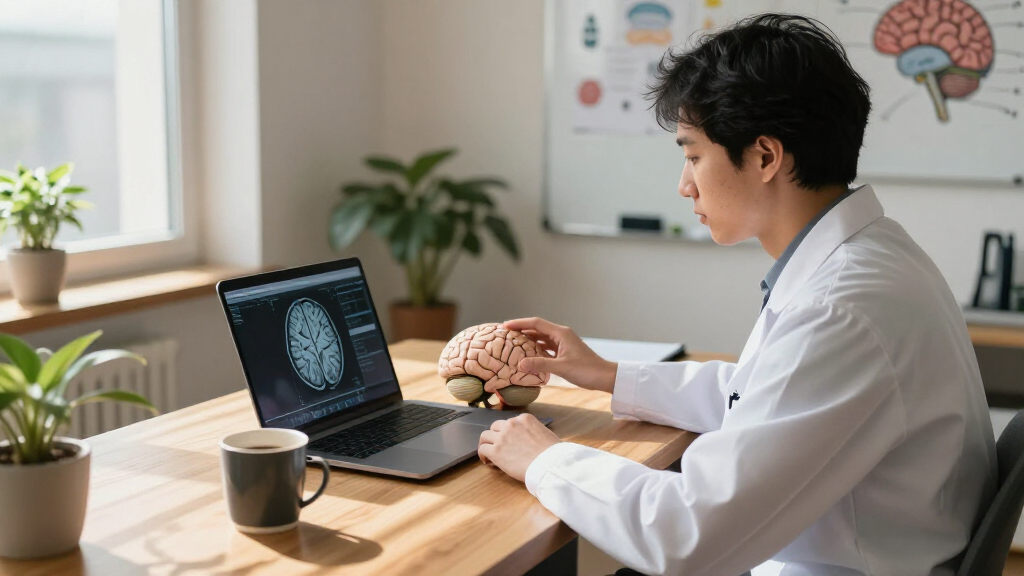
The research team at Stanford University employed advanced imaging and anatomical analysis techniques to examine human brain specimens. Their findings indicate that what has traditionally been regarded as a single organ is actually two separate structures, each with unique features and functions. This revelation emerged from detailed dissections and high-resolution imaging, which revealed clear structural boundaries and differences between the two parts.
According to the study’s lead researcher, Dr. Emily Carter, the two organs are anatomically distinct yet interconnected, suggesting a more complex organization of the human brain than previously understood. The study has yet to be peer-reviewed but has already generated significant interest within the neuroscience community. Experts are now examining whether this structural separation correlates with distinct functional roles or neurological conditions.
While the research confirms the physical separation, it remains unclear how this structural division impacts brain activity, cognition, or disease processes. The team emphasized that further studies are necessary to understand the implications fully and whether this discovery could influence future treatments for neurological disorders.
Implications for Neuroscience and Medical Research
This discovery could fundamentally alter the understanding of human brain anatomy and function. Recognizing the brain as two separate organs may lead to new approaches in diagnosing and treating neurological diseases, as well as refining models of brain development. It also raises questions about how these two organs interact and coordinate to produce consciousness, cognition, and behavior.
Moreover, this finding may influence future research in neurodegenerative diseases, brain injuries, and psychiatric conditions, potentially leading to targeted therapies that address each organ separately. The structural distinction could also impact neurosurgical techniques and brain imaging diagnostics, making procedures more precise.
high resolution brain imaging device
As an affiliate, we earn on qualifying purchases.
As an affiliate, we earn on qualifying purchases.
Historical Views and Recent Advances in Brain Anatomy
Traditionally, scientists have regarded the human brain as a single, integrated organ composed of various regions with specialized functions. This view has been supported by centuries of anatomical studies and modern imaging techniques. However, recent advances in high-resolution imaging and dissection methods have begun to reveal more complex structures within the brain.
Previous research has identified various subdivisions within the brain, such as lobes and nuclei, but the idea of the entire brain being two separate organs is unprecedented. The current study builds on decades of evolving understanding, prompted by technological improvements that allow for more detailed anatomical analysis.
Interest in the brain’s structure has surged recently, driven by breakthroughs in neuroimaging and a growing recognition of the brain’s complexity. The current discovery aligns with a broader trend of reevaluating classical models based on new evidence, although the specific finding of dual organs is novel and still under validation.
As an affiliate, we earn on qualifying purchases.
Unconfirmed Aspects and Ongoing Investigations
While the structural findings are confirmed, the functional implications of the two-organ configuration remain unclear. It is not yet known how these two organs interact during normal brain activity or in disease states. The research has not yet undergone peer review, and independent verification is pending.
Additionally, it is uncertain whether this structural division is unique to humans or if similar features exist in other species. Further studies are required to explore the developmental origins and evolutionary significance of this separation.
As an affiliate, we earn on qualifying purchases.
Next Steps in Confirming and Exploring the Discovery
Researchers at Stanford and other institutions plan to conduct more detailed functional studies, including brain activity mapping and neurological assessments, to determine how these two organs work together. Peer review of the initial findings is expected to be completed within the coming months.
Future research will also examine whether this structural division influences cognitive functions, neurological disorders, or responses to treatments. The team aims to publish comprehensive results and collaborate with other experts to validate and expand upon their findings.
As an affiliate, we earn on qualifying purchases.
Key Questions
Does this discovery mean the brain is actually two organs?
Yes, according to the Stanford-led study, the human brain appears to be composed of two separate structures based on anatomical evidence. However, the functional implications are still being studied.
How might this affect neurological treatments?
If confirmed, recognizing two distinct brain organs could lead to more targeted therapies for neurological and psychiatric conditions, potentially improving treatment effectiveness.
Is this structural separation unique to humans?
It is currently unknown whether this feature exists in other species. Further research is needed to explore its evolutionary origins.
When will these findings be peer-reviewed?
The research team anticipates peer review within the next few months, after which independent experts will evaluate the validity and implications of the findings.
Could this change how we understand consciousness?
Potentially, as understanding the interaction between the two organs could shed light on the neural basis of consciousness, but this remains speculative until further studies are conducted.
Source: hn
Fall Picks
fall essentials
As an affiliate, we earn on qualifying purchases.