📊 Full opportunity report: Home signal monitor: Mortgage Rates Inch to Another 6-Week Low on IdeaNavigator AI — validation score, market gap, and execution plan.

Get school and study supplies delivered free — and shop member deals
- Fast, free delivery on millions of items
- Access to Prime Big Deal Days deals on October 6–7
- Prime Video, Amazon Music and more included
TL;DR
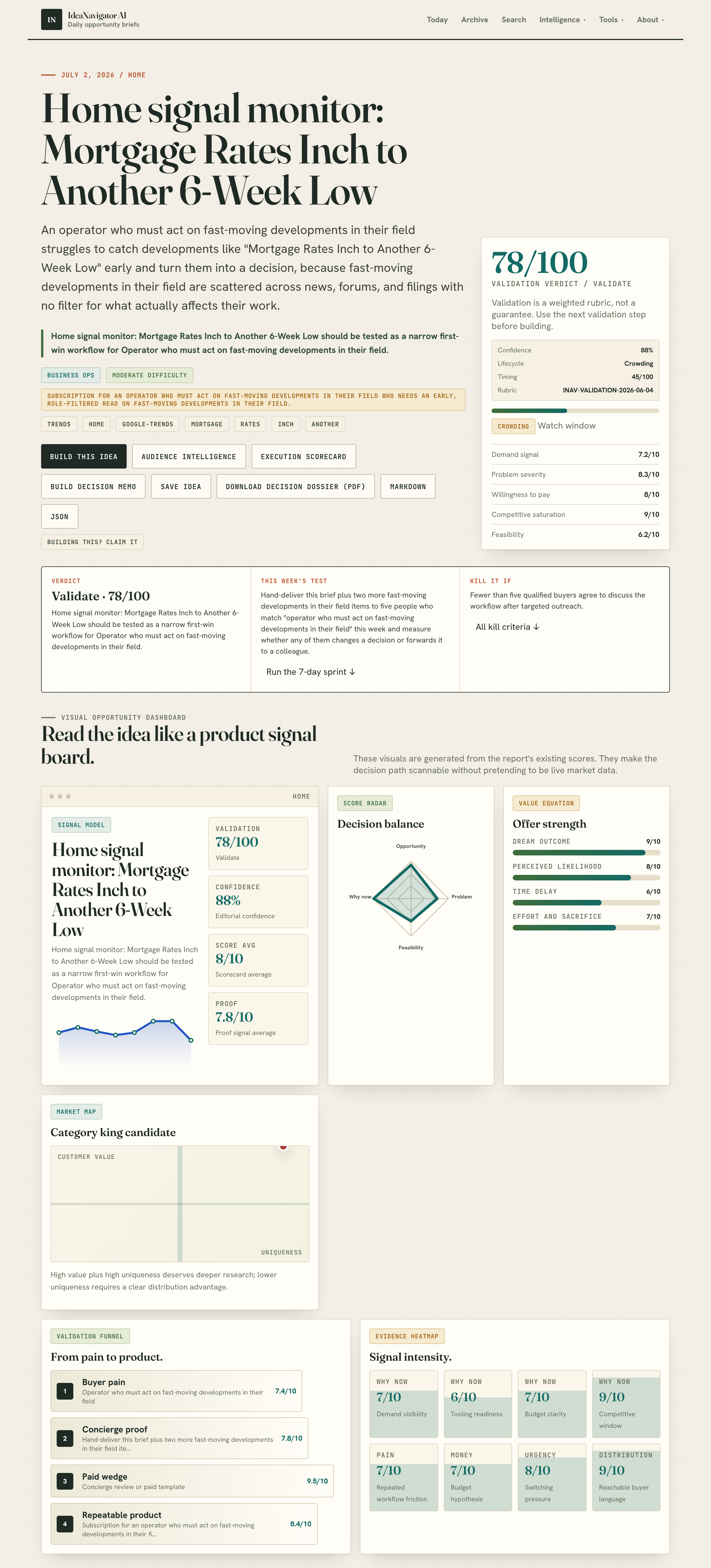
Mortgage rates have decreased to a new six-week low, marking a notable trend in borrowing costs. This development could influence housing affordability and market activity in the near term.
Mortgage rates have declined to their lowest point in six weeks, according to recent market data. This shift is significant for borrowers and the housing market, as it indicates a potential easing of borrowing costs amid changing economic conditions.
Data from mortgage market sources confirm that the average 30-year fixed mortgage rate has fallen to approximately 6.2%, the lowest since early February. The decline is attributed to recent shifts in bond yields and broader financial market trends, according to industry analysts.
Financial experts note that this decrease follows a period of rate stabilization after recent volatility caused by economic policy signals and inflation concerns. The movement is seen as a possible precursor to increased housing activity if rates continue to decline or stabilize at this level.
Implications for Borrowers and Housing Market Dynamics
This decline in mortgage rates could make home financing more affordable for prospective buyers, potentially boosting demand in the housing market. It also signals a possible shift in monetary policy expectations, which could influence future interest rate movements and economic outlooks.
Real estate professionals and financial analysts are watching whether this trend persists, as sustained lower rates might lead to increased home sales and refinancing activity, impacting overall market stability and housing affordability.
As an affiliate, we earn on qualifying purchases.
Recent Trends and Economic Factors Influencing Mortgage Rates
Mortgage rates have experienced fluctuations over the past few months, driven by changes in bond yields, inflation expectations, and Federal Reserve policy signals. The recent decline to a six-week low follows a period of rate stabilization after sharp increases earlier this year, which had dampened housing market activity.
Market observers note that this movement aligns with broader financial market trends, including a slight easing in bond yields amid economic data suggesting slower growth and cautious Federal Reserve signals on future rate hikes.
“If rates remain at these levels or decline further, we could see increased activity in home purchases and refinancing, providing a boost to the housing sector.”
— a mortgage market expert
home signal monitor for mortgage rates
As an affiliate, we earn on qualifying purchases.
As an affiliate, we earn on qualifying purchases.
Uncertainties Surrounding Future Rate Movements
It remains unclear whether this downward trend will persist beyond the current six-week low. Factors such as Federal Reserve policies, inflation data, and bond market movements could influence future mortgage rate directions, but no definitive forecasts are available at this time.
As an affiliate, we earn on qualifying purchases.
Upcoming Economic Data and Policy Signals to Watch
Market participants will closely monitor upcoming economic reports, inflation figures, and Federal Reserve statements for signs of further rate adjustments. Continued declines or stabilization at current levels could influence housing market activity in the coming months.
As an affiliate, we earn on qualifying purchases.
Key Questions
What caused mortgage rates to decline recently?
The decline is primarily attributed to shifts in bond yields and broader financial market trends, including economic data indicating slower growth and cautious Federal Reserve signals.
How might this affect homebuyers?
Lower mortgage rates could reduce borrowing costs, making home financing more affordable and potentially increasing demand for homes.
Is this a sign that mortgage rates will keep falling?
It is uncertain whether rates will continue to decline; future movements depend on economic data, Federal Reserve policies, and bond market developments.
When will we know if this trend continues?
Further rate movements will become clearer after upcoming economic reports and Federal Reserve communications, expected over the next few weeks.
Could this lead to a housing market boom?
If rates remain low or decline further, it could stimulate increased home buying and refinancing, potentially boosting market activity.
Source: IdeaNavigator AI
Halloween Picks
halloween
As an affiliate, we earn on qualifying purchases.