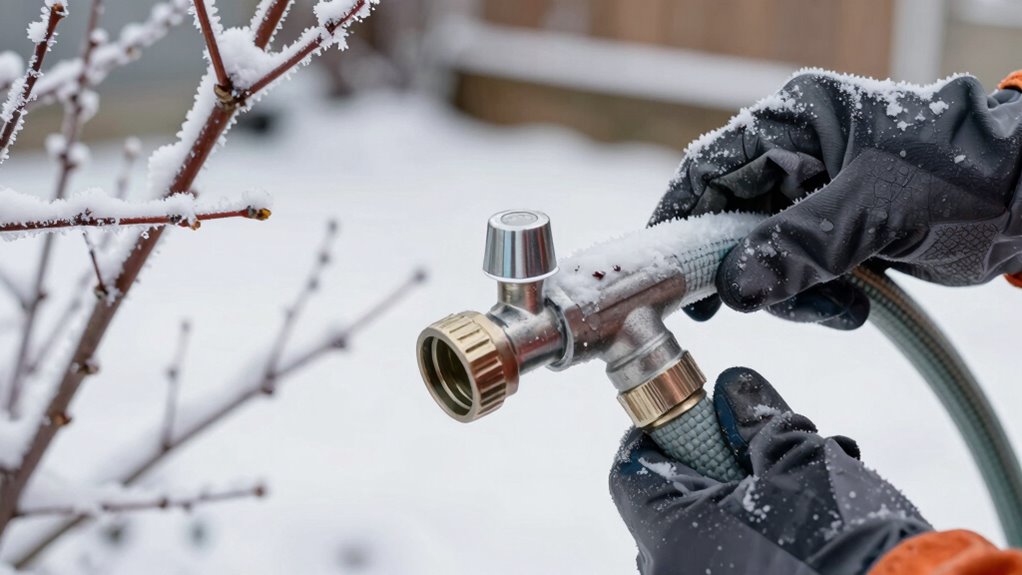

The most essential step in winterizing outdoor faucets is turning off your water supply and properly draining the system. This prevents leftover water from freezing, expanding, and causing cracks or pipe bursts. Make sure to disconnect hoses and open the faucet to drain any remaining water. After that, add insulation or covers for extra protection. Want to know the best ways to do this effectively? Keep exploring for all the tips you need.
Key Takeaways
- Turning off the outdoor water supply prevents water from freezing inside the pipes.
- Draining residual water from hoses and faucets reduces ice formation risk.
- Insulating faucets with foam covers or pipe insulation blocks cold air exposure.
- Covering faucets with insulated faucet covers adds an extra layer of protection.
- Regular inspections and repairs ensure the entire system remains winter-ready.

2Pack Outdoor Faucet Covers for Winter – Pro 6.7" W x 8.3" H Outdoor Water Faucet Cover Socks for Winter Freeze Protection Pipe Insulation Reusable Waterproof Insulated Spigot backflow Cover,Black
❄【High Compatibility】– Faucet covers for winter measures 6.7" W x 8.3" H, Works well with various faucet types,…
As an affiliate, we earn on qualifying purchases.
As an affiliate, we earn on qualifying purchases.
Why Outdoor Faucets Freeze in Winter and How to Prevent It
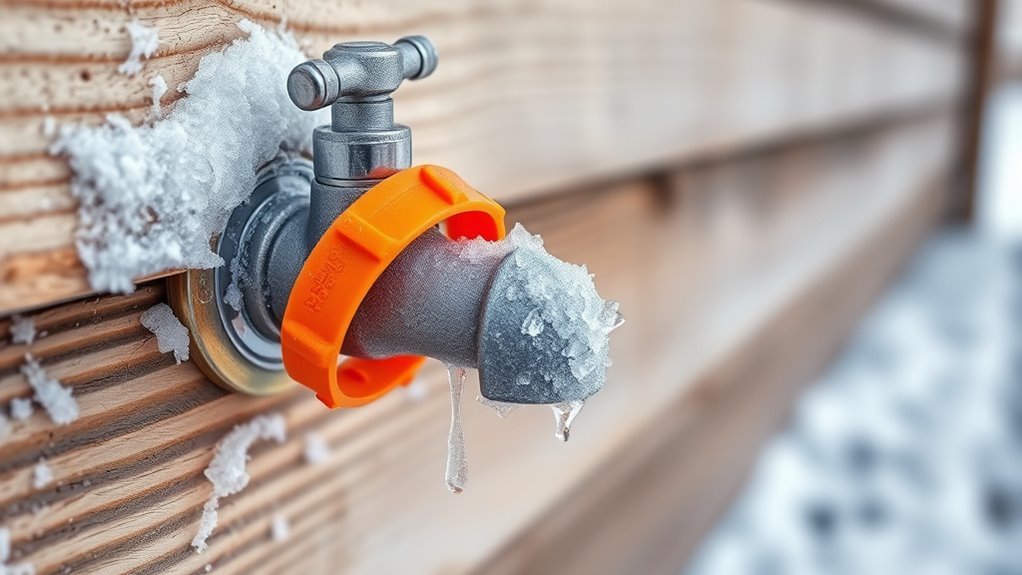
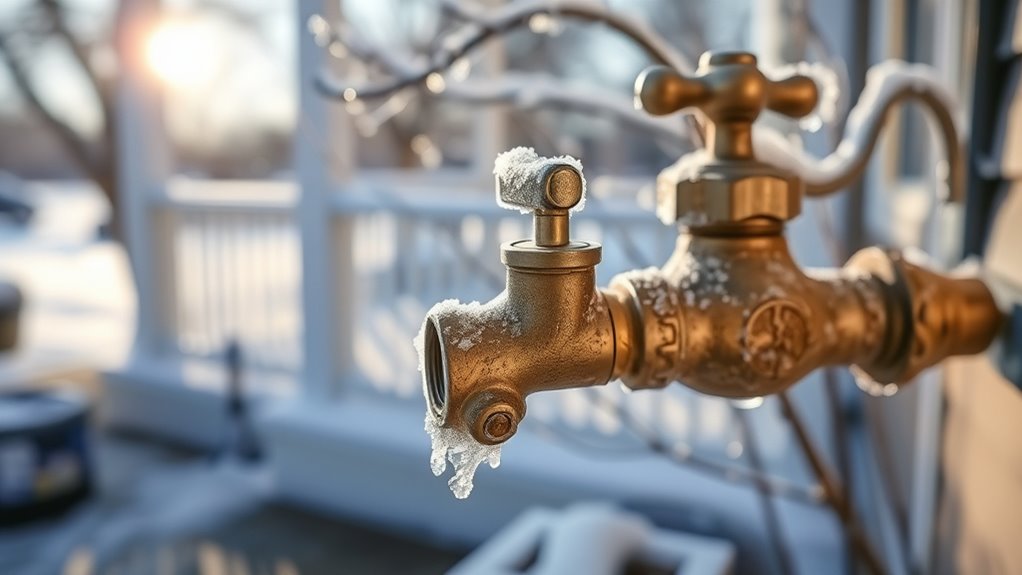
Outdoor faucets are vulnerable to freezing during winter because exposed water lines and insufficient insulation allow cold temperatures to quickly lower the water inside. When water inside the pipe freezes, it expands, which can cause the pipe to crack or burst. To prevent this, you should add pipe insulation around the water lines, creating a barrier against the cold. Additionally, using faucet covers provides extra protection by shielding the faucet from harsh weather and reducing heat loss. These covers are simple to install and inexpensive but highly effective. Proper insulation techniques can further enhance protection by minimizing heat transfer. By insulating pipes and covering faucets, you help keep the water inside from freezing, preventing costly repairs and water damage. Taking these small steps ensures your outdoor faucets remain functional throughout the winter.
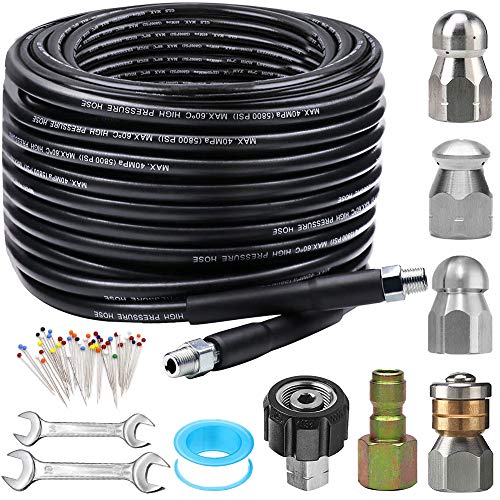
ZOFINE Sewer Jetter Kit for Pressure Washer 100FT, 5800PSI Drain Cleaner Hose 1/4 Inch NPT Corner, Rotating and Button Hose Sewer Jetting Nozzle Pearl Corsage Pin Waterproof Tape with 2 Spanner
【New Family Set 6 Heads Sewer Jetter Kit】We've included a variety of accessories you might use to make…
As an affiliate, we earn on qualifying purchases.
As an affiliate, we earn on qualifying purchases.
Key Methods to Winterize Outdoor Faucets Effectively
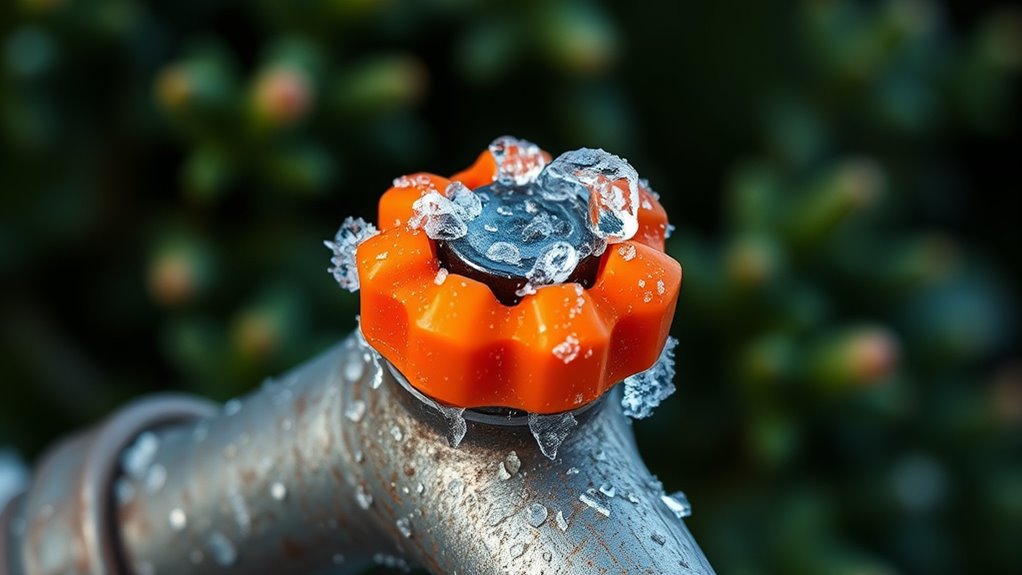
To winterize your outdoor faucets effectively, start by draining any remaining water to prevent freezing. Then, insulate external pipes and cover the faucet with a protective cover to keep cold air out. These simple steps help safeguard your faucets from winter damage and costly repairs. Additionally, consider turning off the water supply to outdoor faucets to further prevent leaks or bursts during freezing temperatures preventive measures.
Drain Remaining Water
Before winter arrives, it’s crucial to drain any remaining water from your outdoor faucets to prevent freezing and potential damage. Start by turning off the water supply and opening the faucet to let residual water escape. If you’ve stored hoses for the season, disconnect them and drain any water inside before storing them properly. This prevents water from freezing and causing damage to the hose or faucet. For faucets that need repair, ensure you fix leaks or cracks before winter, as trapped water can worsen damage during freezing temperatures. Use a wet/dry vacuum to remove stubborn water from the spout if necessary. Draining thoroughly reduces pressure on the faucet and helps avoid costly repairs come spring. Proper drainage is essential for protecting your outdoor plumbing investment. Implementing energy-efficient and sustainable solutions can further enhance your home’s resilience during winter months.
Insulate External Pipes
Insulating external pipes is a vital step in winterizing your outdoor faucets, as it helps prevent freezing and burst pipes. You can achieve this by applying pipe insulation or foam covers around exposed pipes. Proper insulation creates a barrier against cold temperatures, reducing the risk of damage. Additionally, ensuring your outdoor faucet setup is compatible with deep-sky imaging equipment can help monitor and assess winter protection effectiveness through visual inspection. Remember these key points:
- Use high-quality foam covers for maximum protection.
- Seal all gaps to prevent cold air from entering.
- Combine insulation with other winterizing measures for best results.
Cover With Faucet Covers
Covering your outdoor faucets with faucet covers is an effective way to shield them from harsh winter conditions. These covers provide vital winter protection by insulating the faucet and preventing freezing temperatures from causing damage. Choose sturdy, insulated faucet covers designed for outdoor use, and make certain they fit snugly around your fixtures. Before placing the covers, turn off the water supply and drain any remaining water from the faucet to minimize the risk of freezing. Secure the covers tightly to prevent cold air from seeping in, especially if your area experiences severe winters. Using faucet covers is a simple yet essential step to protect your outdoor plumbing, helping you avoid costly repairs and ensuring your outdoor faucets remain in good condition through the coldest months. Additionally, understanding how to test for leaks and insulation effectiveness can help ensure your winterization efforts are successful.

Duck Brand Foam Pipe Covers, Pipe Insulation Foam Tubes for Hot and Cold Water Pipes, Pre Slit and Self Sealing Adhesive Edge, 0.75 in. x 1 Ft., 6 Sticks Per Package, 6 Feet Total, Black
Duck Brand insulating foam pipe stick covers are great for insulating both hot and cold water pipes
As an affiliate, we earn on qualifying purchases.
As an affiliate, we earn on qualifying purchases.
The Most Important Step to Protect Your Faucet From Freezing

The most critical step to prevent your faucet from freezing is to guarantee all water is removed and the pipe is properly insulated. Water left inside can expand and cause cracks when temperatures drop, leading to costly repairs. By draining remaining water and insulating correctly, you give your outdoor faucet the best protection against winter damage. Additionally, incorporating smart plumbing technology can help monitor and maintain optimal conditions, reducing the risk of freezing issues.
Drain Remaining Water
Why is draining the remaining water from your outdoor faucet the most critical step in winterizing? Water left inside can freeze, expand, and crack the faucet or pipe, making frost prevention nearly impossible without proper drainage. To guarantee your faucet is fully drained, disconnect the hose, open the outdoor tap fully, and let the water flow out completely. This step prevents trapped water from freezing and causing damage. Remember, even small amounts of water can freeze and cause costly repairs. Using pipe insulation helps, but it won’t be effective if water remains inside. Proper drainage is essential for protecting your outdoor faucet from winter damage.
Insulate Properly
Have you considered that proper insulation is the most crucial step in preventing your outdoor faucet from freezing? Insulating your outdoor fixtures keeps the cold air from reaching the pipes and causing damage. Use foam faucet covers or wrap insulation tape around exposed outdoor fixtures, ensuring a tight seal. Don’t forget to insulate any accessible hoses and nearby pipes that connect to your outdoor faucet. Good garden maintenance involves regularly checking these insulations before winter hits. Proper insulation reduces the risk of freezing and bursting, saving you money and hassle later. It’s a simple yet essential step to protect your outdoor fixtures and prolong their lifespan. Taking the time to insulate correctly makes all the difference in winter-proofing your outdoor setup. Understanding insulation techniques can help you choose the most effective method for your outdoor fixtures.

Outdoor Faucet Covers for Winter 2 Pack, Foam Faucet Cover for Winter Freeze Protection, Reusable Outdoor Hose Bib Cover, Spigot Covers Winter Insulated
FROST-PROOF DESIGN: Specifically crafted for winter, our faucet covers provide a 1.5 cm insulating layer to shield your…
As an affiliate, we earn on qualifying purchases.
As an affiliate, we earn on qualifying purchases.
Turn Off Your Water Supply Correctly Before Winter
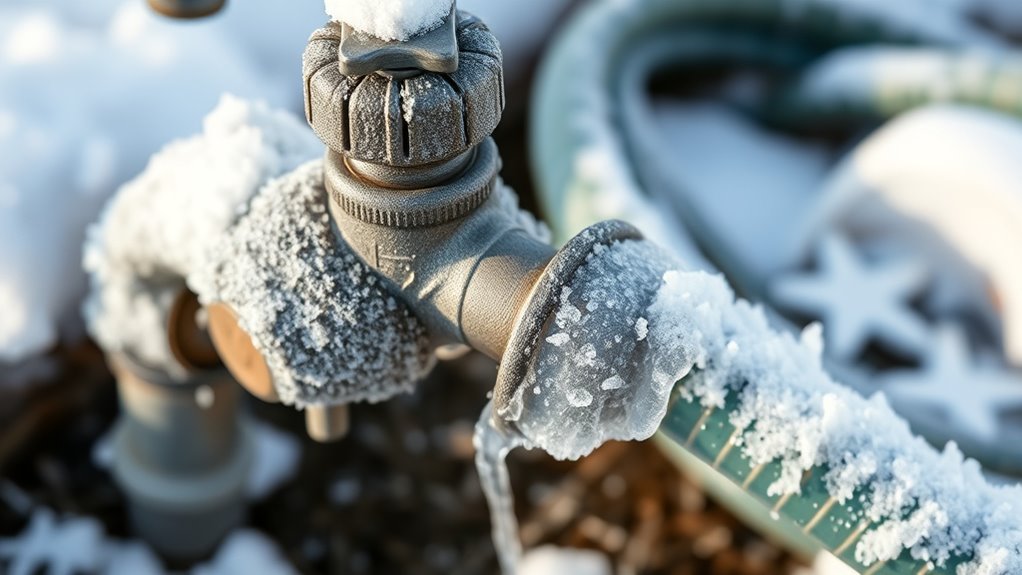
Before winter arrives, make certain you turn off your outdoor faucet’s water supply properly. Shutting off the water supply is a vital step in faucet maintenance to prevent freezing and damage. To do this correctly:
- Locate your outdoor water shutoff valve and turn it off completely.
- Open the outdoor faucet to drain any remaining water.
- Ensure no water is left in the pipe to avoid freezing.
- Consider installing a smart garage door opener to monitor and control your home’s security remotely during the winter months.
Taking these steps helps protect the integrity of your plumbing system. Remember, neglecting to properly turn off and drain your water supply can lead to costly repairs. Proper faucet maintenance not only prolongs the lifespan of your fixtures but also saves you money in the long run. Always double-check that the water supply is fully off before winter hits.
Drain Water From Your Faucet and Hose to Prevent Damage

To prevent freezing and potential damage, you need to drain water from your outdoor faucet and hose thoroughly. Water left in the hose or faucet can freeze, expanding and causing frost damage to the pipes or fittings. Start by disconnecting the hose and draining any remaining water completely. Open the outdoor faucet to allow water to escape and ensure no water is trapped inside. Use a flashlight if needed to check for hidden water pockets. Proper water drainage minimizes the risk of ice forming inside the pipes, which can lead to cracks or leaks. Taking this step now saves you from costly repairs later. Remember, thorough drainage is your best defense against winter frost damage to your outdoor plumbing system. Effective winterization involves ensuring all water is removed to protect your plumbing.
Add Insulation or Foam Covers to Keep Faucets From Freezing
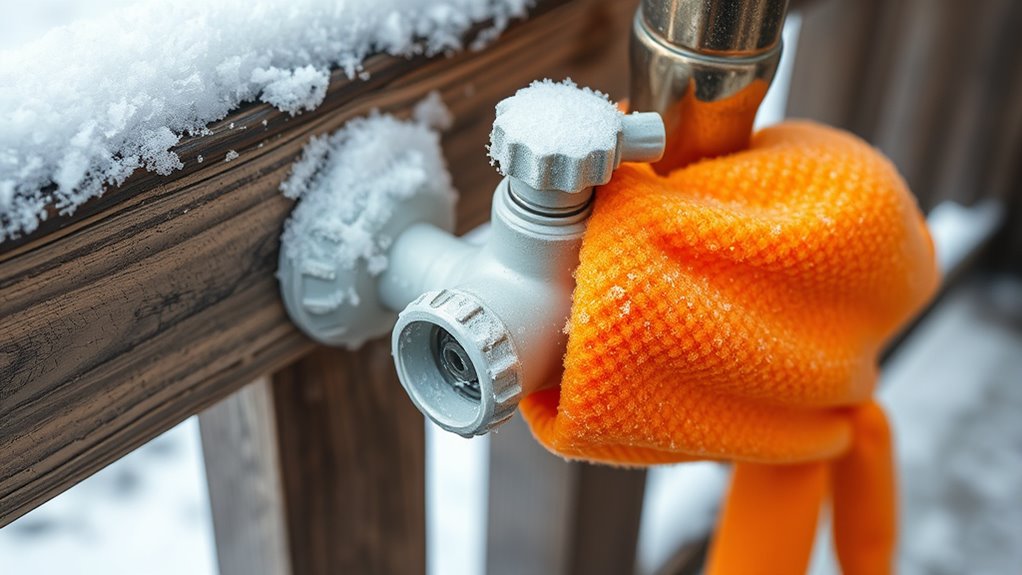
Once you’ve drained the water from your outdoor faucet and hose, adding insulation or foam covers can provide an extra layer of protection against freezing temperatures. Using insulation foam or sturdy faucet covers helps prevent the pipes from freezing and bursting. Make sure to securely fit the covers over your faucet, sealing out cold air. Consider these tips:
- Choose insulated foam covers designed specifically for outdoor faucets
- Ensure the covers fit snugly to prevent drafts
- Remove or replace covers if they become cracked or damaged
These covers are simple but effective, trapping heat and shielding your faucet from harsh winter weather. Proper insulation reduces the risk of costly repairs and keeps your outdoor plumbing safe during cold snaps.
Use a Weatherproof Cover for Extra Outdoor Faucet Protection
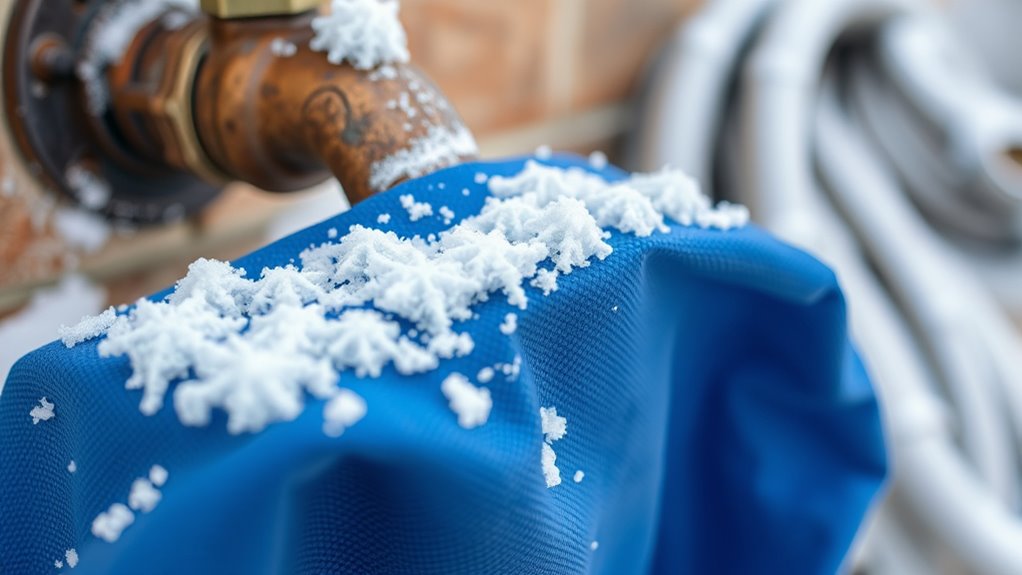
Using a weatherproof cover adds an extra layer of protection for your outdoor faucet. It prevents freezing damage by shielding the faucet from harsh winter elements. Plus, installing it is quick and simple, making winterizing your outdoor faucet hassle-free.
Prevents Freezing Damage
Freezing temperatures can cause your outdoor faucet to burst if not properly protected. Using a weatherproof cover is essential to prevent this damage and safeguard your outdoor plumbing. When you shield your faucet, you help maintain the integrity of your garden maintenance efforts during winter. A cover creates an insulation barrier that keeps cold air from reaching vulnerable parts, reducing the risk of frozen pipes.
Remember, the key benefits include:
- Protects against burst pipes and costly repairs
- Extends the lifespan of outdoor plumbing components
- Saves time and money on winter repairs
Easy Installation Process
Installing a weatherproof cover on your outdoor faucet is a straightforward process that can be completed quickly, even if you’re new to garden maintenance. First, turn off the water supply and drain any remaining water from the faucet. Then, slide the cover over the faucet, ensuring it fits snugly to block out moisture and cold air. Most covers are designed for easy installation without tools, making them ideal for quick winter prep. This simple step helps prevent freezing damage and reduces the need for costly plumbing repairs later. By taking just a few minutes to secure the weatherproof cover, you protect your outdoor faucet from harsh winter conditions and ensure your outdoor plumbing stays intact through the cold months.
Inspect for Leaks or Damage Before Cold Weather Sets In
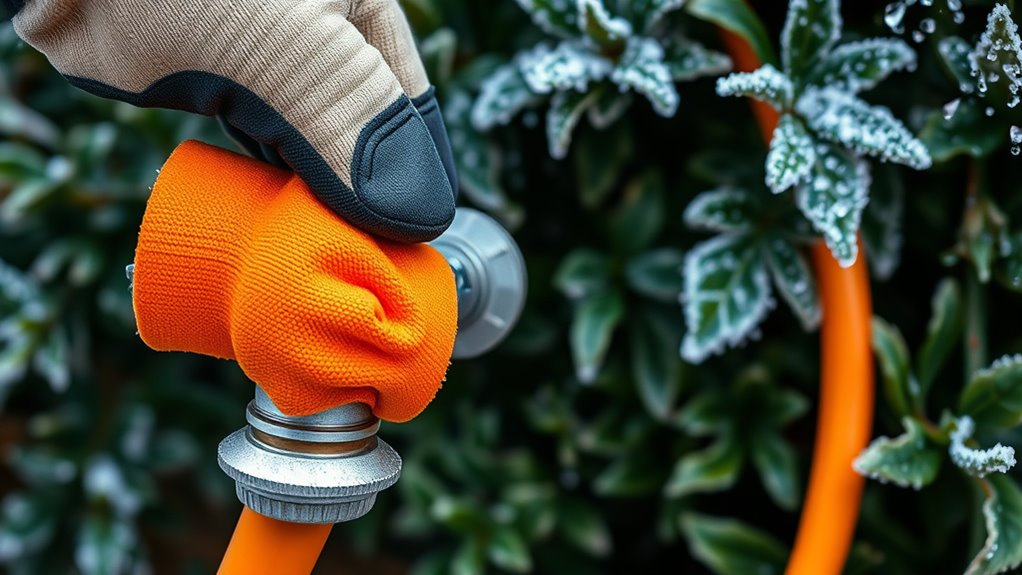
Before cold weather arrives, it’s important to inspect your outdoor faucets for leaks or damage. Conducting a thorough leak detection and damage assessment helps prevent costly repairs later. Look for signs like dripping, cracking, or corrosion around the spout and connections. Check the hose bibs and shut-off valves for any moisture or deterioration. To guarantee your faucets are winter-ready, focus on these key points:
- Tighten loose fittings to prevent leaks
- Replace damaged or cracked parts promptly
- Clear debris that could cause blockages or corrosion
Maintain Your Outdoor Faucets During the Cold Months
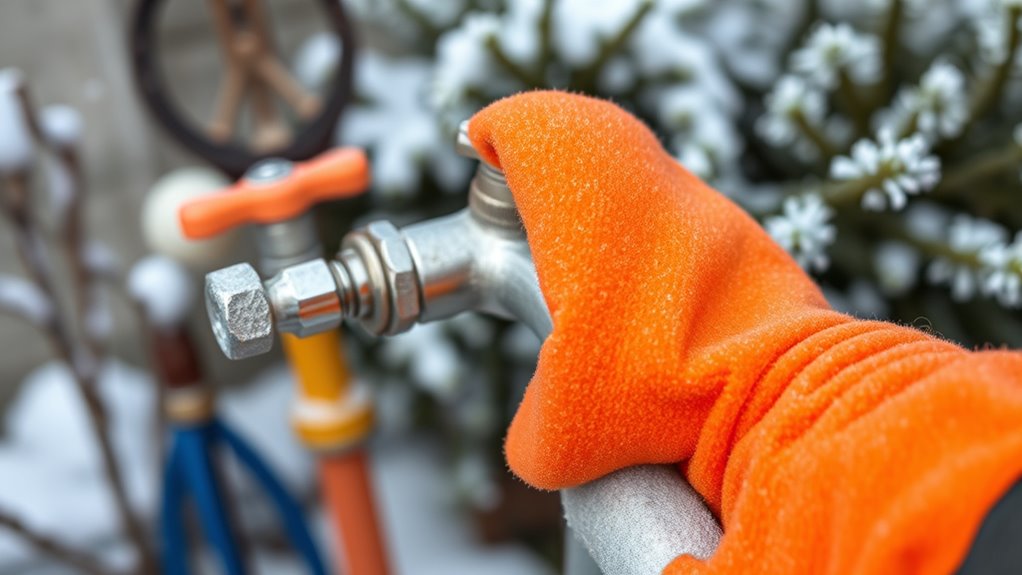
Once you’ve inspected your outdoor faucets for leaks or damage, maintaining them properly throughout the cold months is key to preventing winter-related issues. Regular garden maintenance during this time involves draining any remaining water from hoses and faucets, ensuring they stay dry and protected. Seasonal preparation also includes disconnecting hoses and covering faucets with insulated covers or foam, which helps keep them warm. These simple steps prevent freezing and cracking, saving you money and hassle later. Keep an eye on the weather forecast and perform these tasks before temperatures drop notably. By actively maintaining your outdoor faucets during winter, you reduce the risk of leaks or burst pipes, ensuring your outdoor plumbing stays in good shape until spring.
Know When to Call in a Professional for Winterizing Help
While many homeowners can handle basic winterizing tasks, there are times when calling in professional assistance becomes necessary. If your outdoor plumbing system is complex or you’re unsure about the process, seeking expert help guarantees proper seasonal maintenance. Professional technicians have the experience to identify hidden issues and prevent costly damage. Consider calling a professional if:
When in doubt, hire a professional to ensure your outdoor plumbing is winterized correctly.
- You’re unsure how to drain or insulate your outdoor faucets properly
- Your system involves multiple connections or underground lines
- You’ve experienced previous plumbing problems or leaks
Knowing when to enlist help saves you time and reduces the risk of winter damage. Investing in seasonal maintenance from trained professionals guarantees your outdoor faucets are winterized correctly, giving you peace of mind through the cold months.
Frequently Asked Questions
Can I Winterize Outdoor Faucets Without Turning off the Main Water Supply?
You shouldn’t winterize outdoor faucets without turning off the main water shutoff, as this prevents water from entering the faucet and causing damage. Once you shut off the main water supply, follow faucet drain procedures to remove any remaining water. This step is vital because it guarantees your outdoor faucet won’t freeze or burst, saving you from costly repairs come winter. Always prioritize shutting off the main water supply first.
What Are the Best Materials for Faucet Insulation Covers?
You should choose insulation covers made from durable materials like heavy-duty foam or rubber, which resist cracking and tearing. These insulation materials provide excellent thermal protection, preventing freezing. Look for covers with reinforced seams and weather-resistant coatings to guarantee cover durability over time. Properly insulated covers keep your outdoor faucets safe during winter, and their durable construction guarantees they’ll withstand harsh weather, offering reliable protection season after season.
How Often Should I Check Outdoor Faucets During Winter?
Think of your outdoor faucets as little sentinels guarding your home during winter. You should check them regularly, about once every week or two, during freezing temperatures. This faucet maintenance helps prevent frozen pipes and leaks. Conduct winter checkups to make sure your insulation covers are intact and drains are clear. Staying vigilant keeps your outdoor faucets safe and functional, saving you from costly repairs when spring arrives.
Are There Eco-Friendly Options for Winterizing Outdoor Faucets?
Yes, you can choose eco-friendly options to winterize outdoor faucets. Use sustainable insulation made from recycled or natural materials like straw or wool, which provide effective protection without harming the environment. Additionally, opt for eco-friendly pipe covers and sealants that are non-toxic and biodegradable. These choices help reduce your carbon footprint while keeping your outdoor faucets safe during winter. Always prioritize materials that are both effective and environmentally responsible.
What Signs Indicate My Outdoor Faucet Is Damaged From Freezing?
Like a silent clock unwinding, a damaged outdoor faucet shows subtle signs. You might notice faucet leaks that persist or water discoloration, hinting at internal damage. These symptoms symbolize the faucet’s struggle against freezing, revealing its weakened state. Don’t ignore these signs, as they indicate your faucet’s safety is compromised, risking further damage. Addressing these early hints can save you from costly repairs and ensure your outdoor plumbing stays resilient through winter.
Conclusion
Did you know that over 250,000 homes experience burst pipes each winter? By taking just one essential step—shutting off your water supply—you can prevent costly damage and protect your outdoor faucets. Regularly draining and covering them ensures they stay safe throughout the cold months. Don’t overlook this simple yet important task; it could save you hundreds in repairs and keep your home secure all winter long. Stay proactive and winterize your outdoor faucets today!