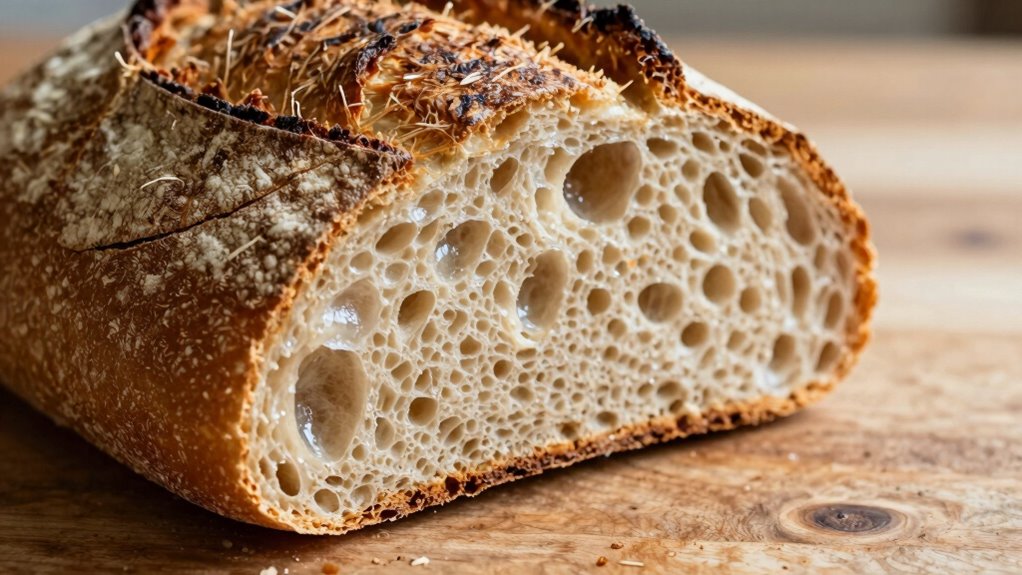

Bread goes stale mainly because of starch recrystallization, moisture migration, and temperature changes that alter its soft, fresh texture. As time passes, starch molecules realign into crystals, pulling water away from the gluten network and making the bread dry and coarse. Moisture shifts from the crumb to the crust, speeding up this process. If you want to understand what causes this and how to prevent it, there’s more to uncover below.
Key Takeaways
- Bread goes stale mainly due to starch molecules recrystallizing over time, which leads to a dry, crumbly texture.
- Crystallization of sugars and formation of ice crystals damage cellular structure, causing gritty mouthfeel.
- Moisture migrates from the crumb to the crust, reducing softness and accelerating staling.
- Cooler temperatures speed up starch retrogradation, making bread go stale faster, especially in refrigeration.
- Proper storage methods, like airtight packaging and controlled humidity, can delay the staling process.
airtight bread storage container
As an affiliate, we earn on qualifying purchases.
As an affiliate, we earn on qualifying purchases.
The Role of Starch in Bread Freshness
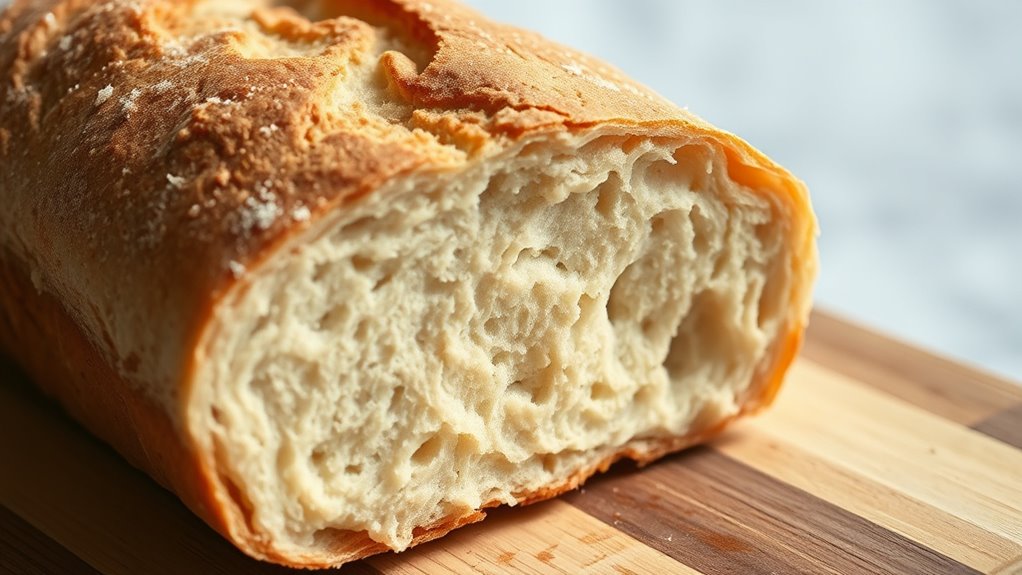
Starch plays an essential role in maintaining bread’s freshness because it interacts with water to influence the bread’s texture over time. As bread cools, starch molecules begin to absorb moisture, which affects the overall softness. A well-formed gluten network helps trap water inside the crumb, keeping it moist longer. When yeast activity occurs during baking, it creates gas that expands the dough, but it also impacts starch behavior by aiding in its gelatinization. This gelatinization makes starch more capable of holding water, helping the bread stay tender. Over time, however, starch starts to recrystallize, pulling water away from the gluten network. This process diminishes the bread’s freshness, leading to staleness. Recognizing the process of starch recrystallization is crucial for understanding how bread becomes stale and how to prevent it. So, starch’s interaction with water and its connection to the gluten network are key to bread’s initial softness and eventual staling. Additionally, understanding the starch gelatinization process can help bakers optimize baking techniques to prolong freshness. Recognizing how starch recrystallization occurs can also inform better storage methods to maintain bread quality longer. Moreover, controlling temperature and humidity during storage can slow down the recrystallization process, extending the bread’s enjoyable texture.
As an affiliate, we earn on qualifying purchases.
How Crystallization Affects Stale Bread
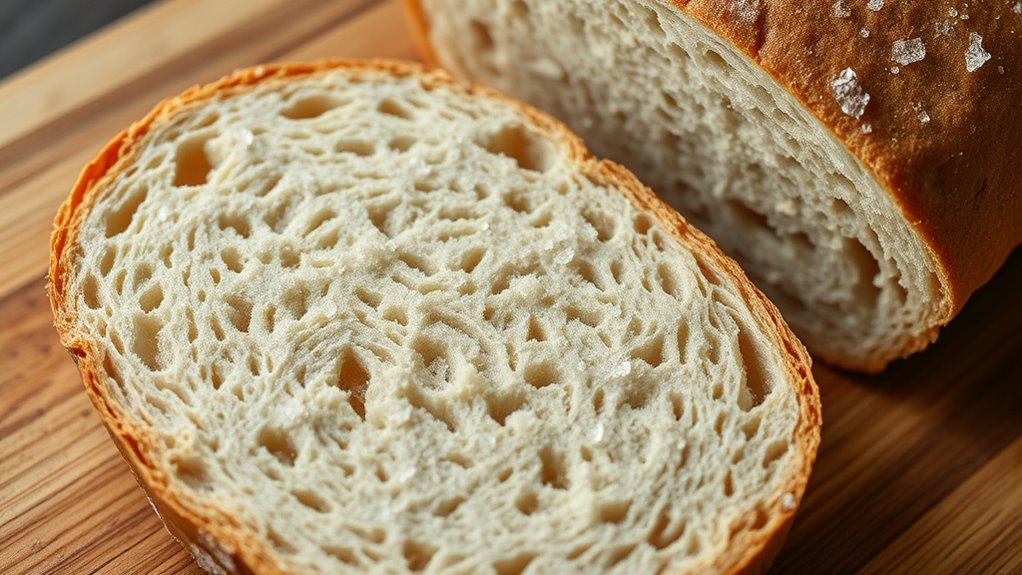
As bread stales, sugar molecules start clumping together, forming tiny crystals that we can’t see. Ice crystals also develop inside the bread, further altering its structure. These changes make the texture gritty and less enjoyable to eat. Understanding free floating moisture can help prevent this crystallization process from accelerating. Proper storage techniques can maintain the bread’s freshness and inhibit moisture migration, which is crucial in delaying staling. Additionally, controlling the solar energy exposure can influence the rate of moisture loss and crystallization in baked goods. Maintaining the right humidity levels in storage environments can further slow down the crystallization process and preserve bread quality. Regularly monitoring air purifier conditions can also help maintain optimal humidity and prevent excess moisture loss.
Sugar Molecules Clump Together
When bread goes stale, sugar molecules inside it start to clump together, forming tiny crystals that disrupt its texture. This process, known as sugar clustering, occurs as part of bread aging, affecting its softness and mouthfeel. As the sugar molecules migrate and cluster, the crystalline structures grow, making the bread feel gritty and dry. To understand this better, consider these points:
- Sugar molecules become mobile during storage, leading to crystallization.
- Clumping interferes with the bread’s moisture retention, accelerating staling.
- The crystalline deposits result from the natural tendency of sugars to seek stability over time.
Ice Crystal Formation Occurs
Ice crystals form in bread when moisture within the crumb freezes during storage, especially at low temperatures. As the water within the bread crumb turns to ice, it causes cellular damage, disrupting the structure of the bread. This crystallization process leads to a loss of freshness, making the bread feel stiff and dry. When freezing, ice crystals can also affect crust formation, as they push against the crust and cause it to become tough or develop cracks. Over time, repeated freeze-thaw cycles worsen this effect, further degrading texture. The formation of ice crystals fundamentally pulls moisture away from the bread’s interior, accelerating staling. Additionally, moisture migration during storage can contribute to uneven crystallization and texture changes. Understanding this process helps explain why bread stored improperly or frozen for too long loses its soft, fresh qualities. Proper storage methods can help minimize crystal growth and preserve bread freshness longer.
Texture Becomes Gritty
Crystallization not only dries out bread but also transforms its texture into a gritty, unpleasant sensation. As starch molecules form tiny crystals, they damage the gluten network that once kept the bread soft and cohesive. This process disrupts the bread’s structure, making it feel coarse and rough on your tongue. Additionally, reduced yeast activity during storage slows fermentation, which can influence moisture retention and texture. To understand this better:
- Crystallized starches create a gritty feel by damaging the gluten network.
- The breakdown of the gluten structure diminishes bread’s smoothness and elasticity.
- Slowed yeast activity affects moisture balance, contributing to a dry, crumbly texture.
This combination results in the gritty, stale sensation you experience when bread ages.
bread freshness preservation bag
As an affiliate, we earn on qualifying purchases.
As an affiliate, we earn on qualifying purchases.
Moisture Migration and Its Impact on Texture
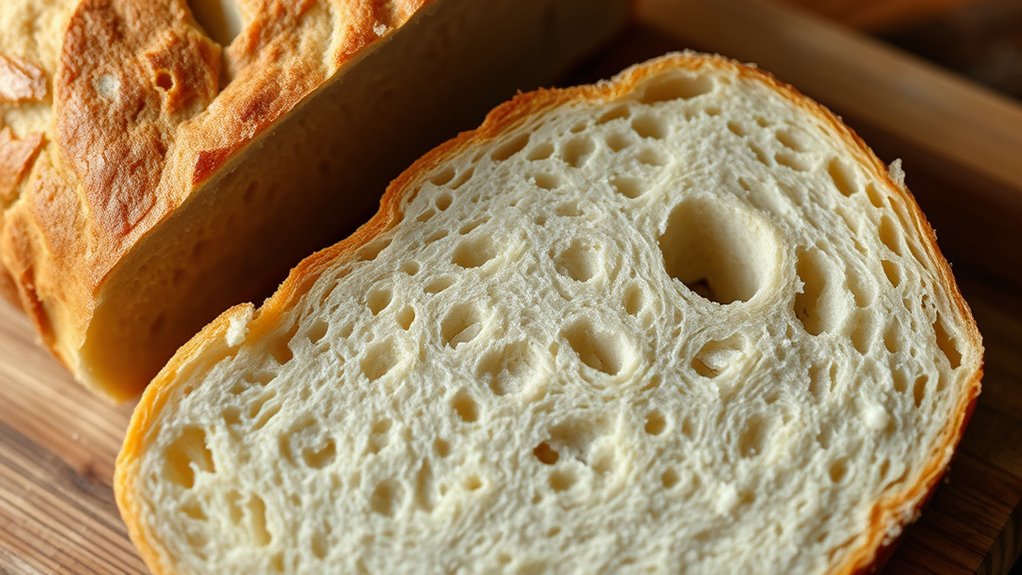
As time passes, moisture moves within the bread, impacting its texture and freshness. This movement causes the crumb to become dry and crumbly while the crust can soften or become tough. Understanding these moisture dynamics helps explain how bread’s texture changes as it ages. Additionally, color accuracy in bread can influence how we perceive freshness and quality. Recognizing the role of moisture migration can also guide better storage practices to maintain bread’s ideal texture longer. Monitoring storage conditions is essential to control moisture levels and prolong freshness effectively.
Moisture Movement Dynamics
Moisture migration plays a crucial role in how bread’s texture changes over time. As the bread ages, moisture moves from the moist interior to the drier crust, affecting its softness and crumb structure. This movement depends on the integrity of the gluten network, which acts as a barrier to moisture flow. During the fermentation process, gluten develops a strong, elastic matrix that influences how moisture disperses. If the gluten network weakens or becomes damaged, moisture migration speeds up, causing the bread to become stale faster. Understanding the dynamics involves considering:
- The moisture gradient between crumb and crust
- The elasticity of the gluten network
- The effects of storage conditions on moisture flow
These factors collectively determine how moisture shifts and impacts bread’s texture over time.
Texture Changes Over Time
When moisture migrates from the bread’s moist interior to its drier crust, your bread’s texture begins to change noticeably over time. As moisture shifts, the crumb becomes firmer and less tender, while the crust hardens. Yeast fermentation during baking creates a network of gluten development, giving the bread its structure, but over time, moisture loss weakens this network. This process is influenced by the quality of ingredients and storage conditions, which can accelerate or slow staling. Proper storage methods can help slow down moisture migration, but cannot prevent it entirely. In addition, air circulation around stored bread can increase moisture loss, further impacting texture. This results in a drier, more crumbly texture. The gluten’s elasticity diminishes as moisture escapes, causing the bread to become tougher. Even if stored properly, ongoing moisture migration and the natural breakdown of gluten contribute to staling. Additionally, temperature fluctuations can further impact the rate at which these changes occur. Ultimately, these processes make your bread less soft and more brittle, transforming its ideal texture into something less appealing the longer it sits.
bread storage with moisture lock
As an affiliate, we earn on qualifying purchases.
As an affiliate, we earn on qualifying purchases.
The Effect of Temperature on Bread Preservation

Temperature plays a vital role in how quickly bread goes stale. When bread is stored below room temperature, starch retrogradation slows, delaying staling. Conversely, warmer temperatures accelerate moisture migration, leading to faster staling or mold growth. Proper bread packaging helps maintain optimal temperature and humidity levels, extending freshness. To preserve bread effectively, consider these factors:
- Store bread in a cool, dry place or in the refrigerator to slow down staling.
- Use bread preservatives or natural alternatives to inhibit mold and microbial growth.
- Avoid exposing bread to direct sunlight or high heat, which speeds up moisture loss and spoilage.
- Understanding temperature’s impact on bread preservation can help you select the best storage methods and additives for longer-lasting freshness. Keeping the storage environment consistent can also prevent moisture migration, which is key to maintaining bread quality. Additionally, employing proper packaging techniques can further regulate temperature and humidity levels, enhancing preservation efforts. Maintaining a stable temperature environment can also reduce the risk of microbial growth, ensuring bread stays safe and fresh longer. Being aware of storage conditions allows for better control over bread freshness and safety.
The Science Behind Retrogradation of Amylopectin
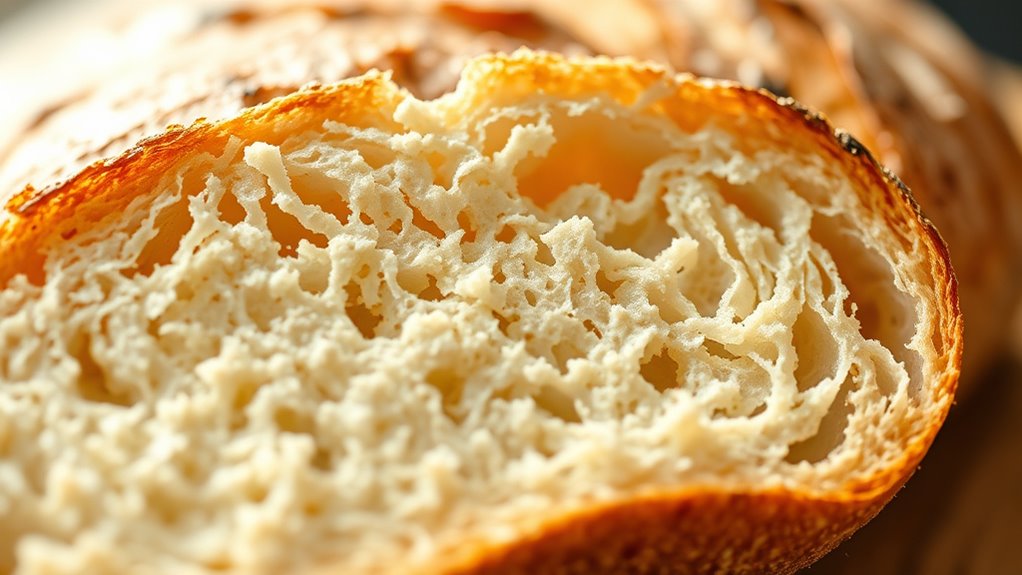
Amylopectin’s crystalline structure causes bread to become stale over time. When temperature changes, these crystals realign and grow, speeding up the staling process. Moisture also influences retrogradation, as it affects how these crystals form and how quickly bread loses its freshness. Understanding the science behind these processes can help optimize storage conditions to slow down the staling process.
Amylopectin’s Crystalline Structure
Amylopectin, a highly branched component of starch, has a crystalline structure that plays a key role in bread staling. Its unique arrangement allows for amylopectin crystallization, which promotes starch retrogradation over time. This crystallization process causes the starch molecules to realign into ordered structures, making the bread feel firmer and less moist. The crystalline regions form as water migrates away from the gelatinized starch, solidifying the structure. Understanding amylopectin’s crystalline structure reveals how it directly influences staling. Specifically:
- The degree of amylopectin crystallization affects the rate of starch retrogradation.
- Crystalline regions hinder water mobility, contributing to dryness.
- The stability of these regions determines how quickly bread loses freshness.
This insight explains why bread becomes stale, driven by amylopectin’s crystalline behavior.
Temperature and Retrogradation
As starch molecules, especially amylopectin, crystallize during storage, external conditions influence how quickly this process occurs. Temperature plays a key role: higher temperatures slow retrogradation, while cooler ones accelerate it. When bread cools after baking, amylopectin chains begin to realign, forming crystalline structures that cause staling. During this time, the fermentation process ceases, and gluten development stabilizes, but retrogradation continues. Maintaining ideal storage temperature can delay staling, preserving freshness longer. The following table illustrates how different temperatures affect retrogradation rates:
| Temperature | Retrogradation Rate | Effect on Bread Quality |
|---|---|---|
| 4°C | Fast | Stale quickly |
| 10°C | Moderate | Slight staling |
| 20°C | Slow | Longer freshness |
| 25°C | Very slow | Extended shelf life |
| 30°C | Minimal | Preserves softness |
Moisture’s Role in Staling
Moisture considerably influences the process of bread staling by affecting the structure and mobility of starch molecules. When bread loses moisture, amylopectin molecules retrograde more readily, causing the bread to become firm and crumbly. The gluten network plays a vital role by trapping water, maintaining softness, and slowing retrogradation. During the fermentation process, excess moisture encourages enzyme activity, which can modify starch structure and impact staling rate. To understand this better:
- Adequate moisture levels help preserve the gluten network, keeping bread moist and delaying staling.
- Reduced moisture accelerates amylopectin retrogradation, making bread stale faster.
- Proper storage prevents moisture loss, minimizing starch reorganization and maintaining freshness longer.
Mold and Bacterial Growth vs. Staling
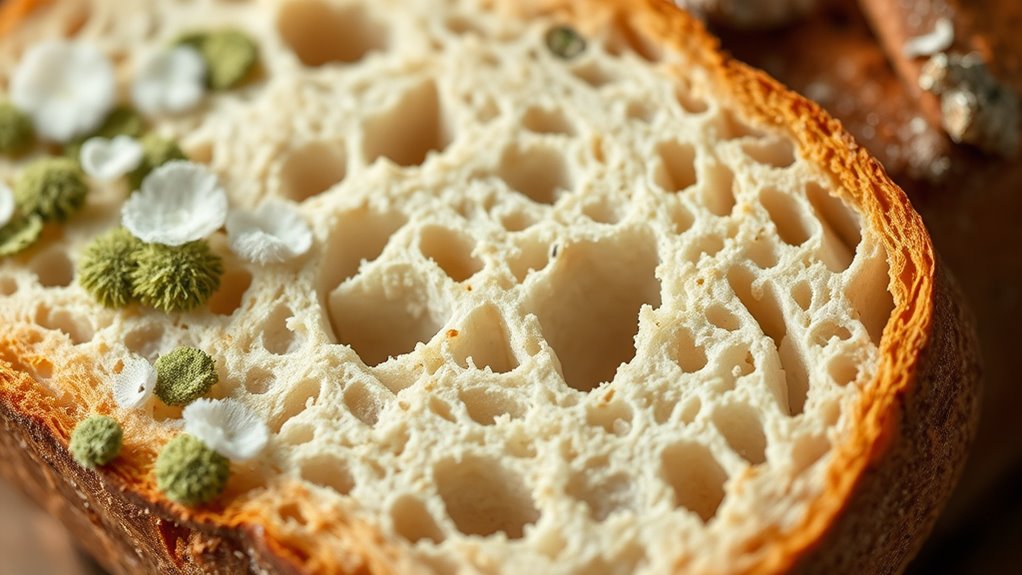
While mold and bacteria can quickly spoil bread, their growth is a different process from staling. Mold and bacteria thrive in moist, warm environments, leading to visible spoilage that makes bread unsafe to eat. Their growth depends on yeast activity and moisture content, which can accelerate decay if not properly preserved. Staling, however, is a chemical and physical change within the bread’s starches and proteins, causing it to lose moisture and become firm. You can prevent mold and bacterial growth by storing bread in a cool, dry place or freezing it, but bread preservation doesn’t stop staling entirely. Recognizing the difference helps you understand that while mold indicates spoilage, staling is a natural, gradual process that affects texture and freshness over time.
The Influence of Flour Type and Baking Method
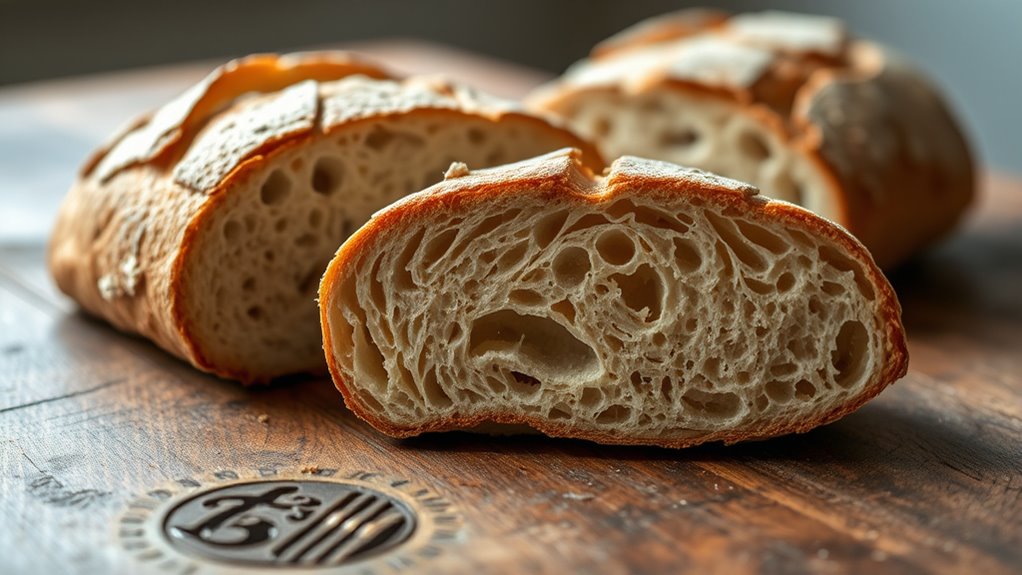
The type of flour and the baking method you choose directly influence bread’s texture, flavor, and shelf life. Different flours, such as bread or pastry flour, create varying gluten networks that affect structure and moisture retention. The fermentation process plays a pivotal role in developing flavor and gluten strength, which impacts staling rates. Your baking technique—whether kneading or steaming—further shapes the bread’s crumb and crust, influencing how quickly it loses freshness. To optimize freshness, consider these factors:
- Flour protein content determines gluten network strength.
- Longer fermentation enhances flavor and gluten development.
- Baking methods affect moisture retention and crust formation.
How Storage Conditions Accelerate or Delay Staling

Proper storage conditions can markedly influence how quickly bread goes stale. If you store bread in a cool, dry place, it slows moisture loss and staling. Conversely, exposure to heat or humidity accelerates spoilage. Packaging innovations, like resealable bags or vacuum-sealed containers, help maintain freshness by reducing air exposure and moisture exchange. Some breads contain artificial preservatives, which can further delay staling by inhibiting mold growth and moisture migration. Avoid storing bread in the refrigerator, as cold temperatures speed up starch retrogradation, leading to faster staling. Instead, keep it at room temperature if you plan to consume it soon. Proper packaging and controlled environment are key to extending bread’s freshness, while poor storage conditions hasten the staling process.
Techniques to Keep Bread Fresher Longer
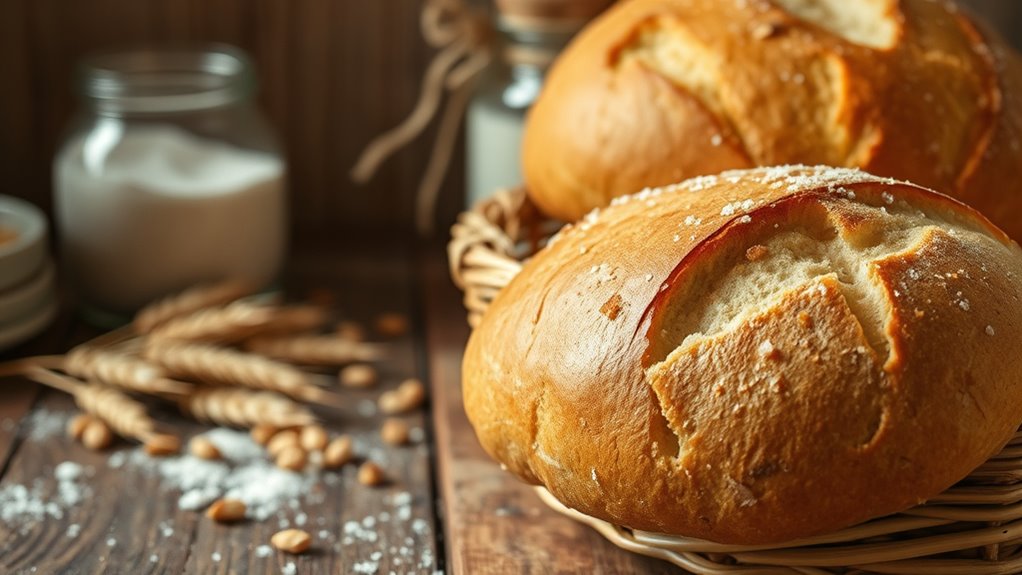
To keep bread fresh for longer, you should focus on effective storage techniques that slow down moisture loss and staling. Proper bread packaging helps maintain humidity and prevent exposure to air, which accelerates staling. Additionally, choosing the right storage location, such as a cool, dry place, minimizes crust hardening. To enhance crust preservation, avoid wrapping bread too tightly, which can trap moisture and promote mold growth. Instead, consider these techniques:
- Store bread in a paper bag or cloth bread box to balance moisture and crust texture.
- Use airtight containers for longer-term storage, ensuring minimal air exposure.
- Keep bread away from direct sunlight and heat sources to prevent drying out and crust hardening.
Implementing these methods ensures your bread stays fresher and crust remains appealing longer.
Innovative Solutions to Prevent Bread From Going Stale
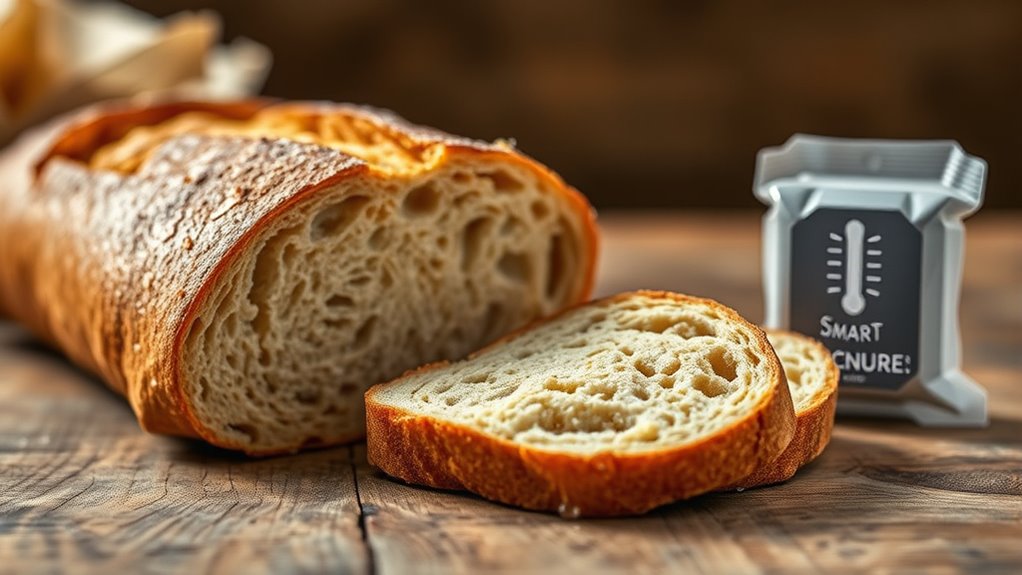
Innovative solutions are emerging to keep bread fresher for longer and prevent it from going stale. One approach involves strengthening the gluten network during baking, which helps retain moisture and slows staling. By optimizing the fermentation process, bakers can create bread with improved structure and shelf life. For example, using specific strains of yeast or bacteria enhances the development of the gluten network, resulting in a more durable crumb. Additionally, incorporating natural preservatives or moisture-retaining ingredients can extend freshness without artificial additives. Some companies are experimenting with packaging that controls humidity and oxygen levels, further delaying staling. These advancements aim to preserve bread’s texture and flavor, giving you longer-lasting freshness while reducing waste. Embracing such innovative solutions benefits both consumers and the environment.
Frequently Asked Questions
Can Freezing Bread Reverse Staling Effectively?
Freezing bread can temporarily reverse staling, but it doesn’t fully restore its original bakery techniques or bread texture. When you freeze bread quickly, the ice crystals prevent moisture loss, helping it stay fresh longer. However, upon thawing, the bread may become slightly denser or drier. To maximize freshness, wrap the bread tightly before freezing, and consume it within a few months for the best texture and taste.
Does Slicing Bread Beforehand Affect Its Staling Rate?
Slicing bread beforehand speeds up its staling process because it exposes more surface area, leading to quicker moisture loss. When you cut bread, you break its crust, which helps preserve the remaining bread’s moisture but also accelerates crust preservation challenges. To keep bread fresh longer, avoid slicing until you’re ready to eat, as this minimizes moisture loss and maintains crust quality, helping delay staling.
How Does Humidity Influence Bread’s Shelf Life?
Humidity greatly impacts your bread’s shelf life by affecting moisture retention and mold growth. If humidity is high, your bread absorbs excess moisture, making it prone to mold and spoilage faster. Conversely, low humidity helps preserve its freshness by preventing excess moisture, but it can dry out the bread. To extend your bread’s freshness, store it in a cool, dry place and keep it sealed to control humidity levels.
Are There Natural Preservatives That Slow Staling?
Yes, natural preservatives like vinegar or lemon juice can slow staling by inhibiting enzyme activity that causes bread to lose moisture and become hard. These natural options help preserve freshness without artificial additives. When you add these preservatives, you’re actively slowing down enzyme activity that accelerates staling, keeping your bread softer longer. Just a small amount can make a noticeable difference in extending the bread’s shelf life naturally.
What Role Do Enzymes Play in Delaying Bread Staling?
Enzymes play a key role in delaying bread staling by reducing enzyme activity that causes starch retrogradation. They break down starch molecules, slowing their tendency to recrystallize and firm up. This process keeps the bread softer and fresher longer. When enzymes are active, they help maintain the bread’s moisture and texture, effectively postponing staling and extending its shelf life naturally.
Conclusion
Understanding the science behind bread staling helps you keep it fresher longer. By controlling moisture, temperature, and storage conditions, you can outsmart time and prevent your bread from becoming as appealing as a forgotten relic. Think of bread’s freshness as a delicate dance—balance the steps, and you’ll enjoy soft, tasty slices every time. So, take these tips to heart, and let your bread stay lively instead of turning into a stale relic of the past.