
Carryover cooking is the process where your food’s internal temperature continues to rise after you remove it from the heat source, thanks to residual heat redistributing inside. Typically, the temperature increases by about 5°F to 10°F, especially in larger cuts or dense dishes. Factors like shape, size, and initial temperature influence this rise. To master your cooking, understanding and managing this effect can help you achieve perfectly cooked, juicy results, so keep exploring to learn more.
Key Takeaways
- Food’s internal temperature can increase by 5°F to 10°F after removal from heat due to residual heat.
- Larger cuts tend to experience a greater temperature rise during carryover cooking.
- Resting time allows heat redistribution, causing the temperature to keep rising even after cooking stops.
- Properly timing resting periods helps prevent overcooking caused by ongoing heat transfer.
- Using a thermometer ensures you account for the temperature increase and achieve perfect doneness.

Alpha Grillers Instant Read Meat Thermometer Digital, Cooking, Food, Grill
- Instant Read Response: Reads temperature in 1-2 seconds
- Versatile Use: Suitable for grilling, baking, frying, and more
- Easy-to-Read Display: Large digital screen with blue backlight
As an affiliate, we earn on qualifying purchases.
As an affiliate, we earn on qualifying purchases.
What Is Carryover Cooking and Why Does It Happen?
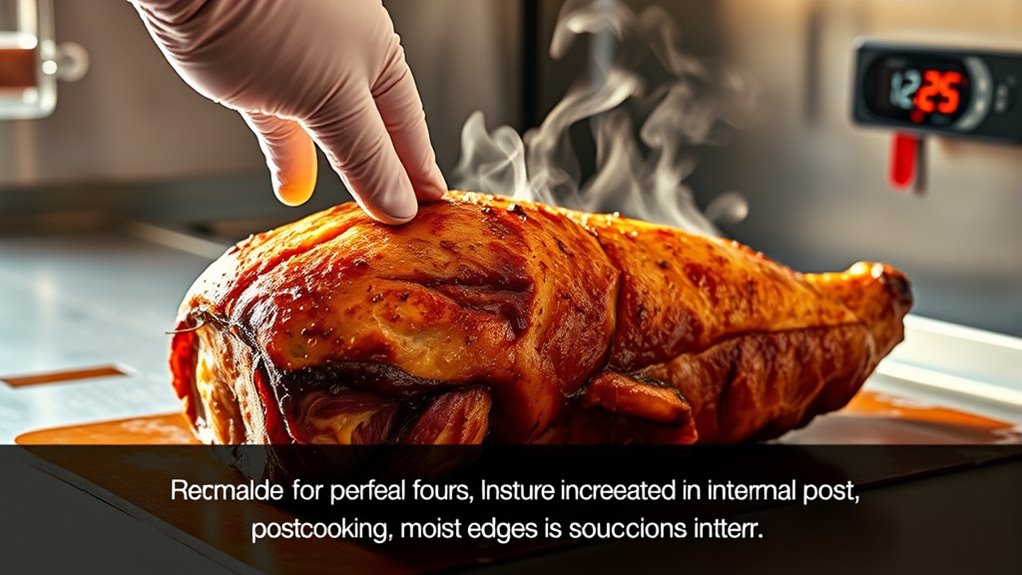
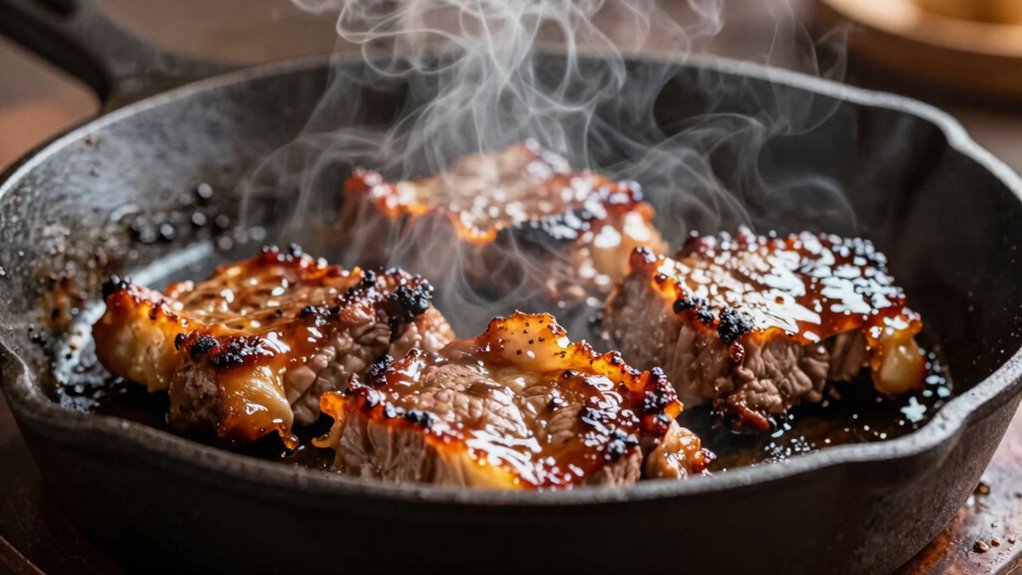
Have you ever noticed that food continues to cook even after you remove it from the heat? That’s because of a process called carryover cooking. When you take food off the stove or out of the oven, it doesn’t stop cooking immediately. Instead, it enters a resting period where heat retention causes the temperature to rise slightly. During this time, the residual heat inside the food continues to distribute and cook the interior. This phenomenon is especially noticeable with large cuts of meat or dense dishes. The heat stored within the food causes a gradual increase in temperature, which is why it’s important to let food rest before serving. Understanding this process helps you achieve perfectly cooked, juicy results every time. Proper resting techniques can further enhance the results by allowing the juices to redistribute evenly.
Alpha Grillers Instant Read Meat Thermometer Digital, Cooking, Food, Grill
- Instant Read Response: Reads temperature in 1-2 seconds
- Versatile Use: Suitable for grilling, baking, frying, and more
- Easy-to-Read Display: Large digital screen with blue backlight
As an affiliate, we earn on qualifying purchases.
As an affiliate, we earn on qualifying purchases.
How Much Does Temperature Rise During Carryover?
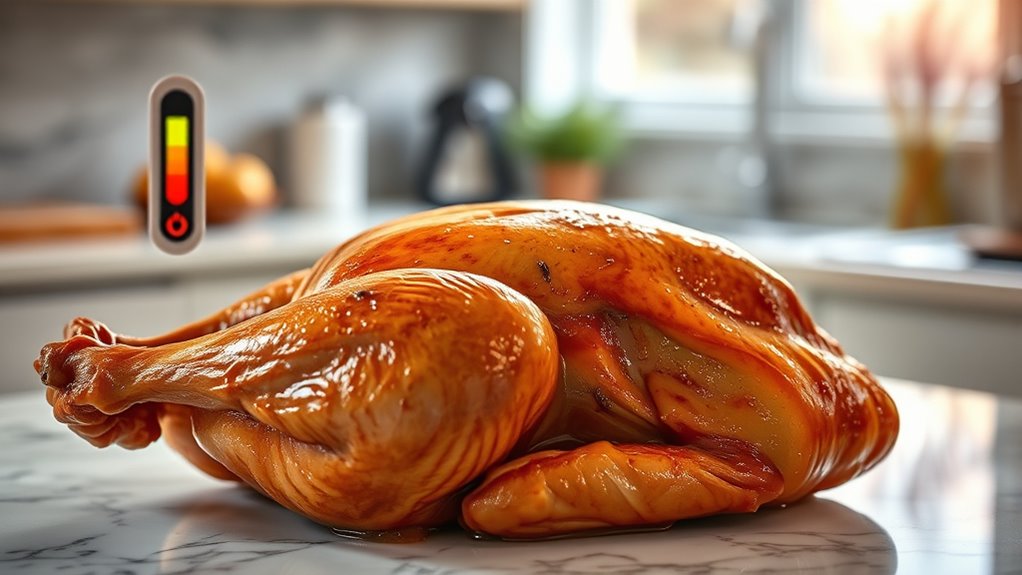
During carryover cooking, the temperature inside your food doesn’t stay constant; it continues to rise by a measurable amount. Typically, you can expect a rise of about 5°F to 10°F (3°C to 6°C), though this varies based on size and type. This temperature increase can lead to surprising cooking surprises if you aren’t prepared, affecting doneness and safety. Understanding how much the temperature rises helps maintain better temperature consistency and avoid overcooking. Keep in mind: larger cuts tend to have a greater temperature increase, while smaller pieces rise less. The heat retained within the food redistributes during resting, so the actual temperature change depends on several factors, including initial temperature, shape, and ambient conditions. Additionally, knowing the contrast ratio of your cookware can influence heat retention and distribution during resting.

Nordic Ware Naturals® Quarter Sheet with Oven-Safe Nonstick Grid
- Material: Natural aluminum quarter sheet
- Includes: Oven-safe nonstick steel grid
- Size: Ideal for 1-2 servings
As an affiliate, we earn on qualifying purchases.
As an affiliate, we earn on qualifying purchases.
What Factors Affect Carryover Cooking?
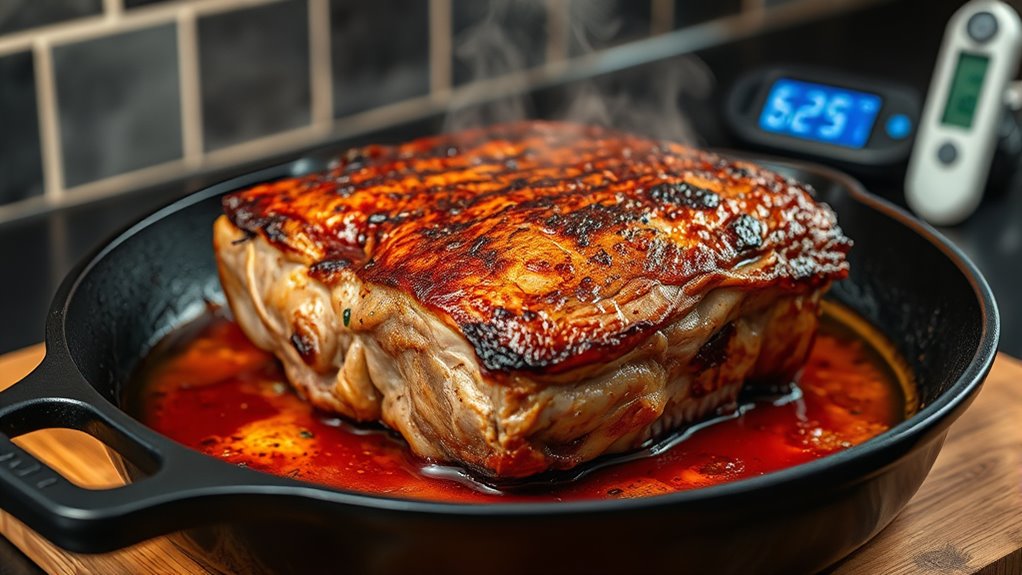
Several factors influence how much your food’s temperature rises during carryover cooking. Resting time is key—you need to give the heat time to transfer evenly, preventing overcooking. Heat retention also plays a role; foods with better heat retention continue to cook longer. The size and shape of the food affect how quickly heat disperses. Thinner cuts cool faster, while thicker cuts retain heat longer. The initial cooking temperature impacts the final rise, with higher starting temps leading to more carryover. Additionally, the presence of piercings, such as clitoral hood piercings, requires careful piercing care and hygiene to avoid complications that could affect cooking or health.
Alpha Grillers Instant Read Meat Thermometer Digital, Cooking, Food, Grill
- Instant Read Response: Reads temperature in 1-2 seconds
- Versatile Use: Suitable for grilling, baking, frying, and more
- Easy-to-Read Display: Large digital screen with blue backlight
As an affiliate, we earn on qualifying purchases.
As an affiliate, we earn on qualifying purchases.
How Can You Use Carryover Cooking to Perfect Your Meal?
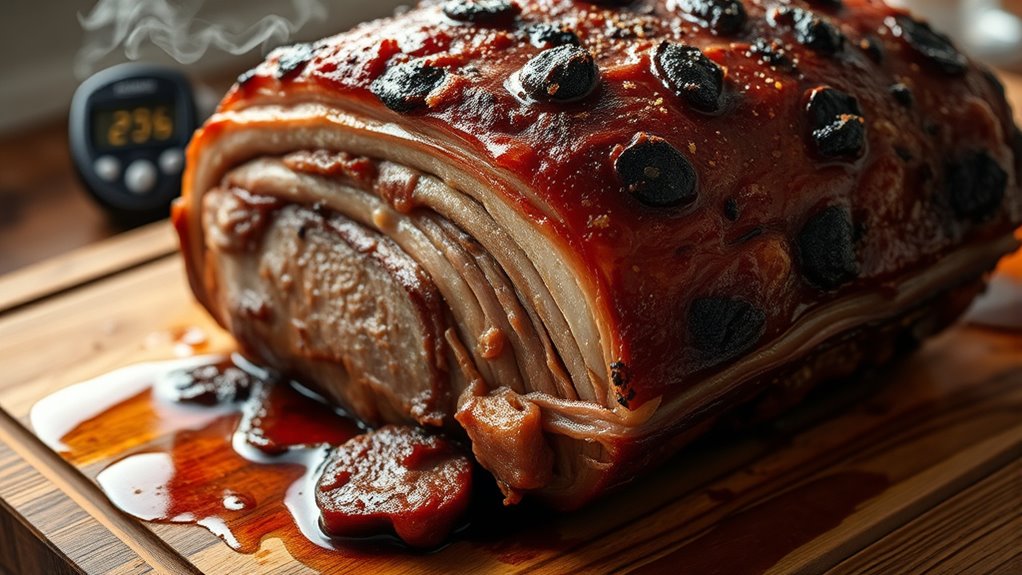
Understanding how carryover cooking works allows you to fine-tune your timing and achieve perfectly cooked dishes. By considering resting times and heat retention, you can prevent overcooking and ensure ideal results. After removing meat from heat, let it rest for the appropriate period to allow internal temperatures to stabilize. This process relies on heat retention to continue cooking the food gently after removal from direct heat. To maximize this effect:
Master carryover cooking by resting meat properly to ensure perfectly juicy, evenly cooked dishes.
- Remove meat just before reaching your target temperature
- Use a thermometer to monitor internal temps accurately
- Cover your dish loosely to retain heat during resting
- Know the ideal resting times for different foods
- Understand how heat retention prolongs carryover cooking
Applying these practices helps you control temperature increases, ensuring your meals are perfectly cooked and juicy.
Tips for Managing Carryover Cooking in Your Kitchen

Managing carryover cooking effectively requires you to stay attentive to your dishes even after removing them from heat. To do this, set appropriate resting times based on the food’s thickness and size, allowing thermal conduction to distribute heat evenly. Use a thermometer to monitor internal temperatures, preventing overcooking. Remember, residual heat continues to raise the temperature during resting. Visualize this process with the following:
| Resting Time | Effect |
|---|---|
| Short | Slight temperature rise |
| Moderate | Even heat distribution |
| Long | Potential overcooking |
| Immediate | Minimal carryover effect |
| Extended | Risk of losing moisture |
Being mindful of safe cooking practices helps prevent foodborne illness and ensures your meals are both delicious and safe to enjoy.
Frequently Asked Questions
Does Carryover Cooking Vary Between Different Types of Meat?
Yes, carryover cooking varies between different types of meat. Thicker cuts tend to experience more temperature rise during resting because they retain heat longer. You should adjust resting times accordingly, usually longer for larger cuts, to prevent overcooking. For example, a thick steak needs more resting time than a thinner one, ensuring the internal temperature stabilizes without exceeding your desired doneness.
How Can I Prevent Overcooking Due to Carryover Heat?
To prevent overcooking from carryover heat, you should use resting techniques and stay aware of the temperature. Remove the meat from heat slightly before it reaches your target temperature, as residual heat will continue to cook it. Cover it loosely with foil and let it rest. This allows juices to redistribute and prevents the internal temperature from rising too much, ensuring your meat stays perfectly cooked.
Is Carryover Cooking Significant for All Cooking Methods?
Imagine your food resting as its heat gently continues to rise, affecting cooking timing and flavor development. Carryover cooking is significant for many methods like roasting or grilling, where residual heat boosts internal temperatures even after removing from heat. For delicate items like fish, it’s less impactful. So, understanding this helps you perfect timing and flavor, ensuring your dishes are just cooked through without overdoing it.
Can Carryover Cooking Affect the Safety of Cooked Poultry?
Yes, carryover cooking can affect poultry safety by raising the internal temperature after you remove it from heat. If you don’t take into account this rise, your poultry might stay at a safe temperature long enough to prevent bacteria growth, or conversely, become overcooked and dry. To guarantee poultry safety, always check the internal temperature, and remember that it can increase a few degrees during resting, so don’t rely solely on the final reading.
What Tools Are Best for Monitoring Temperature During Carryover?
Sure, your kitchen’s in chaos, and you need quick answers. The best tools for monitoring temperature during carryover are instant read thermometers and wireless probes. Instant read thermometers give you immediate, accurate readings before slicing, while wireless probes monitor temperature remotely, letting you relax. Both are essential for ensuring your poultry hits the perfect safe temperature without overcooking. Trust these tools—your culinary safety net.
Conclusion
Don’t worry if your meat seems underdone right after removing it from the heat. Remember, carryover cooking will raise the temperature by several degrees, just like how a hot pizza box keeps the slices warm. By understanding this process, you can confidently remove your dish at the right moment, ensuring perfect doneness. So, trust your instincts and keep a close eye on the temperature—your perfectly cooked meal is just a carryover away!