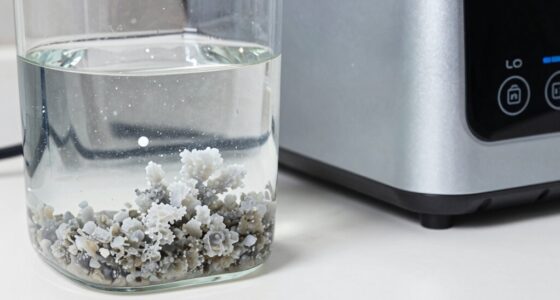
Choosing between copper, PEX, and PVC pipes impacts your water quality considerably. Copper can add a metallic taste and leach small amounts of copper, especially with acidic water, but it’s durable and resistant to corrosion. PEX offers better flexibility and fewer chemical concerns but may release trace chemicals initially. PVC is lightweight and affordable, yet it can emit odors and leach chemicals like styrene over time. To learn which option suits your needs best, keep exploring these differences.

Prime made for students and young adults
- Fast, free delivery for dorm and study essentials
- Prime Video and Amazon Music included
- Member-only deals
Key Takeaways
- Copper pipes may leach copper ions, especially with acidic water, potentially affecting water taste and safety over time.
- PEX pipes are chemically inert, generally not affecting water taste or odor but may emit a slight plastic smell initially.
- PVC pipes can leach chemicals like styrene, especially under high temperatures, possibly impacting water quality and safety.
- Water temperature and chemistry influence leaching rates; higher temperatures and low pH increase metal release from copper.
- Resistance to corrosion varies among materials, affecting long-term water purity and the likelihood of mineral or bacterial buildup.
What Are the Main Materials in Copper, PEX, and PVC Pipes?
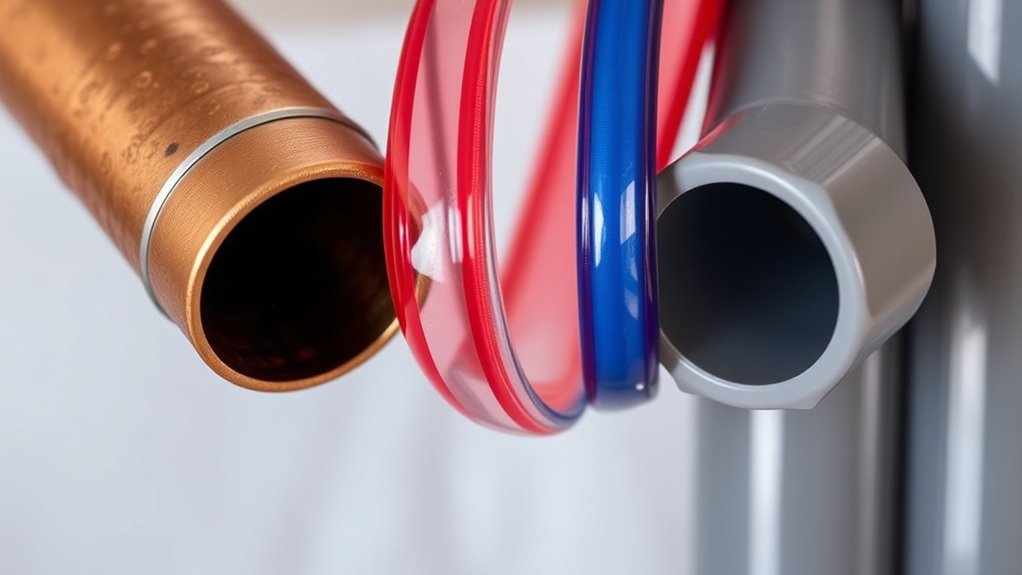
Copper pipes are made from a natural metal that offers durability and corrosion resistance. When it comes to pipe installation, copper is a reliable choice because it withstands high temperatures and pressure without deteriorating. Its material cost is generally higher than other options, which can impact your overall budget. PEX pipes are made from cross-linked polyethylene, a flexible plastic material that’s easy to install and resistant to scale and chlorine. They’re often preferred for their lower material cost and quick installation process. PVC pipes, crafted from polyvinyl chloride plastic, are lightweight and inexpensive, making them popular for drainage and venting. Each material’s composition influences installation ease and costs, helping you choose based on your specific needs and budget constraints. Additionally, European cloud innovation emphasizes sustainable practices, which can be relevant when considering the environmental impact of different piping materials.
How Do Pipe Materials Affect Water Taste and Odor?
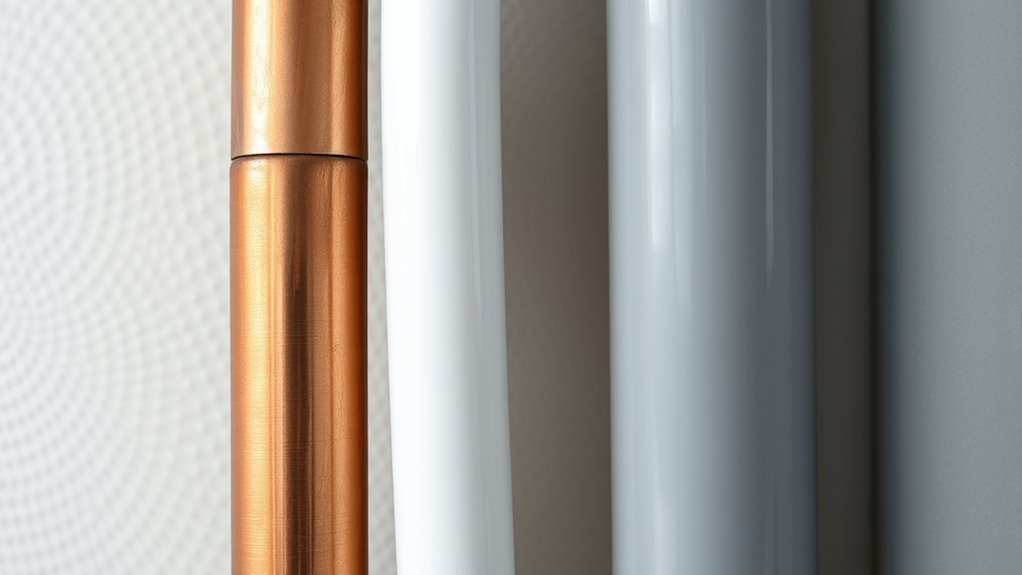
The materials used in your pipes can considerably influence the taste and odor of your water. Copper pipes often add a metallic taste, especially if the water is highly acidic, and their aesthetics can give a classic, durable look. PEX pipes typically don’t affect water flavor but may emit a slight plastic smell initially. PVC pipes are inexpensive and easy to install, but some users notice a chemical or plastic scent, particularly when new. Installation costs vary: copper tends to be pricier due to material and labor, while PEX and PVC are more affordable options. Your choice of pipe material can impact not only aesthetics but also how your water smells and tastes, especially during the initial period after installation. Additionally, understanding water purification systems can help mitigate some of these taste and odor issues caused by pipe materials.
Do Pipes Leach Chemicals Into Water Over Time?

Over time, pipes can release trace amounts of chemicals into your water, depending on the material and condition of the pipe. This process, known as chemical leaching, can affect pipe safety and water quality. Copper pipes may leach small amounts of copper, which usually isn’t harmful in moderation but can be problematic if levels increase. PEX pipes have been known to release substances like antioxidants or residual chemicals from manufacturing, though typically at low levels. PVC pipes can sometimes leach chemicals such as styrene or other additives, especially if exposed to high temperatures or prolonged use. While these leaks are generally minimal and regulated, it’s essential to stay aware of your pipe material’s tendencies to guarantee safe, clean drinking water over time. Understanding leaching processes is crucial for maintaining water quality and ensuring the safety of your plumbing system.
How Do Water Temperature and Usage Impact Pipe Water Quality?
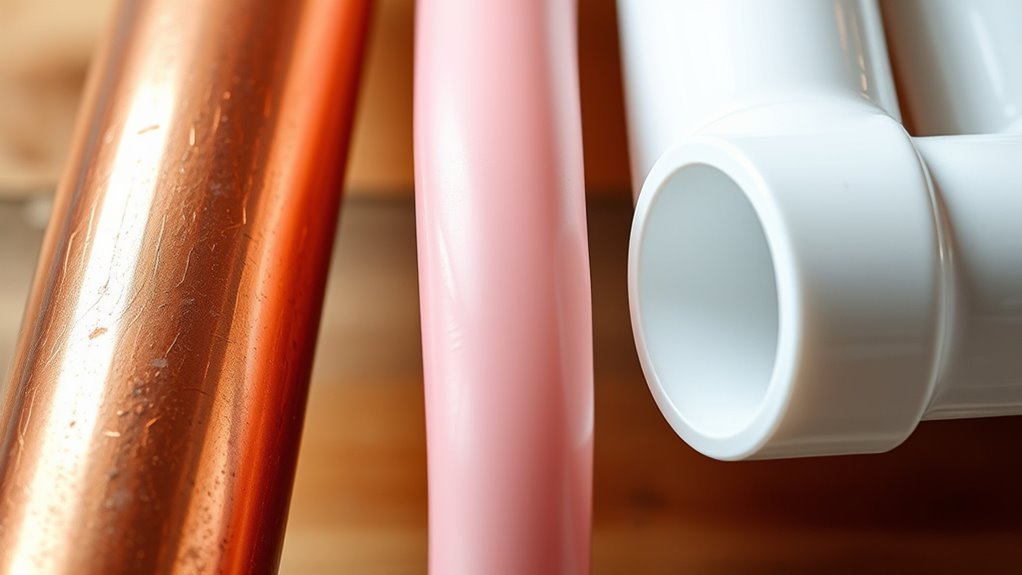
Water temperature and usage patterns directly influence pipe water quality by affecting chemical leaching and bacterial growth. Higher water temperatures can accelerate the leaching of metals from pipes, especially if pipes aren’t properly insulated. Temperature fluctuations cause expansion and contraction in pipes, which may loosen fittings or create microcracks, increasing contamination risks. Using pipe insulation helps maintain steady temperatures, reducing these fluctuations and protecting water quality. When hot water is used frequently, it can promote bacterial growth if pipes aren’t well-maintained, particularly in areas with inconsistent usage. Conversely, cold water usage minimizes bacterial activity but may still lead to mineral buildup over time. Your water quality depends on managing these factors through consistent usage, proper insulation, and temperature regulation. Proper maintenance also plays a crucial role in ensuring long-term pipe integrity and water safety.
How Does Resistance to Corrosion Keep Water Clean?
When your pipes resist corrosion, they stay durable longer and require less maintenance, saving you money over time. This resistance also prevents contaminants from leaching into your water, keeping it cleaner and safer to drink. Understanding how different materials handle corrosion helps you choose the right pipe for lasting water quality. Additionally, considering the cost‑of‑ownership of various pipe materials ensures you make an informed decision that balances durability and expense.
Material Durability and Corrosion Resistance
Corrosion resistance plays a critical role in maintaining water quality by preventing the degradation of piping materials that can introduce contaminants. When pipes resist corrosion, they stay intact longer, enhancing material longevity and reducing the risk of leaks or failures. Copper is naturally corrosion-resistant, offering durability over decades. PEX pipes resist corrosion as well, thanks to their flexible, plastic composition, which helps maintain the integrity of your water system. PVC also boasts high corrosion resistance, making it less prone to rust or mineral buildup that can compromise water purity. By choosing pipes with strong corrosion resistance, you’re ensuring your water remains clean and safe over time, while also extending the lifespan of your plumbing system. Additionally, Gold IRA Markets highlight the importance of selecting durable materials to protect your investment in long-term water quality.
Impact on Water Contaminants
Ever wondered how pipe materials prevent contaminants from leaching into your water? The key lies in pipe material compatibility and their resistance to corrosion. Copper pipes resist corrosion better, reducing the chance of metal leaching, while PEX and PVC are less reactive, minimizing chemical contamination. This containment helps maintain water purity and enhances water filtration effects.
| Pipe Material | Impact on Water Contaminants |
|---|---|
| Copper | Resistant to corrosion; minimal leaching |
| PEX | Inert; low risk of chemical leaching |
| PVC | Inert; prevents chemical contamination |
Longevity and Maintenance Needs
Resistance to corrosion plays a crucial role in determining how long your pipes last and how much maintenance they require. When choosing between Copper, PEX, or PVC, consider how corrosion resistance impacts pipe installation and ongoing maintenance costs. Copper pipes resist corrosion well, extending their lifespan and reducing frequent repairs. PEX pipes are highly resistant to corrosion, making installation easier and lowering maintenance needs. PVC pipes also resist corrosion, but may degrade over time, leading to potential replacements. Additionally, the use of natural filtration systems in eco-friendly pools can help maintain water quality without relying solely on pipe materials.
Can Bacteria Grow in Different Pipe Types?

Have you ever wondered if different pipe materials influence bacterial growth? The answer is yes. Bacterial growth can vary depending on the pipe material you choose. Copper naturally resists bacteria because of its antimicrobial properties, making it less likely for harmful microbes to thrive. PEX and PVC, on the other hand, are more prone to bacterial buildup if not properly maintained, as they lack these natural defenses. Moisture and organic matter can accumulate in these pipes, creating a breeding ground for bacteria. Regular cleaning and disinfection are essential, especially for PEX and PVC, to prevent contamination. So, your choice of pipe material directly impacts how bacteria can grow in your plumbing system. Understanding antimicrobial properties of different materials can help you make informed decisions about your plumbing.
How Do Water Chemistry Interactions Vary by Pipe Material?
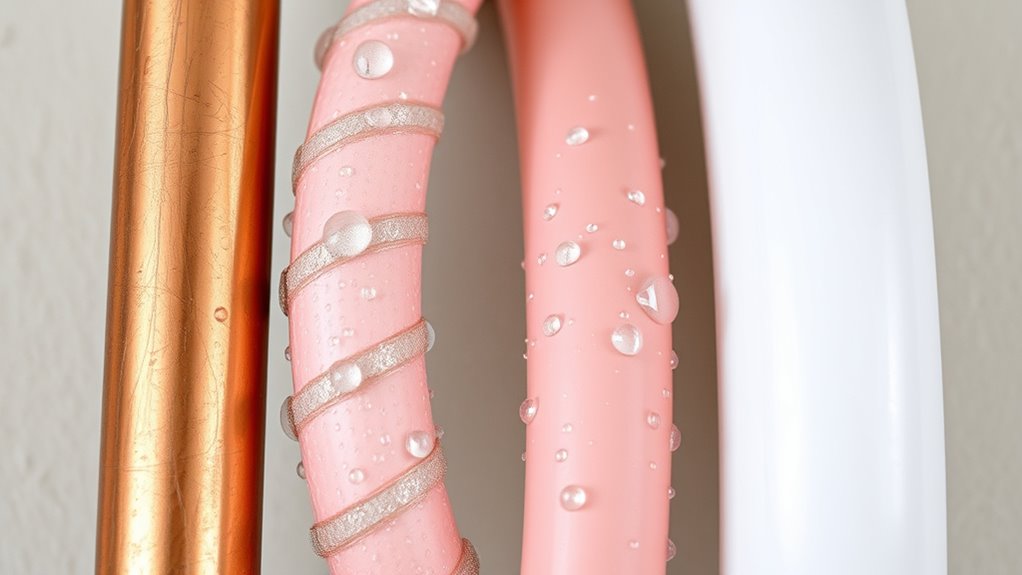
Different pipe materials interact with water chemistry in distinct ways, affecting the longevity and safety of your plumbing system. When you’re considering pipe installation, understanding these interactions helps prevent issues.
- Copper pipes can corrode over time with high water pressure or low pH water, releasing copper ions that may affect water taste and safety.
- PEX is resistant to corrosion but can absorb chemicals or leach additives if water chemistry is aggressive, impacting water quality.
- PVC pipes are inert but may degrade with prolonged exposure to certain chemicals, especially if water pH is outside normal ranges, influencing pipe integrity.
These interactions highlight the importance of matching pipe material to your water chemistry, ensuring safe, durable plumbing systems.
What Is the Lifespan of Each Pipe Type and Its Effect on Water?

Understanding how long each pipe type lasts helps you choose the right material for your water system. Corrosion resistance and durability directly affect water quality over time, while maintenance needs influence costs and effort. By comparing lifespan, you can better assess how each pipe impacts your water’s safety and your long-term investments. Additionally, projector technology can play a role in monitoring pipe conditions and ensuring optimal water quality over time.
Corrosion Resistance and Longevity
Copper pipes are highly resistant to corrosion, often lasting 50 to 70 years, which helps guarantee your water remains clean and free from contaminants over time. This durability means fewer pipe repairs and a longer lifespan, reducing long-term costs. When considering corrosion resistance and longevity, keep these points in mind:
- PEX pipes resist corrosion but may degrade over 40 years, especially with exposure to UV light.
- PVC pipes are resistant to corrosion but can become brittle after 50 years, impacting longevity.
- Installation costs vary; copper tends to be more expensive initially, but its durability can lower repair costs over time.
- The corrosion resistance of each pipe type plays a crucial role in maintaining water quality throughout their lifespan.
Choosing the right material depends on balancing initial expenses with long-term durability, ensuring your water quality stays ideal without frequent repairs.
Material Durability and Water Impact
The lifespan of pipe materials directly influences water quality and maintenance needs over time. Copper pipes typically last 50 years or more, but corrosion effects can cause metal leaching, impacting water mineralization and taste. PVC pipes generally last 25-40 years, resisting corrosion but sometimes degrading when exposed to UV light, which can affect water purity. PEX pipes usually last around 40 years, offering good durability with minimal corrosion effects, reducing metal leaching concerns. As pipes age, deterioration can alter water chemistry, potentially increasing mineral buildup or releasing contaminants. Choosing a durable material helps maintain water quality longer, minimizing the risks associated with corrosion effects and water mineralization changes over time. Proper lifespan understanding guarantees you keep your water safe and maintenance manageable.
Maintenance and Replacement Needs
Since each pipe material varies in lifespan, choosing the right one impacts your maintenance schedule and overall water quality. Copper pipes typically last 50-70 years, making replacement infrequent but costly. PEX pipes usually last 40-50 years, offering easier pipe installation and lower initial costs. PVC pipes tend to last 25-40 years, but their lower durability might require sooner replacement.
- Copper’s durability means less frequent maintenance but higher upfront costs and potential for corrosion.
- PEX offers flexibility, quick pipe installation, and a lower cost comparison, though it may need replacement sooner.
- PVC is affordable and easy to replace but may degrade faster in extreme conditions.
Your choice affects long-term water quality and maintenance needs.
What Are the Environmental and Health Factors of Pipe Choices?

Choosing the right pipe involves considering how each material impacts both the environment and your health. Copper pipes have a lower environmental impact during manufacturing but can release trace metals into water, raising health concerns for sensitive individuals. PEX pipes are flexible and easy to install, but their production involves chemicals that may affect the environment, and some worry about potential leaching of additives. PVC pipes are lightweight and inexpensive, yet their manufacturing releases toxic chemicals, and burning PVC releases harmful fumes. Ultimately, your choice influences not only water quality but also ecological health. By understanding these environmental impacts and health concerns, you can make a more informed decision that balances durability, safety, and sustainability.
Frequently Asked Questions
How Does Pipe Installation Affect Water Quality Over Time?
Your pipe installation impacts water quality over time by influencing corrosion resistance and microbial growth. Properly installed pipes reduce corrosion, preventing metal leaching that can degrade water quality. Ensuring pipes are sealed correctly minimizes microbial growth, which could cause health issues. Using appropriate materials and installation techniques helps maintain clean, safe water, preventing long-term contamination and preserving water quality.
Are There Specific Maintenance Needs for Each Pipe Material?
Did you know that copper pipes can last up to 70 years, while PEX typically lasts 40-50 years? To maintain water quality, you should regularly inspect for corrosion concerns in copper, replace worn-out PEX, and guarantee PVC pipes are free from cracks. Each material has unique maintenance needs that help maximize their longevity and prevent contamination, so stay vigilant and perform routine checks to keep your water safe and clean.
Can Pipe Material Influence Water Pressure and Flow Rates?
Yes, pipe material can influence water pressure and flow rates. Corrosion concerns in copper pipes can lead to mineral leaching, which might clog pipes over time and reduce flow. PEX pipes generally maintain consistent pressure thanks to their flexibility, while PVC pipes can sometimes restrict flow if not properly installed. Choosing the right material helps guarantee ideal water pressure, minimizes corrosion risks, and maintains water quality.
How Do Pipe Connections Impact Potential Contamination Risks?
Did you know that poor pipe connections can increase contamination risk by up to 50%? Your pipe connection’s integrity is essential; loose or faulty joints can allow bacteria and pollutants to enter your water supply. Connection corrosion weakens pipe joints over time, raising the chance of leaks and contamination. To protect water quality, make certain your pipe joints are secure and corrosion-resistant, reducing potential health risks and maintaining clean, safe water.
What Are the Cost Differences Impacting Long-Term Water Quality?
You’ll find that PEX pipes are often the most cost-efficient option, offering lower initial and maintenance costs due to their flexibility and ease of installation. Copper pipes, while more durable and resistant to corrosion, tend to be pricier upfront. PVC is affordable but may require more frequent replacements over time. Your choice impacts long-term water quality, as material durability influences how well pipes resist leaks and contamination, affecting overall water safety and costs.
Conclusion
So, whether you choose copper, PEX, or PVC, just remember you’re inviting a tiny chemical party or bacterial bash into your water. Want your sip to taste like a chemistry lab or a plastic factory? Or maybe you’d prefer bacteria throwing their own underground rave? Pick your pipe wisely—your water quality depends on it. Because, after all, it’s only your health and taste buds on the line—no big deal.
Halloween Picks
halloween
As an affiliate, we earn on qualifying purchases.