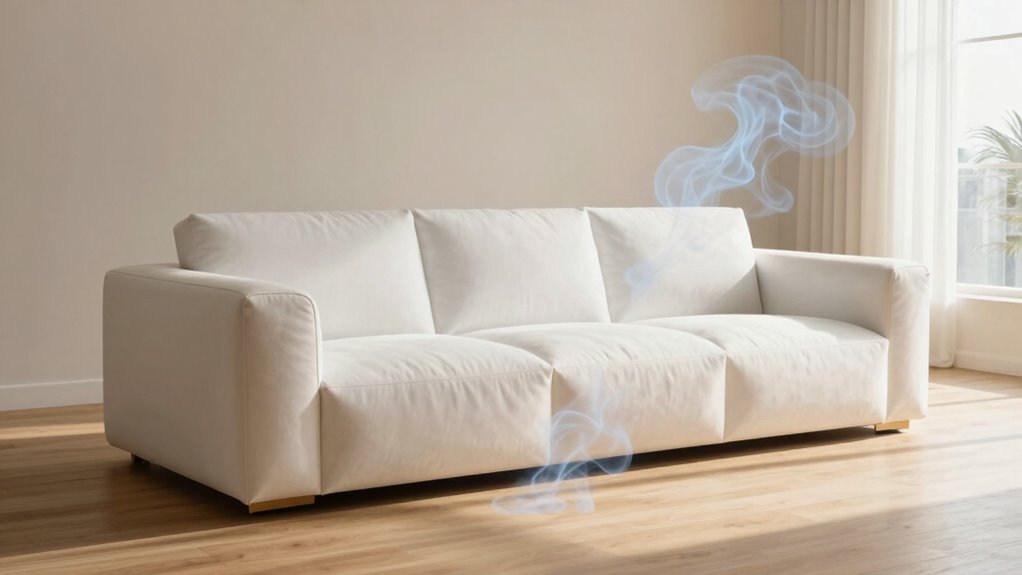

When you bring home new furniture or household products, the sharp smell comes from off-gassing—the release of VOCs and chemicals from materials as they break down or react. Softer plastics, pressed wood, and foam tend to off-gas more quickly. These emitted chemicals can cause irritation or short-term discomfort, especially in poorly ventilated spaces. If you’d like to understand how to reduce these odors and protect your indoor air quality, keep exploring these tips.

Prime made for students and young adults
- Fast, free delivery for dorm and study essentials
- Prime Video and Amazon Music included
- Member-only deals
Key Takeaways
- New items release VOCs due to chemical reactions during manufacturing, causing a sharp smell.
- VOCs evaporate from porous, soft materials like foam, adhesives, and pressed wood, intensifying odors.
- The sharp scent results from VOCs interacting with air and heat, activating olfactory receptors.
- Higher VOC concentrations from new products can cause short-term symptoms like headaches and irritation.
- Ventilation, air purifiers, and VOC-absorbing plants help reduce the sharp smell and off-gassing effects.
As an affiliate, we earn on qualifying purchases.
What Is Off-Gassing and How Does It Occur

Off-gassing happens when volatile organic compounds (VOCs) release from new products into the air. This process occurs due to chemical reactions involving the material properties of the item. When products are manufactured, their chemical composition changes, creating compounds that can evaporate over time. These compounds are often trapped within the material’s structure, but as they interact with air and heat, they break free. The rate of off-gassing depends on the material properties, such as porosity and chemical stability. Softer plastics, adhesives, and finishes tend to off-gas more readily because their chemical makeup allows VOCs to escape more easily. Understanding these chemical reactions helps explain why new items often smell “sharp” or strong, especially right after unpacking. Additionally, the contrast ratio of a projector can influence the perception of image quality, especially in darker scenes.
As an affiliate, we earn on qualifying purchases.
Which Items Off-Gas Most and Why

Certain household items tend to off-gas more than others because their materials are designed to be soft, porous, or chemically reactive. Items like foam furniture, pressed wood products, and new carpets release higher levels of chemical emissions due to their material sources. Foam cushions contain volatile organic compounds (VOCs) from the polyurethane or memory foam, which easily off-gas as they break down. Pressed wood furniture often uses adhesives and resins that emit chemicals over time. Carpets and rugs contain synthetic fibers and backing materials that release chemical emissions as they off-gas. These items are more prone to emit strong odors because their materials are designed for comfort or durability, but that also makes them more chemically reactive, increasing the intensity and duration of off-gassing. Understanding off-gassing can help you identify the materials most likely to emit these odors and choose safer options for your home.
off-gassing reduction air purifier
As an affiliate, we earn on qualifying purchases.
As an affiliate, we earn on qualifying purchases.
Why Do New Items Smell So Sharp?

The sharp smell of new items comes from the release of volatile organic compounds (VOCs) and other chemicals that are present in their materials. When these chemicals evaporate, they undergo chemical reactions with the air, creating the strong, pungent scent you notice. Your scent perception is highly sensitive to these compounds, especially when they are new and plentiful. The chemical reactions alter the VOCs, producing different molecules that trigger your olfactory receptors, resulting in that sharp, distinctive smell. The intensity of this scent depends on the types of chemicals used and how quickly they off-gas. As these reactions settle and VOC levels decrease, your perception of the smell diminishes. This process explains why new items often smell so sharp and noticeable at first. Additionally, free floating chemicals can linger in the air for extended periods, contributing to the persistence of the scent.
As an affiliate, we earn on qualifying purchases.
Are VOCS From Off-Gassing Harmful?
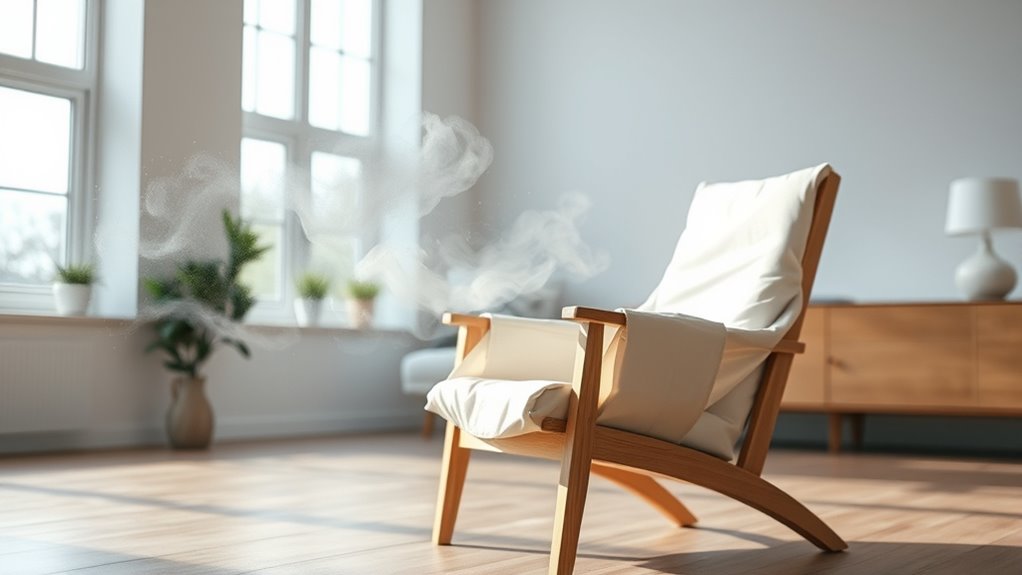
While the sharp smell of new items signals the presence of VOCs released during off-gassing, you might wonder whether these chemicals pose health risks. Short-term exposure to VOCs can cause headaches, dizziness, or irritation, especially in poorly ventilated spaces. Long-term effects are less clear but may include respiratory issues or allergic reactions. To protect your indoor air quality and reduce chemical exposure, consider these points:
- Ventilate your space regularly after bringing in new items
- Use air purifiers with activated carbon filters
- Limit the time spent in areas with strong off-gassing
- Choose low-VOC or VOC-free products when possible
- Keep humidity levels balanced to prevent mold growth
- Be aware of indoor air quality factors that can influence off-gassing and chemical accumulation
Being aware helps you minimize risks and maintain a healthier environment in your home.
How to Minimize Off-Gassing and Keep Your Space Fresh

To keep your space smelling fresh and reduce off-gassing, you should take proactive steps to minimize VOC emissions from new items. Start by increasing air circulation—open windows regularly and use fans to help disperse volatile compounds. Incorporate air purifying plants like snake plants or pothos, which can absorb some VOCs and improve indoor air quality naturally. Avoid placing new furniture or products in enclosed spaces without ventilation for extended periods. Consider using air purifiers with activated carbon filters to trap airborne chemicals. Regularly cleaning surfaces can also help reduce lingering off-gassing odors. Additionally, understanding VOC emissions and how they affect indoor air quality can guide you in choosing safer, low-emission products. These measures work together to lower VOC levels, making your environment healthier and more pleasant while your space naturally airs out.
Frequently Asked Questions
How Long Does Off-Gassing Typically Last in New Products?
Off-gassing from new products usually lasts from a few days up to a few weeks, depending on the material and ventilation. During this time, chemical emissions cause the sharp odor you notice. You can speed up odor duration by airing out the item regularly and keeping the area well-ventilated. Most odors fade as the chemicals evaporate, but persistent smells might take longer if ventilation is limited.
Can Off-Gassing Occur in Items Stored Unopened for Long Periods?
Like a ship in a bottle, off-gassing can occur even in items stored sealed for long periods. You might think they’re safe, but chemical accumulation can happen over time. When you open these items, you could still smell that sharp odor, indicating ongoing off-gassing. It’s advisable to ventilate sealed storage regularly, as chemicals trapped inside can slowly escape, making the smell persist or even intensify after long-term storage.
Are Natural or Organic Products Less Likely to Off-Gas Harmful Chemicals?
You’re right to wonder if natural or organic products are less likely to off-gas harmful chemicals. Generally, they emit fewer chemical emissions because they use natural scents and ingredients instead of synthetic ones. This means the off-gassing is usually milder and less harmful to your health. However, always check product labels, as some natural products can still contain additives that cause minor chemical emissions.
Does Off-Gassing Happen in All Types of Plastic and Synthetic Materials?
You bet, off-gassing can happen in all types of plastic and synthetic materials. The chemical composition and material stability play big roles in whether a product releases volatile compounds. Some plastics are more stable and emit fewer odors, while others are more prone to off-gassing, especially when new. It’s like opening a can of worms—different materials have different tendencies to release chemicals, so always check for safer options.
What Are the Signs of Health Issues Caused by Off-Gassing Exposure?
You might notice symptoms like headaches, dizziness, or respiratory issues if you’re sensitive to off-gassing chemicals. Chemical sensitivity can cause skin irritation or fatigue, while prolonged exposure could worsen respiratory issues like asthma. If you experience persistent symptoms after bringing new items into your home, it’s a sign to ventilate the space and avoid prolonged contact. Consulting a healthcare professional is wise if symptoms continue or worsen.
Conclusion
Think of off-gassing like a new car’s fresh paint—bright, sharp, but fading over time. When you bring home new furniture or appliances, you’re inviting tiny molecules to dance in your space. With patience and proper ventilation, these molecules drift away like a passing breeze. Just as a fresh coat of paint eventually settles, your space will smell normal again. Trust the process, and soon your home will feel as inviting as a summer breeze.
Halloween Picks
halloween
As an affiliate, we earn on qualifying purchases.