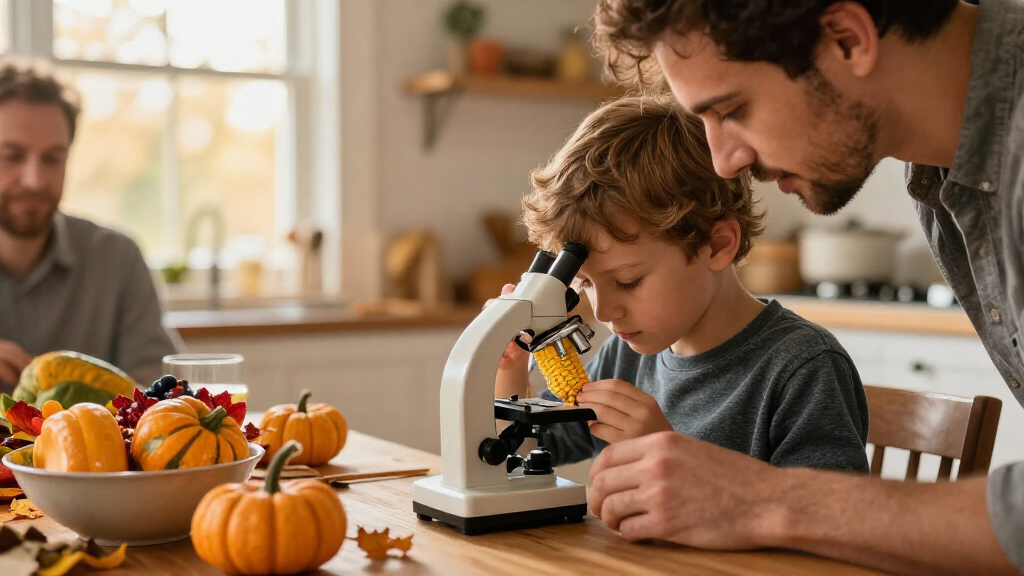
Finding a children’s Thanksgiving science book means choosing between different kinds of seasonal learning, not just picking a book with a turkey on the cover. I rank My First Thanksgiving Science Book first for younger children who learn through coloring and activities, while Thanksgiving Riddles for Kids Ages 8–12 is the stronger fit for older kids who enjoy brain teasers. Corn: A Children’s Guide to Corn, Farming, and Gratitude takes a more focused route, pairing an agricultural subject with a gratitude theme.

Prime made for students and young adults
- Fast, free delivery for dorm and study essentials
- Prime Video and Amazon Music included
- Member-only deals
The main tradeoff is age fit versus subject depth: the activity books target distinct age groups and seasonal engagement, while the corn guide centers on one real-world topic. The supplied descriptions do not specify the exact science concepts, activity instructions, page counts, or reading levels, so I keep my comparisons anchored to the stated topics and formats rather than assuming details. My ranking favors a clear age fit, an explicit science or STEM activity format, and a meaningful connection to Thanksgiving.
Key Takeaways
- For ages 3–7, My First Thanksgiving Science Book is the clearest match because its stated format combines fall STEM activities and coloring.
- For ages 8–12, Thanksgiving Riddles for Kids makes the most sense when a child prefers puzzles and brain teasers to a topic-led guide.
- Corn: A Children’s Guide to Corn, Farming, and Gratitude is the most focused choice for a family wanting to connect Thanksgiving with crops and farming.
- The two activity books divide naturally by age: one targets ages 3–7 and the other ages 8–12, so they are not interchangeable for most readers.
- The product details do not list specific experiments, answer guidance, or lesson depth; buyers who need those should check the listing before choosing.
| My First Thanksgiving Science Book: Turkeys, Harvests & Pie — Fall STEM Activities and Coloring for Kids Ages 3–7 |  | Best Overall for Ages 3–7 | Format: Activity and coloring book | Age range: 3–7 years | Theme: Thanksgiving and fall | VIEW LATEST PRICE | See Our Full Breakdown |
| Thanksgiving Riddles for Kids Ages 8–12: STEM Activity Book with 150 Brain Teasers and Coloring Pages |  | Best for Older Kids Who Like Puzzles | Format: STEM activity book | Age range: 8–12 years | Theme: Thanksgiving | VIEW LATEST PRICE | See Our Full Breakdown |
| Corn: A Children’s Guide to Corn, Farming, and Gratitude |  | Best for Agriculture and Harvest Connections | Format: Children’s educational guide | Audience: Children; specific age range not supplied | Main subject: Corn | VIEW LATEST PRICE | See Our Full Breakdown |
| children’s thanksgiving science book | Format | Age range | Theme | Learning focus |
|---|---|---|---|---|
| My First Thanksgiving Science | Activity and coloring book | 3–7 years | Thanksgiving and fall | Fall STEM activities |
| Thanksgiving Riddles for Kids | STEM activity book | 8–12 years | Thanksgiving | Science and STEM through fun facts |
| Corn: A Children’s Guide to Co | Children’s educational guide | — | — | — |
More Details on Our Top Picks
My First Thanksgiving Science Book: Turkeys, Harvests & Pie — Fall STEM Activities and Coloring for Kids Ages 3–7
I rank My First Thanksgiving Science Book first because it makes the clearest promise for an early-learning buyer: it is aimed at ages 3–7 and combines seasonal STEM activities with coloring. Turkeys, harvests, and pie give the book recognizable Thanksgiving hooks, which can make science feel connected to the child’s immediate world rather than an unrelated lesson. Its stated format also gives caregivers a concrete expectation: this is an activity-and-coloring book, not simply a guide to read aloud.
Compared with Thanksgiving Riddles for Kids Ages 8–12, this book targets a younger audience and appears better suited to children who want hands-on or visual engagement rather than a series of brain teasers. Compared with Corn: A Children’s Guide, it covers several seasonal themes rather than focusing on corn and farming. That breadth is useful for a family seeking a general Thanksgiving activity, but the corn guide may be a better fit when a child is especially interested in where food comes from.
The limitation is the lack of detail about the activities themselves. The description names fall STEM activities but does not say whether they involve observation, simple experiments, matching, or another format. It also gives no specific reading level or page count. I would choose it for the age fit and seasonal format, not on the assumption that it contains a particular experiment or lesson plan. For a young child who needs close adult guidance, a caregiver may need to read prompts aloud or help with the activities.
This is my strongest general recommendation because it aligns its audience, format, and Thanksgiving theme in one package. It is not automatically the best choice for every child: older readers may find the age band and activity style too young, while families looking for a detailed agricultural explanation may prefer the corn-focused guide. If the child is within the stated age range and enjoys coloring alongside themed activities, this has the most direct all-around fit in the lineup.
Pros:- Targets a clearly stated age range of 3–7.
- Combines a Thanksgiving theme with fall STEM activities and coloring.
- Uses familiar topics including turkeys, harvests, and pie.
- Offers a different, younger-child format than the brain-teaser book.
Cons:- The supplied description does not explain what the STEM activities ask children to do.
- No page count, reading level, or adult-guidance information is provided.
- Its young age focus makes it a poor fit for older elementary readers.
Best for: Children ages 3–7 who enjoy coloring and seasonal activities, with an adult available to help where needed.
Not ideal for: Older children seeking more challenging puzzles, or buyers who need a clearly specified set of experiments, lesson details, or reading level.
- Format:Activity and coloring book
- Age range:3–7 years
- Theme:Thanksgiving and fall
- Named topics:Turkeys, harvests, and pie
- Learning focus:Fall STEM activities
- Activity detail:Specific activity types are not provided
- Reading level:Not specified
- Page count:Not specified
Our verdict“I would choose this first for a young child who wants Thanksgiving-themed coloring and STEM activities, while checking the listing for activity details before expecting a specific lesson format.”
Thanksgiving Riddles for Kids Ages 8–12: STEM Activity Book with 150 Brain Teasers and Coloring Pages
Thanksgiving Riddles for Kids Ages 8–12 is the clear choice for older children who prefer solving a puzzle to following a younger-child activity format. Its description names 150 brain teasers and coloring pages, giving buyers a more concrete sense of the book’s activity mix than the other two listings provide. The stated age band also separates it cleanly from My First Thanksgiving Science Book, which is aimed at ages 3–7.
Its science connection is framed through STEM and fun facts, but the supplied details do not name particular science subjects or explain how the facts connect to each riddle. I would treat this as a puzzle-led seasonal activity book, not assume that it functions like a science textbook or a structured experiment workbook. Compared with Corn: A Children’s Guide, it offers a larger stated activity count and a stronger game-like format; the corn guide, by contrast, appears more suited to a child interested in one subject and its relationship to farming.
The age fit is a strength, but it also sets a boundary. A child who is still building reading confidence may need help with riddles, while a younger sibling may be outside the intended range. The description does not state how difficult the brain teasers are, whether answers are included, or how much science explanation accompanies the activities. Those unknowns matter for buyers who want independent use or a resource that teaches specific concepts rather than offering themed entertainment.
I place it second because the format and age range are especially clear, but its specific science scope is less clear than its puzzle count. Choose it over the younger activity book when your reader is 8–12 and enjoys wordplay or problem-solving. Choose the corn guide instead if the child’s interest is agricultural, or the ages 3–7 book if a more visual, younger-oriented activity format is the priority.
Pros:- Specifies an age range of 8–12 years.
- Names 150 brain teasers plus coloring pages.
- Combines Thanksgiving activities with a stated STEM focus.
- Provides a more puzzle-centered option than the other books in the lineup.
Cons:- The supplied details do not identify which science topics the riddles cover.
- Riddle difficulty and answer availability are not specified.
- Its puzzle format may not suit children who prefer topic-led reading or hands-on activities.
Best for: Children ages 8–12 who enjoy riddles, brain teasers, and coloring as a seasonal way to engage with STEM themes.
Not ideal for: Preschoolers, children who dislike puzzles, or families seeking named science lessons and clearly described experiments.
- Format:STEM activity book
- Age range:8–12 years
- Theme:Thanksgiving
- Activities:150 brain teasers and coloring pages
- Learning focus:Science and STEM through fun facts
- Specific science subjects:Not specified
- Riddle difficulty:Not specified
- Answer guidance:Not specified
Our verdict“I recommend it for puzzle-loving older children, but buyers wanting defined science concepts or experiments should verify the contents before choosing it.”
Corn: A Children’s Guide to Corn, Farming, and Gratitude
Corn: A Children’s Guide to Corn, Farming, and Gratitude takes the most focused approach in this group. Rather than centering its pitch on coloring or a set of puzzles, it points children toward corn, farming, and gratitude. That subject makes a natural seasonal connection: families can use the book to relate a familiar harvest food to the work of growing crops, while the gratitude theme gives the reading a Thanksgiving link.
Compared with My First Thanksgiving Science Book, this title appears more topic-led than activity-led. It may appeal to a child who likes learning about food and farms, but the available description does not state an age range or identify activities. Compared with Thanksgiving Riddles for Kids, it does not advertise a specific number of puzzles or coloring pages; in return, its subject is more concentrated, rather than split across a broad seasonal activity format. I would pick it when the agricultural angle is the main reason for buying, not when a child expects a workbook full of games.
The biggest drawback is limited information. The title and description establish a guide to corn and farming with gratitude as a theme, but they do not spell out the book’s science concepts, reading level, illustrations, activities, or length. That makes it harder to judge whether it will suit an early reader or an older elementary student. Buyers who want a known age match can make a clearer choice with either of the two activity books, whose descriptions state their intended age bands.
I rank this third for overall selection because its Thanksgiving and science fit is credible but less fully specified in the supplied details. That does not make it a weaker subject choice. A family focused on agriculture, crops, and where food comes from may find its narrow scope more appealing than riddles or broad seasonal prompts. I would skip it if the purchase depends on a stated activity count or age range, since neither is included in the product information provided here.
Pros:- Centers on corn and farming, connecting food with agriculture.
- Includes gratitude as a stated theme for fall or Thanksgiving reading.
- Offers a more focused subject than either puzzle-led activity book.
- Can support a seasonal conversation about crops and harvests.
Cons:- No age range is provided in the supplied details.
- The description does not specify activities, experiments, or reading level.
- Its exact science coverage and book length are not stated.
Best for: Children curious about corn, farming, harvests, and gratitude, especially when a family wants a focused food-and-agriculture topic.
Not ideal for: Buyers who need a stated age range, a clearly described activity format, or a specified set of experiments and lesson topics.
- Format:Children’s educational guide
- Audience:Children; specific age range not supplied
- Main subject:Corn
- Related topic:Farming
- Seasonal theme:Gratitude and fall or Thanksgiving reading
- Activity format:Not specified
- Reading level:Not specified
- Page count:Not specified
Our verdict“I would choose this for a child interested in farming and food origins, but not for a buyer who needs a clearly stated age fit or activity format.”
How We Picked
I compared these three books against the promise of children’s Thanksgiving science books: each pick needs a credible link between seasonal reading and science learning, and the differences should help a family decide what fits its child. I considered the stated age range, the kind of engagement described, and whether the subject connects Thanksgiving to the natural or built world. I also gave weight to how clearly the available information describes the book’s format.
That approach puts My First Thanksgiving Science Book at the top for its direct combination of a young age range, fall STEM activities, and coloring. The older-child riddles book follows because its 150 brain teasers and coloring pages give it a distinct, puzzle-led role, although its precise science coverage is not described. The corn guide ranks third not because agriculture is a weak Thanksgiving connection, but because the provided information identifies its subject and gratitude theme without giving a specific activity format or age range. This order reflects how clearly each description supports an age-and-use decision, not a claim about unlisted content.
I did not infer page counts, illustrations, experiment safety, reading difficulty, or teaching resources that were not supplied. That leaves a meaningful distinction for readers: choose the young-child activity book for its stated format, the older-child riddles book for its named puzzle count and age band, or the corn guide for focused agricultural subject matter. Where a detail could change a purchase decision, I flag it as unknown rather than filling the gap with guesswork.
| children’s thanksgiving science book | Format | Theme | Learning focus |
|---|---|---|---|
| My First Thanksgiving Science | Activity and coloring book | Thanksgiving and fall | Fall STEM activities |
| Thanksgiving Riddles for Kids | STEM activity book | Thanksgiving | Science and STEM through fun facts |
| Corn: A Children’s Guide to Co | Children’s educational guide | — | — |
Factors to Consider When Choosing Children’s Thanksgiving Science Books
I would choose among these books by starting with the child’s age and preferred way to learn, then checking whether the family wants a broad seasonal activity or a specific topic. The descriptions support those comparisons, but leave several content details unknown.Match the stated age range first
The two activity books give buyers the clearest age guidance: My First Thanksgiving Science Book is intended for ages 3–7, while Thanksgiving Riddles for Kids Ages 8–12 targets older children. That gap should guide the first cut. A riddle-based book may demand more independent reading than a young child is ready for, while a book designed for preschool and early elementary ages may not offer the challenge an older reader wants. Corn: A Children’s Guide has no supplied age range, so I would check its listing or sample pages before choosing it for a particular reading level.
Choose an activity style the child will use
Coloring and seasonal STEM activities make the 3–7 book the more direct fit for a child who enjoys visual tasks. The 8–12 title is better suited to children who like brain teasers and riddles; its stated 150 puzzles make that format a prominent part of the offer. The corn guide is described as an educational guide, but no activity structure is provided. I would not assume it contains experiments or worksheets. A book that matches a child’s usual interests is more likely to be picked up, even when another title sounds more explicitly educational.
Decide how specific the science should be
For a focused connection between food and agriculture, corn and farming are the clearest subject pair in the lineup. The two activity books make broader seasonal STEM claims: one names turkeys, harvests, and pie, while the other mentions science and fun facts without listing subjects. If you want to teach a child about a particular science idea, check the available contents rather than relying on the word STEM alone. The descriptions here do not identify exact concepts, experiments, or explanations for any title.
Treat missing details as a buying question
Activity books can differ in page count, writing demands, adult support, answer keys, and the depth of their science explanations. Those details are not provided for these listings, so I would verify them if they affect your decision. In particular, check whether the riddles include answers if the child will work alone, and whether the youngest reader can complete the activities with the support available at home. For the corn guide, confirm its age suitability and whether its content is mostly reading or includes interactive elements.
Choose the kind of Thanksgiving connection you want
These titles approach the holiday differently. The 3–7 activity book uses familiar seasonal subjects such as turkeys, harvests, and pie; the 8–12 book frames STEM through Thanksgiving riddles and coloring; and the corn guide connects farming and gratitude. Choose the first for broad, young-child seasonal engagement, the second for puzzle-based entertainment, and the third for a more concentrated harvest-and-food discussion. The right pick depends less on a general label like science and more on which holiday connection will interest the child.
Frequently Asked Questions
Which book is the best fit for a child ages 3–7?
My First Thanksgiving Science Book is the clearest match because its stated age range is 3–7 and its format includes fall STEM activities and coloring. The supplied information does not explain how much adult help each activity needs, so I would check the listing if independent use matters. The riddles book is aimed at ages 8–12, while the corn guide does not provide a specific age range.
Which option suits an older child who likes puzzles?
Thanksgiving Riddles for Kids Ages 8–12 is the most direct choice for an older child who enjoys brain teasers. It lists 150 riddles or brain teasers along with coloring pages and frames the activities around STEM and fun facts. Its precise science topics and puzzle difficulty are not stated, so I would check for a contents preview if the child needs a particular challenge level.
Which book focuses most on farming and where food comes from?
Corn: A Children’s Guide to Corn, Farming, and Gratitude is the strongest match for that interest because corn and farming are its named subjects. It also brings in gratitude, which gives the topic a seasonal connection. Unlike the other two, its description does not specify an age band or activity format, so confirm those details if they matter to your purchase.
Do these descriptions confirm that the books include hands-on experiments?
No specific experiment list is provided for any of the three books. The youngest title is described as having fall STEM activities, and the older-child title as a STEM activity book with brain teasers and coloring, but those phrases do not establish that either includes physical experiments. The corn guide is described as educational, with no activity details supplied. I would check the listing or a preview before buying specifically for experiments.
Can I choose one book to suit children across a wide age range?
None of the supplied descriptions confirms that one title will work equally well for both preschoolers and older elementary children. The two activity books target distinct age bands, and the corn guide’s age range is unspecified. If siblings have different reading abilities, you may get a better fit by choosing separate books or sharing the corn guide only after checking its reading level and format.
Conclusion
For children ages 3–7 who like coloring and seasonal activities, I would start with My First Thanksgiving Science Book. For a puzzle-loving reader ages 8–12, Thanksgiving Riddles for Kids is the more natural match, with its clearly stated brain-teaser format. For a child most curious about crops, farming, and the story behind food, I would choose Corn: A Children’s Guide to Corn, Farming, and Gratitude, after confirming that its age and reading level fit. The descriptions leave activity depth and several practical details open, so I would verify those before buying when a specific kind of science lesson is the priority.