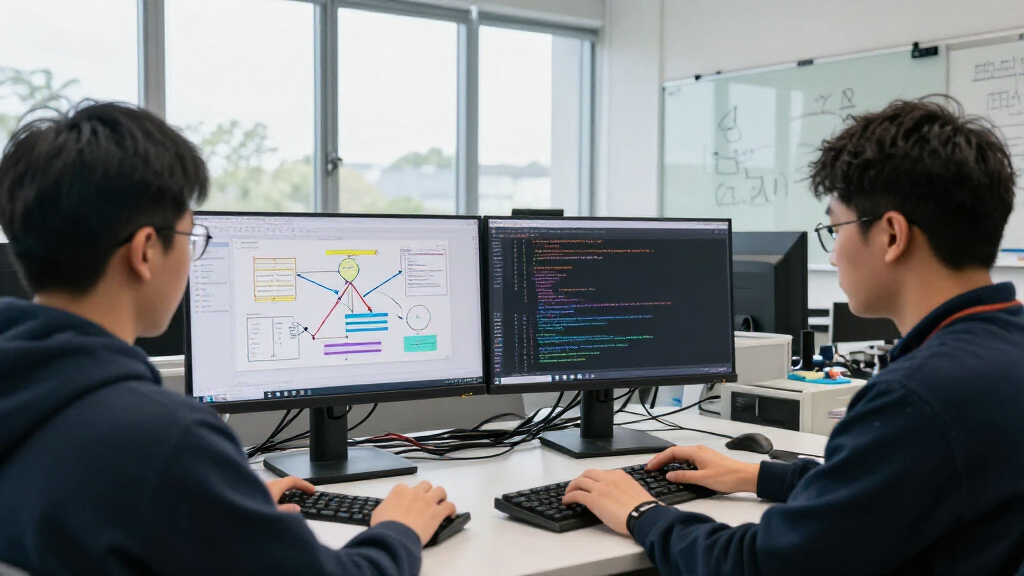
🔍 Read the full analysis: What Does A Software Stack Look Like When AI Builds The Tools? on ThorstenMeyerAI.com

Prime made for students and young adults
- Fast, free delivery for dorm and study essentials
- Prime Video and Amazon Music included
- Member-only deals
TL;DR
Thorsten Meyer says AI coding agents helped him replace several rented work tools with software he builds and operates himself. His account describes a personal setup, not an independently verified measure of cost or productivity; it also leaves him responsible for maintenance, security and review.
Thorsten Meyer says he has replaced several subscription software products for his work with tools built using Anthropic’s Claude and OpenAI’s Codex, two AI coding agents. In an article published November 25, he describes a personal software setup for analytics, project tracking, PDFs and video recording, while stressing that building and operating the tools makes maintenance, security and review his responsibility.
Meyer presents the setup as his own practice, not a broad industry survey or a tested comparison of software costs. He says his software subscriptions are now for Claude and Codex, while models used to generate voices, images and video clips are paid for separately on a per-use basis. The article does not provide a full cost comparison with the products he stopped renting.
He says coding agents work inside software projects: they can read and write code, run tests and report on their work. Meyer sets the goals and checks the results. He considers the agents comparable to senior developers in his experience, but notes they do not automatically retain his business knowledge between sessions. He maintains project notes, rules, plans and work logs to give them instructions.
Meyer says seven tools discussed in the article had 5,648 commits and 2,128 test files across his repositories as of November 24, 2026. Those are project-level counts reported by Meyer; the article gives no comparison baseline and does not establish how well the tools perform in production. He describes the services as connected so software agents can discover and use them, rather than requiring a person to click through each interface.
What Changes When Software Is Self-Built
Meyer’s account illustrates a shift in what some small firms and solo workers may be able to build: instead of adapting their processes to a general-purpose subscription product, they can use coding agents to create narrow tools for their own workflows. The practical barrier, in his telling, is less the act of producing code and more the ability to describe requirements precisely and decide whether the result is correct.
That does not make software free or remove the need for expertise. Meyer says he now handles maintenance, security and review, and depends on services from two AI companies. A business weighing a similar approach would need to account for subscription and model-use charges, the time needed to manage the tools, and what happens if a service or AI provider changes its terms or becomes unavailable.
For software vendors, Meyer argues that customers who need only a narrow set of features may build alternatives themselves. That is his assessment, not evidence that demand for commercial software is falling. His article suggests vendors may continue to compete on reliability, support, security and how easily other software can use their products.
Popular right now

Samsung 48-Inch S90F OLED 4K Smart TV (2025)

Ninja Prestige Smart XL Pro Cook System 10-in-1 Air Fryer and Countertop Oven, Stainless Steel, DT551

Roborock Qrevo 2 Pro Robot Vacuum and Mop with 20,000 Pa Suction
As an affiliate, we earn on qualifying purchases.
From Rented Apps to Connected Tools
Meyer frames the shift against the subscription software model, commonly called software as a service. The U.S. National Institute of Standards and Technology describes that model as using a provider’s applications on cloud infrastructure, with users generally not managing the underlying servers, storage or application capabilities. Meyer likens this to renting desks in separate office buildings: convenient, but controlled by different providers.
To make his own tools usable by agents, Meyer describes giving each one a readable guide and an interface for requests. He points to the Model Context Protocol, or MCP, an open-source standard released by Anthropic on November 25, 2024, for connections between data sources and AI tools. He also references llms.txt, a proposal for providing AI agents with information about websites. These approaches can make capabilities easier to discover, but they do not themselves decide which actions an agent is permitted to take.
In Meyer’s description, the resulting “fleet” is a set of services running across computers and able to communicate. He says the seven tools’ commit and test-file totals reflect work in his own repositories. The article is a written companion to a video, and its examples and evaluations are based on his experience building and using the tools.
““The scarce part is no longer the code. It is knowing exactly what you need, and checking that you got it.””
— Thorsten Meyer
Costs, Reliability and Security
The article does not state the former vendors’ prices, total current spending, development hours or the amount of work required to keep the services running. It therefore does not establish that the setup is cheaper overall. Meyer also does not provide independent testing of the tools’ reliability, security or suitability for other businesses.
It is unclear how the tools are hosted, how access is controlled, what data they handle, and what safeguards are in place if an agent makes an error. MCP can provide a way for software to connect, but, as Meyer notes, permissions and credentials still need to be managed. His account does not quantify dependence on Anthropic and OpenAI or explain a fallback if either provider changes its offerings.
The reported repository counts are not a measure of user adoption or product quality. No outside assessment or customer data is provided, and Meyer’s view of the agents’ coding ability is explicitly based on his experience.
Testing the Tools in Daily Work
Meyer’s next step, as described in the article, is to continue using and maintaining the services he has built. The piece does not announce a launch date, a commercial release or a formal evaluation. It also does not set out a public roadmap for the tools.
For readers considering a similar setup, the immediate questions are practical: which tasks need custom software, how the output will be checked, who will manage access and security, and what support is available when a service fails. Any wider claims about cost savings or productivity would require evidence beyond Meyer’s personal account, such as documented expenses, operating results and comparisons over time.
Key Questions
What software does Meyer say he replaced?
He says his tools for web analytics, project tracking, PDFs and video recording now run on software he built. The article does not name every former product.
Which AI coding agents did he use?
Meyer says he uses Claude Code from Anthropic and Codex from OpenAI to read and write code, run tests and report results.
Does his account show that AI-built software is cheaper?
No. Meyer describes his current subscriptions and says some media-generation models are billed per use, but provides no complete comparison with his former software costs or the time spent building and maintaining his tools.
What does “agentic” mean in this article?
Meyer uses the term for software that other agents can discover and use through a readable guide and a technical interface, rather than relying only on a person clicking through screens. Access rules still need to be set separately.
What responsibility comes with operating the tools?
Meyer says maintenance, security and review are now his responsibility. He also says he depends on Anthropic and OpenAI for the coding-agent subscriptions.
Source: ThorstenMeyerAI.com