🔍 Read the full analysis: How To Find Convenient, Fast Storage: 13 Best Portable SSDs For 2027 on ThorstenMeyerAI.com

Prime made for students and young adults
- Fast, free delivery for dorm and study essentials
- Prime Video and Amazon Music included
- Member-only deals
TL;DR
A buyer’s guide attributed to ThorstenMeyerAI.com compares 13 portable SSD listings, naming the Samsung T7 1TB as a balanced everyday starting point and highlighting the Samsung T9 and SanDisk Extreme 4TB for larger workloads. The guide cautions that advertised top speeds depend on compatible ports, cables and workloads; prices, independent test results and a full model-by-model list are not included in the supplied material.
ThorstenMeyerAI.com’s 2027 portable SSD guide compares 13 drive listings by advertised speed, capacity, connection requirements and design, recommending the Samsung T7 1TB as a balanced starting point for everyday use. It also points buyers with larger workloads toward the Samsung T9 and SanDisk Extreme 4TB, while warning that top speed claims depend on compatible hardware.
The guide says the T7’s USB 3.2 Gen 2 connection offers a practical mix of speed, capacity and compatibility, a consideration also covered in this portable SSD comparison. It contrasts that with the Samsung T9’s advertised maximum of up to 2,000 MB/s across its 1TB, 2TB and 4TB versions. That figure is a manufacturer-style maximum cited by the guide, not a guarantee of real-world transfer performance.
According to the guide, approaching the T9’s advertised speed requires a host device and cable that support USB 3.2 Gen 2×2, a compatibility factor that also matters for portable SSDs used for AI. A USB-C socket alone does not establish that support. The guide also notes that file size and sustained workload can affect transfer results, and that some SanDisk Extreme listings advertise speeds in the same general tier.
The 13-pick comparison is described as covering capacity, intended use and likely limitations, but the supplied source material does not name all 13 individual listings. It identifies SanDisk Portable SSD and Extreme models, including 500GB, 2TB and 4TB capacities, and cautions that some listings with similar names and capacities show different speed claims. Buyers are advised to check the exact model specifications before ordering.
The 13 picks
- 1
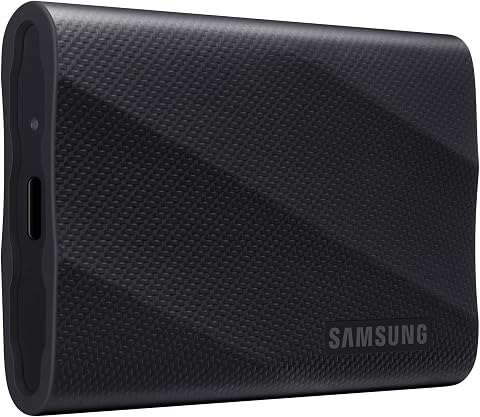 Samsung T9 Portable SSD 4TB, USB 3.2 Gen 2×2 External Solid State DriveView on Amazon →
- 2
 SanDisk Extreme Portable SSD, 4TB, Up to 2000MB/sView on Amazon →
- 3Samsung T9 Portable SSD 2TB, USB 3.2 Gen 2×2, Up to 2,000 MB/sView on Amazon →
- 4SanDisk Extreme Portable SSD, 2TB, Up to 2000MB/sView on Amazon →
- 5
 SanDisk Extreme 2TB Portable SSDView on Amazon →
- 6
 SanDisk 2TB Portable SSD, Up to 1000 MB/s Read Speed, BlackView on Amazon →
- 7Samsung T9 Portable SSD 1TB, USB 3.2 Gen 2×2, Up to 2,000 MB/sView on Amazon →
- 8SanDisk Extreme Portable SSD, 1TB, Up to 2000MB/sView on Amazon →
- 9
 Samsung T7 Portable SSD 1TB Titan Gray, USB 3.2 Gen 2, Up to 1,050MB/sView on Amazon →
- 10SanDisk 1TB Extreme Portable SSD, Up to 1050MB/sView on Amazon →
- 11SanDisk 1TB Portable SSD, Up to 1000MB/s Read Speed, BlackView on Amazon →
- 12SanDisk 500GB Portable SSD, Up to 1000MB/s Read Speed, BlackView on Amazon →
- 13
 SSK Portable SSD 500GB External Solid State Drive USB-C/USB-AView on Amazon →
Match SSD Speed to Your Devices
The buying decision affects both transfer time and cost: a premium speed tier may offer little benefit if a computer’s port cannot use it. Checking the host device, cable and drive standard before purchase can help avoid paying for performance that a setup cannot reach. For large video, photo or project files, capacity planning may matter more than the highest advertised speed.
Design is another practical distinction. The guide presents SanDisk’s standard Portable SSD line as a straightforward storage option and its Extreme family as more suited to people who value a tougher portable design. Neither category replaces a second copy of important files: a portable SSD used as the sole copy is not a backup plan.
Popular right now

KitchenAid Artisan 5-Quart Tilt-Head Stand Mixer, Almond Cream

Roborock Q7 M5+ Robot Vacuum and Mop with Self-Emptying Dock

Ninja SP151 Flip Toaster Oven & Air Fryer, Stainless Steel
As an affiliate, we earn on qualifying purchases.
How the Guide Compares Drives
The source says its ranking weighs advertised speed, usable capacity, connection requirements, portability and intended workload. It favors balanced options over headline speed alone and treats larger capacity variants as choices for different needs, not automatically better-performing products.
Its main recommendation is the Samsung T7 1TB for everyday transfers, while the T9 and larger SanDisk Extreme models are framed for heavier workloads or large files. These are editorial recommendations from the guide, not results from independently reported benchmark testing in the supplied material.
“The Samsung T7 is the balanced starting point.”
— ThorstenMeyerAI.com guide
Specifications and Availability to Verify
The supplied material does not provide the complete names of all 13 picks, current prices, purchase links or a publication date. It also does not include independent benchmark results, so the speed figures should be read as advertised maxima cited by the guide rather than verified performance across devices.
It is unclear which exact SanDisk Extreme listings carry each speed claim, and the source specifically warns that models with similar names and capacities may differ. Buyers should confirm the full model number, connection standard and protection details on the product listing. Real transfer speeds will vary with the device, cable, files and sustained workload.
Check the Exact Model Before Buying
The guide’s practical next step is to check the computer or mobile device’s specifications, confirm cable compatibility and choose capacity around the files that will stay on the drive. Buyers considering a faster model should verify USB 3.2 Gen 2×2 support rather than relying on the USB-C connector shape.
Before purchase, compare the exact listing’s advertised speed and documented protection details, particularly among similarly named SanDisk models. The supplied material does not announce a later update or testing milestone; availability and prices remain to be checked at the time of purchase.
Key Questions
Which portable SSD does the guide recommend for everyday use?
It names the Samsung T7 1TB as a balanced starting point, citing its USB 3.2 Gen 2 connection and everyday usefulness.
Will the Samsung T9 always reach 2,000 MB/s?
No. The guide describes up to 2,000 MB/s as an advertised maximum for the listed T9 capacities. Reaching that level depends on compatible USB 3.2 Gen 2×2 host hardware and cable, and actual results can vary by workload.
Is USB-C enough to confirm a drive will run at full speed?
No. USB-C identifies the connector shape, not the transfer standard or speed supported by the device. Check the device specifications and cable as well as the drive.
How much storage capacity should I choose?
Base the choice on the files and projects you expect to keep on the drive. The guide describes 500GB as a lighter-use option and larger capacities as more suitable for growing photo, video or project collections.
Does a rugged-style SSD replace a backup?
No. The guide says a tougher portable design may suit travel or mobile work, but it does not make data loss impossible. Keep another copy of important files on a separate device or backup service.
Source: ThorstenMeyerAI.com