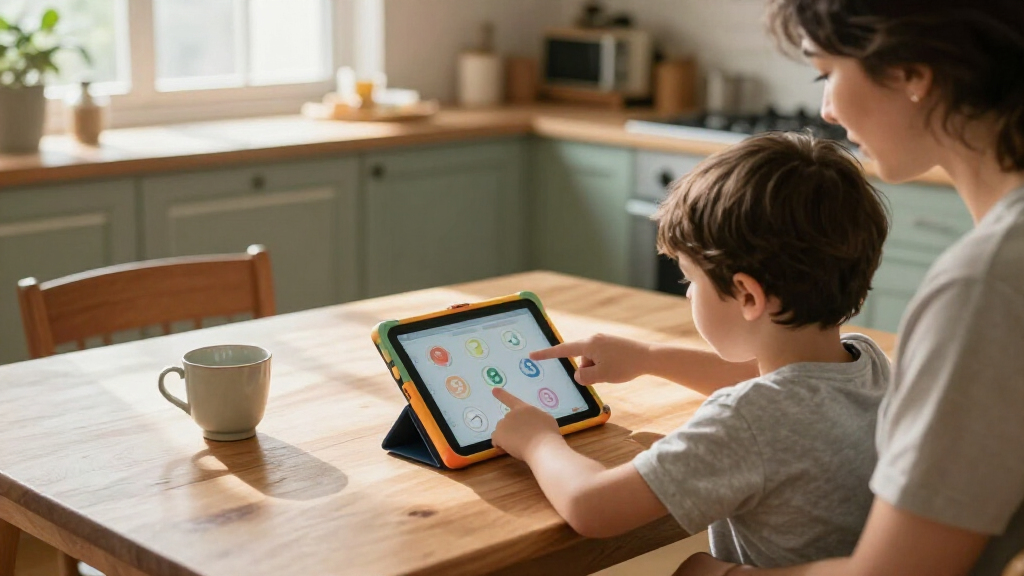

Electronic learning tablets for kids range from simple preschool activity toys to larger Android tablets built for apps and videos. My best overall pick is the LeapFrog LeapPad Academy, which puts child-focused learning ahead of headline hardware claims; the pink and green versions share the same learning-first role. For a larger screen and broader Android use, the COLORROOM 10.1-inch tablet stands out, while the hahaland five-language tablet suits toddlers who benefit from simple, focused language activities. The main tradeoff is between guided learning and flexibility: dedicated toys are easier to keep focused, while Android models offer more screen space and app choice but call for closer parent setup. Read on for how the 11 options differ and which type best fits your child.

Prime made for students and young adults
- Fast, free delivery for dorm and study essentials
- Prime Video and Amazon Music included
- Member-only deals
Key Takeaways
- The LeapPad Academy ranks ahead of general Android tablets for guided learning: it is the clearest fit for families who want a child-oriented experience rather than a general-purpose screen.
- The two LeapPad colors are the same pick for different preferences: pink and green do not represent separate learning tiers, so choose by color availability rather than assumed capability.
- Screen size marks a real use-case split: COLORROOM and the Android 16 10-inch model offer more room for media and activities, while the 7-inch Android models are easier to handle and carry.
- More RAM or storage does not automatically mean better learning: specs such as 24GB RAM or 1TB expansion on the Android 16 model do not establish app quality, child safety, or ease of setup.
- Simple toys still have a place: the 3-inch alphabet-and-math device and hahaland‘s five-language format avoid many open-tablet distractions, but offer less flexibility than Android options.
| Kids Learning Tablet – 3.0″ HD Color Screen Alphabet/Words//Math/Games/Music Preschool Interactive Educational Electronics for Boys and Girls |  | Best for First Learning Basics | Screen: 3.0-inch color screen | Learning topics: ABC, numbers, words, math, music, and drawing | Activities: 50 games and five learning modes | VIEW LATEST PRICE | See Our Full Breakdown |
| COLORROOM 10.1-Inch Kids Tablet, Android 15, 10GB RAM, 64GB Storage, Pink |  | Best for a Full-Size Learning Tablet | Operating system: Android 15 | Processor: Octa-core CPU | Display: 10.1-inch HD, 1280 × 800 | VIEW LATEST PRICE | See Our Full Breakdown |
| hahaland Five-Language Learning Tablet Toy for Toddlers |  | Best Screen-Free Pick for Toddlers | Age range: 12 months to 3 years | Activities: More than 90 learning modules | Interactive icons: 39 | VIEW LATEST PRICE | See Our Full Breakdown |
| TOPELOTEK 7-Inch Kids Tablet, 2GB RAM, 32GB Storage |  | Best for Offline Learning | Screen: 7-inch HD IPS | Memory: 2GB RAM | Storage: 32GB, expandable to 128GB | VIEW LATEST PRICE | See Our Full Breakdown |
| HOTTABLET 7-Inch Kids Android Tablet, 4GB RAM, 32GB Storage, Blue |  | Best for App-Based Learning on a Compact Screen | Operating system: Android 12 | Screen: 7-inch IPS touchscreen | Resolution: 1024 × 600 | VIEW LATEST PRICE | See Our Full Breakdown |
| LeapFrog LeapPad Academy Kids’ Learning Tablet, Pink |  | Best Structured Learning Pick | Display: 7-inch LCD, 1024 × 600 | Operating system: Android | Storage: 16 GB | VIEW LATEST PRICE | See Our Full Breakdown |
| Android 16 Kids Tablet HD 10 Inch with Stylus & Case, 24GB RAM 64GB ROM 1TB |  | Best for a Larger Screen | Display: 10-inch IPS, 1280 × 800 | Operating system: Android 16 | Processor: Allwinner A333, up to 1.8 GHz | VIEW LATEST PRICE | See Our Full Breakdown |
| LeapFrog LeapPad Academy Kids’ Learning Tablet, Green |  | Best for Guided Learning on a Compact Tablet | Display: 7-inch LCD, 1024 × 600 | Operating system: Android | Processor: Quad-core, up to 1.5 GHz | VIEW LATEST PRICE | See Our Full Breakdown |
| Trayoo 7-Inch Kids Tablet, 32GB, Blue |  | Best for Offline Learning Content | Display: 7-inch IPS, 1024 × 600 | Processor: Allwinner quad-core | RAM: 2 GB | VIEW LATEST PRICE | See Our Full Breakdown |
| PEICHENG 7-Inch Kids Tablet, Android 12, 4GB RAM, 32GB Storage, Parental Controls, Blue |  | Best Compact Android Option | Operating system: Android 12 | Display: 7-inch IPS, 1024 × 600 | Processor: Quad-core | VIEW LATEST PRICE | See Our Full Breakdown |
| YINOCHE Y8 Kids Tablet, 7-Inch, 32GB, Android 11, Pink |  | Best for Offline Learning | Screen size: 7 inches | Operating system: Android 11 | Processor: Quad-core | VIEW LATEST PRICE | See Our Full Breakdown |
| electronic learning tablets for kid | Storage | Processor | Operating system | Battery |
|---|---|---|---|---|
| Kids Learning Tablet | — | — | — | — |
| COLORROOM 10.1-Inch Kids Table | 64GB, expandable up to 1TB with MicroSD | Octa-core CPU | Android 15 | 6000mAh; listed average runtime up to 8 hours |
| hahaland Five-Language Learnin | — | — | — | — |
| TOPELOTEK 7-Inch Kids Tablet | 32GB, expandable to 128GB | Allwinner | — | 3500mAh; up to 8 hours listed |
| HOTTABLET 7-Inch Kids Android | 32GB, expandable up to 1TB | 4-core CPU | Android 12 | 3000mAh; up to 8 hours of mixed use |
| LeapFrog LeapPad Academy Kids’ | 16 GB | — | Android | — |
| Android 16 Kids Tablet HD 10 I | 64 GB; microSD expansion up to 1 TB | Allwinner A333, up to 1.8 GHz | Android 16 | 6000 mAh |
| LeapFrog LeapPad Academy Kids’ | 16 GB | Quad-core, up to 1.5 GHz | Android | 2500 mAh lithium-ion |
| Trayoo 7-Inch Kids Tablet | 32 GB; microSD expansion up to 1 TB | Allwinner quad-core | — | — |
| PEICHENG 7-Inch Kids Tablet | 32 GB; microSD expansion up to 512 GB | Quad-core | Android 12 | Lithium-ion, 11 Wh |
| YINOCHE Y8 Kids Tablet | 32GB, expandable up to 512GB | Quad-core | Android 11 | 3500mAh; up to 10 hours |
More Details on Our Top Picks
Kids Learning Tablet – 3.0″ HD Color Screen Alphabet/Words//Math/Games/Music Preschool Interactive Educational Electronics for Boys and Girls
This compact learning toy keeps the focus on early skills rather than apps, internet access, or video. Its activities cover letters, numbers, first words, music, drawing, and games, giving preschoolers several ways to practice recognition and hand-eye coordination. The small color screen and lightweight body make it easier for young children to hold than the larger COLORROOM 10.1-Inch Kids Tablet, while its five learning modes offer more varied play than a single-purpose alphabet toy.
The tradeoff is that its 3-inch display and manual operation limit what children can do compared with a full Android tablet, and the listing does not describe parental controls or an app library. It makes more sense for short, guided learning sessions than for families seeking a device that grows with a child. The stated battery details are also unclear: the listing mentions a rechargeable battery but lists a 9V battery requirement.
Pros:- Covers early alphabet, number, word, music, and drawing activities in one toy.
- Lightweight, compact format is easier for preschoolers to carry than a 7- or 10-inch tablet.
- Includes 50 games and five learning modes for varied short play sessions.
- Color screen and child-oriented grip suit simple independent handling.
Cons:- The 3-inch screen is small for reading or extended learning activities.
- No app downloads, Wi-Fi, or parental controls are specified.
- Battery information conflicts between the rechargeable-battery description and the listed 9V battery requirement.
Best for: Preschool families looking for a small, simple device for practicing letters, numbers, first words, and music without needing a general-purpose tablet.
Not ideal for: Families wanting downloadable learning apps, parental screen-time controls, a larger display, or clear battery specifications.
- Screen:3.0-inch color screen
- Learning topics:ABC, numbers, words, math, music, and drawing
- Activities:50 games and five learning modes
- Power:Built-in 1800mAh rechargeable battery stated; listing also specifies one included 9V battery
- Dimensions:7.1 × 6.9 × 0.1 inches
- Weight:8 ounces
- Color:Pink
Our verdict“Choose this for basic, screen-based preschool practice in a compact toy format, not as a replacement for an app-enabled kids tablet.”
COLORROOM 10.1-Inch Kids Tablet, Android 15, 10GB RAM, 64GB Storage, Pink
For families who want a real Android tablet with kid-focused controls, this COLORROOM pairs a 10.1-inch HD screen with Google Kids Space and parental settings for content and screen-time management. Its 64GB internal storage, expandable by MicroSD, leaves more room for apps and downloaded material than the 32GB TOPELOTEK 7-Inch Kids Tablet. The larger display also gives learning apps, reading, and shared viewing more space than the compact options in this roundup.
The size and broader app access bring more flexibility, but this is a general-purpose tablet rather than a dedicated early-learning toy like the hahaland Five-Language Learning Tablet Toy. Caregivers will need to set up and manage its digital environment. The 6000mAh battery is listed for up to eight hours, while the description also claims eight to twelve, so runtime expectations should stay cautious. Its MicroSD expansion requires a separate card.
Pros:- 10.1-inch HD display provides more room for reading and interactive learning apps.
- Google Kids Space and parental controls support content management and screen-time limits.
- 64GB storage can be expanded up to 1TB with a MicroSD card.
- Includes an EVA case, dual stereo speakers, USB-C, and a headphone jack.
Cons:- MicroSD card for expanded storage is sold separately.
- Battery runtime is inconsistent in the listing, with up to eight hours specified and eight to twelve hours also claimed.
- A larger Android tablet requires more caregiver setup than a dedicated toy such as the hahaland learning tablet.
Best for: Families seeking a larger Android device for learning apps, videos, and managed child profiles, with room to expand storage.
Not ideal for: Caregivers who prefer screen-free or narrowly focused learning toys, or who want a small, low-complexity device for toddlers.
- Operating system:Android 15
- Processor:Octa-core CPU
- Display:10.1-inch HD, 1280 × 800
- Memory:10GB listed (4GB + 6GB)
- Storage:64GB, expandable up to 1TB with MicroSD
- Battery:6000mAh; listed average runtime up to 8 hours
- Connectivity:2.4GHz and 5GHz Wi-Fi, Bluetooth, USB-C, and 3.5mm audio jack
- Included accessories:EVA case, USB cable, and manual
Our verdict“Pick the COLORROOM if you want a large, app-capable kids tablet with controls and expandable storage rather than a single-purpose learning toy.”
hahaland Five-Language Learning Tablet Toy for Toddlers
This is the clearest choice for screen-free early learning: children interact with icons, sounds, and music instead of watching a display. More than 90 activities span learning, quizzes, music, and pretend play, while five listed languages—English, French, Spanish, German, and Italian—add a playful introduction to different words. That makes it more focused on toddler-friendly interaction than the app-based COLORROOM 10.1-Inch Kids Tablet, and more age-specific than the broader preschool toy with a color screen.
Its compact BPA-free ABS body suits short play sessions and travel, but the stated age range of 12 months to 3 years also limits how long it may remain engaging. Unlike the COLORROOM or TOPELOTEK 7-Inch Kids Tablet, it does not offer a general app library or a large display; that simplicity is the point, but older children may outgrow it. Product information also gives conflicting language counts in different sections, so I would confirm the included language options before buying.
Pros:- Screen-free activities use sounds, music, and interactive icons.
- More than 90 activities across learning, quiz, music, and pretend-play modes.
- Five listed language options support exposure to early words in multiple languages.
- Compact design uses BPA-free ABS plastic and is suited to travel.
Cons:- The 12-month-to-3-year age range may mean children outgrow it quickly.
- No screen, app store, or general-purpose tablet functions are included.
- Product information conflicts on the number of supported languages.
Best for: Caregivers of children aged 12 months to 3 years who want portable, sound-based learning without a conventional screen.
Not ideal for: Families shopping for older children, downloadable learning apps, visual lessons, or a tablet that can serve general entertainment needs.
- Age range:12 months to 3 years
- Activities:More than 90 learning modules
- Interactive icons:39
- Modes:Learning, quiz, music, and pretend play
- Languages:English, French, Spanish, German, and Italian listed
- Material:BPA-free ABS plastic
- Players:1
- Model:35847
Our verdict“Choose the hahaland for toddler-focused, screen-free play; choose the COLORROOM instead if your child needs apps and a larger visual display.”
TOPELOTEK 7-Inch Kids Tablet, 2GB RAM, 32GB Storage
Preloaded Montessori and STEM content is this tablet’s main distinction: children can access learning activities without relying on a constant connection. That gives it a more education-first starting point than the HOTTABLET 7-Inch Kids Android Tablet, which emphasizes Android apps and Play Store access, while its 7-inch size is easier to handle than the 10.1-inch COLORROOM. Caregivers also get screen-time limits and content filters, and the rotatable stand can make lessons or videos easier to view hands-free.
The tradeoff is modest hardware: 2GB RAM and 32GB storage leave less headroom than the COLORROOM’s listed 10GB RAM and 64GB storage. Storage can reach 128GB with expansion, but that still does not make this the strongest choice for a large app collection. The listing describes a drop-resistant build and up to eight hours of battery life, though the processor and age information are sparse; buyers wanting clearly stated performance details may prefer a more fully specified option.
Pros:- Preloaded Montessori, STEM, and game content can support use away from Wi-Fi.
- Parental controls include screen-time limits and content filters.
- Lightweight 7-inch format has a drop-resistant design and rotatable stand.
- Adjustable brightness and listed eight-hour battery life support everyday use.
Cons:- 32GB internal storage and 2GB RAM offer less capacity than the COLORROOM tablet.
- Storage expansion is limited to 128GB, below the HOTTABLET’s stated 1TB support.
- The listing provides conflicting intended age information and limited processor details.
Best for: Families who want a compact kids tablet with offline Montessori and STEM activities, basic parental controls, and a viewing stand.
Not ideal for: Children who need a large app library, high storage capacity, or caregivers who want detailed and consistent age and hardware information.
- Screen:7-inch HD IPS
- Memory:2GB RAM
- Storage:32GB, expandable to 128GB
- Processor:Allwinner
- Battery:3500mAh; up to 8 hours listed
- Learning content:Preloaded Montessori lessons, STEM activities, and games
- Controls:Screen-time limits and content filters
- Included components:Tablet, Type-C cable, charger, and manual
Our verdict“Choose the TOPELOTEK for preloaded offline lessons and a stand, but look to the HOTTABLET or COLORROOM for broader app and storage flexibility.”
HOTTABLET 7-Inch Kids Android Tablet, 4GB RAM, 32GB Storage, Blue
The HOTTABLET suits families who want a small Android device for learning apps without moving up to a larger screen. Its parental controls cover profiles, content, and screen time, while Wi-Fi and Play Store access offer a broader app route than the preloaded offline lessons on the TOPELOTEK 7-Inch Kids Tablet. It also includes a protective stand case and dual cameras, giving children options for hands-free viewing and basic camera activities.
Compared with the TOPELOTEK, the HOTTABLET lists more RAM and much greater storage expansion, up to 1TB, but its 1024 × 600 resolution is modest and the 3000mAh battery is rated for up to eight hours of mixed use. Its Android 12 system is older than the Android 15 COLORROOM, and the seven-inch screen leaves less room for reading and multitasking. This is a practical compact app device, not the best pick for families prioritizing the newest software or a generous display.
Pros:- Parental controls support profile, content, and screen-time management.
- Play Store access allows families to add educational apps.
- Storage is listed as expandable up to 1TB, exceeding the TOPELOTEK’s stated 128GB limit.
- Protective stand case, dual cameras, Wi-Fi, and Bluetooth are included or supported.
Cons:- 1024 × 600 resolution is lower than the COLORROOM’s 1280 × 800 display.
- Android 12 is older than the Android 15 system listed for the COLORROOM.
- The 3000mAh battery is rated for up to eight hours of mixed use, so extended sessions may need recharging.
Best for: Families seeking a 7-inch Android tablet for educational apps, with parental controls, a stand case, and substantial optional storage expansion.
Not ideal for: Buyers who prioritize a high-resolution screen, newer listed Android software, or a larger display for reading and shared activities.
- Operating system:Android 12
- Screen:7-inch IPS touchscreen
- Resolution:1024 × 600
- Memory:4GB listed (2GB original + 2GB expandable)
- Storage:32GB, expandable up to 1TB
- Processor:4-core CPU
- Battery:3000mAh; up to 8 hours of mixed use
- Cameras and connectivity:2MP front and rear cameras; Wi-Fi, Bluetooth, and USB Type-C
- Included components:Protective case with stand and Type-C cable
Our verdict“Pick the HOTTABLET for a compact, app-capable kids device with broad storage expansion, but choose the COLORROOM for a larger, higher-resolution screen and newer listed Android version.”
LeapFrog LeapPad Academy Kids’ Learning Tablet, Pink
LeapFrog’s educator-approved learning apps make this a better fit for guided early learning than a general-purpose kids tablet. More than 20 apps cover reading, math, writing, coding, problem-solving, and creativity, while parental controls let caregivers manage apps and screen time. A stylus, protective bumper, and built-in kickstand support drawing and tabletop activities for children ages 3–8. Compared with the Trayoo 7-Inch Kids Tablet, this model puts more emphasis on a curated learning ecosystem, rather than the listed combination of offline content and expandable storage. The tradeoff is that its 7-inch, 1024 × 600 screen is compact, and the LeapFrog Academy trial lasts three months; continued access requires a subscription. Extra App Center content is sold separately, so families seeking a broad, open-ended Android tablet may prefer another option.
Pros:- More than 20 included educator-approved apps span several early-learning subjects.
- Three-month LeapFrog Academy trial adds guided lessons and activities.
- Stylus and built-in kickstand support drawing and hands-free tabletop use.
- Parental controls include time limits and app management.
Cons:- The 7-inch 1024 × 600 display offers less room for reading and activities than 10-inch options such as the Android 16 Kids Tablet.
- Additional App Center content is sold separately, and continued LeapFrog Academy access requires a subscription.
- The listed 16 GB storage may constrain families who want to keep a large library of apps and media.
Best for: Families with children ages 3–8 who want guided early-learning activities and parent-managed screen time in a ready-to-use device.
Not ideal for: Families who want a larger display, lots of included storage, or ongoing access to all learning content without a subscription or separate purchases.
- Display:7-inch LCD, 1024 × 600
- Operating system:Android
- Storage:16 GB
- Age range:3–8 years
- Included learning content:More than 20 educator-approved apps
- Controls:Time limits, app management, and kid-friendly web content
- Included accessories:Stylus and protective bumper with kickstand
- Cameras:2 MP front and rear
Our verdict“Choose the pink LeapPad Academy if curated learning for a preschool or early-elementary child matters more than screen size and open-ended tablet flexibility.”
Android 16 Kids Tablet HD 10 Inch with Stylus & Case, 24GB RAM 64GB ROM 1TB
A 10-inch IPS display gives this tablet more room for picture books, drawing, and shared viewing than the 7-inch LeapFrog LeapPad Academy or the Trayoo 7-Inch Kids Tablet. The included stylus and case with a 180-degree adjustable stand make it suited to both hands-on activities and propped-up reading. Its UKIDOZ Kids Space and parental controls offer a kid-focused starting point, with settings for screen time, app permissions, and content filtering. The 64 GB storage can be expanded with a microSD card, useful for families keeping media and learning materials on the device. However, the advertised 24 GB RAM figure is not clearly broken down, so I would not choose it on that claim alone. The broad 3–12 age range also means families should check whether the content matches a younger child’s learning needs.
Pros:- 10-inch IPS display provides more workspace for reading and drawing than the 7-inch models in this batch.
- Protective case includes an adjustable stand, and a stylus is included.
- 64 GB storage with microSD expansion support up to 1 TB.
- UKIDOZ Kids Space and controls for screen time, apps, and content filtering are included.
Cons:- The listed 24 GB RAM claim is not explained as physical memory versus memory expansion.
- The 1280 × 800 resolution is modest for a 10-inch screen.
- The 6000 mAh battery is specified, but no runtime estimate is provided.
Best for: Families seeking a larger-screen Android tablet for school-age children who will use drawing, reading, videos, and learning apps.
Not ideal for: Caregivers of preschoolers who want a narrowly age-targeted, educator-curated curriculum like the LeapFrog LeapPad Academy, or buyers who need verified memory specifications.
- Display:10-inch IPS, 1280 × 800
- Operating system:Android 16
- Processor:Allwinner A333, up to 1.8 GHz
- Memory:24 GB advertised RAM
- Storage:64 GB; microSD expansion up to 1 TB
- Battery:6000 mAh
- Cameras:5 MP front, 8 MP rear autofocus
- Included features:UKIDOZ Kids Space, protective case with adjustable stand, and stylus
Our verdict“Pick this model when a larger screen and stylus matter more than a tightly curated, preschool-focused learning program.”
LeapFrog LeapPad Academy Kids’ Learning Tablet, Green
The green LeapPad Academy offers the same learning-first approach as the pink version: more than 20 educator-approved apps, a three-month LeapFrog Academy trial, and controls for setting time limits and managing apps. Its compact 7-inch format, stylus, and kickstand suit short lessons, drawing, and tabletop use for children ages 3–8. The listed hardware includes a quad-core processor and 2500 mAh battery, while the product description does not give a battery runtime. Compared with the PEICHENG 7-Inch Kids Tablet, the LeapPad foregrounds a curated educational catalog; PEICHENG offers a more conventional Android setup with Bluetooth, cameras, and expandable storage. The LeapPad’s tradeoff is a smaller 16 GB capacity, plus paid content and a subscription after the trial. Since the pink LeapPad has the same learning features, this green version is chiefly a color choice, not a different capability tier.
Pros:- More than 20 educator-approved apps cover early academic and creative skills.
- Three-month LeapFrog Academy trial provides additional guided activities.
- Stylus, protective bumper, and kickstand support drawing and tabletop learning.
- Parental controls include time limits and app management.
Cons:- 16 GB storage is limited compared with the PEICHENG’s 32 GB and microSD support.
- Access to extra content can require separate purchases or a subscription.
- The 7-inch 1024 × 600 display is smaller than the 10-inch Android 16 Kids Tablet, and no battery runtime is listed.
Best for: Caregivers choosing a compact, guided learning tablet for a child ages 3–8 who prefers green and benefits from structured app content.
Not ideal for: Families needing larger storage, a larger screen, or the flexibility of a general Android tablet with expandable storage.
- Display:7-inch LCD, 1024 × 600
- Operating system:Android
- Processor:Quad-core, up to 1.5 GHz
- Storage:16 GB
- Battery:2500 mAh lithium-ion
- Age range:3–8 years
- Included learning content:More than 20 educator-approved apps
- Included accessories:Stylus and protective bumper with kickstand
Our verdict“Choose the green LeapPad when a young child needs a compact, curriculum-led device and the color suits your household better than the otherwise similar pink version.”
Trayoo 7-Inch Kids Tablet, 32GB, Blue
Offline learning content is the Trayoo’s clearest advantage for families who want activities available without relying on a Wi-Fi connection. Its YuBaBe learning app is paired with parental controls for screen-time limits and blocking apps or websites, while the included protective case adds a practical layer for everyday handling. Compared with the LeapFrog LeapPad Academy, Trayoo is less focused on a named, educator-approved learning ecosystem but offers 32 GB storage with expansion up to 1 TB, giving families more room to manage their own apps and media. The 7-inch IPS display is still compact and has a 1024 × 600 resolution, so it is better for short activities than extended reading. Its battery is listed for up to eight hours, but actual use will vary. This is a sensible fit for portable basics, not a curriculum-rich substitute for LeapFrog.
Pros:- YuBaBe learning app includes offline content for use away from Wi-Fi.
- Parental controls can set time limits and block apps or websites.
- 32 GB storage can be expanded by microSD up to 1 TB.
- Protective case is included, and battery life is listed at up to eight hours.
Cons:- The 7-inch 1024 × 600 screen provides limited space for books and learning activities.
- The listing does not specify the age range or detail the scope of the included learning curriculum.
- The Allwinner quad-core processor and 2 GB RAM may limit headroom for heavier multitasking.
Best for: Families who want a compact tablet with offline learning activities, parental controls, and room to add storage for travel use.
Not ideal for: Parents seeking a clearly defined, educator-approved curriculum or a larger screen for long reading sessions.
- Display:7-inch IPS, 1024 × 600
- Processor:Allwinner quad-core
- RAM:2 GB
- Storage:32 GB; microSD expansion up to 1 TB
- Battery life:Up to 8 hours
- Battery capacity:3500 mAh
- Learning content:YuBaBe app with offline content
- Included components:Protective case, charger head, USB-C cable, and user manual
Our verdict“Choose the Trayoo for portable offline activities and expandable storage, but choose the LeapFrog LeapPad Academy if curated early-learning content is the priority.”
PEICHENG 7-Inch Kids Tablet, Android 12, 4GB RAM, 32GB Storage, Parental Controls, Blue
Flexible parental controls give the PEICHENG a more configurable feel than the LeapFrog LeapPad Academy, with profiles, screen-time limits, app restrictions, and web filtering listed. It runs Android 12 and pairs a 7-inch IPS screen with 32 GB storage, expandable by microSD up to 512 GB. That makes it a compact general-purpose choice for families who want to select their own learning apps rather than rely on LeapFrog’s curated catalog. The adjustable-stand protective case is useful for video lessons or hands-free reading, and automatic brightness adjustment can adapt the screen to changing light. Its advertised 4 GB RAM includes 2 GB of expansion, so it should not be read as 4 GB of physical RAM. The 1024 × 600 display is modest, and, unlike the larger Android 16 Kids Tablet, this model has no cellular connectivity.
Pros:- Parental controls include profiles, screen-time limits, app restrictions, and web filtering.
- 32 GB storage supports microSD expansion up to 512 GB.
- Protective case includes an adjustable stand for videos and hands-free activities.
- Automatic brightness adjustment helps adapt the screen to different lighting.
Cons:- The 4 GB RAM figure includes 2 GB of expansion, rather than representing 4 GB of physical RAM.
- The 7-inch 1024 × 600 display is small for reading or multi-step school activities.
- No cellular connectivity is listed, so internet-based activities need Wi-Fi.
Best for: Families who want a small Android tablet with customizable controls, a stand, and the option to install their own learning apps.
Not ideal for: Buyers who want a larger, sharper display, cellular internet, or a clearly curated learning library included out of the box.
- Operating system:Android 12
- Display:7-inch IPS, 1024 × 600
- Processor:Quad-core
- Memory:4 GB advertised, including 2 GB expansion
- Storage:32 GB; microSD expansion up to 512 GB
- Cameras:2 MP front, 5 MP rear
- Connectivity:Wi-Fi and Bluetooth
- Battery:Lithium-ion, 11 Wh
- Included features:Protective case with adjustable stand and parental controls
Our verdict“Choose the PEICHENG if you want a compact Android device with detailed parental controls, but skip it for curated lessons or a roomier screen.”
YINOCHE Y8 Kids Tablet, 7-Inch, 32GB, Android 11, Pink
The YINOCHE Y8 is a practical pick for families who want a general-purpose Android tablet with learning content ready for offline use. Its included IWAWA apps and parental controls give younger children a more guided starting point, while Google Play app downloads leave room to add other learning tools. Compared with the LeapFrog LeapPad Academy, this model offers a standard Android app environment rather than a more tightly defined learning platform, which can suit households that want flexibility but calls for parents to manage downloads and settings.
The 7-inch screen and 3500mAh battery make it portable, and storage can grow to 512GB for downloaded content. The tradeoffs are modest 2GB RAM and low-resolution cameras; the small display may also feel cramped for longer reading or shared activities. I’d choose it for flexible, mostly solo learning, not for camera quality or a larger-screen classroom feel.
Pros:- Includes IWAWA apps and offline educational content for learning without a Wi-Fi connection.
- Parental controls cover screen time, websites, apps, and video access.
- Storage expands up to 512GB, leaving room for downloaded lessons and media.
- Supports video calling and Google Play app downloads.
Cons:- The 7-inch display can feel cramped for reading and activities involving more than one child.
- With 2GB RAM, it is less suited to demanding apps or frequent multitasking than higher-memory options such as the HOTTABLET 7-Inch.
- The 0.3MP front and 2.0MP rear cameras offer limited image detail for video calls and photos.
Best for: Families seeking a portable Android tablet with offline educational apps, expandable storage, and parental controls for a child who will also use general apps.
Not ideal for: Buyers who want a large display for reading or shared activities, stronger multitasking capacity, or clear video-call images.
- Screen size:7 inches
- Operating system:Android 11
- Processor:Quad-core
- RAM:2GB
- Storage:32GB, expandable up to 512GB
- Battery:3500mAh; up to 10 hours
- Cameras:0.3MP front; 2.0MP rear
- Connectivity:Wi-Fi
Our verdict“Choose the YINOCHE Y8 if you want a portable Android tablet with offline learning apps and parental controls, and can accept its small screen and basic cameras.”
How We Picked
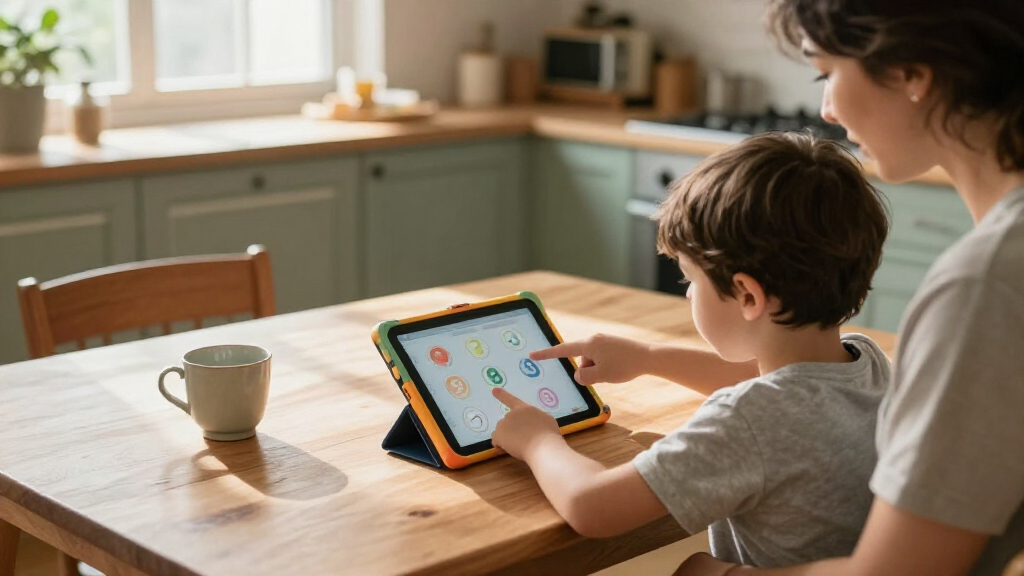
I ranked these electronic learning tablets for kids by how clearly each product matches a child’s learning and supervision needs, not by the biggest numbers on its spec sheet. I weighed the difference between dedicated learning toys and Android tablets, the usefulness of the screen size for the intended age and activities, stated storage and memory, and features such as parental controls where listed. I also looked at how much flexibility each type offers compared with the setup and supervision it can require.
The LeapPad Academy leads because its learning-first identity gives it a clearer role than a general Android device; its two colors are treated as one model choice, not separate ranks. The larger Android tablets follow for families seeking broader use, while the 7-inch models suit portability and the simpler learning toys serve narrower early-learning needs. Product titles alone do not confirm app libraries, update policies, battery life, or safety settings, so I avoid treating unverified claims as proof and recommend checking those details before buying.
| electronic learning tablets for kid | Operating system |
|---|---|
| Kids Learning Tablet | — |
| COLORROOM 10.1-Inch Kids Table | Android 15 |
| hahaland Five-Language Learnin | — |
| TOPELOTEK 7-Inch Kids Tablet | — |
| HOTTABLET 7-Inch Kids Android | Android 12 |
| LeapFrog LeapPad Academy Kids’ | Android |
| Android 16 Kids Tablet HD 10 I | Android 16 |
| LeapFrog LeapPad Academy Kids’ | Android |
| Trayoo 7-Inch Kids Tablet | — |
| PEICHENG 7-Inch Kids Tablet | Android 12 |
| YINOCHE Y8 Kids Tablet | Android 11 |
Factors to Consider When Choosing Electronic Learning Tablets For Kids
Choosing among these options starts with the kind of screen experience you want to allow, not the most impressive-sounding specification. These broader checks can help match a device to your child’s age, routines, and your own comfort with setup and supervision.
Choose Between a Dedicated Learning Toy and Android
A dedicated learning toy typically keeps activities within a more limited format, which can make it easier to focus a young child on letters, numbers, or language practice. An Android tablet can support a wider mix of apps and media, but that flexibility also puts more decisions on the adult setting it up. Before buying, check what activities are included and whether extra apps or accounts are needed. A common mistake is assuming that the word “learning” means the device comes with a strong curriculum or a curated app library. If you want a narrow, predictable activity set, favor a toy-style device; if you want one screen for learning and general use, plan for hands-on setup and supervision.
Match Screen Size to How Your Child Will Use It
A 7-inch screen is easier for small hands to carry and can work well for short sessions or travel. A 10-inch display gives more room for reading, drawing, and shared viewing, though it can be bulkier for a young child to hold. Screen size alone does not tell you whether the display is comfortable or durable, so check the product details for resolution, case coverage, and any stand or grip design. Avoid choosing a larger tablet just because it sounds more capable if portability is the main need. Consider where the device will be used most: a home table, a car trip, or a child’s lap.
Treat Memory and Storage Claims as One Part of the Decision
RAM and storage influence how a general Android tablet may handle apps and saved content, but they do not tell you whether those apps are suitable for your child. Some listings combine memory figures or describe expandable storage in ways that are not directly comparable across models. Check the actual built-in storage, how expansion works, and whether the device can use the apps you want. If the tablet will mainly run a small set of learning activities, extra capacity may matter less than a simple interface and reliable parental controls. Give more weight to clear, verifiable specifications than unusually large headline numbers.
Check Parental Controls Before You Rely on Them
A product title mentioning parental controls does not explain what adults can manage. Look for specifics such as screen-time limits, app approval, web filtering, child profiles, and the ability to set or protect a parent account. Also check whether those controls are built into the device or depend on separate apps and accounts. The setup burden can be a real drawback if you expect a tablet to be ready for independent use straight from the box. For younger children, prioritize settings you can understand and maintain over a long feature list that is difficult to configure.
Buy for the Child’s Age and Attention Span
A toddler may get more out of a small set of responsive language or sound activities than a tablet with many open-ended choices. Preschoolers may be ready for alphabet, number, and early problem-solving content, while older children may benefit from a larger screen and wider app options. Age labels are only a starting point: consider reading ability, hand size, patience, and whether your child can follow simple device rules. A common mismatch is buying an advanced tablet for a child who needs a simpler interface, or choosing a toy that quickly feels limiting. Think about the next year of use, but avoid paying for flexibility your household does not plan to manage.
Check Durability, Updates, and Ongoing Support
Children’s tablets face drops, sticky hands, and frequent handling, so the case and screen protection matter alongside internal specifications. Confirm whether a protective case is included, whether ports are covered, and how the device is meant to be cleaned. For Android models, check the stated operating system and ask whether updates, app compatibility, and support are documented; a newer version label by itself does not answer those questions. Dedicated toys may be simpler to maintain but can be less adaptable as a child’s interests change. Choose the product whose upkeep and expected lifespan fit your household, rather than assuming every kids-branded device is equally rugged.
Frequently Asked Questions
Should I choose a LeapPad Academy or an Android tablet for a preschooler?
Choose the LeapPad Academy if your priority is a child-oriented learning device with a more focused role. Consider an Android tablet if you want a broader screen for apps, video, and activities beyond preschool lessons, and you are prepared to configure it. The Android options vary in screen size and listed controls, so check each model’s setup requirements rather than treating them as interchangeable. Neither category is automatically right for every child; attention span and adult supervision matter. Decide whether flexibility is worth the extra setup in your home.
Are the pink and green LeapPad Academy tablets different models?
The product list identifies both as LeapFrog LeapPad Academy Kids’ Learning Tablets, with color as the stated difference. There is no supplied information establishing a difference in learning features or performance between them. I would choose the color your child prefers, then confirm the exact included accessories and product details on the listing. Avoid paying more based on an assumption that one color has a different curriculum. If you are comparing them with Android tablets, compare the learning approach and controls instead of the finish.
Is a 10-inch kids tablet a better choice than a 7-inch one?
Not by default. A 10-inch screen can be more comfortable for drawing, reading, or watching content, while a 7-inch tablet is generally a more portable size for small hands and travel. The larger screen can also make the device harder for a young child to hold for long periods. Check the tablet’s weight, case, and intended use alongside its diagonal measurement. Pick the size that suits where and how your child will use it, rather than treating screen area as a measure of learning quality.
Do large RAM and storage numbers make a kids tablet a better learning device?
They can matter for general tablet use, but they do not show whether the learning content is age-appropriate or easy to access. Listing figures may also describe memory and expandable storage differently, making direct comparisons difficult. Confirm built-in storage, app compatibility, and what the memory figure represents before relying on a headline claim. For a device used mainly for basic learning activities, controls and interface may matter more than extra capacity. Treat specifications as supporting evidence, not a substitute for checking the actual software experience.
What should I verify before giving an Android learning tablet to a child?
Check how to create a child profile, restrict app downloads, manage web access, and set screen-time limits. Confirm whether those tools are built in or require separate apps, accounts, or subscriptions. Review the available app store and decide which content your child can reach without help. Also check for a protective case and the product’s update and support information. A quick setup review before handing over the tablet can prevent surprises that a product title alone will not reveal.
Conclusion
For a child who needs a focused learning device, I recommend the LeapFrog LeapPad Academy as the best overall; choose pink or green based on preference, since the listed options share the same role. For a broader, larger-screen tablet, the COLORROOM 10.1-inch model is my best premium-style pick among the named options, while the 7-inch Android models are more suitable when portability matters. The best value depends on the features your family will actually use: compare the 7-inch choices by controls, case, and verified specifications rather than headline memory claims. For beginners and toddlers, the hahaland five-language tablet or the simple 3-inch learning device may feel more approachable than an open Android tablet. If you need flexible apps, look at the Android 16 10-inch model, but verify its specifications and parental setup before choosing it. Match the device to your child’s attention, your supervision preferences, and the activities you expect it to support.