
TL;DR

Prime made for students and young adults
- Fast, free delivery for dorm and study essentials
- Prime Video and Amazon Music included
- Member-only deals
A Nov. 3, 2026, post reports that field experiments found fewer insects at LED lights than at incandescent and compact fluorescent lights. But the author says readers have flagged a possible reversal in the explanation of how those lights emit ultraviolet radiation, and warns that the article is due for major correction. The reported experimental result and the post’s proposed mechanism should not be treated as equally settled.
A Nov. 3 post on Birds Outside My Window says LED lights attract fewer insects than older household lights, but its author also warns that readers have challenged the article’s explanation of the difference and that a major correction is coming. The caveat matters because the post’s account of ultraviolet light and insect navigation may be wrong, even though it cites a 2016 field study reporting lower insect catches at LEDs.
The post draws on a field study by researchers at the University of Bristol, published in 2016, that compared insects caught near four commercially available domestic light sources: tungsten-filament incandescent bulbs, compact fluorescent lamps, cool-white LEDs and warm-white LEDs. The researchers reported that LEDs attracted significantly fewer insects than the other tested light types. They found no significant difference in attraction between the cool- and warm-white LED lamps.
The study’s reported outcome is narrower than a claim that insects never gather at LEDs. It compared particular lamps under field conditions and counted insects in evening sampling periods beginning at sunset across 17 sites. The post says the finding may help explain why people notice fewer insects around some outdoor lights after replacing older bulbs. It also describes a guide’s family whose geckos became less visible around an outdoor dining area after the lights were changed to LEDs; the anecdote is not a controlled test.
However, the author prominently labels the post “CORRECTION COMING SOON!” and says commenters pointed out that the incandescent-versus-LED ultraviolet issue was presented backwards. The post’s further explanation—that insects use ultraviolet light as a moon cue and that LEDs generally do not emit UV—therefore requires verification. Until the article is corrected, readers should distinguish the study’s stated comparison of insect catches from the post’s disputed account of why the difference occurs.
Fewer Bugs Around Outdoor LEDs
If the reported difference holds across commonly used outdoor lighting, it could affect how homeowners and municipalities weigh lighting choices. The Bristol researchers said LEDs’ lower insect catches may offer a way to reduce disturbance to wildlife and possibly lower encounters with insects associated with insect-borne disease. Those are potential implications described by the study, not proof that switching a particular street or property to LEDs will produce a specified ecological or public-health result.
The issue also reaches beyond whether bugs gather around a porch lamp. Artificial light at night can alter where nocturnal insects fly and feed, and the post cites a review examining its effects on insects. Fewer insects at a lamp could mean less local attraction, but it does not by itself establish what happens to insect populations or ecosystems overall. Lighting design, lamp spectrum, brightness, placement and surrounding habitat may all affect outcomes; the supplied material does not quantify those factors.
For readers choosing bulbs, the practical takeaway is limited: the cited comparison found fewer insects at the LED products tested, but the explanation in the blog is under correction. The evidence does not support treating every LED as insect-free or concluding from one bulb change that insects have disappeared from an area.
Popular right now

De'Longhi Rivelia Fully Automatic Espresso Machine with Milk Frother, White

KitchenAid Artisan 5-Quart Tilt-Head Stand Mixer, Almond Cream

Shark HydroVac MessMaster Wet/Dry Vacuum & Mop Combo (AW261)
As an affiliate, we earn on qualifying purchases.
What the 2016 Light Test Compared
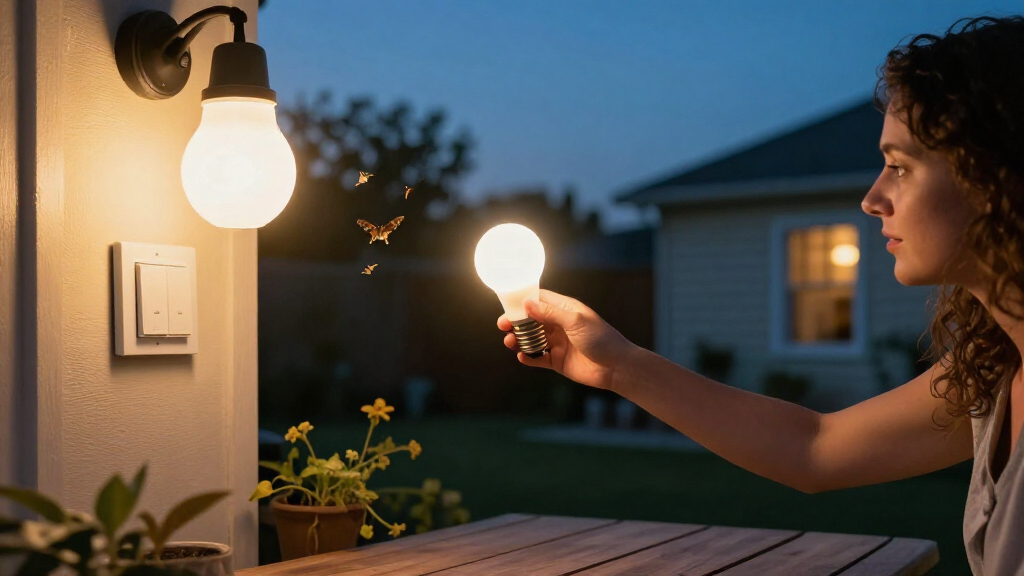
The post connects a familiar observation—large numbers of insects gathering around some outdoor lights—with the use of lights and white sheets in insect surveys. Such light trapping takes advantage of insects’ responses to artificial illumination. The article then describes a change many households have made: replacing incandescent and compact fluorescent lamps with LEDs.
Its central scientific reference is the 2016 paper Experimentally comparing the attractiveness of domestic lights to insects: Do LEDs attract fewer insects than conventional light types? The experiment compared four types of commercially available domestic lamps and reported lower catches at both LED types. The researchers also noted that LEDs can use electrical energy more efficiently by producing light largely in the visible range, rather than substantial ultraviolet or infrared radiation. But the blog now says its explanation of which lamp types emit UV has been challenged, so that detail should not be repeated as settled without checking the study and the promised correction.
The post also refers to a 2024 BBC article about why insects are drawn to artificial light at night and to a review on artificial light’s effects on nocturnal insects. These references provide broader context, but the supplied report does not establish that all insects navigate by moonlight in the same way or that reduced attraction to LEDs alone addresses wider insect declines.
““We found that LEDs attracted significantly fewer insects than other light sources, but found no significant difference in attraction between the ‘cool’ and ‘warm’ white LEDs.””
— Researchers in the 2016 field study
The UV Explanation Is Under Review
The main uncertainty is the mechanism the post gives for the difference in insect catches. Its author says readers believe the discussion of UV emissions from incandescent bulbs and LEDs is reversed, and says the article will change substantially. The supplied material does not include the revised article or a response from the study’s authors, so the corrected explanation cannot be confirmed here.
Other limits remain. The post does not provide enough detail to determine how well the 2016 results apply to every LED product, outdoor fixture, insect group or setting. It reports the study’s comparison but does not give a full breakdown of species, lamp specifications or effects beyond the sampling periods. The family’s experience with geckos is an illustration, not evidence that LEDs caused a lasting decline in local wildlife.
It is also not clear when the correction will appear or whether it will change only the proposed mechanism or other parts of the post. Until then, the safest reading is that the cited experiment reported fewer insects at the tested LEDs, while the blog’s present explanation for that result is contested.
Watch for the Promised Revision
The immediate next step is publication of the author’s promised correction or rewritten article. That revision should clarify which claims have changed and how the author interprets the study’s findings after reviewing readers’ objections. No publication date or revised wording is supplied in the Nov. 3 post.
For a firmer account of the science, readers can compare the corrected post with the 2016 paper itself and its methods and results. Any broader claim about ecological benefits would require evidence beyond a lower catch around the particular lamps tested, including research on different species and real-world lighting conditions. Until those details are available, the headline idea is best stated cautiously: the cited test found fewer insects at its LED lamps, but the explanation remains under review.
Key Questions
Do insects never swarm around LED lights?
No. The cited study reported fewer insects at the LED lamps it tested; it did not establish that insects never gather around LEDs.
What did the 2016 study compare?
Researchers compared insect catches at incandescent, compact fluorescent, cool-white LED and warm-white LED domestic lamps. They reported significantly fewer insects at the LEDs than at the other tested light types, with no significant difference between the two LED colors.
Why is the blog post marked for correction?
The author says readers challenged its explanation of how incandescent and LED lights differ in ultraviolet emissions. The promised revision has not been included in the supplied report, so the mechanism should be treated as unsettled.
Does switching to LEDs protect insect populations?
The study’s authors said LEDs may have potential to reduce wildlife disturbance and insect-borne disease occurrences relative to other lighting technologies. The reported lamp comparison does not prove that switching lights by itself improves insect populations or ecosystems.
Source: birdsoutsidemywindow.org