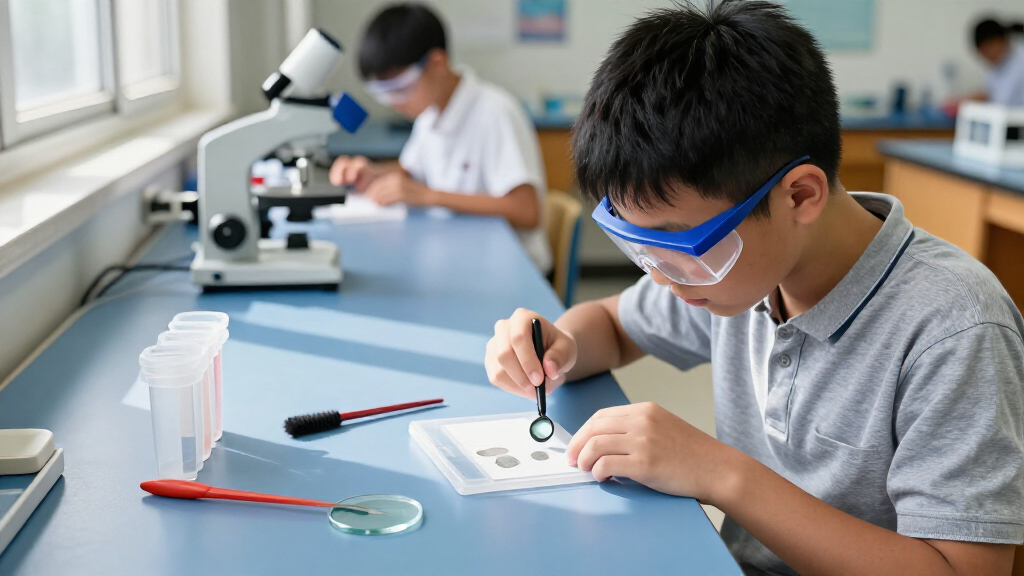
Searching for the best forensic science lab kits in 2027? The top pick overall is the Crime Scene Forensic Science Mega Kit: The Missy Hammond Case, which offers a comprehensive experience for students and enthusiasts. The Innovating Science Crime Scene Investigation Lab Kit stands out for its realistic scenarios, ideal for classroom use. However, buyers often face tradeoffs between affordability, complexity, and realism. Continue reading for a detailed breakdown of the best forensic lab kits and how to choose the right one for your needs.

Prime made for students and young adults
- Fast, free delivery for dorm and study essentials
- Prime Video and Amazon Music included
- Member-only deals
Key Takeaways
- The best overall kits balance realism, educational value, and ease of use, making them suitable for diverse users.
- More advanced kits tend to include complex chemicals and tools, but may be overwhelming for beginners or casual hobbyists.
- Pricing varies widely, with premium kits offering more authentic experiences but at a higher cost.
- Many kits are designed for classroom or group use, emphasizing collaboration and hands-on learning.
- Choosing the right kit depends heavily on the user’s experience level and specific forensic interests.
| Crime Scene Forensic Science Mega Kit: The Missy Hammond Case – 40-Student Pack |  | Best for Large Classes | Brand: Crime Scene | Manufacturer part number: CSI-SCI-40 | Recommended age: 12 years and up | VIEW LATEST PRICE | See Our Full Breakdown |
| Innovating Science Forensic Chemistry of Blood Typing Lab Kit |  | Best for Blood Typing Lessons | Brand: ALDON | Manufacturer: Innovating Science | Model: IS1508 | VIEW LATEST PRICE | See Our Full Breakdown |
| Innovating Science Crime Scene Investigation Lab Kit |  | Best for Technique Variety | Brand: ALDON | Model: IS9011 | Age range: 18 years and up | VIEW LATEST PRICE | See Our Full Breakdown |
| Crime Scene Forensic Supply Kit for Classrooms |  | Best for Scene Setup | Brand: Crime Scene | Model: CSI-CLASSRM | Evidence bags: Over 50 assorted paper and plastic sizes | VIEW LATEST PRICE | See Our Full Breakdown |
| Innovating Science Murder at Eagle Nest Harbor Forensic Lab Kit for 15 Groups |  | Best for Multi-Group Casework | Brand: ALDON | Model: IS9025 | Groups: 15 | VIEW LATEST PRICE | See Our Full Breakdown |
| Spy Labs Forensic Investigation Kit |  | Best for Younger Beginners | Brand: Thames & Kosmos | Age range: 8 years and up | Included components: Lab station, tool holder, filter paper, fingerprint powder, lab equipment, pH test strips, horse chestnut bark, UV flashlight, lab report pad, and manual | VIEW LATEST PRICE | See Our Full Breakdown |
| ALDON Innovating Science Forensic Chemistry Presumptive Blood Test Kit, 30 Tests |  | Best for Presumptive Blood-Test Demonstrations | Tests included: 30 | Recommended age: 13 and older | Supervision: Adult supervision required | VIEW LATEST PRICE | See Our Full Breakdown |
| Innovating Science ABO/Rh Simulated Blood Typing Kit for 10 Lab Groups |  | Best for Classroom Blood-Typing Lessons | Brand: ALDON | Model: IS3101 | Samples: 4 simulated blood samples | VIEW LATEST PRICE | See Our Full Breakdown |
| Forensic Chemistry of Unknown Substances Distance Learning Kit |  | Best for Mystery-Substance Analysis | Brand: ALDON | Manufacturer: Innovating Science | Model: IS1507 | VIEW LATEST PRICE | See Our Full Breakdown |
| Mark Twain Forensic Investigations Workbook |  | Best for Literature-Linked Lessons | ASIN: 1580374735 | Target audience: Middle school | Subject: Forensic science | VIEW LATEST PRICE | See Our Full Breakdown |
| Crime Scene Forensic Science Kit: Solve the Missy Hammond Murder |  | Best for Case-Based Solo Investigation | Brand: Crime Scene | Model number: FORENSIC-FULL | Recommended age: 16 years and up | VIEW LATEST PRICE | See Our Full Breakdown |
| ALDON Innovating Science Who Stole the Gold? Forensic Analysis Kit for 15 Groups |  | Best for Multi-Group Classroom Analysis | Brand: ALDON Innovating Science | Model: IS9019 | Materials for: Up to 15 groups | VIEW LATEST PRICE | See Our Full Breakdown |
| Spy Labs Master Detective Toolkit V2 Forensic Science Kit |  | Best for Young Detective Play | Brand: Thames & Kosmos | Model number: 548001 | Age range: 8–12 years | VIEW LATEST PRICE | See Our Full Breakdown |
| MindWare Science Academy Detective Lab |  | Best for Guided Beginner Experiments | Brand: MindWare | Set name: Science Academy: Detective Lab | Recommended age: 8 years and up | VIEW LATEST PRICE | See Our Full Breakdown |
| Innovating Science Forensic Dental Analysis Kit for Up to 30 Student Groups |  | Best for Forensic Dentistry Instruction | Brand: ALDON | Model: IS9021 | Activities: 8 | VIEW LATEST PRICE | See Our Full Breakdown |
| forensic science lab kit | Brand | Model |
|---|---|---|
| Crime Scene Forensic Science M | Crime Scene | — |
| Innovating Science Forensic Ch | ALDON | IS1508 |
| Innovating Science Crime Scene | ALDON | IS9011 |
| Crime Scene Forensic Supply Ki | Crime Scene | CSI-CLASSRM |
| Innovating Science Murder at E | ALDON | IS9025 |
| Spy Labs Forensic Investigatio | Thames & Kosmos | — |
| ALDON Innovating Science Foren | — | — |
| Innovating Science ABO/Rh Simu | ALDON | IS3101 |
| Forensic Chemistry of Unknown | ALDON | IS1507 |
| Mark Twain Forensic Investigat | — | — |
| Crime Scene Forensic Science K | Crime Scene | — |
| ALDON Innovating Science Who S | ALDON Innovating Science | IS9019 |
| Spy Labs Master Detective Tool | Thames & Kosmos | — |
| MindWare Science Academy Detec | MindWare | — |
| Innovating Science Forensic De | ALDON | IS9021 |
More Details on Our Top Picks
Crime Scene Forensic Science Mega Kit: The Missy Hammond Case – 40-Student Pack
For a teacher planning a full-class investigation, this 40-student pack offers a broader group activity than the two-team Innovating Science Forensic Chemistry of Blood Typing Lab Kit. Ten groups of four can work through the Missy Hammond case with fingerprint materials and synthetic blood tests on fabric, giving students evidence to interpret instead of just a single lab result. The case packets and detailed instructions help structure a lesson across multiple teams. That scale comes with a practical cost: distributing materials and setting up stations takes more preparation than a compact kit. The scenario also centers on one case, so teachers seeking several unrelated experiments may prefer a kit with a wider technique mix. I’d choose this for a coordinated class or camp activity, not solo exploration.
Pros:- Supplies are planned for 40 students in ten groups
- Combines fingerprinting with synthetic blood testing on fabric
- Case packets give groups evidence to work through
- Detailed instructions support classroom and camp use
Cons:- Large-group distribution and setup require advance preparation
- The activities follow one case scenario rather than a broad set of investigations
Best for: Middle school teachers or camp leaders organizing a case-based investigation for up to 40 students in small groups
Not ideal for: Families or instructors seeking a compact activity for one or two learners, or several independent lab exercises
- Brand:Crime Scene
- Manufacturer part number:CSI-SCI-40
- Recommended age:12 years and up
- Capacity:40 students; 10 groups of four
- Theme:Forensic science
- Activities:Fingerprint dusting and synthetic blood testing on fabric
- Warranty:30-day warranty against manufacturer defects
Our verdict“Choose this pack when you need a structured forensic case activity for a large class and can plan for group setup.”
Innovating Science Forensic Chemistry of Blood Typing Lab Kit
This kit narrows the investigation to one teachable question: how simulated samples classify under ABO/Rh reagents. Its materials are arranged for two teams, making it easier to run a focused lab than the 40-student Missy Hammond pack, which asks a teacher to coordinate a much larger case activity. That focus is also its limitation: buyers get practice with blood typing rather than a range of scene techniques such as fingerprinting or chromatography. The samples are simulated, so the exercise suits classroom instruction without using real blood, but it won’t reproduce the complexity of actual evidence. I’d pick it when students need a contained chemistry investigation and skip it if the goal is a full crime-scene narrative.
Pros:- Includes ABO/Rh blood typing anti-sera
- Materials are designed for two teams
- Uses simulated blood for an educational activity
- Compact package measures 7 x 6 x 4.5 inches
Cons:- Limited to a blood classification activity rather than a broad investigation
- Simulated samples do not provide experience handling real blood evidence
Best for: Science teachers who want two small teams to practice ABO/Rh classification with simulated samples
Not ideal for: Buyers looking for multiple forensic techniques, a large-class kit, or work with real biological samples
- Brand:ALDON
- Manufacturer:Innovating Science
- Model:IS1508
- Number of items:19
- Unit count:17
- Designed for:Two teams
- Included reagents:ABO/Rh blood typing anti-sera
- Dimensions:7 x 6 x 4.5 inches
- Weight:9.6 ounces
Our verdict“Choose this for a focused, small-team blood typing lab; choose a case kit for a wider forensic investigation.”
Innovating Science Crime Scene Investigation Lab Kit
Where the blood typing kit centers on one assay, this missing-frogs investigation gives students several methods to connect: fingerprinting, hair examination, and thin-layer chromatography for ink. That range makes it a stronger fit for lessons comparing how different evidence types answer different questions. The kit supports six student groups and includes a teacher’s manual plus reproducible study guides, which helps a class share one scenario while following a common structure. Its stated age range of 18 years and up is a significant boundary; younger learners may need a different kit, such as the Missy Hammond pack recommended from age 12. The fictional premise also makes this more of a guided lab exercise than a realistic case file. I’d choose it for older students learning multiple techniques.
Pros:- Covers fingerprinting, hair examination, and ink chromatography
- Provides materials for six student groups
- Includes a teacher’s manual and reproducible student guides
- Compact package measures 9.25 x 4 x 2.85 inches
Cons:- Age range is listed as 18 years and up
- Uses a fictional missing-frogs scenario
- Multiple methods may require more instruction than a single-topic lab
Best for: Instructors of older students who want six groups to compare fingerprint, hair, and ink-analysis methods
Not ideal for: Teachers of younger students or buyers seeking a realistic crime narrative and evidence packets
- Brand:ALDON
- Model:IS9011
- Age range:18 years and up
- Student groups:Six
- Techniques:Fingerprinting, hair examination, and thin-layer chromatography of ink
- Materials:Plastic, metal, glass, paper, ink, and powder
- Educational objective:STEM
- Dimensions:9.25 x 4 x 2.85 inches
Our verdict“Choose this for older learners who benefit from comparing several forensic methods within one guided class investigation.”
Crime Scene Forensic Supply Kit for Classrooms
This is the lineup’s practical choice for staging a scene: it supplies evidence bags, tape, markers, gloves, and labels rather than a packaged lab investigation. Compared with the Innovating Science Crime Scene Investigation Lab Kit, which teaches specific analysis techniques, this kit helps a teacher demonstrate how evidence is marked, collected, and organized. The 20 numbered markers and assorted containers can make a classroom exercise feel more procedural, while the 100-foot crime scene tape roll supports a defined activity area. The tradeoff is clear: the listed contents don’t include a case narrative or analytical experiments, so instructors must supply the learning activity. It’s described for classroom demonstrations, not professional forensic work. I’d select it as scene-handling equipment for a lesson, not as a standalone lab kit.
Pros:- Includes over 50 assorted paper and plastic evidence bags
- Provides 20 numbered A-frame evidence markers
- Includes a 100-foot crime scene tape roll and evidence sealing tape
- Adds evidence boxes, gloves, toe tags, labels, and a lanyard
Cons:- Contents focus on scene handling and do not list analysis experiments
- No case narrative or teaching guide is listed
- Intended for classroom demonstrations rather than professional use
Best for: Teachers staging a classroom evidence-collection demonstration who already have an investigation plan
Not ideal for: Families or educators who need experiments, student worksheets, or a complete case-solving activity in the box
- Brand:Crime Scene
- Model:CSI-CLASSRM
- Evidence bags:Over 50 assorted paper and plastic sizes
- Crime scene tape:One 100-foot roll
- Evidence sealing tape:Two 10-foot rolls
- Evidence boxes:Five small white boxes and one weapon evidence storage box
- Evidence markers:20 numbered yellow A-frame markers
- Other items:Cotton gloves, five toe tags, five assorted labels, and a lanyard
Our verdict“Choose this when you need physical scene-marking and collection supplies and can provide the investigation activities yourself.”
Innovating Science Murder at Eagle Nest Harbor Forensic Lab Kit for 15 Groups
For a class that wants every table working through the same simulated crime, this kit is built around 15 groups and includes six bottles of simulated blood, a teacher’s manual, student guide copy masters, and safety data sheets. That makes it a more coordinated case activity than the two-team blood typing kit, while its materials are more investigation-focused than the classroom supply kit’s scene markers and bags. The group capacity is the main draw; the available description doesn’t identify the specific evidence tests, so instructors should check whether its activities match their lesson before choosing it over the technique-rich missing-frogs kit. The listed age range of 0–10 years also merits checking against the intended class. I’d choose it for guided group work when its case materials fit the students’ level.
Pros:- Designed to support 15 groups
- Includes six 10 mL bottles of simulated blood
- Comes with a teacher’s manual and student guide copy masters
- Includes safety data sheets
Cons:- Group-oriented format may not suit individual use
- The supplied description does not specify which evidence tests students perform
- Listed age range of 0–10 years may not fit many classroom audiences
Best for: Teachers preparing a shared simulated crime investigation for up to 15 student groups, with instructor guidance
Not ideal for: Individual learners, or instructors who need clearly specified forensic techniques and an age range matched to older students
- Brand:ALDON
- Model:IS9025
- Groups:15
- Simulated blood:Six 10 mL bottles
- Included materials:Teacher’s manual, student study guide copy masters, and safety data sheets
- Dimensions:11.5 x 8.5 x 3 inches
- Age range:0–10 years
- Educational objective:STEM
Our verdict“Choose this for instructor-led casework across many groups after confirming that its activity details suit your students.”
Spy Labs Forensic Investigation Kit
I’d choose the Spy Labs Forensic Investigation Kit for younger learners who want to explore several kinds of evidence without starting with a single specialized procedure. Its lab station, fingerprint powder, pH strips, filter paper, and UV flashlight give children ways to investigate fingerprints, liquids, and ink, while the 20-page illustrated manual guides make-believe cases. Compared with the Forensic Chemistry of Unknown Substances Distance Learning Kit, this is aimed at younger children and offers broader pretend-play variety rather than chemistry-focused testing of mystery samples. That breadth makes it approachable, but the activities are simulated investigations, not instruction in validated forensic methods. I’d skip it for teens seeking realistic lab protocols or a classroom needing materials for several groups; the listing describes a single set, and adult-led discussion may be needed to distinguish play from real evidence analysis.
Pros:- Combines fingerprint, liquid, and ink activities in one lab station
- Includes a 20-page illustrated manual with mystery stories and guided activities
- Offers varied tools, including fingerprint powder, pH strips, filter paper, and a UV flashlight
- Supports hands-on pretend play for children ages 8 and up
Cons:- Designed for make-believe investigations rather than real forensic work
- Listed as a single set, with no stated supplies for multiple learners
- Its broad activity mix offers less focused chemistry practice than dedicated substance-testing kits
Best for: Families with children ages 8 and up who want guided, hands-on pretend investigations involving several evidence types.
Not ideal for: Older students or teachers seeking realistic forensic procedures, multi-group classroom supplies, or a kit centered on rigorous chemistry experiments.
- Brand:Thames & Kosmos
- Age range:8 years and up
- Included components:Lab station, tool holder, filter paper, fingerprint powder, lab equipment, pH test strips, horse chestnut bark, UV flashlight, lab report pad, and manual
- Manual length:20 pages
- Set name:Single Set
- Model number:548004
Our verdict“Choose this for a younger child who wants varied, story-led forensic play, not for realistic lab training.”
ALDON Innovating Science Forensic Chemistry Presumptive Blood Test Kit, 30 Tests
This kit earns a distinct place for learners who want to examine how a presumptive blood test works, rather than investigate several evidence types. Swabbed samples produce a rapid color change when the test indicates blood, and the materials cover 30 tests, giving a teacher room to run repeated demonstrations or student practice. Compared with the Innovating Science ABO/Rh Simulated Blood Typing Kit, this kit focuses on presumptive detection, not identifying blood groups through antigen-antibody reactions. That narrow focus is useful for teaching a specific investigative step, but a color change is a presumptive indication, not proof of identity or a substitute for confirmatory testing. It is intended for ages 13 and older and requires adult supervision; I’d pass if I wanted a child-led kit, a broad crime-scene activity, or a classroom exercise about blood typing.
Pros:- Provides materials for 30 tests, supporting repeated practice
- Uses a rapid color change to indicate a presumptive positive result
- Includes instructions and a safety data sheet
- Centers the activity on a recognizable forensic chemistry technique
Cons:- Requires adult supervision
- A presumptive color-change result does not confirm that a sample is blood
- Focuses on one test rather than a wider range of forensic evidence
Best for: Science teachers or supervised learners ages 13 and older who want repeated practice demonstrating a presumptive blood test.
Not ideal for: Younger children, unsupervised home use, or buyers seeking blood-type identification and broader crime-scene activities.
- Tests included:30
- Recommended age:13 and older
- Supervision:Adult supervision required
- Test method:Swabbed-sample test with a rapid color-change indication
- Included documentation:Instructions and safety data sheet (SDS)
Our verdict“Pick this for supervised practice with presumptive blood testing, but choose the ABO/Rh kit for blood-typing lessons.”
Innovating Science ABO/Rh Simulated Blood Typing Kit for 10 Lab Groups
I’d rank this as the classroom choice for teaching ABO/Rh typing and antigen-antibody reactions, rather than general crime-scene investigation. Four simulated samples let students work through blood-group identification, while supplies for 10 lab groups and teacher and student materials suit a structured lesson. Compared with the ALDON Innovating Science Forensic Chemistry Presumptive Blood Test Kit, this kit asks a different question: it models blood type, rather than using a presumptive test to indicate blood’s presence. The simulated samples make the activity suitable for an instructional setting, but they also mean students are not handling real blood or practicing real-sample analysis. Its purpose is focused, so buyers wanting fingerprints, unknown substances, or a narrative case investigation should look elsewhere. I’d favor it for a teacher-led unit where clear group distribution matters more than broad forensic variety.
Pros:- Provides supplies for 10 student groups
- Uses four simulated blood samples to teach ABO/Rh typing
- Demonstrates antigen-antibody reactions through a hands-on activity
- Includes a teacher manual, student study guide copymasters, and an SDS packet
Cons:- Uses simulated samples rather than real blood
- Focused on blood typing rather than broader forensic investigation
- Teacher and student materials may be less useful for independent learners
Best for: Teachers who need a structured ABO/Rh lesson with simulated samples and materials for up to 10 student groups.
Not ideal for: Home learners seeking a varied forensic kit, or students expecting to test real blood or investigate multiple evidence types.
- Brand:ALDON
- Model:IS3101
- Samples:4 simulated blood samples
- Lab groups:10
- Educational objective:STEM
- Included materials:Blood typing serum, teacher manual, student study guide copymasters, and SDS packet
- Dimensions:7 x 5 x 10 inches
- Weight:0.27 g
Our verdict“Choose this for a classroom blood-typing unit, not for students who want a broader crime-scene investigation.”
Forensic Chemistry of Unknown Substances Distance Learning Kit
For learners more interested in comparing chemical reactions than following a crime-scene story, this kit offers a focused exercise: identify two mystery substances using supplied comparison materials and reagents. The reaction plates, scoops, and worksheets support a structured investigation for two student groups, making the activity easier to run remotely or in a small class than a single-learner demonstration. Compared with the Spy Labs Forensic Investigation Kit, this set is more chemistry-centered and aimed at adults, but it has less variety in evidence types and no child-oriented pretend-play framing. The 18-and-up recommendation and inclusion of reagents make age suitability and instruction worth checking before use. I’d skip it for younger families or larger classes; its stated capacity is limited, and its goal is narrow substance identification rather than a complete forensic case.
Pros:- Provides materials to identify two mystery substances
- Includes comparison substances, reagents, reaction plates, and scoops for hands-on analysis
- Worksheets and instructions support a guided learning activity
- Materials are listed for two student groups
Cons:- Recommended for ages 18 and up
- Limited to two student groups
- Focuses on chemical identification rather than varied forensic evidence or a full case narrative
Best for: Adult learners or instructors seeking a small-group forensic chemistry exercise focused on identifying unknown substances.
Not ideal for: Families with young children or teachers needing a kit for more than two groups or a broad crime-scene investigation.
- Brand:ALDON
- Manufacturer:Innovating Science
- Model:IS1507
- Recommended age:18 years and up
- Item dimensions:10 x 6.5 x 4.5 inches
- Item weight:12.8 ounces
- Set includes:Baking powder, baking soda, corn starch, talcum powder, salt, gelatin, two mystery substances, biuret reagent, dilute Lugol’s iodine, acetic acid, 4 reaction plates, 8 scoops, instruction manual, and worksheets
- Group capacity:Two student groups
Our verdict“Choose this for an adult or small-group lesson in unknown-substance testing, not for younger learners or large classes.”
Mark Twain Forensic Investigations Workbook
This workbook stands apart from the reagent-based kits by connecting forensic ideas to Mark Twain’s literature. Its middle-school activities cover DNA analysis, handwriting verification, and critical thinking, giving teachers a way to fold forensic topics into language arts or a cross-curricular unit. Compared with the Spy Labs Forensic Investigation Kit, it offers more explicit academic exercises and a literature link, but less supplied equipment and less open-ended hands-on play. The workbook is better treated as a lesson resource than a complete lab kit: the listing notes that specific lab materials are required, so buyers should check what they already have before planning experiments. Its reliance on Twain may also be a mismatch for students or curricula that do not use his work. I’d choose it when the literary connection is an asset, not when a ready-to-run kit is the priority.
Pros:- Connects forensic science concepts with literature
- Covers DNA analysis, handwriting analysis, and critical thinking
- Includes hands-on laboratory activities
- Can support classroom or homeschool instruction
Cons:- Mark Twain’s work may not fit every learner or curriculum
- Specific materials are required for the lab activities
- A workbook format provides less ready-to-use equipment than the physical kits in this roundup
Best for: Middle-school teachers or homeschool educators building a forensic-science unit around Mark Twain and cross-curricular critical thinking.
Not ideal for: Buyers who need all lab supplies included, or students who want forensic activities without a Mark Twain literature connection.
- ASIN:1580374735
- Target audience:Middle school
- Subject:Forensic science
- Format:Workbook
- Topics:DNA analysis, handwriting analysis, and critical thinking
Our verdict“Choose this as a literature-linked teaching resource if you can supply the lab materials, rather than as a self-contained kit.”
Crime Scene Forensic Science Kit: Solve the Missy Hammond Murder
I’d choose this kit for an older teen or adult who wants to work through a single forensic case rather than rotate through a broad set of classroom exercises. Its fingerprint dusting and presumptive blood tests give the investigation tangible evidence to examine, while the suspect exemplars and latent-print item connect those activities to the fictional Missy Hammond case. Online police case-file access adds context, but also means the experience depends on an internet connection. Compared with the Spy Labs Master Detective Toolkit V2, this is more focused on a murder-case narrative and less suited to younger children or open-ended detective play. The tradeoff is its narrower scope: it is designed for one player, and its 16-and-up recommendation makes it a less flexible choice for family activities or group lessons.
Pros:- Pairs fingerprint dusting and lifting with a presumptive blood test
- Includes suspect fingerprint exemplars and a latent-print evidence item
- Connects the evidence to a fictional murder investigation
- Includes safety gear and instructions
Cons:- Online case-file access requires an internet connection
- Designed for one player rather than a classroom group
- The 16-and-up age recommendation limits its suitability for younger learners
Best for: Older teens and adults who want a solo, case-based introduction to fingerprint and presumptive blood analysis
Not ideal for: Younger children, classroom groups, or buyers who need a kit that works without internet access for its case file
- Brand:Crime Scene
- Model number:FORENSIC-FULL
- Recommended age:16 years and up
- Number of players:1
- Included supplies:Fingerprint dusting brush, fingerprint powder, lifting tape, presumptive blood test, and safety gear
- Case file access:Online; internet access required
- Operation mode:Manual
- Box dimensions:12 x 9 x 2 inches
Our verdict“Choose this for a focused solo investigation with hands-on print and blood tests, but skip it if you need a group kit or a younger-child activity.”
ALDON Innovating Science Who Stole the Gold? Forensic Analysis Kit for 15 Groups
For a teacher planning a shared investigation across several teams, this kit has a stronger classroom fit than the single-player Crime Scene Forensic Science Kit: Solve the Missy Hammond Murder. Materials for up to 15 groups support a simulated train-robbery case where students compare fingerprints, handwriting, soil, fibers, blood, and hair. That breadth lets a class work across several evidence types instead of centering on one or two tests. The teacher’s manual, study-guide masters, observation sheets, and safety data sheets also make it more structured for instruction than the child-focused MindWare Science Academy Detective Lab. Its limits are real: the product is designated for laboratory use only, involves chemicals that need appropriate handling and storage, and is not a ready-made household activity. I’d favor it for a supervised teaching setting, not casual play.
Pros:- Provides materials for up to 15 groups
- Covers fingerprints, handwriting, soil, fibers, blood, and hair
- Includes a teacher’s manual and student study-guide masters
- Supplies observation sheets, microscope slides, magnifiers, and safety data sheets
Cons:- Marked for laboratory use only, not household use
- Chemical materials require appropriate handling and storage
- The classroom materials and teacher resources may be excessive for an individual learner
Best for: Science teachers preparing a supervised forensic investigation for multiple student groups
Not ideal for: Families seeking a home activity or instructors without suitable laboratory procedures for chemical handling and storage
- Brand:ALDON Innovating Science
- Model:IS9019
- Materials for:Up to 15 groups
- Analysis topics:Soil and minerals, documents, fabric and fibers, blood, fingerprints, and hair
- Included resources:Teacher’s manual, student study-guide masters, and observation sheets
- Lab materials:Simulated evidence samples, chemicals, microscope slides, and magnifiers
- Safety information:Safety data sheets included
- Use designation:For laboratory use only
Our verdict“Pick this for a supervised class that needs broad evidence analysis across many groups, not for an informal home experiment.”
Spy Labs Master Detective Toolkit V2 Forensic Science Kit
I’d rank this as the most play-oriented option here for children who want to collect clues as well as try simple lab activities. The 32-page experiment storybook, practice cases, suspect cards, and crime-scene pad give its assortment of tools a framework, while fingerprint supplies, a UV flashlight, plaster-casting materials, and codebreaking materials encourage varied activities. That makes it a broader detective-play set than the case-specific Crime Scene Forensic Science Kit: Solve the Missy Hammond Murder, which is recommended for ages 16 and up and centers on one fictional murder. Compared with the MindWare Science Academy Detective Lab, this kit puts more emphasis on equipment and story-led play. The tradeoff is that its many components introduce forensic ideas rather than provide a clearly specified multi-group or advanced laboratory curriculum; it is also aimed specifically at ages 8–12.
Pros:- Includes a 32-page experiment storybook and practice cases
- Combines fingerprinting and evidence collection with invisible ink and codebreaking
- Provides a wide assortment of detective and basic laboratory tools
- Includes suspect profile cards and a crime-scene pad to support investigation play
Cons:- Its stated age range is limited to 8–12 years
- The broad play-focused tool set is less suited to advanced forensic analysis
- The supplied description does not specify group capacity or a classroom teaching manual
Best for: Children ages 8–12 who enjoy story-led detective activities, collecting clues, and trying several introductory experiments
Not ideal for: Older students or teachers seeking a formal, advanced forensic lab curriculum or materials for a large class
- Brand:Thames & Kosmos
- Model number:548001
- Age range:8–12 years
- Storybook:32-page experiment storybook
- Fingerprint tools:Fingerprint brush, fingerprint powder, and ink pad
- Other featured tools:UV flashlight, tweezers, magnifying glass, beakers, test tubes, and petri dish
- Activity materials:Plaster casting, invisible ink, secret code, and evidence collection materials
- Investigation materials:Suspect profile cards and crime-scene pad
Our verdict“Choose this for an 8–12-year-old who wants varied detective play; choose a classroom analysis kit for structured group instruction.”
MindWare Science Academy Detective Lab
This is a sensible starting point for a younger learner who benefits from clear directions more than a large collection of detective props. The full-color, step-by-step guide and safety information support activities in fingerprinting, chromatography, and pH testing, so children can encounter several basic forensic concepts in a compact STEM-focused kit. Compared with the Spy Labs Master Detective Toolkit V2, it is less focused on codes, story-led play, and a large tool assortment; its appeal is the guided science activity. It also asks less of a household than the laboratory-use-only ALDON Innovating Science Who Stole the Gold? kit. The tradeoff is scope: the listed activities are introductory, and the available product details do not specify group capacity or a detailed inventory. Its age guidance starts at eight, so it is not intended for very young children.
Pros:- Introduces fingerprinting, chromatography, and pH testing
- Includes fingerprinting supplies and investigation activities
- Provides step-by-step instructions and safety information
- Connects forensic activities with critical thinking and other STEM objectives
Cons:- Recommended for ages eight and up, limiting use with younger children
- Its introductory activity scope is narrower than the multi-evidence classroom kit from ALDON
- The supplied product details do not identify a group capacity or a full component inventory
Best for: Caregivers or educators seeking a guided introductory forensics activity for children aged eight and up
Not ideal for: Buyers seeking an advanced lab curriculum, a large-group classroom kit, or activities for children under eight
- Brand:MindWare
- Set name:Science Academy: Detective Lab
- Recommended age:8 years and up
- Educational objectives:Coding skills, critical thinking, exploratory skills, and STEM
- Theme:Chemistry
- Featured activities:Evidence collection, chromatography, pH testing, and fingerprinting
- Guide:Full-color guide with step-by-step instructions and safety information
- Weight:1.2 pounds
Our verdict“Pick this for a guided first look at forensic science for an eight-or-older learner, but choose another option for advanced or large-group work.”
Innovating Science Forensic Dental Analysis Kit for Up to 30 Student Groups
Where the other kits range across fingerprints, chemicals, or detective play, this one dedicates its activities to forensic dentistry. Dental charting, casting, bite impressions, and comparison of dental records and bite marks give an instructor a focused sequence that the broader ALDON Innovating Science Who Stole the Gold? kit does not provide. Its capacity for up to 30 student groups, plus teacher and student guide copymasters, makes it the strongest fit in this batch for a large supervised lesson on dental evidence. That specialization is also its main limitation: it will not substitute for a general forensic kit covering fingerprints, soil, fibers, or handwriting. The 18-and-up recommendation and laboratory-use-only restriction further narrow its audience, so I’d reserve it for an appropriate educational lab rather than a family activity.
Pros:- Includes eight hands-on forensic dentistry activities
- Provides materials for up to 30 student groups
- Covers charting, casting, bite impressions, and dental evidence comparison
- Includes teacher and student study-guide copymasters
Cons:- Recommended for ages 18 and up
- Materials are for laboratory use only, not household use
- Its dental focus leaves out the broader evidence categories covered by the Who Stole the Gold? kit
Best for: Instructors teaching forensic dentistry to adult learners or large student groups in a supervised laboratory
Not ideal for: Families, younger students, or teachers seeking a general-purpose forensic science kit rather than dental analysis
- Brand:ALDON
- Model:IS9021
- Activities:8
- Capacity:Up to 30 student groups
- Recommended age:18 years and up
- Included materials:Dental alginate, impression trays, measuring cups, rulers, tongue depressors, wax bite plates, nitrile gloves, plaster of Paris, plastic cups, and toothpicks
- Guides:Teacher and student guide copymasters
- Item dimensions:12 x 12 x 12 inches
Our verdict“Choose this for a supervised, large-group lesson focused on dental evidence, not as a general forensic science kit or home activity.”
How We Picked
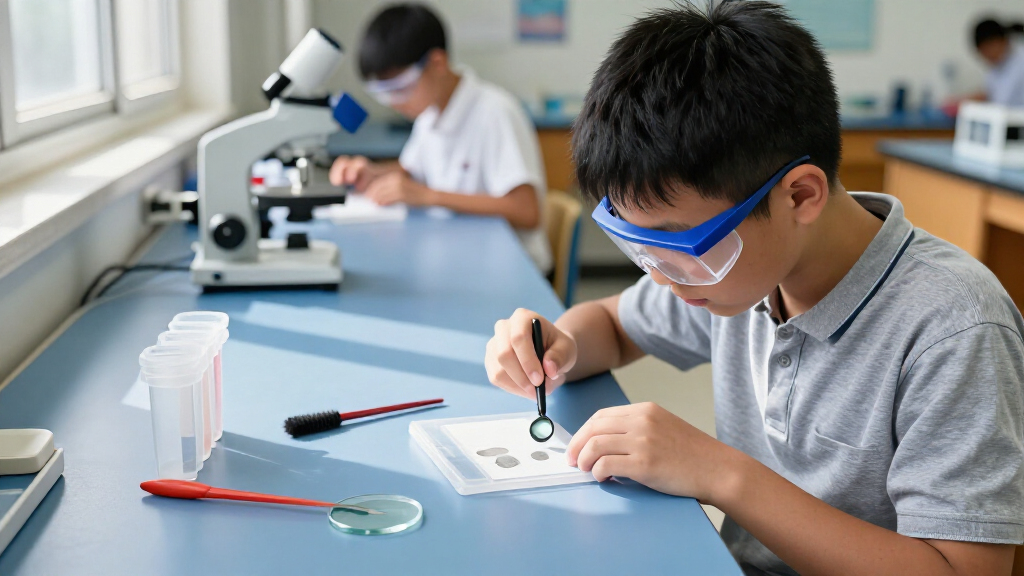
The products in this roundup were evaluated based on their educational value, realism, ease of use, durability, and versatility. We prioritized kits that provide hands-on experience, as well as those suitable for different age groups and skill levels. Cost was considered in relation to the content and quality of the kit, ensuring that each option offers solid value for its intended audience. The ranking reflects a balance between comprehensive content, durability, and accessibility for both beginners and more experienced users.| forensic science lab kit | Brand |
|---|---|
| Crime Scene Forensic Science M | Crime Scene |
| Innovating Science Forensic Ch | ALDON |
| Innovating Science Crime Scene | ALDON |
| Crime Scene Forensic Supply Ki | Crime Scene |
| Innovating Science Murder at E | ALDON |
| Spy Labs Forensic Investigatio | Thames & Kosmos |
| ALDON Innovating Science Foren | — |
| Innovating Science ABO/Rh Simu | ALDON |
| Forensic Chemistry of Unknown | ALDON |
| Mark Twain Forensic Investigat | — |
| Crime Scene Forensic Science K | Crime Scene |
| ALDON Innovating Science Who S | ALDON Innovating Science |
| Spy Labs Master Detective Tool | Thames & Kosmos |
| MindWare Science Academy Detec | MindWare |
| Innovating Science Forensic De | ALDON |
Factors to Consider When Choosing Forensic Science Lab Kits
Selecting the right forensic science lab kit requires considering several key factors. First, determine the intended user’s experience level—beginners need simpler kits, while advanced users may seek more detailed, realistic setups. Next, evaluate the scope of the kit, including the variety of experiments and tools provided, which impacts educational depth. Cost can vary significantly; affordable kits may lack complexity, but premium options often deliver more authentic experiences. Maintenance and storage considerations are also important, especially for kits used repeatedly or in group settings. Finally, think about the specific forensic skills you want to develop—whether blood typing, fingerprint analysis, or crime scene investigation—since different kits specialize in different areas.Experience Level and Complexity
Choosing a kit that matches the user’s familiarity with forensic science is critical. For beginners or young students, simple kits with clear instructions and fewer chemicals reduce frustration and build confidence. More advanced kits are better suited for older students or hobbyists who want to simulate real crime scene analysis, but they often require more careful handling and understanding of scientific procedures. Overly complex kits can overwhelm novices, leading to frustration, while overly simple kits may not challenge more experienced users. Assess the user’s age, background, and learning goals to find the right balance.Scope and Content
A comprehensive kit provides a variety of experiments—such as blood typing, fingerprint analysis, and evidence collection—that mimic real forensic work. Kits with a narrow focus might be less versatile but can offer deeper engagement with a specific skill. When evaluating, consider the number of experiments included, the quality of tools and chemicals, and whether the kit allows for multiple uses. A larger scope often means a higher price, but it also offers more educational value, especially for classroom settings or serious hobbyists.Build Quality and Durability
Forensic kits often include delicate tools and chemicals that need to withstand repeated use. Cheaper options might feature flimsy plastic parts or unreliable chemicals, which can hinder the learning experience. Premium kits tend to use sturdier materials and better-organized storage, reducing the risk of damage or loss. Durability matters more in group or classroom environments where multiple students handle the same kit. Assess the quality of the components and the ease of maintenance before making a decision.Price and Value
While cost can be a deciding factor, it’s important to weigh the price against the content and realism of the kit. Cheaper kits might be suitable for casual or introductory use but often lack the depth or durability of more expensive options. Premium kits tend to include more authentic tools, chemicals, and detailed instructions, which justify their higher price point. Consider your budget and how much value you need—whether for casual experimentation, classroom use, or serious study—to find the most appropriate balance.Specific Forensic Skills and Interests
Different kits focus on distinct forensic disciplines, such as blood analysis, fingerprinting, or crime scene investigation. Clarify your primary interest to choose a kit that aligns with your goals. For example, if you’re fascinated by DNA analysis, look for kits emphasizing genetic testing. For crime scene reconstruction, select options that include evidence collection and scene analysis tools. Matching the kit’s focus with your learning objectives ensures a more engaging and relevant experience.Frequently Asked Questions
Are forensic science lab kits suitable for children?
Many forensic science kits are designed specifically for children or young students, featuring simplified experiments and safer chemicals. Always check the recommended age range on the packaging to ensure safety and appropriateness. Kits aimed at younger audiences typically focus on foundational concepts and are easier to handle, making them ideal for introducing kids to forensic science without the risk of handling hazardous substances. For older children or teenagers interested in more complex analysis, look for kits with advanced features and instructions.
What should I consider if I want a kit for classroom use?
Classroom kits should be durable, easy to set up, and capable of supporting multiple users. They often include enough components for group activities, fostering collaboration and discussion. Additionally, check if the kit aligns with educational standards and offers clear, step-by-step instructions suitable for students of varying ages. Budget is also a factor—larger classroom kits tend to be more cost-effective per student but may require additional storage space.
Can I find forensic kits that include digital or electronic components?
Some advanced forensic kits incorporate digital tools, such as UV light scanners or fingerprint scanners, to enhance analysis and realism. These electronic components can provide more detailed results and a more authentic experience, but they often come at a higher cost and may require additional training. For hobbyists or educational settings, basic chemical and physical analysis kits are usually sufficient, but for more tech-savvy users, options with digital features can add value and engagement.
Are there kits suitable for independent study or self-learning?
Yes, several forensic kits are designed for individual use, featuring comprehensive instructions and straightforward experiments. These kits are ideal for self-motivated learners who want to explore forensic science at their own pace. Look for options that include detailed guides, enough materials for multiple experiments, and clear safety instructions to maximize the learning experience without supervision. Keep in mind that more advanced kits may require prior knowledge or additional resources.
What is the difference between beginner and advanced forensic kits?
Beginner kits typically emphasize simple experiments, easy-to-handle materials, and straightforward instructions, making them accessible for newcomers and younger users. Advanced kits, on the other hand, often include more complex tools, chemicals, and scenarios that mimic real forensic investigations, suitable for older students or serious hobbyists. The key difference lies in the level of detail and realism—advanced kits provide a more authentic experience but may demand more scientific background and careful handling.
Conclusion
For those starting out or seeking a versatile educational tool, the Crime Scene Forensic Science Mega Kit: The Missy Hammond Case offers a comprehensive experience. Budget-conscious buyers will appreciate the Innovating Science Crime Scene Investigation Lab Kit for its balance of affordability and educational value. Serious students or professionals should consider premium options like the Spy Labs Forensic Investigation Kit or the Innovating Science Forensic Dental Analysis Kit for authentic, in-depth analysis. Beginners and educators benefit most from straightforward kits, while hobbyists and advanced learners should look for more detailed, feature-rich options to deepen their understanding of forensic science.
Halloween Picks
halloween
As an affiliate, we earn on qualifying purchases.