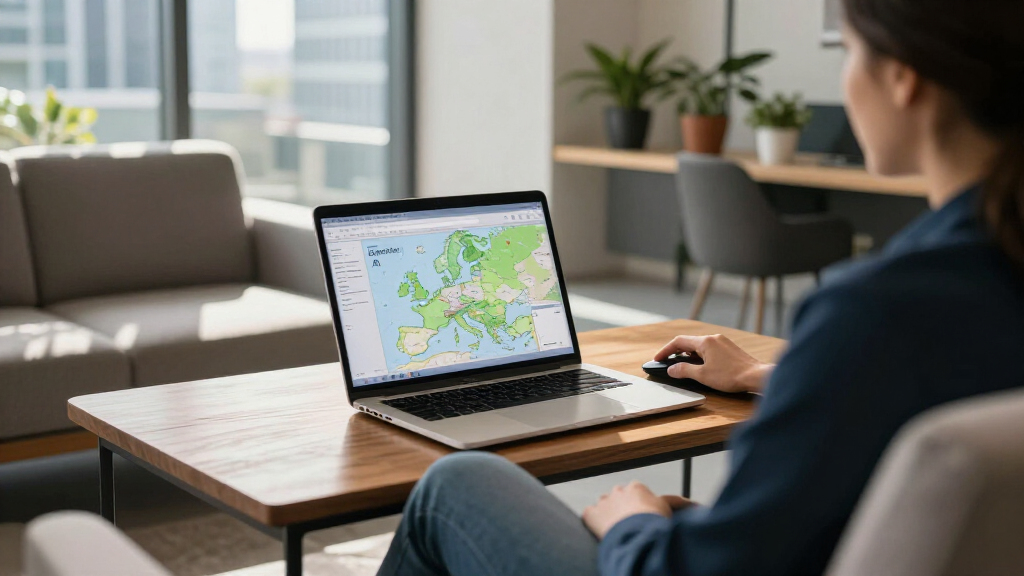
🔍 Read the full analysis: Europe’s AI Supplier Landscape For 2026: An Overview on ThorstenMeyerAI.com
Play games included with Prime
Start a Prime free trial and play with Amazon Luna on your devices.
Start playingAs an affiliate, we earn on qualifying purchases.
TL;DR
Europe’s AI supply chain in 2026 is dominated by a mix of European and non-EU companies, with ownership transparency and sovereignty remaining key issues. Several firms show promise, but uncertainties about control and jurisdiction persist.
European AI procurement in 2026 is shaped by a complex landscape of suppliers, with ownership transparency and sovereignty considerations at the forefront. Major players include Mistral AI in France, Cohere-Aleph Alpha in Toronto/Heidelberg, and Germany’s Helsing, each with varying degrees of ownership clarity and jurisdictional control. The landscape reflects ongoing debates about control, certification, and independence in European AI supply chains.
Mistral AI, France’s leading foundation-model lab, has a valuation of over €11.7 billion and is owned by a French parent company, with significant non-EU investment from firms like a16z and Nvidia. Its ownership is not publicly detailed, but it remains a key candidate for European procurement due to its certification prospects and open weights. Cohere, now part of Aleph Alpha, is publicly owned at roughly 90% by shareholders, but its ownership is non-European, raising sovereignty concerns despite its strong certification (BSI C5) and jurisdictional advantages.
Germany’s Helsing stands out as the only supplier where ownership transparency is publicly available, with roughly 80% European ownership reported. It is valued at €12 billion and has secured a significant defense contract, illustrating a model of maintaining control and transparency. Conversely, Black Forest Labs, with a valuation of $3.25 billion, has a heavily non-EU ownership structure, though it offers open weights suitable for infrastructure use. The UK’s Nscale raised $2 billion in March 2026, with strategic partnerships involving American firms like OpenAI, highlighting the nuanced distinction between infrastructure hosting and sovereignty.
Across sectors, the defense tier remains highly strategic, with Helsing and France’s Harmattan AI leading efforts to develop secure, sovereign AI solutions. The overall landscape reveals a tension between European ambitions for sovereignty and the reality of non-EU investments and control, with many suppliers operating under opaque ownership structures or relying on foreign capital.
Europe’s AI suppliers: the 2026 shortlist
Eleven articles argued that ownership is the only real sovereignty test, certifications mostly measure practice rather than control, and “not American” is a proxy. Those were arguments. This is the list — every supplier a European buyer might shortlist, scored on ownership · certification · jurisdiction · weights · exit.
For almost every company here, the ownership answer is not public. That’s nobody’s scandal — private companies don’t publish cap tables. But it means Europe’s sovereignty debate is being conducted without the one number its own rules turn on (24% individual / 39% collective non-EU). Two exceptions: the SecNumCloud-qualified tier, which has been audited — and Helsing, which publishes.
Defence · classified · DORA · national health data. Your shortlist is short: the SecNumCloud tier, S3NS or Bleu for hyperscaler capability, Mistral for models, Helsing for defence AI. Pay the premium and stop apologizing for the benchmark gap — your alternative isn’t a worse model, it’s no deployment.
Use the best model available, put a router in front of it, and spend the difference on shipping. That argument survived its own steelman and nothing on this page changes it. Everything above the router line, buy only if a law requires it.
Europe’s specialists are excellent and under-celebrated — FLUX, Helsing, ElevenLabs, DeepL, Wayve, Legora are category leaders, not consolation prizes. The generalist race is over as a European story: one French champion with a real jurisdictional edge and a real capability gap, one Canadian-controlled entity with the politics and the balance sheet. Everything else is specialization — the correct strategy, and it should be said out loud rather than treated as retreat. And the ownership data doesn’t exist. Europe built a regime that turns on 24%/39% — then built an industry where almost nobody publishes that number. It’s fixable tomorrow, cheaply: publish your non-EU capital and voting share, update it each round. The ones that do will win procurement they’d otherwise lose. The ones that don’t are telling you something.
Implications of Ownership and Control in European AI
This landscape matters because ownership transparency and jurisdiction directly influence European AI sovereignty and security. Suppliers like Helsing demonstrate that public ownership data can support sovereignty claims, while opaque structures hinder them. The ongoing debate impacts procurement decisions, national security, and Europe’s strategic independence in AI development. The mix of European and non-EU investments underscores the challenge of balancing innovation, control, and sovereignty in a rapidly evolving field.
As an affiliate, we earn on qualifying purchases.
European AI Supply Chain and Sovereignty Challenges
Over recent years, European AI policy has emphasized sovereignty, control, and certification as critical factors for procurement. The debate centers on whether ownership, jurisdiction, and control measures effectively protect European interests. Companies like Mistral AI and Helsing exemplify different approaches: Mistral’s French ownership aligns with sovereignty goals, while Helsing’s transparent ownership ratio offers a model for control. Meanwhile, the influx of non-EU capital into European suppliers complicates sovereignty claims, raising concerns about external influence and dependency.
Historically, European AI development has been fragmented, with a mix of startups, defense contractors, and infrastructure providers. Recent investments, including record infrastructure rounds and defense contracts, indicate a strategic shift toward securing sovereignty through ownership and control. However, the opacity of many private companies’ ownership structures remains a persistent obstacle, with private cap tables often unpublished, making sovereignty assessments difficult.
AI sovereignty certification software
As an affiliate, we earn on qualifying purchases.
As an affiliate, we earn on qualifying purchases.
Unresolved Issues in European AI Ownership and Control
Many companies’ ownership structures remain opaque, with private cap tables unpublished, making sovereignty assessments difficult. It is unclear whether non-EU investments will be fully acceptable for procurement, or if ownership ratios will be scrutinized more stringently in upcoming evaluations. Additionally, the long-term stability of European ownership, especially for firms like Helsing, remains uncertain as they seek to balance external funding against sovereignty goals. The impact of upcoming regulations and potential policy shifts on ownership transparency is still evolving.
As an affiliate, we earn on qualifying purchases.
Next Steps in European AI Sovereignty and Procurement
European regulators and procurement agencies are expected to increase scrutiny of ownership transparency and jurisdictional control in upcoming AI tenders. Companies like Helsing and Mistral AI will likely face further transparency requirements, potentially influencing investment and partnership strategies. The development of standardized reporting for ownership and control ratios could become a key criterion in procurement decisions. Additionally, ongoing debates about sovereignty may lead to new policies aimed at reducing dependency on non-EU capital and improving control over critical AI infrastructure and models.
As an affiliate, we earn on qualifying purchases.
Key Questions
Why is ownership transparency important for European AI sovereignty?
Ownership transparency allows procurement agencies and policymakers to verify control and jurisdiction, which are essential for asserting sovereignty and security in AI supply chains.
How does non-EU investment affect European AI sovereignty?
Non-EU investment can introduce external influence, potentially compromising control and independence, which are central to European sovereignty goals.
What role does certification play in European AI procurement?
Certification, such as SecNumCloud or BSI C5, tests compliance with security and practice standards, but ownership and control are ultimately decisive for sovereignty claims.
Will European regulations force companies to disclose ownership details?
It is likely that future policies will mandate greater transparency to support sovereignty and control assessments, though specifics are still under discussion.
What are the main challenges for European AI sovereignty in 2026?
The key challenges include opaque ownership structures, reliance on non-EU capital, jurisdictional control, and establishing standardized transparency measures.
Source: ThorstenMeyerAI.com
Fall Picks
fall essentials
As an affiliate, we earn on qualifying purchases.