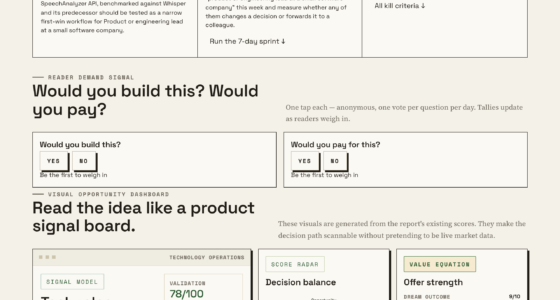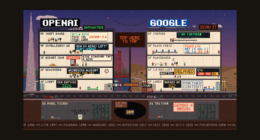

📊 Full opportunity report: OpenAI's Cursor Disabling: Who Really Loses In AI Development? on ThorstenMeyerAI.com — validation score, market gap, and execution plan.

Prime made for students and young adults
- Fast, free delivery for dorm and study essentials
- Prime Video and Amazon Music included
- Member-only deals
TL;DR
OpenAI announced it will terminate its models’ support for Cursor by November 12 due to recent corporate control changes. This move affects developers using Cursor, who had no role in the underlying corporate disputes. The decision raises questions about trust, competition, and developer reliance on AI tools.
OpenAI has announced it will stop supplying its AI models to Cursor, the AI coding tool, with the support ending on November 12, due to the recent acquisition of Cursor by SpaceX. This decision directly impacts developers who rely on Cursor for their work, raising questions about trust and corporate control in AI development. The move underscores ongoing tensions between OpenAI and Musk-affiliated companies, but the core issue involves the developers caught in the middle.
On August 28, 2026, OpenAI issued a formal notice that it will terminate its contract with Cursor, a coding AI tool that originated from OpenAI’s startup accelerator in 2024. The termination is set for November 12, 2026, and is framed as the maximum notice allowed under their agreement following a change of control. The change stems from SpaceX’s recent acquisition of Cursor through a series of corporate transactions, including SpaceX’s merger with xAI and the purchase of Anysphere, Cursor’s parent company, which closed on August 15, 2026.
OpenAI’s decision is based on its concerns about trust and contractual compliance, citing previous instances where Musk’s companies, such as Twitter (now part of SpaceX), allegedly broke contracts or used OpenAI data improperly. OpenAI claims that the recent change of control raises risks that SpaceX may not adhere to OpenAI’s terms of service, especially given Musk’s companies’ history of contract breaches and data use violations. As of now, SpaceX and Cursor have not publicly responded to these claims.
Developers using Cursor to access OpenAI’s models will lose that access unless a new agreement is reached. They were not involved in the corporate disputes, nor did they violate any terms; they simply relied on a popular tool that is now being withdrawn due to decisions made at a corporate level above their control. This situation highlights the broader issue of how corporate mergers and control changes can impact end-users in the AI ecosystem.
OpenAI will stop supplying its models to Cursor (shutoff Nov 12) now that SpaceX owns it. The lesson underneath has nothing to do with whose side you’re on.
Implications for AI Developer Ecosystems
This move by OpenAI underscores how corporate control and trust issues can directly affect developers and users of AI tools. Developers who rely on third-party AI models for coding, research, or product development may face sudden disruptions, especially when the underlying technology is tied to corporate disputes. The decision also raises broader questions about the stability and transparency of AI service providers amid rapid corporate consolidations and acquisitions. For the AI community, it exemplifies the risks of dependence on proprietary models controlled by entities whose strategic interests might shift unexpectedly, potentially leaving developers and businesses vulnerable to sudden changes.
Furthermore, this incident highlights the growing influence of large tech and corporate entities in shaping AI access and innovation. The decision to cut off support based on corporate control rather than technical or security reasons reflects a trend where corporate disputes can have unintended consequences on the developer ecosystem, possibly stifling innovation or fragmenting the AI landscape.
AI coding assistant tools for developers
As an affiliate, we earn on qualifying purchases.
As an affiliate, we earn on qualifying purchases.
Corporate Control and Developer Reliance in AI
Cursor was launched in 2024 as part of OpenAI’s startup accelerator, quickly gaining popularity among developers for its integration of OpenAI models with coding tools. In 2026, Elon Musk’s companies underwent a series of major mergers: SpaceX merged with xAI, the maker of Grok, and later acquired Cursor’s parent company, Anysphere, in a $60 billion all-stock deal. This series of transactions culminated in Cursor becoming a wholly owned subsidiary of SpaceX, which finalized the acquisition on August 15, 2026.
OpenAI’s decision to end support was announced shortly thereafter, citing concerns over trust and contractual compliance following the change of control. The move is part of a broader pattern of corporate disputes involving Musk’s companies, including allegations of data misuse and contract breaches, which OpenAI claims justify the termination. However, the core issue for end-users remains: developers who depend on Cursor’s integration with OpenAI models now face potential loss of access, with no direct involvement in the corporate disputes.
This situation exemplifies a broader challenge in AI development: the reliance of developers on proprietary platforms controlled by large corporations whose strategic decisions can abruptly alter access and capabilities, often without warning or input from the end-users.
AI model access management software
As an affiliate, we earn on qualifying purchases.
As an affiliate, we earn on qualifying purchases.
Unresolved Questions About Corporate Motives
It remains unclear how much of OpenAI’s decision is driven by genuine trust concerns versus strategic competitive considerations. SpaceX and Cursor have not publicly responded, and the specifics of any contractual breaches or data misuse allegations have not been independently verified. The extent to which this move is a precaution versus a strategic competitive maneuver remains uncertain, and further statements from involved parties are awaited.
As an affiliate, we earn on qualifying purchases.
Next Steps for Developers and Stakeholders
Developers using Cursor will need to seek alternative solutions or wait for potential new arrangements with OpenAI or other providers. OpenAI may clarify or modify its stance as the situation develops, especially if SpaceX or Cursor responds publicly. The broader AI community will be watching how this corporate dispute influences trust, access, and competition in AI development, possibly prompting calls for more transparent and resilient developer ecosystems.
In the coming weeks, stakeholders will likely analyze the legal and contractual implications of this move, and developers may advocate for more open or decentralized AI tools to mitigate similar risks in the future.
As an affiliate, we earn on qualifying purchases.
Key Questions
Why is OpenAI cutting off support for Cursor now?
OpenAI cites concerns over trust and contractual compliance following SpaceX’s acquisition of Cursor, which it claims raises risks that SpaceX might not adhere to OpenAI’s terms of service.
How will this affect developers using Cursor?
Developers relying on Cursor to access OpenAI models will lose that support on November 12 unless new arrangements are made, impacting their workflows and projects.
While OpenAI’s public reasoning emphasizes trust and contractual issues, some analysts suggest that competitive considerations may also influence the decision, especially given Cursor’s ownership by SpaceX, a direct rival in AI coding tools.
Could this situation set a precedent for future corporate control issues?
Yes, it highlights risks for developers and users dependent on proprietary AI tools, emphasizing the need for more resilient and transparent ecosystems in AI development.
Source: ThorstenMeyerAI.com
Halloween Picks
halloween
As an affiliate, we earn on qualifying purchases.