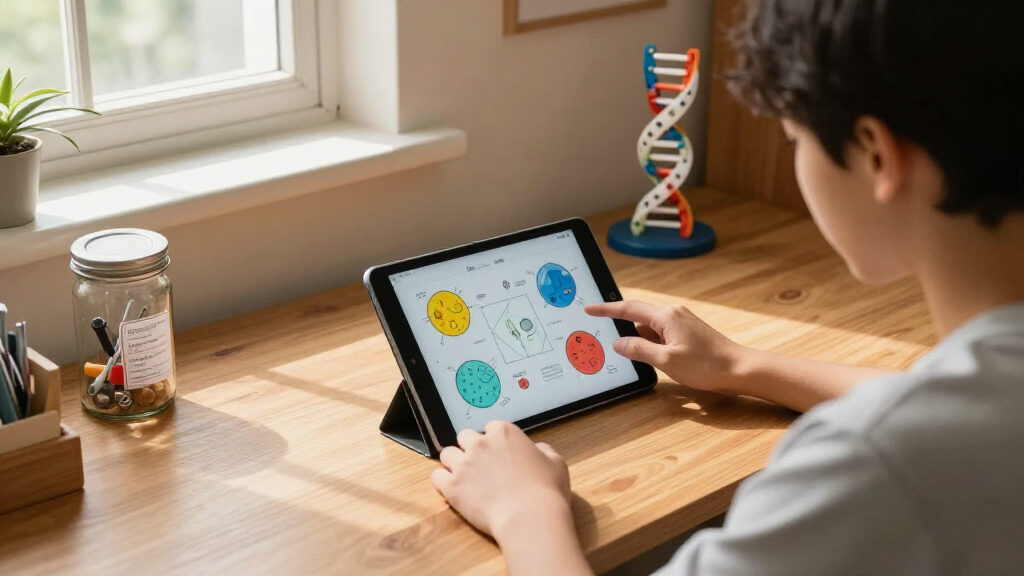

The best educational science reference tools span a wider range of formats than most buyers expect, from laminated wall charts and quick-reference guides to hands-on circuit kits and illustrated encyclopedias. My top overall pick is The Way Things Work: Newly Revised Edition, because it covers more scientific ground, for more age groups, than anything else in this lineup. For tight budgets, the Periodic Table of Elements Poster delivers serious reference value for the price of a coffee, while the EUDAX Electricity and Magnetism Kit is the standout if you want learning that happens with the hands rather than the eyes. The main tradeoff in this category is depth versus accessibility: dense reference material serves older students better, while younger learners need visual, tactile formats even if the content is shallower. Keep reading for the full breakdown of where each tool excels and who should skip it.

Prime made for students and young adults
- Fast, free delivery for dorm and study essentials
- Prime Video and Amazon Music included
- Member-only deals
Key Takeaways
- Format determined usefulness more than content quality — the laminated QuickStudy guides and wall charts won for targeted study, while The Way Things Work won for breadth, and no single product did both well.
- Age alignment was the most common mistake risk in this category: the children’s science tools book and the EUDAX circuit kit sit at opposite ends of a K-12 spectrum, and buying the wrong end wastes money regardless of quality.
- The 17-poster biology set offered the best cost-per-topic value for classroom walls, but the single Anatomy QuickStudy guide beat it for portability and test-prep focus.
- Hands-on kits carried hidden costs the posters did not — batteries, replacement parts, and adult supervision — which changes the true price comparison for homeschool families.
- Reference tools that grow with the student (the encyclopedia, the periodic table poster) justified higher upfront prices better than grade-locked materials.
| I Use Science Tools: Children’s Book About Science Instruments (K-Grade 1) |  | Best for Early Readers | Pages: 24 | Series: My Science Library | Grade Level: K-Grade 1 | VIEW LATEST PRICE | See Our Full Breakdown |
| EUDAX School Physics Labs Basic Electricity and Magnetism Experiment Kit |  | Best Hands-On Learning Kit | Total Items: 79 | Electricity Components: 56 | Magnetism Components: 21 | VIEW LATEST PRICE | See Our Full Breakdown |
| Periodic Table of Elements Poster – Laminated Science Chart for Chemistry Learning |  | Best Chemistry Reference | Material: Laminated paper | Sides: Double-sided | Features: Color-coded, waterproof, dry-erase compatible | VIEW LATEST PRICE | See Our Full Breakdown |
| 17 Laminated Biology Posters – Human Body System, Cell Anatomy, DNA, Photosynthesis – Educational Science Charts |  | Best Classroom Wall Set | Number of Posters: 17 | Size: 11″ x 16″ each | Material: Laminated thick paper with PET film coating | VIEW LATEST PRICE | See Our Full Breakdown |
| The Way Things Work: Newly Revised Edition |  | Best Cross-Age Reference Book | Format: Illustrated hardcover reference book | Edition: Newly revised edition | Reading Level: All ages | VIEW LATEST PRICE | See Our Full Breakdown |
| Anatomy: QuickStudy Laminated Reference Guide |  | Best Pocket Reference for Anatomy Students | Format: Laminated tri-fold reference guide | Subject: Human anatomy | Intended Audience: Students and professionals | VIEW LATEST PRICE | See Our Full Breakdown |
| QuickStudy Reference Guide |  | Best Budget Desk Reference (If You Know Your Topic) | Product Type: Office Products (laminated reference guide) | Format: Single laminated sheet | Package Dimensions: 0.254 cm L x 21.59 cm W x 28.7 cm H | VIEW LATEST PRICE | See Our Full Breakdown |
| educational science reference tool | Format | Use Case |
|---|---|---|
| I Use Science Tools: Children’ | Leveled reader (print book) | — |
| EUDAX School Physics Labs Basi | — | — |
| Periodic Table of Elements Pos | — | Classroom, lab, or study-room wall reference |
| 17 Laminated Biology Posters | — | Classroom, bulletin boards, homeschool study areas |
| The Way Things Work: Newly Rev | Illustrated hardcover reference book | — |
| Anatomy: QuickStudy Laminated | Laminated tri-fold reference guide | Quick study reference and lab lookup |
| QuickStudy Reference Guide | Single laminated sheet | Office and study quick reference |
More Details on Our Top Picks
I Use Science Tools: Children’s Book About Science Instruments (K-Grade 1)
I Use Science Tools fills a gap most of the other picks in this roundup ignore: the very beginning of the science journey. Where The Way Things Work assumes a reader can handle dense pages of mechanical detail, this leveled reader keeps vocabulary controlled and sentences short, so kindergarten and first-grade students can actually read it themselves. This option stands out for building science vocabulary — magnifiers, thermometers, rulers — before kids ever touch a lab kit like the EUDAX circuit set, which is aimed at high schoolers and would be lost on this audience.
The tradeoff is depth. At 24 pages, it introduces tools without explaining how they work in any detail, and there is no interactive or multimedia component to extend the learning.
Pros:- Leveled text that K-1 students can read independently
- Introduces core science instruments with simple, age-appropriate language
- Fits the My Science Library series for a cohesive classroom collection
- Affordable enough to buy multiple copies for guided reading groups
Cons:- Only 24 pages, so coverage of instruments is surface-level
- No interactive or digital companion content
Best for: Kindergarten and first-grade teachers, and parents building an early-reading science corner at home
Not ideal for: Anyone above early elementary — the content is too basic for middle schoolers who would get more from the biology poster set
- Pages:24
- Series:My Science Library
- Grade Level:K-Grade 1
- Format:Leveled reader (print book)
- Topic:Introduction to science instruments
- Audience:Early elementary students
Our verdict“This makes the most sense for educators who need a true beginner reference that five- and six-year-olds can read on their own.”
EUDAX School Physics Labs Basic Electricity and Magnetism Experiment Kit
Every other product here is a reference tool — something to read, hang, or consult. The EUDAX physics kit earns its slot by turning reference into practice: students build the circuits, electromagnets, and generators that a poster like the periodic table chart can only describe. With 79 components split between electricity and magnetism plus a color manual, this model is better suited to active learners who retain concepts through experimentation rather than reading.
Compared with the biology poster set, which covers breadth across life science, this kit goes deep into one domain — physics. The tradeoffs are real, though: batteries are not included, so factor in that purchase, and some experiments require assembly and adult supervision to go smoothly.
Pros:- 79 items covering both electricity and magnetism experiments in one kit
- Includes a color manual that walks students through each build
- Practical, NGSS-friendly approach that reinforces abstract physics concepts
- Comes with a storage bag to keep small components organized
Cons:- Requires 3 AA batteries that are not included
- Assembly is required for many experiments, which takes class time and adult help
Best for: High school physics teachers and homeschooling parents who want a lab-in-a-box for electricity and magnetism units
Not ideal for: Visual or life-science learners — it covers only physics, so biology students should look at the 17-poster set instead
- Total Items:79
- Electricity Components:56
- Magnetism Components:21
- Repair Tools:2 included
- Manual:Color page manual
- Batteries:Not included (requires 3 AA)
- Target Level:High school
- Storage:Includes storage bag
Our verdict“Buy this if your student learns physics best by wiring it up rather than reading about it; skip it if you need a broad science reference instead.”
Periodic Table of Elements Poster – Laminated Science Chart for Chemistry Learning
If chemistry is the subject at hand, this double-sided laminated poster is the most efficient purchase in the roundup. One side gives a color-coded periodic table, the other covers essential chemical equations — a pairing that means students get two core references in a single hanging. Compared with the 17-poster biology set, this pick trades breadth for focus: it will not help with anatomy or photosynthesis, but for AP Chemistry or homeschool labs it does the job of several textbook appendices.
The dry-erase-compatible surface is the standout feature for educators — students can annotate groups and trends, then wipe clean. Just note it is chemistry-only, and plan to buy markers separately since they are required for that use.
Pros:- Double-sided design combines periodic table and equation reference in one poster
- Waterproof lamination survives frequent handling and lab environments
- Dry-erase surface allows annotation and repeated practice
- Color coding speeds up pattern recognition for element groups
Cons:- Chemistry-only scope limits usefulness for other science subjects
- Dry-erase markers required but not the focus of every buyer’s budget
Best for: High school, AP Chemistry, and college students who need a durable at-a-desk or on-the-wall chemistry reference
Not ideal for: Students needing multi-subject coverage — for general science, the biology poster set or The Way Things Work covers more ground
- Material:Laminated paper
- Sides:Double-sided
- Features:Color-coded, waterproof, dry-erase compatible
- Topics:Periodic table and chemical equations
- Audience:High school, college, AP Chemistry, homeschool
- Use Case:Classroom, lab, or study-room wall reference
Our verdict“The clear choice for a dedicated chemistry study space — just don’t expect it to serve as an all-subject reference.”
17 Laminated Biology Posters – Human Body System, Cell Anatomy, DNA, Photosynthesis – Educational Science Charts
Where the periodic table poster covers one subject brilliantly, this 17-poster biology bundle wins on breadth — human body systems, cell anatomy, DNA, and photosynthesis, all in one purchase. That makes it the strongest option here for teachers decorating a full science classroom or homeschool parents rotating units across a year. Compared with a single QuickStudy guide like Anatomy: QuickStudy Laminated Reference Guide, these 11×16 inch charts sacrifice portability but gain wall presence that students absorb passively every day.
The PET film coating means they hold up to handling and humidity, and the simplified diagrams are pitched well for middle school. The tradeoff: advanced high schoolers may find the content too introductory, and displaying all 17 requires serious wall space.
Pros:- 17 posters spanning the core middle/high school biology curriculum
- Waterproof, tear-resistant lamination built for daily classroom wear
- Clear labels and simplified diagrams make complex topics approachable
- Works equally well for classrooms, bulletin boards, and homeschool study areas
Cons:- Full display requires substantial wall space
- Content level caps out around middle school, limiting appeal for advanced students
Best for: Middle and early high school science teachers, and homeschool families building a full-year biology curriculum
Not ideal for: Advanced or AP-level students — the simplified visuals will feel too basic next to a college-level anatomy reference
- Number of Posters:17
- Size:11″ x 16″ each
- Material:Laminated thick paper with PET film coating
- Topics Covered:Human body systems, cell anatomy, DNA, photosynthesis, plant and animal cells, body organs
- Durability:Waterproof and tear-resistant
- Educational Level:Middle and high school
- Use Case:Classroom, bulletin boards, homeschool study areas
Our verdict“The best value for covering an entire biology curriculum visually — pick it if you have the wall space and students at the intro level.”
The Way Things Work: Newly Revised Edition
Most picks in this roundup are narrow by design — a chemistry chart, a biology wall set, a physics kit. The Way Things Work takes the opposite approach: one heavily illustrated book explaining how machines and systems operate, newly updated with modern content. This pick makes the most sense for families where multiple kids of different ages share one resource; a second grader can follow the drawings while a middle schooler reads the explanations, something neither the periodic table poster nor the biology charts can manage.
The tradeoff is that it is a gateway, not a textbook. It deliberately skips deep technical math and engineering detail, and there is no digital companion — students who need rigor will outgrow it and need a more specialized reference.
Pros:- Accessible to a wide age range, from elementary readers through curious adults
- Newly revised edition includes updated machines and modern illustrations
- Explains complex mechanical concepts through clear, engaging diagrams
- Covers far more subject breadth than any single-subject poster in this lineup
Cons:- Lacks detailed technical and mathematical explanations for serious study
- No digital or interactive companion content
Best for: Families and school libraries wanting one durable, all-ages reference that explains technology and mechanics accessibly
Not ideal for: Students who need exam-level technical depth — a dedicated reference like the chemistry poster or a QuickStudy guide will serve better
- Format:Illustrated hardcover reference book
- Edition:Newly revised edition
- Reading Level:All ages
- Subjects Covered:Machines, technology, and mechanical systems
- Style:Illustrated explanations with simple diagrams
- Digital Content:None included
Our verdict“Buy this as the generalist science bookshelf anchor — and supplement with subject-specific references when coursework demands depth.”
Anatomy: QuickStudy Laminated Reference Guide
Most of the tools in this roundup cover broad ground — the 17 Laminated Biology Posters set spans whole body systems across a wall’s worth of charts — but this pick takes the opposite approach: one dense, laminated sheet that survives backpacks, lab benches, and spilled coffee. For a student who needs to verify a term or structure in seconds, flipping through a textbook is overkill, and this guide strips anatomy down to its most consulted facts. Compared with the generic QuickStudy Reference Guide, it wins because buyers actually know what they are getting: named anatomical content, not an unspecified topic. The tradeoff is real, though — the format that makes it fast also makes it shallow for advanced coursework, and there are no linked online resources for deeper study. Treat it as a memory jogger, not a curriculum.
Pros:- Laminated surface resists spills, tearing, and daily backpack wear
- Condenses high-yield anatomy terms into a single scannable page
- Fits easily into a binder, folder, or lab coat pocket
- Clear topic focus — buyers know exactly what subject they’re getting
Cons:- Too shallow to serve as a primary study resource for advanced courses
- No companion digital or online content to extend learning
Best for: Nursing, pre-med, and A&P students who want a durable cram-sheet for exam review and quick lookups during labs
Not ideal for: Advanced anatomy or medical students — the single-sheet format simply cannot carry the depth a full atlas or textbook provides
- Format:Laminated tri-fold reference guide
- Subject:Human anatomy
- Intended Audience:Students and professionals
- Use Case:Quick study reference and lab lookup
- Durability:Water-resistant laminated surface
- Portability:Fits standard binders and folders
Our verdict“Buy this if you need a rugged, glanceable anatomy cheat sheet rather than a full reference — students wanting depth should look to a textbook or atlas instead.”
QuickStudy Reference Guide
This is the cheapest way into the QuickStudy format, and for a buyer who already owns other laminated guides, it slots neatly alongside them at a desk or workstation. Where the Anatomy: QuickStudy Laminated Reference Guide at least declares its subject, this listing is vague about which topics it actually covers, which makes it a gamble compared with the clearly labeled Periodic Table of Elements Poster in this lineup. The strength is the format itself: thin, laminated, and sized like a letter sheet, it stays flat on a desk and wipes clean. Compared with wall posters, it is far easier to store and reposition, though it sacrifices the visual scale that makes posters effective classroom teaching aids. At this price the risk is low, but uncertain content means it is best bought by buyers who don’t need a specific subject guarantee.
Pros:- Very low cost compared with poster sets and textbooks
- Thin laminated format wipes clean and stores flat in any drawer or binder
- Lightweight enough to move between office, classroom, and home
- Durable enough for daily desk handling
Cons:- Listing lacks clear information on covered content or topics
- Single sheet cannot match the depth or visual impact of a multi-poster set like the 17 Laminated Biology Posters
Best for: Budget-conscious buyers building a collection of laminated study sheets who want cheap, durable quick-reference material
Not ideal for: Buyers seeking a specific subject — the listing doesn’t clearly state the content, so targeted learners could end up with the wrong topic
- Product Type:Office Products (laminated reference guide)
- Format:Single laminated sheet
- Package Dimensions:0.254 cm L x 21.59 cm W x 28.7 cm H
- Package Quantity:1
- Country of Origin:United States
- Use Case:Office and study quick reference
Our verdict“A cheap, durable grab-and-go reference for flexible buyers — but anyone needing a guaranteed specific topic should pick a clearly labeled guide instead.”
How We Picked
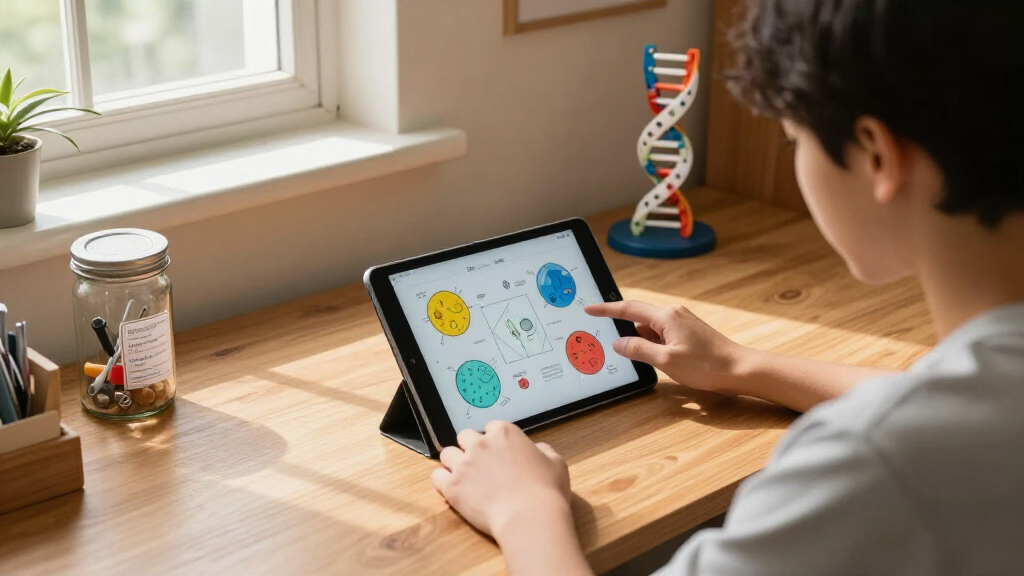
I evaluated these seven tools against four buyer-relevant criteria: educational depth, age appropriateness, usability in real learning environments, and long-term value. Depth meant asking whether the tool actually explains scientific concepts or merely labels them. Usability covered practical realities — whether a laminated chart survives a classroom year, whether a kit requires adult supervision, whether a book holds attention across grade levels. Long-term value rewarded tools that stay relevant as a student advances, which is why reference materials with broad age ranges ranked above grade-locked ones.
The ranking logic favors versatility at the top and specialization further down. The Way Things Work earns the top slot because it serves the widest audience and the longest timeline. The poster sets and QuickStudy guides rank in the middle because they are excellent within narrow scopes. The children’s book and the circuit kit bookend the list not because they are weaker products, but because their usefulness collapses outside their specific age groups and learning styles.
| educational science reference tool | Format | Use Case |
|---|---|---|
| I Use Science Tools: Children’ | Leveled reader (print book) | — |
| EUDAX School Physics Labs Basi | — | — |
| Periodic Table of Elements Pos | — | Classroom, lab, or study-room wall reference |
| 17 Laminated Biology Posters | — | Classroom, bulletin boards, homeschool study areas |
| The Way Things Work: Newly Rev | Illustrated hardcover reference book | — |
| Anatomy: QuickStudy Laminated | Laminated tri-fold reference guide | Quick study reference and lab lookup |
| QuickStudy Reference Guide | Single laminated sheet | Office and study quick reference |
Factors to Consider When Choosing Educational Science Reference Tools
Choosing among educational science reference tools comes down to matching the format to the learner, the subject, and the setting. Before buying anything in this category, work through the factors below — they explain most of the regret I see in this market.Match the Format to How Your Student Actually Learns
The most common mistake in this category is buying the format you prefer rather than the one the student uses. Visual learners return to wall charts repeatedly because the information stays visible in their environment; test-crammers reach for folded QuickStudy guides because they mirror the act of studying itself. Kinesthetic learners get almost nothing from any printed reference and need kits like the EUDAX circuit set, where the concept is discovered rather than read. A useful test: watch what the student does with information already in the house. If posters go unnoticed but hands-on toys get disassembled, printed references are the wrong investment. Hybrid households usually get the best results by pairing one visual anchor, like the periodic table poster, with one interactive tool. Also remember that format affects where learning happens — a laminated guide travels to study hall, a wall poster does not.
Age Range Matters More Than Quality
A brilliant product aimed at the wrong grade is a wasted purchase, and this category spans everything from kindergarten picture books to high school physics kits. Grade-locked materials lose value fast — a child outgrows the science tools book within a year or two, while a well-written encyclopedia like The Way Things Work serves a ten-year span. Check the stated age range, but also check the reading level and the density of the visuals, because publishers routinely overestimate who a product suits. For multi-child households, tools with wide age ranges almost always win the value comparison even at a higher price. The exception is test preparation, where a narrowly targeted reference for one exam is exactly what you want. Buying a year ahead of reading level is the single most frequent complaint pattern in this market.
Lamination and Physical Durability Are Not Equal
Nearly every poster and guide in this category advertises lamination, but thickness, seal quality, and finish vary enough to change the product’s lifespan. Classroom walls and homeschool corners subject charts to sunlight fading, tape damage, and handling by younger siblings, and thin laminate curls at the edges within a semester. Thicker sealed laminate wipes clean, resists tears, and can move between rooms or years of students, which is where the real savings appear. Fold-out reference guides face a different durability question: the fold seams are the failure point, so check reviews for seam splitting before buying the cheapest option. For posters, larger formats with larger type read better from a desk across the room — a chart nobody can read from a distance is decoration, not reference. Durability is the area where spending slightly more upfront reliably pays off.
Count the Hidden Costs of Hands-On Kits
Experiment kits carry costs that printed references never do, and comparing sticker prices alone misleads buyers. The true cost of a circuit kit includes batteries, occasional replacement wires or bulbs, and — the biggest hidden input — adult supervision time, since electricity experiments with younger students need a parent present. Kits also assume a certain amount of patience for troubleshooting; a circuit that fails to light because of a loose contact can frustrate a beginner into abandoning the whole subject. That said, no printed reference produces the conceptual payoff of a child watching their first circuit work, so the extra cost often buys genuinely different learning. The right approach is to budget for the consumables at purchase time and to check whether the kit sells replacement parts at all. If it does not, treat it as semi-disposable when comparing prices.
One Subject Deep or Many Subjects Shallow
Buyers must decide between depth and coverage before comparing any individual product. A single-subject reference like the Anatomy QuickStudy guide goes far deeper into its topic than any general encyclopedia, which matters when the student is preparing for a specific exam or wrestling with one difficult unit. Broad tools like The Way Things Work build the connective understanding that makes individual topics stick, but they will never carry a student through an anatomy test on their own. The efficient strategy for most families is one broad anchor plus targeted references added as specific courses demand them. This also spreads the spending over time instead of front-loading a full reference library. Resist the urge to buy every chart at once — the poster set that matches next semester’s curriculum is the one that gets used.
Where the Reference Will Live
Environment shapes whether a reference tool gets used at all. Wall charts need actual wall space in the room where studying happens; a gorgeous periodic table hung in a hallway nobody studies in is invisible education. Fold-out guides live in backpacks and binders, so their value depends on the student actually carrying them — check the folded dimensions against the bag they use. Books need shelf space near the study area, and heavy hardcovers get consulted less often than ones a child can carry to the couch. Classroom buyers face different constraints than homeschoolers: teachers need multiples, bulk pricing, and materials that survive thirty hands, while a homeschool family can buy one durable copy and keep it for years. Deciding the destination before the purchase prevents the drawer-full-of-unused-charts problem that plagues this category.
Frequently Asked Questions
Is a general encyclopedia like The Way Things Work enough on its own, or do I need subject-specific references too?
A general encyclopedia builds conceptual understanding, but it cannot replace targeted references for coursework and exams. If a student is taking a high school anatomy or chemistry class, the QuickStudy guides and subject posters map directly to what tests cover, while the encyclopedia explains the underlying principles in an engaging way. The two formats do different jobs: the encyclopedia creates curiosity and context, the targeted references drive memorization and recall. Most families get the best results by starting with the broad book, then adding subject references as specific courses begin. Buying everything at once usually means half of it sits unused for years.
Are laminated posters actually useful for learning, or just classroom decoration?
The answer depends entirely on placement and reinforcement. Research on visual aids in classrooms consistently shows that reference charts improve recall only when students interact with them — labeling exercises, scavenger hunts, or regular teacher reference. A poster hung and never mentioned becomes wallpaper within two weeks. The periodic table is the strongest case for poster learning because chemistry students consult it dozens of times per chapter, and having it permanently visible builds familiarity that a book-bound copy cannot. Posters also win for younger learners who absorb environmental information more readily than they use study guides. Treat posters as supplements to active study, not substitutes for it, and they earn their price.
What age is right to switch from picture books about science to real reference tools?
The transition usually works best somewhere between grades 2 and 4, and it happens gradually rather than all at once. Early readers benefit from picture books like I Use Science Tools because the goal at that stage is vocabulary and positive association, not information retrieval. Around age 8, most students can pull facts from a well-designed chart or an illustrated encyclopedia, and that skill — looking things up independently — is worth teaching deliberately. A good bridge is The Way Things Work, which reads like a picture book but contains genuine reference content, letting both formats coexist for a couple of years. Waiting too long to introduce real references slows the development of independent study habits, so err on the early side with highly visual materials.
Are hands-on experiment kits worth the extra cost and supervision compared to printed references?
For many students, yes — but only if an adult is realistically available to participate. Kits like the EUDAX circuit set produce a kind of understanding that printed material cannot, because the student sees cause and effect directly: connect the circuit correctly and the bulb lights, reverse the wiring and it does not. That feedback loop is especially valuable for students who struggle with abstract textbook explanations. The tradeoffs are real, though: kits need batteries and replacement parts, they require supervision for younger students, and a single frustrating failure can sour the experience. If your household cannot commit the adult time, quality printed references deliver more learning per dollar. If you can, one well-chosen kit per year is a reasonable investment.
How do I choose between a poster set and QuickStudy guides when both cover the same subject?
The choice comes down to passive exposure versus active study. Posters work through repeated ambient exposure — the student absorbs the material by seeing it daily, which suits material that benefits from familiarity, like the periodic table or the human body systems. QuickStudy guides work at the moment of active studying: they get pulled out, consulted, and packed for exams, which suits memorization-heavy subjects like anatomy. If the student studies in one consistent room with available wall space, posters win. If studying happens in libraries, classrooms, or different locations, the portable guide wins. For a course with a big cumulative exam, the strongest combination is the poster for daily exposure during the semester and the guide for the final weeks of review.
Conclusion
The right choice here depends less on product quality — all seven earn their place — and more on who is doing the learning. For best overall, The Way Things Work: Newly Revised Edition covers the most subjects for the most years, making it the safest single purchase in the lineup. For best value, the Periodic Table of Elements Poster delivers outsized reference utility at a minimal price, with the QuickStudy guides close behind for exam-focused students. For best for beginners, I Use Science Tools is the clear pick for K-1 learners building science vocabulary, provided you accept its short usable lifespan. For best premium hands-on learning, the EUDAX Electricity and Magnetism Kit justifies its higher total cost of ownership for families with the time to use it properly. And for specific needs: the 17-poster biology set for classroom walls and curriculum coverage, and the Anatomy QuickStudy guide for portable, test-prep-ready reference. Buy one broad anchor first, then add targeted tools as the coursework demands them.
Fall Picks
fall essentials
As an affiliate, we earn on qualifying purchases.