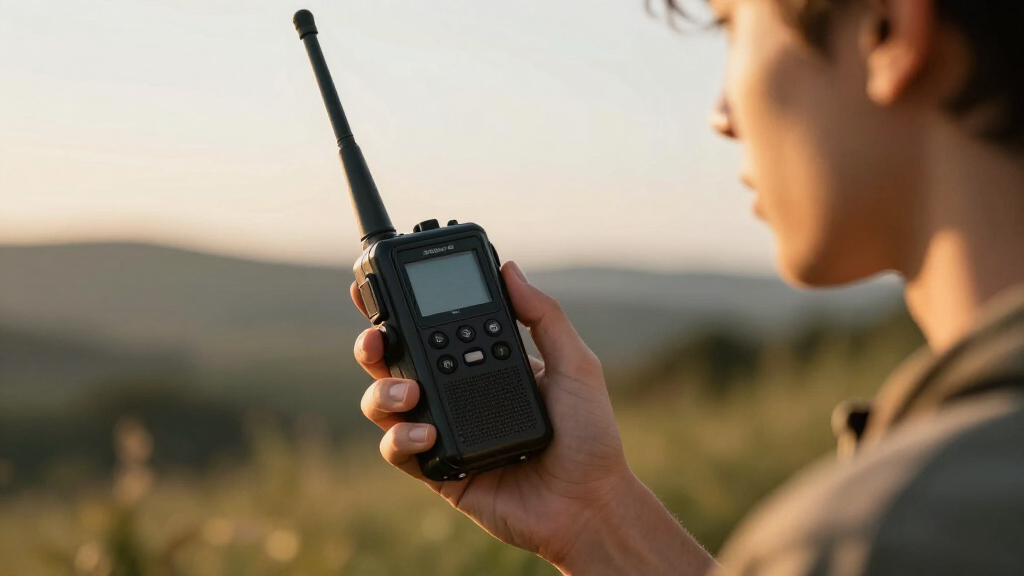

📊 Full opportunity report: Revolutionizing Shortwave Listening: The AI Design Behind Station 36 on ThorstenMeyerAI.com — validation score, market gap, and execution plan.

Prime made for students and young adults
- Fast, free delivery for dorm and study essentials
- Prime Video and Amazon Music included
- Member-only deals
TL;DR
Station 36 is an immersive, AI-designed web platform that simulates vintage shortwave radio listening. It combines authentic visuals, tactile controls, and synthesized audio to evoke the experience of secret signal hunting. This innovation offers a new way to engage with radio history through modern web technology.
Station 36, an AI-crafted web experience, has been launched to simulate the tactile and auditory experience of vintage shortwave radio listening. Developed as an immersive, browser-based interface, it features vintage aesthetics, interactive tuning controls, and synthesized audio signals, aiming to revive a lost art of signal hunting for modern audiences. This development marks a significant intersection of AI design, web craftsmanship, and radio history, offering a novel way to explore secret signals without specialized equipment.
The platform, built entirely with HTML, CSS, and JavaScript, employs inline SVG graphics to replicate vintage radio hardware, including a detailed dial, knobs, and meters. It uses the Web Audio API to synthesize authentic static hiss, heterodyne whistles, carrier hum, Morse code bursts, and voice signals, which activate only when users toggle a power switch. The spectral waterfall visualization scrolls dynamically beneath the controls, displaying real-time signal activity and noise patterns, creating an immersive experience that mimics real shortwave reception.
According to the creators, the design palette draws from vintage materials—deep bakelite brown-black backgrounds, amber accents, phosphor cyan for spectral activity, and soft cream textures—enhancing the authentic aesthetic. The interactive dial allows users to precisely tune into different frequencies, with real-time updates to the spectral display and audio, simulating the slow, deliberate process of signal hunting. The project was developed as part of a broader series of AI-crafted websites exploring historical and technological themes, with Station 36 standing out for its detailed attention to vintage radio design and user experience.
Innovative Fusion of AI, Web Design, and Radio History
This project demonstrates how AI and modern web technologies can revive and reinterpret historical experiences, making vintage radio listening accessible to a new generation. It offers educational value by illustrating the complexity of shortwave signals and the art of signal hunting, which was once a clandestine activity during the Cold War era. For enthusiasts and newcomers alike, Station 36 provides a tactile, immersive environment that bridges the gap between history and digital innovation, highlighting the potential of AI-driven design in cultural preservation and interactive storytelling.
Popular right now

Samsung 65-Inch The Frame Pro Neo QLED 4K TV (2026) Bundle with Modern Brown Bezel, HDMI Cables, and Home Theater Guide

Dyson Ball Animal 3 Upright Vacuum – Corded, 290 AW, De‑tangling Motorbar Cleaner Head, 3 Suction Modes

iRobot Roomba 105 Combo Robot Vacuum and Mop
As an affiliate, we earn on qualifying purchases.
Evolution of Shortwave Listening and Digital Revival
Shortwave radio has historically been used for clandestine communications, hobbyist listening, and emergency broadcasts. During the Cold War, secret signals and numbers stations became part of an underground communication network, often monitored by enthusiasts and intelligence agencies. In recent years, digital simulations and online platforms have sought to preserve this legacy, but few have achieved the level of authenticity and interactivity seen in Station 36. The project builds on advances in AI, web graphics, and audio synthesis to create a convincing, tactile experience that resonates with both history buffs and tech enthusiasts.
Prior efforts in digital recreations have focused on static images or simple sound samples, but Station 36 integrates dynamic spectral visualizations, real-time audio synthesis, and intricate SVG controls to produce a comprehensive, immersive environment. Its development reflects a broader trend of using AI to craft historically inspired digital artifacts that engage audiences through sensory-rich experiences.
“Station 36 exemplifies how AI can be employed to recreate and preserve the tactile and auditory nuances of vintage radio listening, making history accessible and engaging through modern web technologies.”
— an anonymous researcher
Unconfirmed Details About Future Expansions
It is not yet clear whether the creators plan to expand Station 36 with additional features, such as more complex Morse decoding, user-generated signals, or integration with real-time radio feeds. The long-term goals and potential for community interaction remain unspecified, and ongoing development updates have not been announced.
Next Steps for Development and Engagement
Developers are expected to refine the platform based on user feedback, potentially adding features like more detailed signal analysis, educational modules, or collaborative signal hunting. Future updates may also include deeper integration with historical archives or interactive storytelling elements. The project aims to serve both as a nostalgic tribute and an educational tool, with further enhancements likely to expand its appeal.
Key Questions
Can I listen to real shortwave signals on Station 36?
No, Station 36 uses synthesized audio to emulate shortwave signals. It does not connect to real-time radio broadcasts.
Is Station 36 suitable for beginners or only enthusiasts?
Station 36 is designed to be accessible to all users, offering an immersive experience that can be enjoyed by both newcomers and experienced radio hobbyists.
Will there be more features added in the future?
The developers have indicated plans to enhance the platform, possibly including more advanced signal decoding and interactive elements, but specific timelines have not been announced.
How authentic is the audio synthesis used in Station 36?
The audio is generated using the Web Audio API to produce static, heterodyne whistles, Morse code, and other signals, aiming for a realistic vintage radio soundscape.
Source: ThorstenMeyerAI.com