
TL;DR
Recent archaeological discoveries offer new understanding of the Late Bronze Age Collapse around 1200 BCE. While some causes are confirmed, others remain debated. The findings could reshape historical interpretations.
Archaeologists have announced significant new findings that shed light on the Late Bronze Age Collapse around 1200 BCE, a period marked by the sudden decline of major civilizations across the Eastern Mediterranean. The discoveries confirm that environmental factors and internal societal stresses played a role, but some causes remain under debate. This development offers fresh insights into one of the most significant upheavals in ancient history.
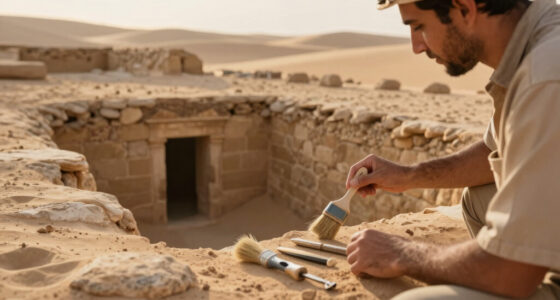
The recent excavations at multiple sites in the eastern Mediterranean, including in modern-day Turkey, Greece, and Egypt, have uncovered evidence of widespread destruction, climate change, and economic disruption during the late 13th and early 12th centuries BCE. Notably, researchers identified signs of prolonged drought, which likely contributed to crop failures and food shortages, corroborating theories that environmental stress was a key factor in the collapse.
Additionally, new findings of fortified city ruins and abandoned settlements suggest internal societal unrest and possible invasions by migrating groups. However, the precise sequence of events remains unclear, and some scholars caution against attributing the collapse to a single cause. Dr. Maria Lopez, an archaeologist involved in the excavations, stated, “While we see clear signs of environmental and social upheaval, the interplay of these factors is complex, and more evidence is needed to establish causality.”
Implications of New Archaeological Evidence for Ancient Civilizations
This discovery is significant because it provides tangible evidence supporting longstanding theories that environmental change and internal instability contributed to the collapse. Understanding these factors helps historians and archaeologists interpret the decline of civilizations such as the Hittites, Mycenaeans, and Egyptians. It also informs current discussions on how climate and societal resilience influence large-scale societal changes, making this research relevant beyond ancient history.

30 Pcs Dino Fossils Dig Kit Digging Hammer Chisel Brush Archaeological Excavation Tool Kit Science Kits for Girls Boys
- Number of Tools: Includes 9 excavation tools
- Tool Size: Perfect size for children's hands
- Realistic Functionality: Simulates real tools to boost imagination
As an affiliate, we earn on qualifying purchases.
As an affiliate, we earn on qualifying purchases.
Recent Discoveries and Historical Theories on the Collapse
The Late Bronze Age Collapse, occurring around 1200 BCE, involved the sudden decline of major civilizations in the eastern Mediterranean, including the Hittite Empire, the Mycenaean kingdoms, and the Egyptian New Kingdom’s decline in certain regions. Historically, scholars have debated causes such as invasions by the Sea Peoples, natural disasters, economic decline, and climate change. Previous evidence was fragmentary, leading to multiple competing theories.
Recent excavations, especially in the last decade, have begun to fill gaps in the archaeological record. The latest findings build on earlier research, which indicated climate anomalies and societal stresses, but lacked conclusive evidence linking these to the collapse. These new discoveries confirm some aspects of environmental stress and internal unrest, but the overall picture remains complex and multifaceted.
“Our findings of drought evidence and abandoned settlements strongly suggest that environmental and social factors worked together to destabilize these civilizations.”
— Dr. Maria Lopez, Archaeologist

Sands3D™ Parthenon Ruins Model – Miniature Replica of Ancient Greek Temple Remains, Classical Landmark Display, Historic Collectible
- Replica of Parthenon Ruins: Detailed miniature of Greek temple remains
- Ideal for History & Architecture Fans: Perfect for collectors and educators
- Compact and Realistic Design: Measures 5 x 2.25 x 1.5 inches
As an affiliate, we earn on qualifying purchases.
As an affiliate, we earn on qualifying purchases.
Unresolved Questions About the Causes and Timeline
Despite the new findings, it is not yet clear how precisely environmental factors, such as drought, interacted with social and political upheaval to cause the collapse. The exact timeline of events, including the role of migrating groups and invasions, remains uncertain. Researchers emphasize that more archaeological data is needed to establish causality definitively, and some aspects of the collapse are still debated among scholars.
Sands3D™ Parthenon Ruins Model – Miniature Replica of Ancient Greek Temple Remains, Classical Landmark Display, Historic Collectible
- Replica of Parthenon Ruins: Detailed miniature of Greek temple remains
- Ideal for History & Architecture Fans: Perfect for collectors and educators
- Compact and Realistic Design: Measures 5 x 2.25 x 1.5 inches
As an affiliate, we earn on qualifying purchases.
As an affiliate, we earn on qualifying purchases.
Future Research Directions and Expected Discoveries
Ongoing excavations at key sites across the eastern Mediterranean are expected to yield further evidence about the sequence of events leading to the collapse. Researchers plan to analyze climate data from ice cores and sediment layers to better understand environmental conditions during that period. Interdisciplinary studies combining archaeology, climate science, and ancient texts aim to clarify the causes and chronology of this pivotal historical event.

A Vast Machine: Computer Models, Climate Data, and the Politics of Global Warming (Infrastructures)
As an affiliate, we earn on qualifying purchases.
As an affiliate, we earn on qualifying purchases.
Key Questions
What is the Late Bronze Age Collapse?
The Late Bronze Age Collapse was a period around 1200 BCE marked by the sudden decline and fall of major civilizations in the eastern Mediterranean, including the Hittites, Mycenaeans, and Egyptian New Kingdom in certain regions.
What new evidence has been found?
Recent excavations have uncovered signs of widespread destruction, signs of prolonged drought, abandoned settlements, and fortified city ruins, indicating environmental stress and societal unrest.
Why is this discovery important?
It provides tangible archaeological support for theories that environmental and social factors contributed to the collapse, helping refine our understanding of this complex historical event.
What remains uncertain?
The exact sequence of causes, the role of migrating groups, and how environmental factors interacted with societal changes are still under investigation, with many details unresolved.
What are the next steps in research?
Further excavations, climate analyses, and interdisciplinary studies are planned to clarify the timeline and causes of the collapse, aiming for a more comprehensive understanding.
Source: hn