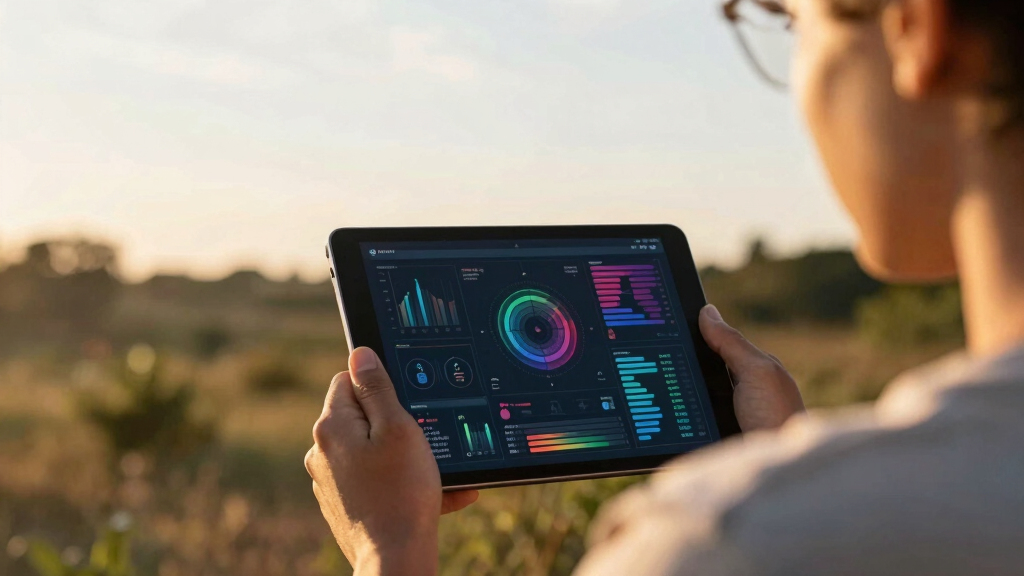

📊 Full opportunity report: Readiness: Before You Fund the Answer on ThorstenMeyerAI.com — validation score, market gap, and execution plan.

Prime made for students and young adults
- Fast, free delivery for dorm and study essentials
- Prime Video and Amazon Music included
- Member-only deals
TL;DR
Organizations considering AI implementation can now use a quick 20-minute readiness assessment to identify potential risks and avoid costly failures. This tool evaluates business-specific failure modes and provides actionable insights before funding.
A new diagnostic tool has emerged that allows organizations to evaluate their readiness for AI deployment in just twenty minutes, using a simple corporate email registration. This assessment aims to prevent costly failures by revealing whether a company’s AI implementation is likely to succeed or quietly erode value over time, making it a critical step before funding or deploying AI systems.
The diagnostic evaluates organizations based on their business type—data-rich, regulated, or document-driven—and provides a clear verdict on readiness, along with specific insights into potential failure modes. It returns six key outputs: a readiness tier, an identification of the organization’s AI failure type, a percentile score against sector peers, calibration to industry-specific constraints, quotes from the company’s responses, and a concrete action plan for immediate next steps. The process is designed to be quick, transparent, and non-salesy, emphasizing a stance of impartial evaluation.According to sources from ThorstenMeyerAI.com, most AI failures are invisible for months, as the systems quietly make judgment calls that degrade decision quality over time. The diagnostic aims to identify these risks early, before deployment, when feedback loops are fast and cheap. The tool does not produce a vendor scorecard or a floating number but offers a comprehensive diagnosis that can guide leadership discussions and immediate actions.
Before You Fund the Answer
Most world-model AI implementations look clean for a year, then decision quality erodes where no dashboard can see it. Twenty minutes and a corporate email tell you — before you sign — whether the money will compound or quietly evaporate.
A clear tier framed in language a CFO will accept — plus your percentile against peers in your sector and size band, so a score becomes a position you can take to the board.
+ twenty minutes
- No follow-up machine — no vendor in your inbox next week.
- No “book a call.” The output is an action you can take without it.
- No vendor scorecard. It doesn’t sell the implementation it assesses.
- No thumb on the scale toward “you’re ready, let’s talk.”
- Subtraction, pointed at a decision. Strip the vendor theater and dashboard-green comfort until the few things that decide success are visible.
- Independence is the product. A diagnostic that deletes your email has nothing to gain from any verdict but the true one — including “not ready.”
- The shift it’s built for. AI is moving from describing to predicting and acting; readiness is a question you answer before deployment, not during it.
- Find out before you fund the answer. The only thing more expensive than this assessment is learning the answer the slow way.
Independent commentary, produced with AI assistance under human editorial oversight. The views are the author’s own and may change. Readiness is a diagnostic tool, not business, financial, legal, or technical advice; its verdict is one input, not a substitute for due diligence. Regulatory references are named as examples, not legal guidance. Product, model, and company names are trademarks of their respective owners; mention does not imply endorsement.
Why a 20-Minute Readiness Check Matters for AI Success
This tool addresses a critical gap in AI deployment: organizations often commit significant budgets without fully understanding their own readiness, leading to failures that only become visible after months or quarters. By providing a quick, reliable assessment upfront, companies can make informed decisions, avoid wasting resources, and implement targeted improvements before risking large investments. It shifts the focus from reactive troubleshooting to proactive risk management, which is especially vital as AI systems become more decision-making embedded and less transparent.
As an affiliate, we earn on qualifying purchases.
The Growing Need for Pre-Deployment AI Readiness Assessments
Most AI failures occur gradually, with early warning signs hidden within the organization’s decision-making processes. Historically, companies only discover shortcomings after negative outcomes manifest months later, often with significant financial and reputational damage. The emergence of world-model AI—systems that build internal representations of business operations—has increased the stakes, as these systems make confident decisions that can erode value subtly and silently. Existing evaluation methods are often too slow or too generic, making this new diagnostic a timely innovation for organizations preparing to scale AI initiatives.
“Most failed AI implementations don’t look like failures for about a year. The dashboards stay green, and the board remains pleased, while the system quietly erodes decision quality.”
— Thorsten Meyer, AI strategist
As an affiliate, we earn on qualifying purchases.
Unconfirmed Aspects of the Readiness Diagnostic Approach
While the diagnostic’s methodology and outputs are well-defined, it is still early to determine how universally applicable or accurate the tool is across different industries and organizational sizes. Its effectiveness in highly complex, regulated, or document-driven environments remains to be validated through broader deployment and feedback. Additionally, the long-term impact on reducing AI failure rates has not yet been statistically established.
As an affiliate, we earn on qualifying purchases.
Next Steps for Organizations Considering AI Readiness Checks
Organizations interested in this diagnostic can currently access it by providing a corporate email and completing a brief survey. The next phase involves wider adoption, gathering feedback, and refining the tool’s calibration to various sectors. Leaders should consider integrating this assessment into their AI project approval processes to identify risks early and prioritize targeted interventions. Further developments may include automated integrations with internal data systems and sector-specific benchmarks.
As an affiliate, we earn on qualifying purchases.
Key Questions
How long does the readiness assessment take?
The assessment takes approximately twenty minutes to complete, requiring only a corporate email and a brief questionnaire.
What insights does the diagnostic provide?
It delivers a clear readiness verdict, identifies the type of potential failure mode, benchmarks against peers, calibrates to industry specifics, quotes responses, and offers actionable next steps.
Can this diagnostic prevent AI failures?
While not guaranteeing failure prevention, it significantly reduces risk by revealing organizational weaknesses before deployment, enabling targeted improvements.
Is the tool suitable for all industries?
The tool is designed to be adaptable, but its accuracy and usefulness may vary depending on industry complexity, regulation, and data maturity. Broader testing is ongoing.
Source: ThorstenMeyerAI.com
Columbus Day / Indigenous Peoples' Day Picks
long weekend sales
As an affiliate, we earn on qualifying purchases.