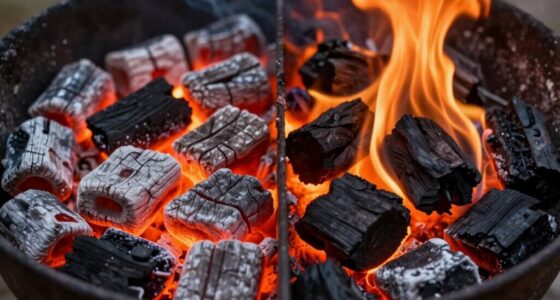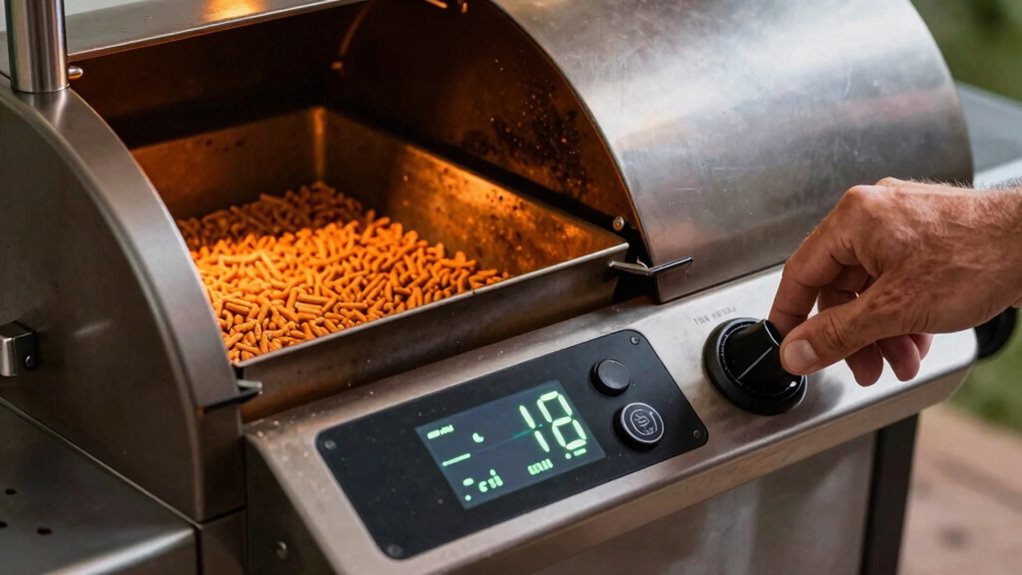

Pellet cooking feels easier because it automates temperature control, making it simple to maintain consistent heat and focus on flavor. You can easily switch wood pellets to customize tastes and set precise temperatures with digital controls. However, it’s not always simpler because mastering pellet types, managing pellet supply, and cleaning ash require effort and learning. If you want to unleash the full potential of pellet cooking, there’s more to discover behind the basics.
Key Takeaways
- Digital controls automate temperature management, reducing active effort, but require understanding for optimal use.
- Flavor customization via different pellets adds complexity despite simplifying the cooking process.
- Regular maintenance like cleaning and pellet replenishment is straightforward but necessary for consistent results.
- Learning to select and pair pellets with ingredients involves skill, making the process more nuanced.
- Achieving perfect results depends on balancing ease of operation with knowledge of equipment and flavor nuances.

Pellet cooking has become a popular way to enjoy delicious, smoky dishes with minimal effort, making it easier than ever to master outdoor grilling and smoking. This method simplifies the process because you can set your desired temperature and let the pellet grill do the work. But even with this ease, it’s not always as straightforward as it seems. While pellet grills offer incredible flavor customization and precise temperature control, they also require a certain level of understanding to get the best results.
When you use a pellet grill, you’re empowered to fine-tune your cooking with ease. You can select a variety of wood pellets to match the flavor profile you want—hickory, mesquite, apple, or cherry—and switch between them depending on your dish. This flexibility makes it simple to experiment and personalize your meals without much fuss. The grill’s digital controls allow you to set the temperature accurately, maintaining consistent heat over hours, which is a huge advantage for smoking and slow cooking. This level of control means you don’t have to worry about fluctuating temperatures or constantly adjusting vents, as you might with traditional charcoal or gas grills.
However, even with these features, pellet cooking isn’t always simpler in practice. It requires a bit of learning to optimize the flavor customization options and understand how different pellets influence taste. For example, some pellets produce a stronger smoke flavor that might overpower delicate meats, while others create a subtle aroma. You need to be aware of the type of pellet you’re using and how it interacts with your ingredients. Additionally, while temperature control is precise, it depends on the grill’s electronics and proper maintenance—something that can trip up beginners if they aren’t familiar with the equipment. Understanding pellet types and their impact on flavor is essential for achieving the best results.
Another aspect that can complicate pellet cooking is the need for regular pellet replenishment and cleaning. You’ll need to keep enough pellets on hand and clean out ash and residue to ensure consistent performance. Though it’s less labor-intensive than managing charcoal or wood fires, neglecting these maintenance tasks can lead to uneven cooking or flavor issues. Proper pellet storage and cleaning routines can help maintain the grill’s performance and make the process smoother. Additionally, understanding pellet quality and sourcing good-grade pellets can significantly influence your cooking experience and flavor outcomes.
In essence, pellet cooking offers greater control and customization, making it easier to produce flavorful, perfectly cooked dishes. But it’s not always simpler because mastering the nuances of pellet types, maintaining the equipment, and understanding how to best utilize the controls takes some time. You might find yourself adjusting settings or experimenting with different pellets more than you’d initially expect. Still, once you get the hang of it, pellet cooking can be both accessible and rewarding, giving you the ability to create a variety of smoky, flavorful meals with relative ease.
pellet grill with digital temperature control
As an affiliate, we earn on qualifying purchases.
As an affiliate, we earn on qualifying purchases.
Frequently Asked Questions
How Does Pellet Quality Affect Cooking Results?
Pellet quality directly impacts your cooking results because good-quality pellets offer consistent pellet consistency, ensuring stable heat and smoke. Poor-quality pellets can cause burn rate variability, leading to uneven temperatures and unpredictable cooking times. When you use high-quality pellets, your grill maintains steady heat, making your cooking more reliable. Conversely, low-quality pellets may produce fluctuations, forcing you to adjust settings more often, which complicates achieving perfect results.
What Are Common Pellet Smoker Maintenance Tips?
Think of your pellet smoker as a well-tuned orchestra; regular maintenance keeps every note in harmony. Store your pellets in a dry, airtight container to prevent moisture from dampening performance. Clean out ash regularly to keep airflow smooth and prevent buildup that could stifle your smoker’s rhythm. By maintaining pellet storage and ash cleanup, you guarantee your smoker hits all the right notes, making your cooking experience more reliable and enjoyable.
Can Pellet Grills Be Used Indoors Safely?
Pellet grills shouldn’t be used indoors due to safety concerns. Indoor safety is compromised because they produce smoke and potentially dangerous fumes. Adequate ventilation requirements aren’t typically met inside a home, increasing fire risk and carbon monoxide buildup. Always use pellet grills outdoors in well-ventilated areas. For indoor cooking, consider electric or propane ovens designed specifically for indoor use, ensuring safety and proper ventilation.
How Do Ambient Temperatures Impact Pellet Cooking?
Ambient temperatures act like a dance partner, guiding your pellet grill’s rhythm. When temperatures fluctuate, your grill struggles to maintain temperature stability, making cooking less predictable. Humidity influence also plays a role, affecting how smoke adheres and how heat disperses. You’ll notice longer cook times or inconsistent results in extreme cold or heat. To keep things steady, monitor weather conditions and adjust your grill’s settings accordingly, ensuring a smoother cooking experience.
What Safety Precautions Are Needed for Pellet Smokers?
You should always prioritize fire safety when using a pellet smoker, like keeping it in a well-ventilated area and away from flammable materials. Store pellets in a dry, cool place to prevent moisture buildup and reduce fire risks. Regularly check your pellet storage and smoker for any signs of damage or leaks. Following these safety precautions helps guarantee a safe and enjoyable cooking experience.
wood pellet variety pack for smoking
As an affiliate, we earn on qualifying purchases.
As an affiliate, we earn on qualifying purchases.
Conclusion
Just like Icarus soaring toward the sun, pellet cooking promises ease and mastery. But remember, even the brightest wings can falter if you neglect the details. Embrace the journey, stay attentive, and enjoy the process—like a skilled artist shaping their masterpiece. Pellet grilling may seem simple, yet it demands your focus. When you balance ease with awareness, you’ll find that cooking becomes both a delightful adventure and a true art form.
pellet grill cleaning brush
As an affiliate, we earn on qualifying purchases.
As an affiliate, we earn on qualifying purchases.
pellet storage container for outdoor cooking
As an affiliate, we earn on qualifying purchases.
As an affiliate, we earn on qualifying purchases.