To fix a slow compost pile, focus on balancing moisture and oxygen. Make sure your pile feels damp like a sponge, and turn it regularly to introduce fresh air, preventing compaction. If the pile is too wet, add dry browns like shredded paper, and if it’s too dry, water lightly. Keeping these elements in check accelerates decomposition and keeps your compost healthy. Continue exploring for more tips to boost your composting success.
Open a free Amazon Business account
Business pricing, bulk buying and tax-exempt orders.
As an affiliate, we earn on qualifying purchases.
Key Takeaways
- Turn the compost regularly to improve oxygen flow and prevent compacting.
- Balance green (wet, nitrogen-rich) and brown (dry, carbon-rich) materials to maintain proper moisture.
- Keep moisture level like a damp sponge to avoid excess wetness or dryness.
- Add dry materials or shredded paper if the pile is too wet; water lightly if too dry.
- Monitor for odors and adjust aeration and moisture to keep microbial activity active.
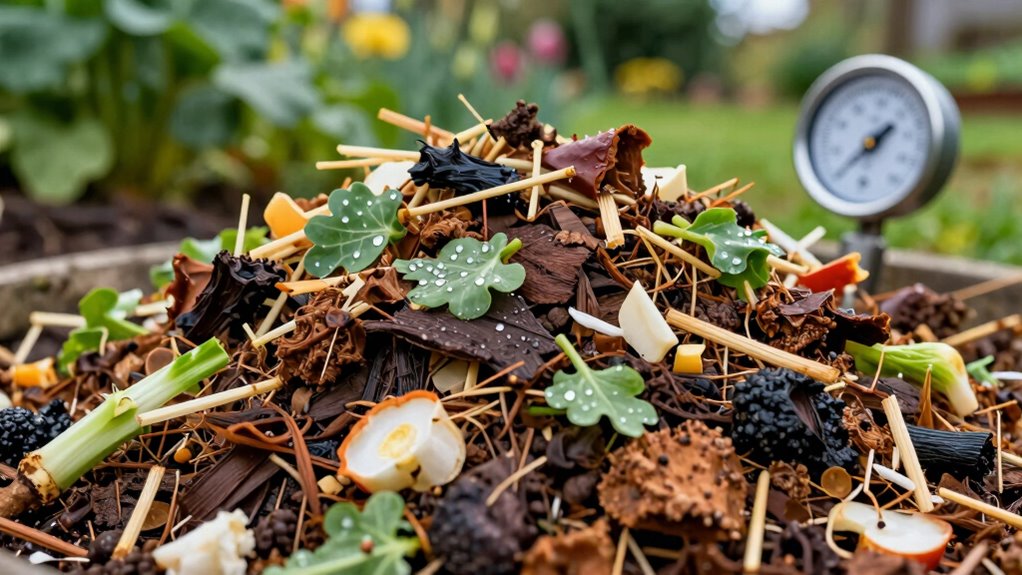
Maintaining the right balance in your compost is essential for creating rich, healthy soil. When your pile starts to slow down, it’s often because the fundamental elements of composting aren’t properly balanced. Two critical factors you need to pay close attention to are moisture regulation and oxygen levels. Without these, your compost can become sluggish, smelly, or even stop decomposing altogether.
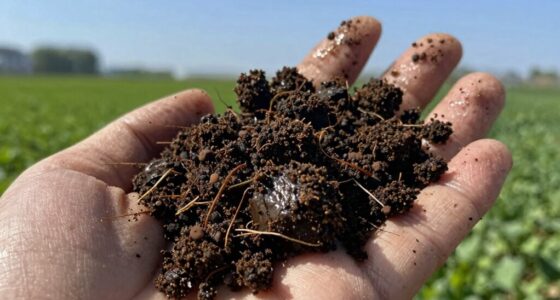
First, check the moisture in your compost. It should feel like a damp sponge—not too wet or too dry. If it’s too wet, excess water fills the air pockets, cutting off oxygen flow and creating an environment prone to foul odors and slow decomposition. To fix this, turn your pile to introduce air and add dry materials such as straw, shredded paper, or dry leaves to absorb excess moisture. Conversely, if your compost feels dry, water it lightly and evenly, ensuring moisture penetrates all layers. Proper moisture regulation keeps microbes active, helping them break down organic material efficiently. Maintaining the right compost balance is crucial for sustaining microbial activity and ensuring efficient decomposition. Being mindful of microbial activity can help you troubleshoot issues more effectively.
Next, focus on oxygen levels. Composting is an aerobic process, meaning it needs oxygen to work effectively. When oxygen is lacking, microbes switch to anaerobic digestion, which is slower and produces unpleasant smells like rotten eggs. To prevent this, regularly turn your compost pile. Turning aerates the material, introducing fresh oxygen and preventing compaction that can block airflow. If your pile is dense or packed tightly, it’s a sign you need to loosen it up. Aeration also helps evenly distribute moisture and heat, which boosts microbial activity. Additionally, the presence of beneficial microbes is essential for rapid decomposition and healthy compost. Ensuring proper oxygen flow enhances microbial efficiency and keeps odors at bay.
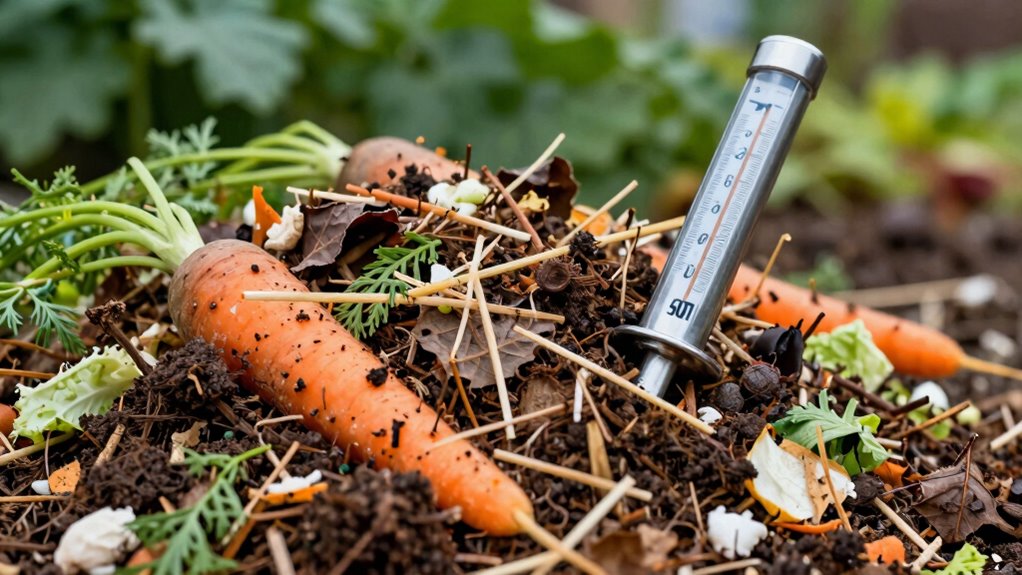
Balancing moisture and oxygen levels isn’t a one-time task; it requires ongoing attention. Keep an eye on the pile’s texture and smell. A healthy compost pile should emit an earthy aroma, not a sour or rotten scent. If it smells bad or feels overly wet and compacted, it’s time to turn and adjust moisture levels. Adding browns like shredded paper or dry leaves can help dry out the pile, while watering and turning can boost oxygen and moisture levels. Regularly monitoring these factors ensures your compost remains active and productive.
Getting this balance right will transform your slow-moving compost into a thriving, active system. When moisture regulation and oxygen levels are well-managed, microbes can do their job efficiently, breaking down waste into nutrient-rich compost faster. This process not only speeds up composting but also results in healthier soil for your garden. Keep monitoring and adjusting, and your compost pile will become a vibrant, productive part of your gardening routine.
As an affiliate, we earn on qualifying purchases.
Frequently Asked Questions
How Long Does It Typically Take to See Improvements?
You’ll usually see improvements in compost temperature and microbial activity within a few days to a week. As you balance your pile properly, microbial activity increases, generating heat that raises the compost temperature. This accelerated activity breaks down materials faster, turning your compost into rich soil. Keep monitoring and adjusting moisture and aeration, and you’ll notice your pile composting more efficiently, giving you faster, healthier results.
Can I Compost Year-Round in Cold Climates?
Ever wondered if you can compost year-round in cold climates? Yes, you can! Winter composting is possible if you use cold climate tips, like insulating your pile with straw or leaves and maintaining a balanced mix of greens and browns. Keep your compost slightly warmer by placing it near a wall or underground. With these strategies, you’ll keep your compost active, even through freezing temperatures.
What Are Common Signs of an Imbalanced Compost Pile?
You’ll notice signs of an imbalanced compost pile through poor aeration, like a foul smell or slow decomposition, and reduced microbial diversity, leading to fewer beneficial microbes. If your pile isn’t heating up or looks compacted and soggy, it’s a clear sign. To fix this, turn your compost regularly to improve aeration and add a mix of green and brown materials to boost microbial diversity, ensuring faster, healthier composting.
Is It Necessary to Turn the Pile Regularly?
Think of your compost pile as a living organism needing care. Yes, you should turn it regularly to promote airflow and moisture management, preventing it from becoming anaerobic. This helps maintain the proper carbon to nitrogen ratio, speeding up decomposition. Turning distributes heat, breaks up clumps, and guarantees all materials break down evenly. Skipping this step risks slow composting and unpleasant odors, so stay consistent for healthy, rich compost.
Are There Specific Bacteria or Microbes Involved?
Yes, specific bacteria and microbes are involved in composting. You’ll find diverse microbial diversity, including various bacterial strains like Bacillus, Pseudomonas, and Actinobacteria, working together to break down organic matter. These microbes thrive when conditions are right, especially with the proper balance of nitrogen and carbon. By maintaining this balance, you promote active bacterial strains, speeding up composting and preventing your pile from becoming sluggish.
As an affiliate, we earn on qualifying purchases.
Conclusion
By maintaining the right compost balance, you can turn slow, stubborn piles into rich, nutritious soil faster. Remember, an ideal mix has about 25-30% greens and 70-75% browns, ensuring best decomposition. Did you know that composting can reduce household waste by up to 30%? Keep monitoring your pile’s moisture and aeration, and your compost will stay active and efficient. With patience and the right balance, you’ll create black gold in no time.
As an affiliate, we earn on qualifying purchases.
compost bin with moisture control
As an affiliate, we earn on qualifying purchases.
As an affiliate, we earn on qualifying purchases.
NFL season / tailgating Picks
team gear
As an affiliate, we earn on qualifying purchases.