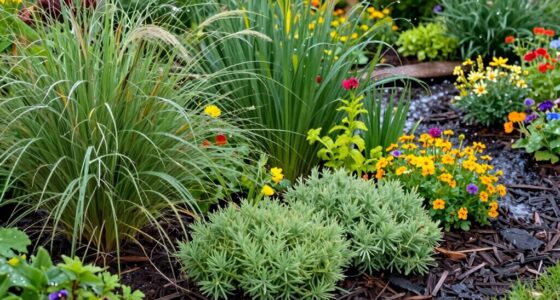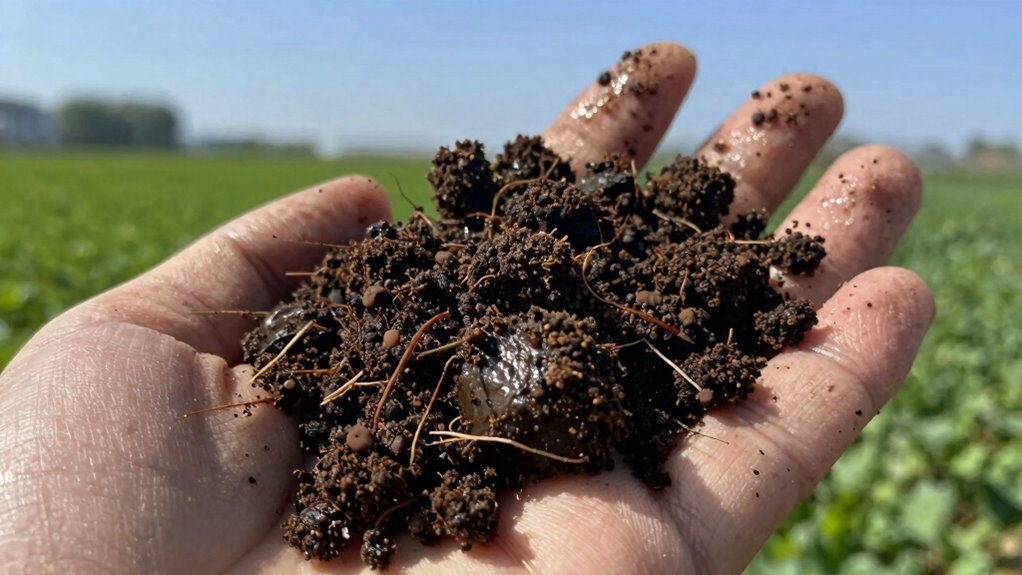
A soil texture test reveals the proportions of sand, silt, and clay in your soil, helping you understand how it retains water, drains, and supplies nutrients. This knowledge affects your planting choices by showing which crops thrive in specific conditions and guiding you to make better amendments. Knowing your soil’s texture helps prevent poor drainage or waterlogging issues. To discover how this simple test can transform your planting approach, explore further details below.
Key Takeaways
- Soil texture tests identify sand, silt, and clay proportions, guiding crop selection based on soil suitability.
- Detailed testing reveals drainage and water retention properties, influencing irrigation and planting timing.
- Knowing soil composition helps tailor amendments, improving nutrient availability for specific crops.
- Test results detect problematic textures, such as high clay content, prompting alternative planting strategies.
- Monitoring soil texture over time informs adjustments to land management, ensuring sustainable crop productivity.
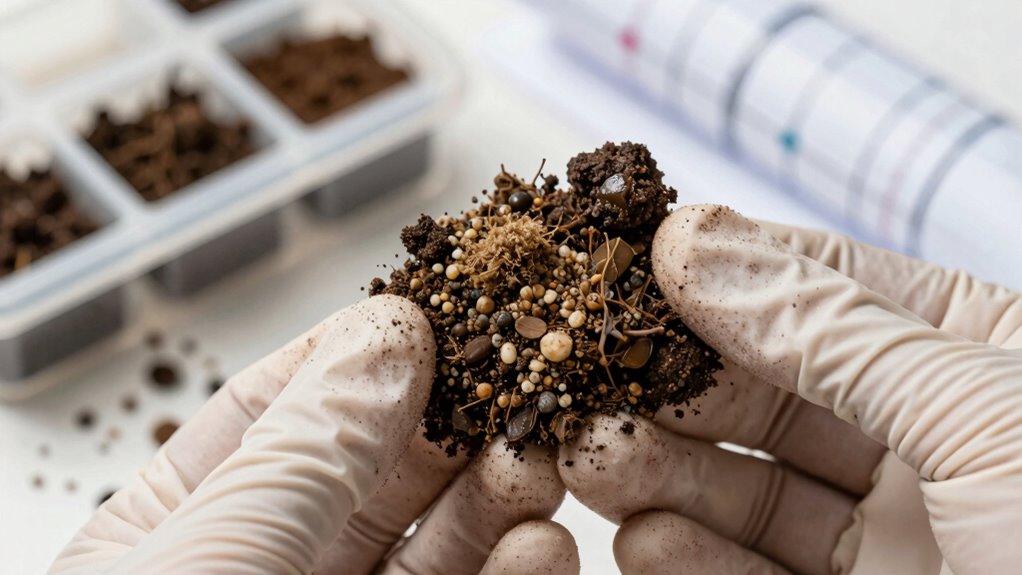
Understanding soil texture is essential for effective land management and farming, as it influences water retention, drainage, and nutrient availability. When you perform a detailed testing of your soil, you gain vital insights into its composition, helping you make informed decisions about planting and land use. This testing goes beyond simple observations; it involves analyzing soil particles to determine the proportions of sand, silt, and clay. With accurate data, you can tailor your approach to optimize plant growth and avoid issues like poor drainage or nutrient deficiencies. Knowing your soil’s texture also helps you understand how it interacts with the environment, allowing you to evaluate the potential environmental impact of your farming practices.
By conducting detailed testing, you can avoid the pitfalls of trial-and-error methods that often lead to wasted resources and environmental harm. For example, if your soil has a high clay content, it retains water excessively and can cause root rot or plant stress. Conversely, sandy soils drain too quickly, depriving plants of necessary moisture and nutrients. When you understand these nuances, you can amend your soil accordingly—perhaps by adding organic matter or adjusting irrigation methods—and implement best practices based on soil composition. This proactive approach reduces runoff, erosion, and pollution, ultimately minimizing your farm’s environmental impact. Incorporating soil texture knowledge can also help you select appropriate soil amendments, ensuring your land remains productive and sustainable.
Furthermore, soil texture tests help you determine which crops are best suited for your land, increasing your chances of a successful harvest. You’ll be able to select plants that thrive under your soil’s specific conditions, saving time and money on unsuitable crops. Additionally, detailed testing provides you with baseline data to monitor changes over time, ensuring your land management practices remain sustainable and effective. This ongoing assessment can reveal trends linked to climate change or soil degradation, prompting you to adapt your strategies to protect the land. Incorporating knowledge about soil composition can also guide you in choosing appropriate soil amendments and conservation practices. Regular testing also helps you understand the soil’s capacity to buffer against environmental stresses, which is vital for long-term land health.
Ultimately, understanding your soil’s texture through detailed testing empowers you to make smarter, more environmentally responsible planting decisions. It’s a vital step toward sustainable agriculture, reducing negative environmental impacts while boosting productivity. With precise information at your fingertips, you can implement best practices tailored specifically to your soil’s unique qualities. This not only supports healthy plant growth but also preserves your land’s health for future generations. In the end, investing in thorough soil testing is a wise move that aligns your farming goals with environmental stewardship, ensuring your land remains fertile and resilient for years to come.
As an affiliate, we earn on qualifying purchases.
Frequently Asked Questions
Can Soil Texture Affect Water Retention?
Yes, soil texture considerably affects water retention. When you understand soil permeability, you realize how quickly water moves through the soil, impacting water absorption. Sandy soils, with high permeability, drain quickly and retain less water, while clay soils hold water longer due to their low permeability. Knowing this helps you decide the best watering schedule and plant choices, ensuring your garden gets the right amount of moisture for healthy growth.
How Often Should I Test My Soil?
You should test your soil at least once a year, ideally in early spring or fall. Remarkably, studies show that over 60% of soils worldwide have imbalanced pH and nutrient levels, which can hinder plant growth. Regular testing helps you monitor soil pH and nutrient levels, allowing you to adjust fertilization and amendments as needed. This proactive approach ensures healthier plants and better yields throughout the growing season.
Does Soil Texture Vary Across My Property?
Yes, soil texture can vary across your property due to differences in soil composition. You might find that some areas have sandy, loamy, or clayey textures, affecting drainage and plant growth. Conducting a texture classification test in different zones helps you understand these variations. By identifying these differences, you can tailor your planting strategies, amend soils appropriately, and improve overall plant health and productivity.
Which Tools Are Best for DIY Soil Testing?
You should use soil testing kits for DIY assessment methods, as they’re affordable and straightforward. These kits often include pH testers, texture assessment tools, and nutrient indicators, helping you analyze your soil’s composition quickly. For more detailed results, consider combining kits with simple manual tests, like the jar test for soil texture. This approach empowers you to make informed planting decisions right from your backyard.
Can Soil Amendments Change Soil Texture?
Yes, soil amendments can change soil texture, but don’t expect miracles overnight. You might try texture modification techniques like adding organic matter or sand, which can gradually alter your soil’s properties. Soil amendment methods, such as incorporating compost or clay, influence drainage and aeration, subtly shifting its texture over time. Keep in mind, patience is key—these changes develop slowly, but they’re powerful tools for improving your garden’s foundation.
As an affiliate, we earn on qualifying purchases.
Conclusion
Imagine you’re steering a boat through different waters—you wouldn’t want to sail into a storm unprepared. Knowing your soil’s texture is just like checking the weather forecast before setting sail. A simple soil test can reveal whether your land is sandy, clayey, or loamy, guiding your planting choices. When you understand your soil, you steer your garden clear of trouble and set it on a course for success. Don’t leave your harvest to chance—test your soil today.
As an affiliate, we earn on qualifying purchases.
best soil testing kit for garden
As an affiliate, we earn on qualifying purchases.
As an affiliate, we earn on qualifying purchases.