Your sauce often breaks right at the end because you might be adding ingredients too quickly or using too much heat. As the sauce nears perfection, excessive heat or sudden ingredient addition can disrupt the emulsion, causing it to separate. To prevent this, add fats slowly and keep the heat gentle and consistent. If you want to master the art of stable sauces and avoid common pitfalls, there’s more to discover that can help you perfect your process.
Key Takeaways
- Adding fats too quickly or at high heat causes the emulsion to collapse.
- Sudden temperature increases destabilize the mixture, leading to separation.
- Using cold ingredients or improper heat control weakens emulsion stability.
- Lack of gradual ingredient incorporation can cause the sauce to break near the end.
- Insufficient stirring or missing stabilizers like egg yolk or mustard increases the risk of separation.
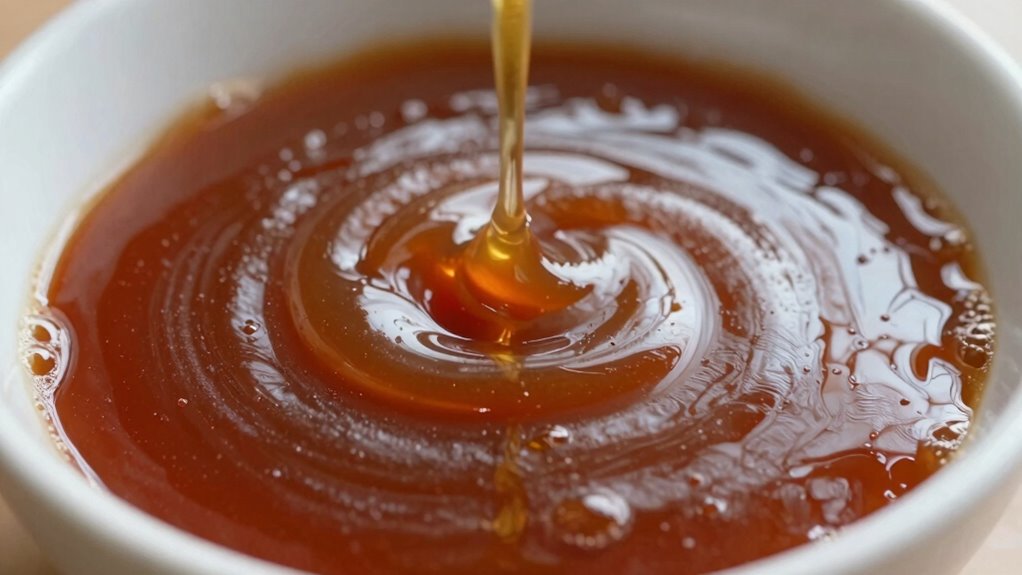
Have you ever noticed your sauce suddenly breaking just when you think it’s perfect? It’s frustrating, especially after all the effort you put into making a smooth, luscious sauce. Often, this happens because of issues with emulsion stability and heat control. When you’re working with ingredients like oil and water, or egg yolks and butter, they need to stay evenly combined. If the emulsion isn’t stable enough, your sauce can suddenly separate, leaving behind greasy pools and a watery mess. Achieving a stable emulsion is key, and that largely depends on how carefully you manage heat and how you add ingredients.
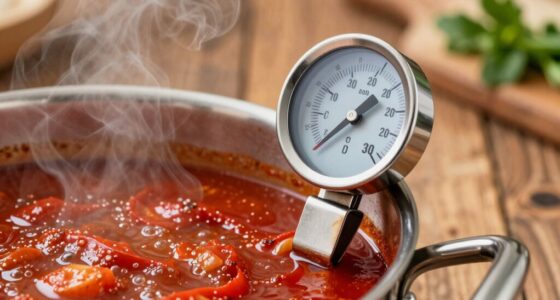
Heat control plays a crucial role in preventing your sauce from breaking. Too much heat too quickly causes the mixture to seize up and separate. When you’re making a hollandaise or a béarnaise, for example, gentle, consistent heat is essential. You want to warm the sauce gradually, avoiding sudden bursts of high temperature that can destabilize the emulsion. Keep your burner on low or use a double boiler to maintain a gentle, even heat. Stir constantly, so the ingredients stay in contact and don’t overheat or scorch. When temperature rises unevenly, the fat particles can clump together and cause the sauce to break. Proper heat management is essential for maintaining emulsion stability and preventing these issues. Using a temperature-controlled method can help keep the heat steady and prevent the sauce from breaking. Additionally, understanding how emulsion stability is affected by temperature fluctuations can help you troubleshoot if problems arise.
Another common mistake is adding ingredients too quickly or at the wrong time. If you pour in oil or melted butter all at once or when the mixture is too hot, the emulsion can collapse. Instead, add fats slowly, in a thin stream, while continuously whisking. This slow incorporation helps the fats disperse evenly throughout the water-based components, forming a stable emulsion. If your sauce begins to look suspiciously oily or starts to separate, it’s often because the emulsion has been compromised due to poor heat control or rapid addition of ingredients. Using ingredients at room temperature can help, as cold ingredients are harder to emulsify. Also, adding a small amount of mustard or egg yolk can stabilize the emulsion, providing a protective barrier that keeps fats and liquids from separating. Remember, patience is key—don’t rush the process. Proper heat management and focusing on emulsion stability will help you avoid those disappointing moments when your sauce falls apart right at the end.
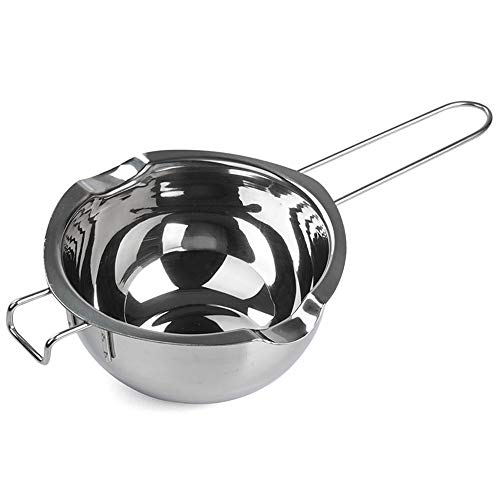
Stainless Steel Double Boiler Pot for Melting Chocolate, Candy and Candle Making (18/8 Steel, 2 Cup Capacity, 480ML)
- Material: Made of rust-resistant 18/8 stainless steel
- Capacity: 2 cups (480ml) size for small tasks
- Versatile Use: Ideal for melting butter, chocolate, cheese, and more
As an affiliate, we earn on qualifying purchases.
As an affiliate, we earn on qualifying purchases.
Frequently Asked Questions
Can Adding Butter Prevent Sauce From Breaking?
Adding butter can help prevent your sauce from breaking by stabilizing the mixture and reducing cream separation. As you stir in butter, it emulsifies with the sauce, creating a smooth texture. Plus, it enhances flavor, making your sauce richer and more luscious. Just add small pieces off the heat, and stir constantly. This simple step keeps your sauce silky, preventing breakage and ensuring a beautiful, glossy finish.
Does the Type of Pan Affect Sauce Stability?
Yes, the pan type affects sauce stability due to its impact on sauce emulsification. Non-stick or stainless steel pans promote even heat distribution, helping your sauce stay smooth and prevent breaking. Cast iron pans retain heat well but can cause uneven temperature zones, risking separation. Choosing the right pan material helps control heat, maintains emulsification, and keeps your sauce stable throughout cooking.
How Does Humidity Influence Sauce Consistency?
Humidity can totally sabotage your sauce, making it impossible to get that perfect, silky consistency. When humidity levels fluctuate wildly, it causes extreme temperature fluctuations and adds extra ingredient moisture, turning your sauce into a lumpy mess. You might as well forget about smooth, glossy sauces in humid environments. To keep your sauce stable, control humidity and avoid sudden changes, ensuring your ingredients stay at their ideal moisture levels.
Is It Better to Cook on High or Low Heat?
It’s better to cook your sauce on low heat, as it allows you to better control the sauce temperature and prevents it from breaking. Using low heat also gives you more time to simmer, which helps develop flavors. High heat can cause the sauce to cook too quickly, reducing your cooking duration and increasing the risk of separation. Patience guarantees a smooth, well-thickened sauce every time.
Can Using Different Oils Change the Outcome?
Using different oils can definitely change your sauce’s outcome. High-quality oils, like extra virgin olive or avocado, add flavor depth and richness, enhancing the overall taste. They also withstand heat differently, helping prevent your sauce from breaking. Choose oils with good flavor profiles and stable properties for cooking, so your sauce maintains its smooth, velvety texture and vibrant flavor, ensuring a more professional and delicious result every time.
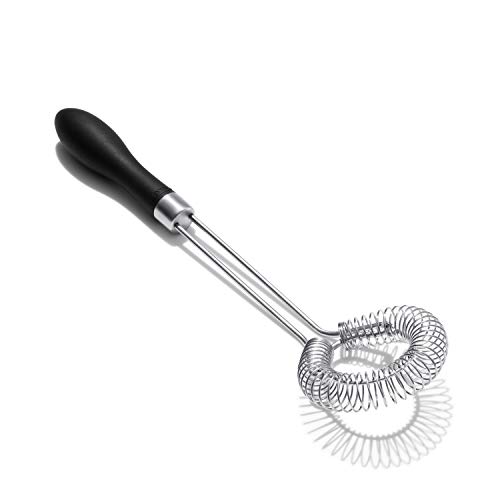
OXO Good Grips Stainless Steel Sauce & Gravy Whisk
- Efficiently whisks gravy and sauces: Specially designed for sauces and roux
- Comfortable grip handle: Innovative handle for easy use
- Durable stainless steel wires: Mixes thoroughly with minimal effort
As an affiliate, we earn on qualifying purchases.
As an affiliate, we earn on qualifying purchases.
Conclusion
Remember, patience is a virtue when it comes to sauce-making. If your sauce breaks right at the end, it’s often because you rushed or didn’t stabilize it properly. Keep a close eye, and don’t be afraid to add a bit more liquid or heat gradually. As the saying goes, “Haste makes waste,” so take your time, and you’ll end up with a smooth, perfect sauce every time.

Cuisinart 1.5 Quart Sauce Pan with Cover, Stainless Steel Pot with Lid, Small Kitchen Pots, Dishwasher Safe, Compatible with Induction, Electric, Gas Cooktops, Oven Safe Saucepan, Cool Grip Handles
- Elegant Mirror Finish: Mirror finish with classic look
- Fast, Even Heating: Encapsulated aluminum base heats quickly
- Non-Reactive Surface: Stainless steel resists discoloration and flavor change
As an affiliate, we earn on qualifying purchases.
As an affiliate, we earn on qualifying purchases.

Sodium Citrate 11oz Jar – Food Grade, Non-GMO, Natural Flavor Enhancer, Emulsifier for Cheese, Spherification, and Molecular Gastronomy Cooking – by Spicy World
- Ideal for Smooth Cheese Sauces: Creates ultra-smooth cheese sauces
- Essential for Modernist Cooking: Adjusts acidity and enhances texture
- Food Grade and Non-GMO: Pure, gluten-free, additive-free
As an affiliate, we earn on qualifying purchases.
As an affiliate, we earn on qualifying purchases.