
Stability in espresso pressure and temperature means keeping these variables steady throughout extraction. Fluctuations can cause uneven water flow, inconsistent crema, and off flavors like sourness or bitterness. When pressure and temperature remain constant, your shot develops a rich crema and balanced flavor. If you want to produce consistent, high-quality espresso, understanding how small changes impact those factors is key. Keep exploring to learn how to perfect your machine’s settings for ideal results.

Prime made for students and young adults
- Fast, free delivery for dorm and study essentials
- Prime Video and Amazon Music included
- Member-only deals
Key Takeaways
- Stability means maintaining consistent pressure (9 bars) throughout extraction to ensure balanced extraction and crema formation.
- Consistent temperature (around 90-96°C) prevents flavor swings and ensures proper solubilization of coffee compounds.
- Fluctuations in pressure or temperature cause uneven extraction, leading to sour, bitter, or weak espresso.
- Steady pressure and temperature support uniform oil and sugar release, resulting in rich, velvety crema.
- Proper calibration of machine settings and grind size helps achieve and maintain extraction stability.
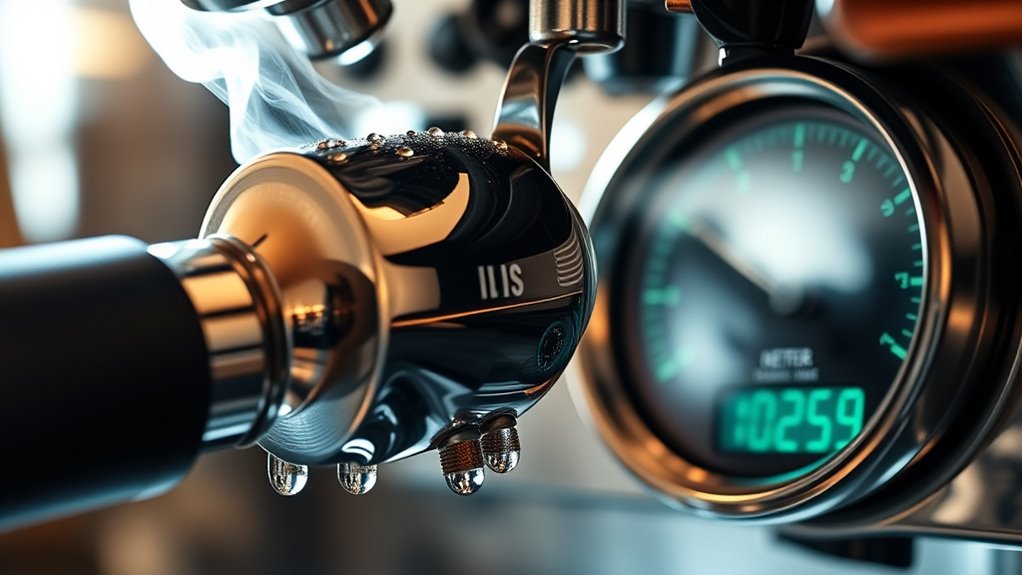
Have you ever wondered how the perfect shot of espresso is brewed? It’s all about precision—specifically, maintaining consistent pressure and temperature to release the full flavor potential of your beans. But two critical factors often overlooked are grind size and crema formation, which play a huge role in achieving that ideal shot. When you dial in your grind size just right, you control how water interacts with the coffee grounds. Too fine, and the water struggles to pass through, resulting in over-extraction and a bitter taste. Too coarse, and the water flows too quickly, leading to under-extraction and a weak, sour flavor. The proper grind size creates just the right resistance, allowing pressure to build evenly and consistently. This stability in pressure guarantees that water spends enough time in contact with coffee solids, extracting all the desirable flavors without overdoing it. As pressure remains steady, the crema—those rich, golden bubbles on top of your espresso—forms beautifully. Crema is more than just a visual cue; it’s a sign of proper extraction and indicates that the espresso’s oils and aromatic compounds have been effectively released. When pressure and temperature are stable, crema formation becomes reliable, giving your espresso that velvety texture and vibrant aroma. If your machine’s pressure fluctuates or the temperature isn’t steady, crema will be thin or inconsistent, and flavors can become muddled. That’s why maintaining a stable environment during extraction is vital. It’s not enough to just set your machine to a certain pressure and temperature; you need to understand how grind size influences the process. A fine, consistent grind promotes even water flow, helping to maintain the required pressure throughout the extraction. This stability allows the hot water to extract the coffee’s oils, sugars, and acids uniformly, resulting in a balanced and full-bodied shot. Remember, even slight changes in grind size can disrupt this delicate balance, causing fluctuations in pressure and temperature that diminish crema quality and flavor. In essence, stability isn’t just about machine settings—it’s about how all these elements work together. When your grind size is right and your machine maintains steady pressure and temperature, you’re more likely to produce that perfect espresso: rich, aromatic, with a thick, lasting crema. Achieving this level of pressure stability involves understanding how various factors such as grind size and machine calibration interact. It’s a dance of science and skill, where understanding how grind size influences crema formation and how pressure stability impacts extraction can elevate your coffee game from good to exceptional.
As an affiliate, we earn on qualifying purchases.
Frequently Asked Questions
How Does Altitude Affect Espresso Pressure and Temperature?
Altitude effects can cause pressure fluctuations in your espresso machine, making it harder to maintain consistent pressure and temperature. As you go higher, the reduced atmospheric pressure means you might need to modify your machine’s settings to keep the right extraction. Without these adjustments, you risk uneven shots. So, it’s essential to monitor and tweak your setup to counteract altitude effects and ensure your espresso remains stable and flavorful.
Can Machine Wear Impact Pressure Stability Over Time?
Your machine wear can definitely shake things up, making it harder to keep brew consistency. As parts wear down, pressure stability suffers, causing fluctuations that mess with your espresso shot. Regular machine calibration is essential to stay on top of these issues. Think of it as tuning your car—you’ll keep everything running smoothly and maintain that perfect pressure, ensuring every cup meets your standards despite wear over time.
What Are the Signs of Unstable Pressure During Extraction?
You’ll notice unstable pressure during extraction as pressure fluctuations cause inconsistent flow. This results in uneven extraction, with some shots tasting weak or sour and others overly bitter. You might see bubbling or spurting from the portafilter or inconsistent pressure readings on your machine. These signs threaten extraction consistency, making it harder to achieve a balanced, flavorful espresso. Addressing pressure instability guarantees smoother operation and a better coffee experience.
How Do Different Espresso Beans Respond to Pressure Changes?
Imagine each bean as a delicate dancer responding uniquely to pressure changes. You’ll notice that bean characteristics—like roast level and origin—dictate how they react, with some resisting and others yielding quickly. Grind consistency plays a vital role, helping you control these responses. By understanding these nuances, you can fine-tune your extraction, ensuring each shot is perfectly balanced, no matter how the beans decide to perform under pressure.
Is Pressure Stability More Important Than Temperature Stability?
You should prioritize pressure consistency over temperature control because stable pressure ensures even extraction and better flavor. While temperature stability is important, fluctuations can be less noticeable if your pressure remains steady. By maintaining consistent pressure, you help your espresso develop balanced flavors, preventing over- or under-extraction. Focus on keeping your pressure steady during brewing, and you’ll notice more reliable results and a richer, more enjoyable espresso experience.
As an affiliate, we earn on qualifying purchases.
Conclusion
Think of your espresso shot as a delicate dance between pressure and temperature—each element a dancer, synchronized and steady. When both stay balanced, they create a perfect harmony, like a calm lake reflecting a clear sky. Stability isn’t just technical; it’s the heartbeat of your brew’s soul. Master this rhythm, and you’ll craft a cup that’s as reliable as dawn’s first light—beautiful, consistent, and truly alive.
temperature stability espresso machine
As an affiliate, we earn on qualifying purchases.
As an affiliate, we earn on qualifying purchases.
As an affiliate, we earn on qualifying purchases.
Halloween Picks
halloween
As an affiliate, we earn on qualifying purchases.