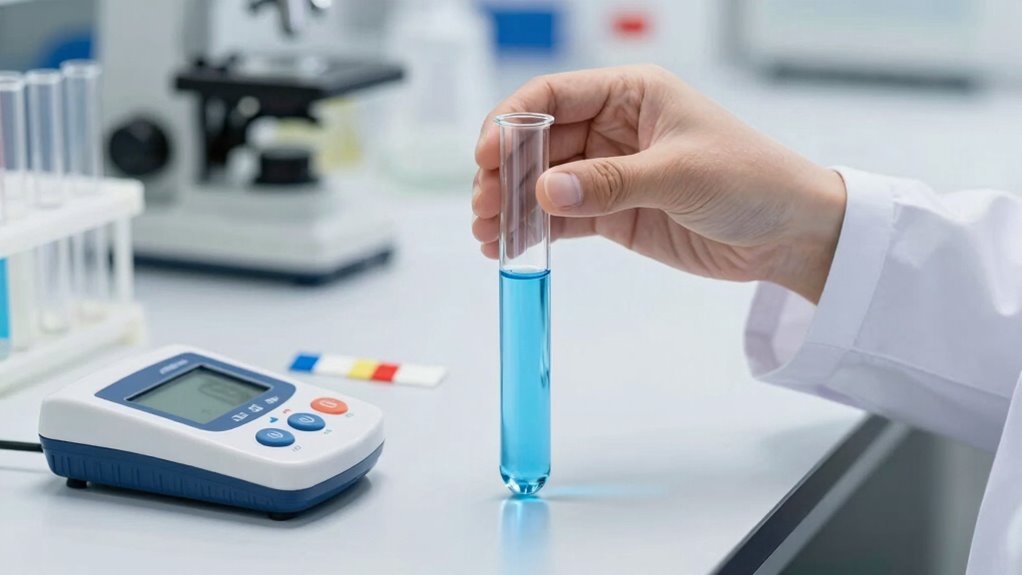

To start, focus on testing for bacteria and nitrates since these pose immediate health risks and are common in well water. Bacteria detection, like E. coli or coliforms, highlights dangerous contamination, while nitrates can harm infants and pregnant women. For city water, check recent reports and test for lead or chemical pollutants if concerns exist. Prioritizing these results helps you quickly address critical issues and guarantee safe drinking water—continue to explore more about how to interpret your test outcomes effectively.

Prime made for students and young adults
- Fast, free delivery for dorm and study essentials
- Prime Video and Amazon Music included
- Member-only deals
Key Takeaways
- Prioritize testing for bacteria like E. coli and coliforms to detect fecal contamination early.
- For well water, check nitrates and bacteria first, as these pose immediate health risks.
- Review regional contamination concerns to focus on chemicals like lead, pesticides, or VOCs.
- Interpret results against safety standards (EPA or local limits) to determine urgent corrective actions.
- Regular testing ensures ongoing safety, with initial results guiding immediate response priorities.
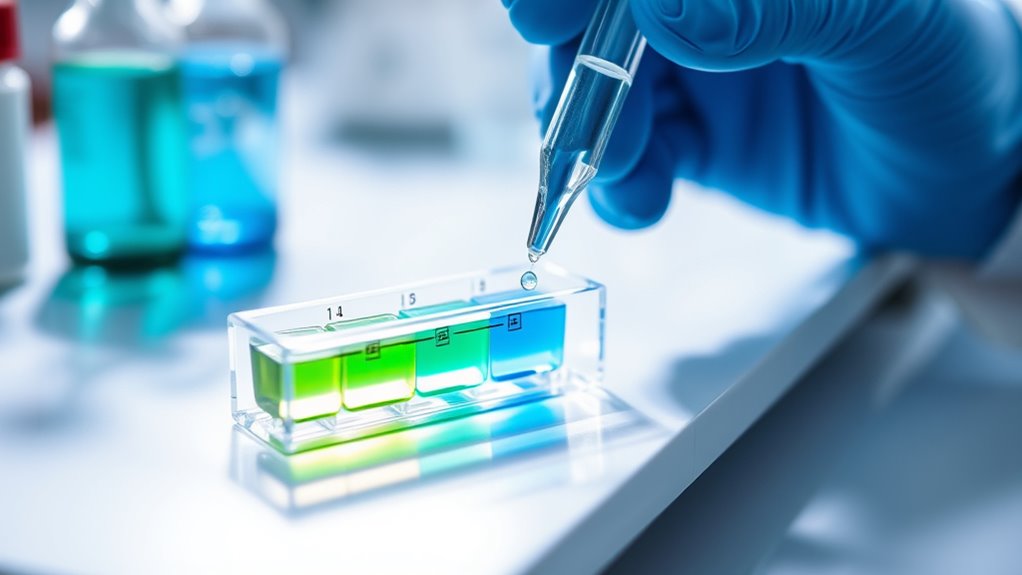
Have you ever wondered how you can guarantee your water is safe to drink or use? The key lies in understanding water testing basics, especially which results matter first. When you’re concerned about water safety, the initial step is contaminant detection. You want to identify any harmful substances lurking in your water, such as bacteria, heavy metals, chemicals, or other pollutants. Detecting these contaminants early helps prevent potential health issues and ensures your water meets safety standards.
To do this effectively, you need to understand the testing methods available. Different testing methods are designed to target specific contaminants or groups of substances. For example, microbial testing often involves collecting water samples and analyzing them for bacteria like E. coli or coliforms, which indicate fecal contamination. Chemical testing, on the other hand, might involve laboratory analysis to detect lead, nitrates, pesticides, or volatile organic compounds. These testing methods vary in complexity, cost, and turnaround time, but they all serve the purpose of identifying potential risks in your water supply.
Understanding different testing methods helps identify specific water contaminants efficiently.
When you’re starting your water testing process, prioritize contaminant detection that aligns with your water source. For well owners, testing for bacteria and nitrates should come first, since those are common pollutants in groundwater. For city water users, reviewing recent reports and performing periodic tests for lead or residual chemicals is essential. Knowing which contaminants are most likely in your area guides you to select the right testing methods, making your efforts more effective and efficient. Additionally, understanding testing accuracy and the reliability of different methods helps ensure you interpret your results correctly.
Once you’ve identified which contaminants you need to detect, focus on the testing results. The most critical data will tell you whether your water exceeds safety limits set by organizations like the EPA or local health authorities. If results show levels above these thresholds, it indicates a need for action—such as installing filters, addressing plumbing issues, or seeking professional remediation. Conversely, if your tests come back within safe limits, you can be more confident in your water’s safety, though regular testing remains crucial to catch any future changes.
water testing kit for bacteria and nitrates
As an affiliate, we earn on qualifying purchases.
As an affiliate, we earn on qualifying purchases.
Frequently Asked Questions
How Often Should I Test My Drinking Water?
You should test your drinking water at least once a year to guarantee water safety. If you notice changes in taste, smell, or appearance, test more frequently. Additionally, if you have a private well or live in an older home, consider testing every six months. Regular test frequency helps catch contaminants early, protecting your health and ensuring your water remains safe to drink.
Can Well Water Be Tested at Home?
Yes, you can test well water at home with DIY testing kits. These kits are easy to use and provide quick results for common contaminants like bacteria, nitrates, and pH levels. However, for a thorough analysis, it’s best to seek professional analysis. Professionals can perform detailed tests for heavy metals, pesticides, and other pollutants that DIY kits might miss, ensuring your water is safe to drink.
What Are the Costs of Comprehensive Water Testing?
Think of water testing as investing in a trusted map; extensive testing costs vary, typically from $100 to $500, depending on the tests. You’ll need advanced testing equipment or a testing laboratory equipped to analyze contaminants thoroughly. While it may seem costly, it’s an investment in your health and safety—ensuring you navigate your water’s quality with confidence, just like trusting a reliable map to guide your journey.
How Long Do Water Test Results Take?
You can anticipate water test results to take anywhere from 24 hours to a week, depending on your sampling frequency and testing methods. Faster results come with quicker sampling and lab testing, while more extensive tests might take longer. If you need urgent info, talk to your lab about options like on-site testing or expedited processing. Keep in mind that more complex tests generally require more time to guarantee accuracy.
Are There Any Legal Standards for Water Quality?
Every rule has its exception, but generally, yes—you must follow legal standards and water regulations. These standards set safe limits for contaminants and guarantee water quality. Authorities like the EPA or local agencies establish these regulations, and your water testing results should meet or exceed them. Staying compliant means checking your water regularly and addressing any violations promptly, safeguarding health and avoiding legal issues.
lead and chemical water test kit
As an affiliate, we earn on qualifying purchases.
As an affiliate, we earn on qualifying purchases.
Conclusion
Now that you know the essentials, remember to focus on the results that matter most—like bacteria and contaminants—first. Don’t get lost in the jargon of old-timey methods; instead, rely on modern testing to keep your water safe. Think of it as your own personal Sherlock Holmes, uncovering clues to protect your health. Stay vigilant, test regularly, and you’ll make certain your water’s purity remains as dependable as the clock in Big Ben.
well water microbial testing kit
As an affiliate, we earn on qualifying purchases.
As an affiliate, we earn on qualifying purchases.
city water contamination test kit
As an affiliate, we earn on qualifying purchases.
As an affiliate, we earn on qualifying purchases.
Halloween Picks
halloween
As an affiliate, we earn on qualifying purchases.