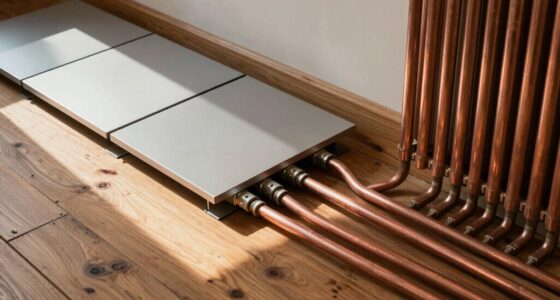
With radiant floor heating, you feel a consistent, gentle warmth under your feet that often exceeds what simple temperature readings show. While a thermometer may read a moderate surface temperature, the system warms your skin and objects nearby, creating a more comfortable environment. Proper insulation and setup are key to efficiency and satisfaction. Keep exploring to discover how understanding both sensations and measurements can help you get the most out of your heating system.

Prime made for students and young adults
- Fast, free delivery for dorm and study essentials
- Prime Video and Amazon Music included
- Member-only deals
Key Takeaways
- Feeling warm floors indicates effective radiant heating, but actual temperature measurements confirm system performance.
- Radiant heat warms skin and objects directly, creating a uniform, comfortable environment.
- Proper insulation enhances efficiency by preventing heat loss and reducing energy consumption.
- Installation costs vary, but long-term energy savings improve overall system value.
- Balancing sensory comfort with measured data ensures optimal radiant floor heating performance.
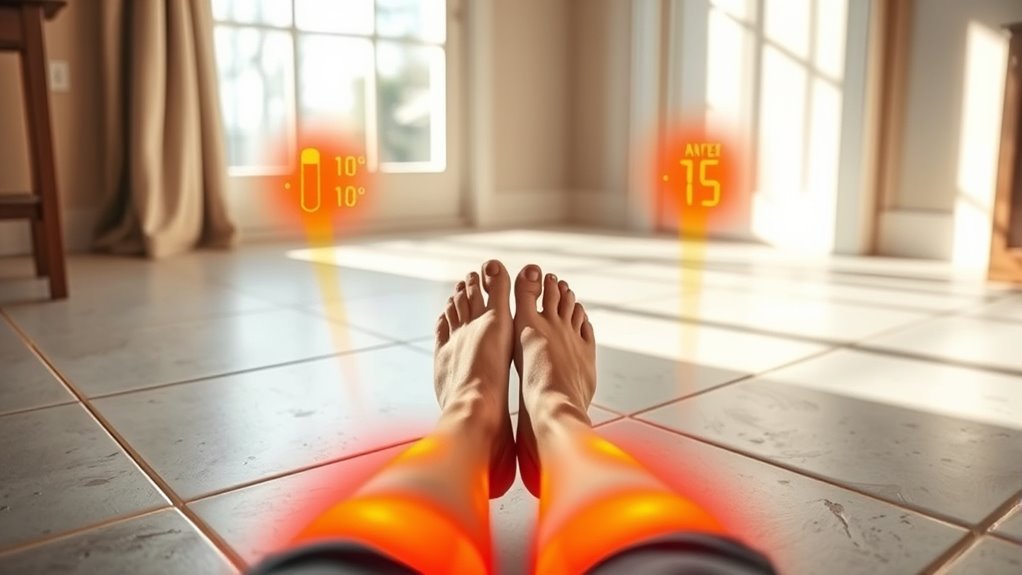
Have you ever wondered how radiant floor heating keeps a room warm without visible radiators or vents? It’s a clever system that works beneath your feet, radiating heat upward to create a cozy environment. But understanding how it feels versus what you measure can be quite illuminating. When you walk into a room with radiant heat, you might notice the floor feels warm and comfortable, even if the air temperature isn’t overly high. That’s because radiant heat directly warms your skin and objects in the space, rather than just heating the air. This sensation often makes the room feel more uniformly heated, eliminating cold spots and drafts common with traditional heating systems.
However, what you feel isn’t the whole story. To truly gauge the effectiveness of a radiant floor heating system, you need to measure temperature levels and energy efficiency. One key factor that influences both comfort and system performance is insulation efficiency. Proper insulation prevents heat from escaping downward into the subfloor or outside, ensuring that most of the heat rises into the living space. If insulation isn’t adequate, you might feel warm floors, but the system could be working harder and consuming more energy than necessary. Improving insulation efficiency not only enhances comfort but also reduces operating costs, making your investment more worthwhile over time.
Speaking of costs, installation expenses for radiant floor heating can vary widely, influenced heavily by the complexity of the setup and the type of system you choose. When considering installation costs, it’s important to look beyond just the price tag. While initial expenses might seem high compared to traditional radiators or baseboard heaters, the long-term savings on energy bills can offset these costs. Properly installed systems with good insulation require less energy to maintain comfortable temperatures, which means you pay less over the years. Additionally, the installation process itself can be more straightforward in new construction, but retrofitting an existing space may involve more work and expense.
In essence, feeling the warmth from radiant floor heating gives you immediate comfort, but measuring its efficiency helps ensure you’re getting the most out of your investment. Good insulation boosts insulation efficiency, reducing energy use and operating costs. When you understand both what you feel and what you measure, you can better appreciate how this innovative heating method provides comfort, efficiency, and value. It’s a system that not only warms your space but also offers peace of mind through its energy efficiency and performance.
Popular right now

Dyson Ball Animal Total Clean Upright Vacuum

De'Longhi Linea Classic Espresso Machine with Adjustable Milk Frother

KitchenAid Artisan 5-Quart Tilt-Head Stand Mixer, Almond Cream
As an affiliate, we earn on qualifying purchases.
Frequently Asked Questions
How Long Does It Take for Radiant Floor Heating to Warm up a Room?
It typically takes 30 minutes to a few hours for radiant floor heating to warm up a room, depending on factors like insulation and installation challenges. Once turned on, you’ll notice the warmth quickly because radiant heat warms objects directly. This system’s energy efficiency means it heats evenly and maintains temperature longer, so you won’t need to turn it on constantly. Proper installation guarantees faster warm-up times and better overall comfort.
What Is the Typical Lifespan of Radiant Floor Heating Systems?
Think of your radiant floor heating system as a dependable old friend, lasting around 30 years with proper care. Its system longevity depends on quality installation and maintenance, and you might need replacements or upgrades within 20 to 30 years. Regular inspections guarantee it continues to warm your home reliably. By treating it well, you extend its lifespan, keeping your comfort uninterrupted for decades.
Can Radiant Floor Heating Be Installed in Existing Floors?
Yes, you can install radiant floor heating in existing floors, but you’ll need to take into account retrofit options and flooring compatibility. You might opt for a thin heating mat or overlay system that fits beneath your current flooring. Keep in mind, some flooring types work better than others for retrofit installations. Consulting a professional will help ensure the system integrates seamlessly and functions efficiently with your existing setup.
Is Radiant Floor Heating Suitable for All Types of Flooring?
Ever wondered if radiant floor heating suits your flooring? Not all flooring types are compatible, so you’ll need to take into account flooring compatibility and installation limitations. Tile, stone, and concrete work best because they conduct heat efficiently. However, laminate, carpet, or hardwood may pose challenges or require special installation methods. Check with professionals to ensure your chosen flooring can handle radiant heat and avoid costly mistakes.
What Maintenance Is Required for Radiant Floor Heating Systems?
You should perform regular maintenance tips like checking for leaks, inspecting the system components, and ensuring the thermostat functions correctly. System inspections are essential annually; look for signs of wear or damage, and clean filters if applicable. Keep an eye on the control valves and wiring, and schedule professional checks as needed. Proper maintenance keeps your radiant floor heating efficient, prolongs its lifespan, and prevents costly repairs down the line.
Conclusion
Understanding radiant floor heating helps you appreciate the warmth you feel compared to what’s measured. Did you know that surface temperature can be about 20% higher than the air temperature, making your space feel warmer even if sensors show lower readings? This difference highlights how radiant heat directly warms your skin. So, next time you enjoy cozy floors, remember it’s the radiant heat’s unique way of creating comfort that really makes the difference.