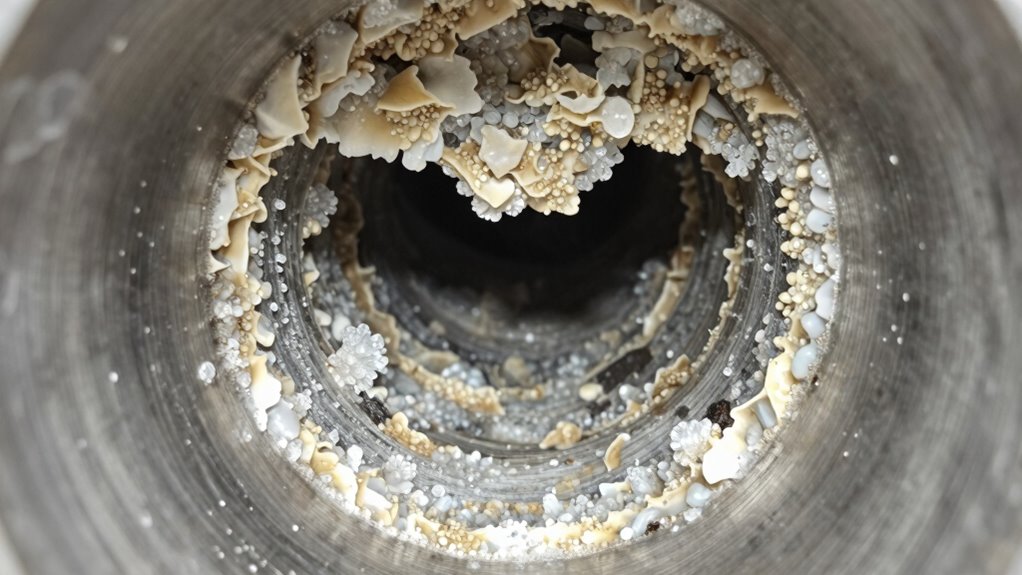

Scale buildup inside your pipes forms slowly as minerals like calcium and magnesium settle and stick to surfaces, especially with hard water and rough pipe interiors. Over time, this causes blockages, decreases water flow, and weakens pipe walls, leading to leaks or failures. It also reduces efficiency, raising energy bills. If you want to understand how to spot early signs and prevent long-term damage, you’ll find helpful details ahead.
Key Takeaways
- Mineral deposits from hard water gradually narrow pipe interiors, reducing water flow and increasing pressure.
- Scale buildup weakens pipe walls over time, heightening the risk of leaks and structural failures.
- Internal mineral deposits create corrosion sites, accelerating pipe deterioration and material degradation.
- As deposits thicken, they impair appliance performance and increase energy consumption due to system inefficiency.
- Early signs like discoloration and reduced flow indicate ongoing scale formation and potential long-term pipe damage.
How Scale Forms Inside Your Plumbing System
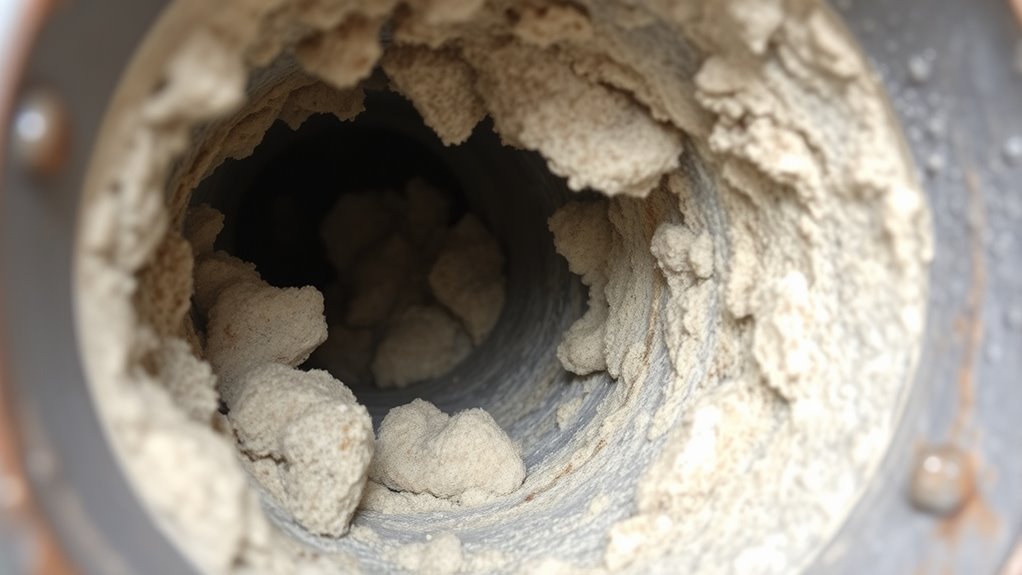
Scale forms inside your plumbing system when minerals like calcium and magnesium dissolved in hard water settle out and stick to the surfaces of pipes and fixtures. This buildup occurs over time as these minerals crystallize, creating a stubborn deposit that narrows water flow. To combat this, scale prevention methods like mineral filtration are essential. Mineral filters, such as water softeners, remove or reduce calcium and magnesium before they can settle, minimizing scale formation. Regular maintenance and installing these filtration systems help protect your pipes from early damage. By actively preventing mineral deposits, you preserve your plumbing’s efficiency and extend its lifespan. Addressing scale early through proper filtration is key to avoiding costly repairs and keeping your water flowing smoothly. Understanding mineral buildup can help you better appreciate the importance of proactive maintenance, especially since water quality directly influences how quickly scale develops inside pipes. Additionally, piercing care and hygiene can be affected by mineral buildup, which may cause irritation or infection if not properly managed. Incorporating preventive measures, such as routine flushing and the use of descaling agents, further enhances your plumbing’s longevity. Being aware of scale formation mechanisms enables homeowners to implement more effective solutions for protecting their plumbing system.
Common Causes of Mineral Deposits in Pipes
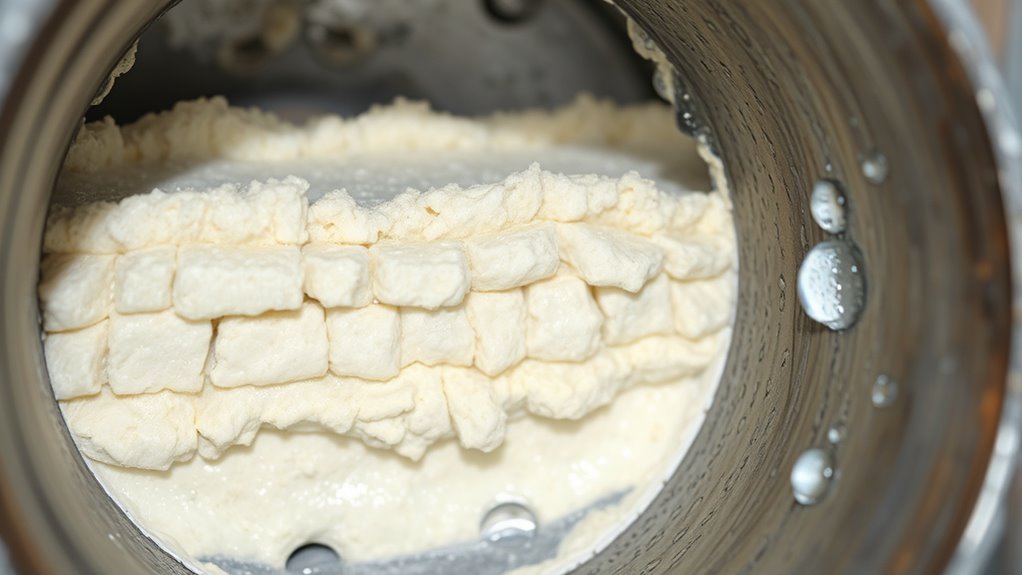
You’ll often find mineral deposits forming because of hard water, which contains high levels of dissolved minerals like calcium and magnesium. As your plumbing ages, corrosion and wear can create rough surfaces that trap minerals more easily. These rough surfaces can act as nucleation sites that promote mineral adhesion, increasing the rate of buildup. These factors combined increase the likelihood of buildup inside your pipes over time. Additionally, the presence of calcium buildup can further accelerate the accumulation process, making maintenance more challenging. Regular inspection and the use of water softening techniques can help mitigate these issues before they become severe. Using corrosion-resistant pipes may also reduce the formation of rough surfaces that contribute to mineral deposits.
Hard Water Composition
Have you ever wondered why mineral deposits form inside your pipes? It all comes down to water mineralization, which occurs when water picks up minerals as it moves through the ground. Hard water contains high levels of calcium and magnesium, leading to calcium saturation in your water supply. When this mineral-rich water flows through your plumbing, the excess calcium begins to settle on the pipe walls. Over time, this buildup forms deposits that narrow your pipes and reduce water flow. Hard water isn’t just a minor nuisance; it’s a primary cause of scale buildup inside your plumbing system. The more calcium saturation present, the faster these deposits accumulate, gradually causing blockages and potential damage to your pipes. Additionally, the sustainability practices in water treatment can influence mineral deposit formation, impacting the longevity of your plumbing. Understanding water hardness levels can help you better manage and prevent excessive scale buildup, which can also be affected by water treatment methods and their effectiveness. Regular monitoring of water mineral content can help detect early signs of scale formation and prevent costly repairs. Implementing preventative measures, such as water softeners, can significantly reduce calcium buildup and extend the lifespan of your plumbing system.
Aging Plumbing Systems
Did you know that aging plumbing systems are a significant factor in mineral deposit formation? Over time, pipes corrode and become rougher, creating more surface area for minerals to cling to. As your plumbing ages, mineral buildup accelerates, leading to reduced water flow and potential clogs. Upgrading your plumbing with modern materials can reduce these issues, but if your pipes are severely corroded, pipe replacement might be necessary. Older pipes, especially those made from materials prone to corrosion, make mineral deposits more likely. Regular plumbing upgrades help prevent buildup and extend the lifespan of your system. Addressing aging pipes early can save you money on costly repairs and improve water quality, reducing the chances of mineral deposits forming inside your pipes. Understanding corrosion and how it impacts plumbing can help you make informed maintenance decisions. Additionally, implementing preventive measures such as water softeners can significantly reduce mineral buildup in your pipes, especially when combined with proper maintenance practices.
Early Signs of Scale Accumulation

How can you tell if scale is starting to form? One of the earliest signs is scale discoloration around faucets, drains, or inside pipes. You might notice a chalky, white, or yellowish tint indicating mineral buildup. Mineral crusts can develop on the surfaces of fixtures, creating rough patches that are difficult to clean. These crusts are the result of minerals like calcium and magnesium settling out of the water and adhering to surfaces. You may also see a slight decrease in water flow or pressure, hinting at initial internal buildup. Catching these signs early helps prevent more severe problems later. If you notice discolored spots or crusts forming in your plumbing, it’s a clear indication that scale accumulation has begun. Recognizing early scale buildup can save you from costly repairs and extensive plumbing issues later on.
The Impact of Scale on Water Flow and Pressure
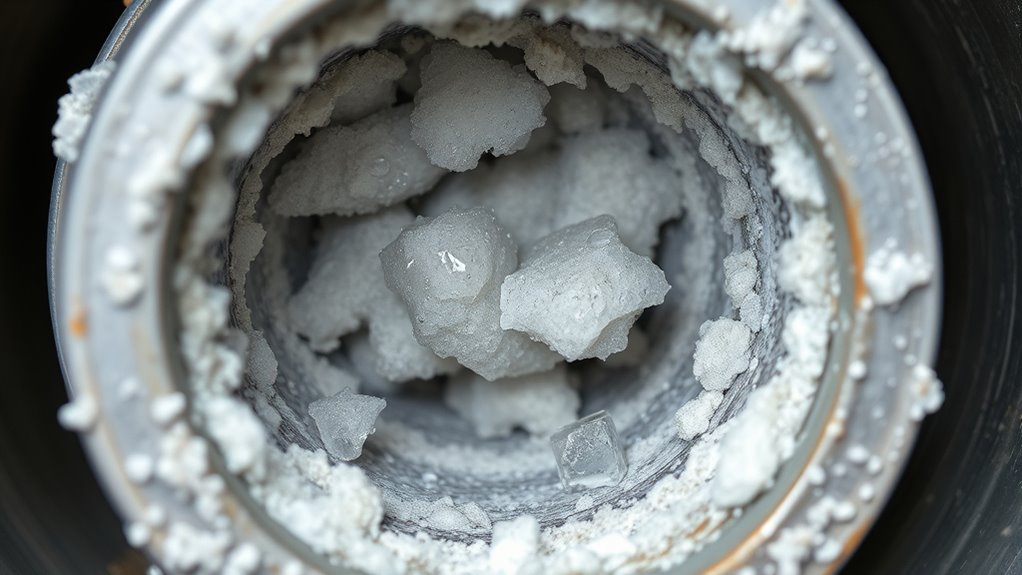
As scale begins to form on fixtures and inside pipes, it can start to substantially impact water flow and pressure. Scale formation narrows pipe diameters, making it harder for water to pass through smoothly. This process can be accelerated by hard water minerals that settle and accumulate over time. This results in decreased water pressure at faucets and appliances, disrupting daily routines. Over time, buildup thickens, further restricting flow. To visualize this, consider the following:
| Pipe Diameter | Water Flow Rate |
|---|---|
| Unaffected | Normal |
| Slight Restriction | Slight Drop |
| Moderate Restriction | Noticeable Drop |
| Severe Restriction | Significant Drop |
| Blocked | Little to no flow |
This visual shows how increasing scale buildup directly hampers water movement, emphasizing the importance of addressing scale buildup early. Regular maintenance and preventive measures can help mitigate this issue before it causes severe disruptions. Additionally, understanding how corrosion and mineral deposits develop can aid in selecting appropriate solutions to maintain optimal water flow.
Energy Costs and Efficiency Loss Due to Buildup
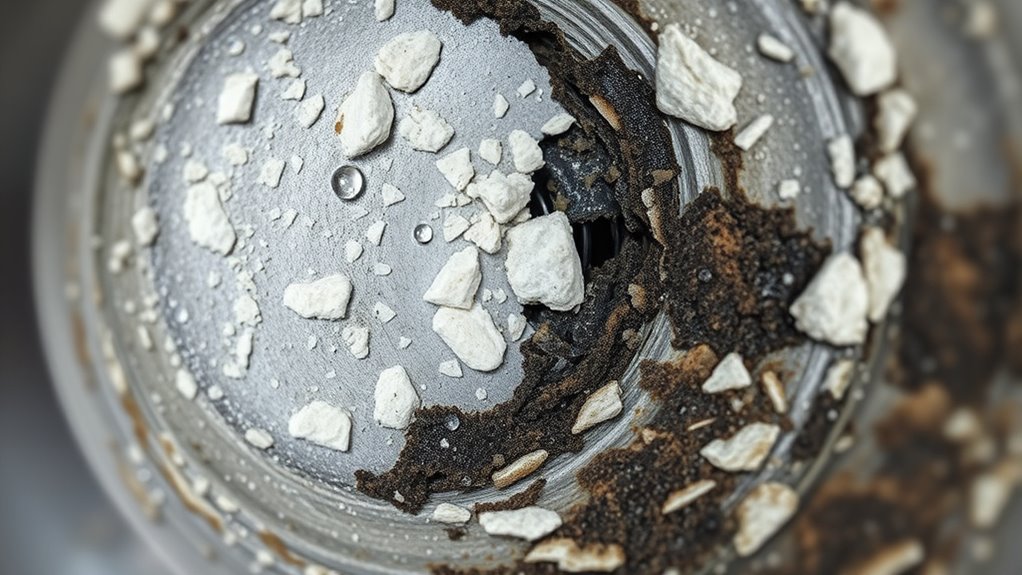
Scale buildup inside pipes and on fixtures forces your water heating and pumping systems to work harder, which increases energy consumption. This added workload reduces overall energy efficiency, meaning you use more power for the same results. Over time, this inefficiency leads to higher utility bills and increased operational costs. By preventing or removing scale buildup, you can improve your system’s performance, resulting in significant cost savings. Maintaining clean pipes ensures your appliances operate smoothly without unnecessary energy drain. Addressing scale early helps you avoid wasted energy, prolongs equipment lifespan, and keeps your household or business running efficiently and economically. Proper system sizing and load management can further optimize energy use and prevent unnecessary strain on your systems. Additionally, understanding energy efficiency principles can help identify the most effective strategies for minimizing scale-related issues. Regular inspections and preventive maintenance are essential components of an effective approach to reducing scale buildup and maintaining optimal system performance.
Long-Term Damage to Pipes and Plumbing Components
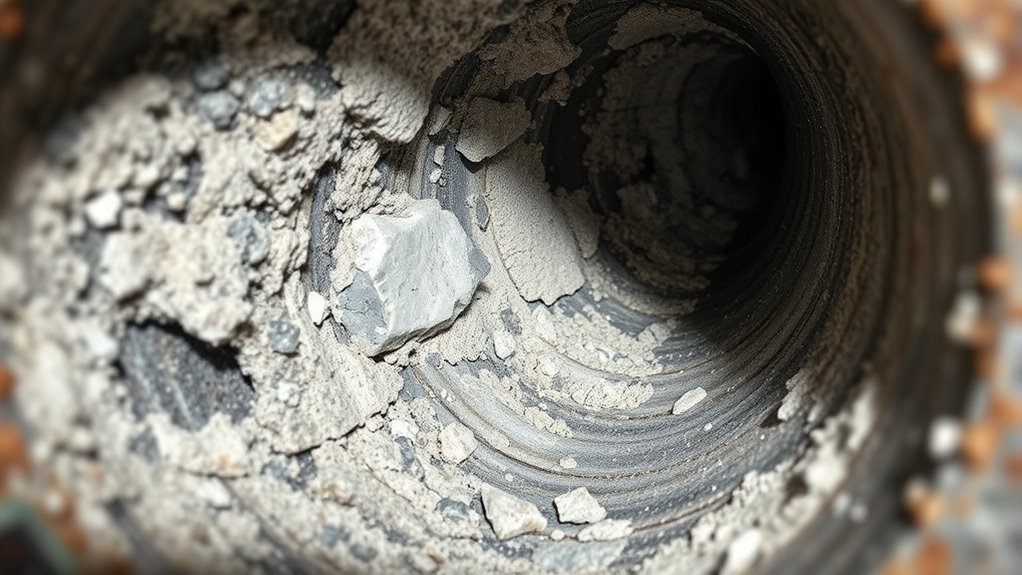
Over time, scale buildup can thin your pipe walls, weakening their structure. This increases your risk of leaks and other failures in your plumbing system. Additionally, corrosion and material degradation can accelerate, further damaging your pipes and plumbing components.
Pipe Wall Thickness Reduction
Long-term buildup of minerals inside pipes causes the wall thickness to gradually decrease, weakening the pipe structure over time. This process, known as pipe wall thinning, occurs as mineral deposits erode the pipe’s interior surface, reducing its overall strength. As the wall becomes thinner, the pipe’s ability to withstand pressure diminishes, increasing the risk of failure. Additionally, the buildup narrows the internal diameter, leading to flow restriction. You may notice decreased water pressure or slower flow rates, which are signs of internal narrowing caused by mineral accumulation. Over time, this reduction in wall thickness compromises the pipe’s integrity, making it more vulnerable to cracks or breaks. Addressing mineral buildup early can help prevent severe damage and extend the lifespan of your plumbing system.
Increased Risk of Leaks
As mineral buildup continues inside your pipes, it weakens their structure and increases the likelihood of leaks developing over time. This slow deterioration makes your plumbing more vulnerable to cracks and drips, leading to costly repairs. To reduce this risk, proper corrosion prevention measures are essential, such as installing protective coatings or using corrosion-resistant pipe materials. Choosing the right pipe material during installation can profoundly impact long-term durability; for example, PVC or PEX pipes are less susceptible to mineral damage compared to traditional metal options. Regular maintenance and water treatment can also help prevent excessive buildup, extending your pipes’ lifespan. Addressing these factors proactively minimizes leak risks and preserves your plumbing system’s integrity over the years.
Corrosion and Material Degradation
Mineral buildup inside pipes doesn’t just cause leaks; it also accelerates corrosion and material degradation over time. As deposits form, they create localized spots where pitting corrosion can occur, weakening pipe walls from within. These tiny pits can become entry points for rust and further deterioration. Additionally, mineral deposits can lead to galvanic effects, especially when different metals are present, causing one metal to corrode faster than the other. Over time, this process compromises pipe integrity, increasing the risk of leaks and failures. The combination of pitting corrosion and galvanic effects accelerates long-term damage, making pipes more vulnerable and reducing their lifespan. Addressing buildup early can help prevent these insidious forms of corrosion and protect your plumbing system.
Preventative Measures and Treatment Options
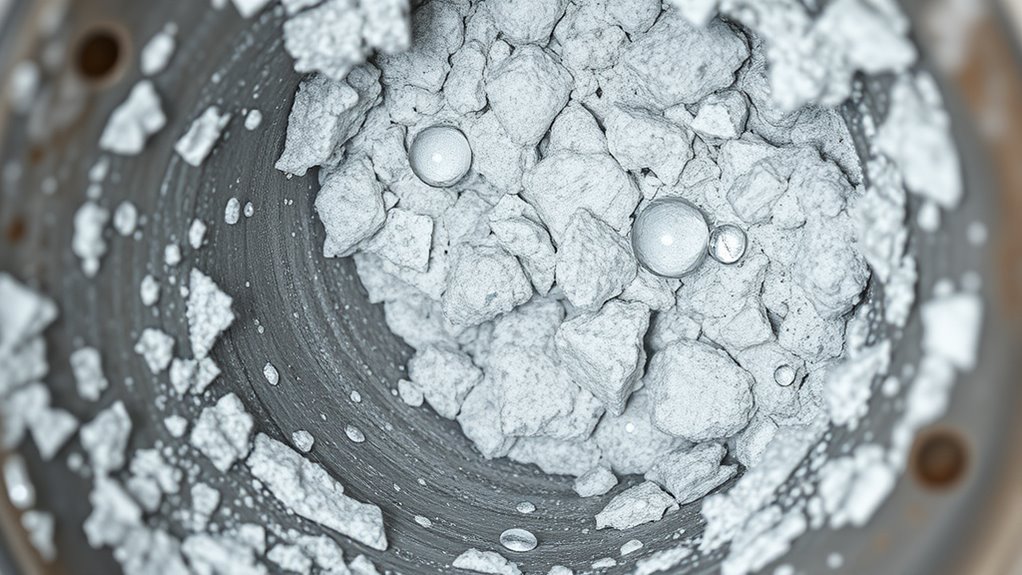
Preventing scale buildup starts with regular maintenance and mindful water management. You can use chemical inhibitors to prevent mineral deposits from sticking to pipe surfaces, slowing down scale formation. These inhibitors interfere with crystal growth, making it harder for scale to adhere and accumulate. Water softening is another effective measure, especially if you have hard water; it reduces calcium and magnesium levels, the primary minerals responsible for scale. Installing a water softener or using salt-based systems can notably decrease mineral content before it enters your plumbing. Consistent monitoring of water quality and implementing these treatments help minimize the risk of scale buildup, extending the lifespan of your pipes and maintaining efficient flow. Taking these proactive steps saves you from costly repairs and ensures smoother operation.
The Importance of Regular Maintenance and Inspection
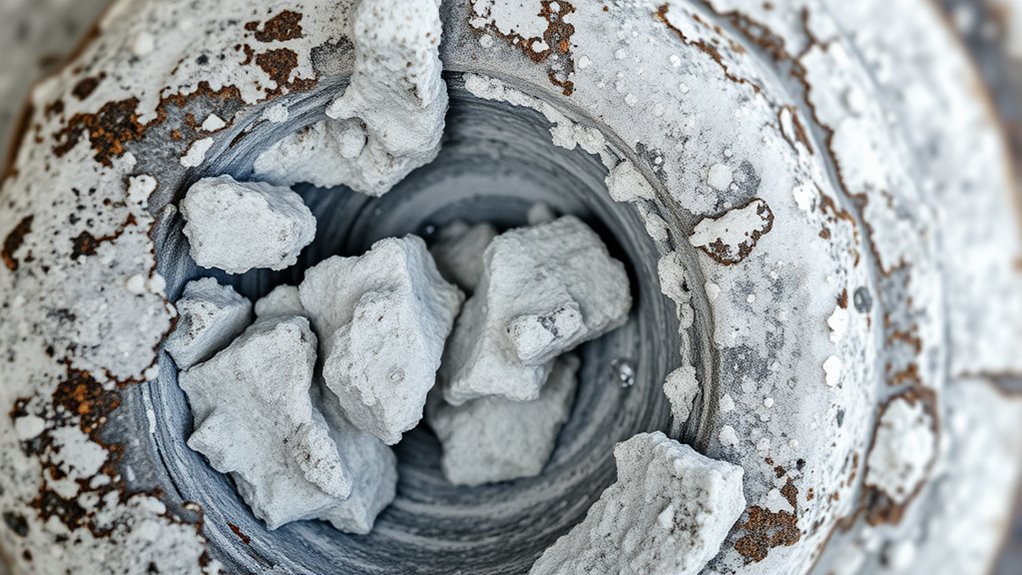
Regular maintenance and inspection are essential to catch scale buildup early before it causes significant damage. By routinely checking your plumbing, you can identify early signs of mineral accumulation and prevent costly repairs. If you have a water softening system, regular inspections guarantee it functions effectively, reducing scale formation. This proactive approach helps preserve your plumbing warranties, as neglected pipes often lead to voided coverage. Additionally, scheduled maintenance keeps your system running efficiently, saving you money on energy and repairs. Don’t wait until you notice problems; routine inspections allow you to address minor issues before they escalate. Implementing a maintenance plan tailored to your water quality and plumbing system safeguards your home’s infrastructure and extends the lifespan of your pipes.
Frequently Asked Questions
Can Scale Buildup Cause Health Issues in Drinking Water?
Scale buildup itself usually doesn’t cause health issues in drinking water, but it can trap waterborne contaminants like heavy metals or bacteria, increasing health risks. You should perform a regular health risk assessment to identify potential dangers. By maintaining your pipes and using appropriate filtration, you can reduce the chance of contaminants leaching into your water and protect your health effectively.
What Are the Most Effective DIY Methods to Remove Scale?
Think of your pipes as delicate veins needing care. To DIY descale, you can use vinegar solutions, which act like a gentle yet effective remedy. Fill your kettle or faucet with equal parts vinegar and water, then let it sit for an hour or overnight. For stubborn buildup, scrub with a brush or sponge. These simple vinegar solutions will help clear the scale and keep your pipes flowing smoothly.
How Often Should I Have My Pipes Professionally Inspected for Scale?
You should have your pipes professionally inspected at least once a year to catch scale buildup early. Regular pipe maintenance, including water testing, helps identify issues before they cause significant damage or blockages. If you notice reduced water flow or strange tastes or odors, consider more frequent inspections. Staying proactive guarantees your plumbing stays in good shape and prevents costly repairs caused by internal scale buildup.
Does Hard Water Contribute to Faster Scale Accumulation?
Your pipes are under attack from mineral deposits, and hard water definitely speeds up scale accumulation. Water hardness, caused by high mineral content, acts like a relentless storm of minerals crashing inside your pipes. You’ll notice scale forming faster, leading to clogs and damage. To protect your plumbing, consider installing a water softener or regular professional inspections. Hard water’s impact is no joke; it’s a slow but powerful enemy inside your pipes.
Are Certain Pipe Materials More Resistant to Scale Formation?
Yes, some pipe materials are more resistant to scale formation. You’ll find that materials like PEX and copper offer better corrosion resistance and enhanced material durability, making them less susceptible to scale buildup. These pipes handle mineral deposits more effectively, reducing the risk of slow damage over time. Choosing pipes with higher corrosion resistance ensures your plumbing remains efficient and durable, ultimately saving you maintenance costs and extending the lifespan of your system.
Conclusion
By staying vigilant and performing regular inspections, you can prevent scale buildup from turning your plumbing into a ticking time bomb. Don’t wait until your pipes clog or burst—think of it as your modern-day equivalent of a blacksmith’s careful craftsmanship. Address early signs and consider treatment options to keep water flowing smoothly. Remember, a proactive approach saves you time, money, and headaches—so don’t let stubborn mineral deposits turn into a plumbing catastrophe.