Most people overlook the importance of mounting their mini split at the right height, which is typically around 7 to 8 feet from the floor. This height guarantees ideal airflow and even temperature distribution, preventing hot or cold spots. Mounting too high can trap conditioned air near the ceiling, while too low can cause inefficiency and noise. If you want to discover the wall height rule most often missed, keep going—there’s more to help maximize your unit’s performance.
Key Takeaways
- Mount indoor units typically at 7 to 8 feet from the floor for optimal airflow and temperature distribution.
- Placing units too high near the ceiling traps cooled air, reducing comfort and efficiency.
- Installing too low can cause noisy airflow and uneven temperature regulation at ear level.
- Proper height ensures natural convection currents and better circulation throughout the room.
- Adhering to the recommended wall height enhances performance, energy efficiency, and aesthetic integration.
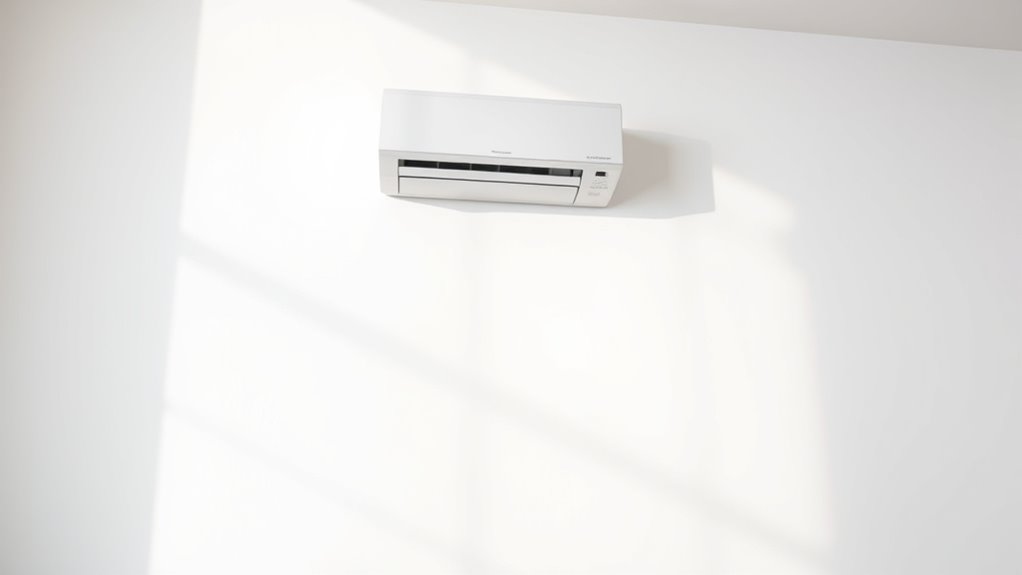
Wondering where to install your mini split for ideal performance? The placement of your unit is essential to maximizing thermal efficiency and ensuring it blends seamlessly with your space. When choosing a wall, consider not just the size of the room but also the height at which you mount the indoor unit. A common mistake is installing it too high or too low, which can reduce airflow effectiveness and make temperature regulation uneven. The goal is to position the unit where it can distribute air evenly across the space, preventing hot or cold spots and reducing energy consumption.
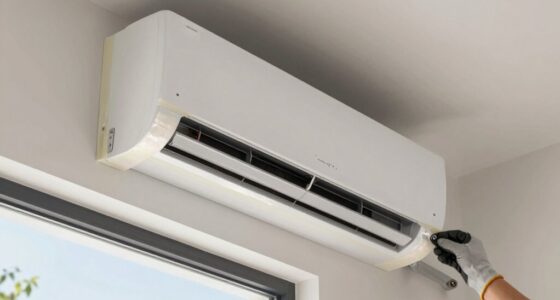
The ideal height for your mini split indoor unit is typically around 7 to 8 feet from the floor. This height allows the cool or warm air to circulate naturally throughout the room, taking advantage of natural convection currents. Installing it too high, near the ceiling, might cause the conditioned air to stay trapped close to the top, making the lower areas less comfortable. Conversely, placing it too low can lead to inefficient airflow and increased noise levels at ear level, disrupting comfort. When mounted at the recommended height, the unit operates at its peak thermal efficiency, using less energy to achieve the desired temperature. This placement ensures your mini split performs effectively without overworking, which can save you money on energy bills over time.
Beyond efficiency, aesthetic integration plays a crucial role in your decision. Mounting the unit at the correct height helps it blend into your room’s design, avoiding a cluttered or awkward appearance. A properly placed mini split is less obtrusive and more visually pleasing, especially if you opt for models with sleek, modern designs. When installed at an appropriate height, it minimizes visual clutter and keeps the unit discreet, maintaining the aesthetic integrity of your space. Additionally, understanding airflow principles can help you optimize placement for maximum comfort and efficiency. If you’re concerned about the unit’s visibility, consider installing it near existing wall features or high enough to be less noticeable but still functional.
Frequently Asked Questions
Can Mini Splits Be Installed Outdoors?
Yes, mini splits can be installed outdoors. You’ll find they’re cost-efficient and designed to handle outdoor conditions, helping you save on energy bills. Plus, they operate quietly, so noise levels won’t disturb your outdoor space or neighbors. Just guarantee proper installation to protect the unit from weather elements, and you’ll enjoy efficient cooling or heating with minimal noise, making it a smart outdoor climate control choice.
What Is the Ideal Distance From Windows?
They say “measure twice, cut once,” and that’s true for mini split placement too. Keep your unit at least 3 to 4 feet away from windows to prevent airflow issues and guarantee efficiency. Consider window placement and insulation, as gaps can reduce cooling performance. Proper distance helps maximize comfort and energy savings, so don’t overlook this simple, yet essential, step in your mini split installation.
How Does Room Size Affect Placement Height?
You should adjust your mini split’s placement height based on room size, ensuring efficient HVAC zoning. Larger rooms benefit from higher placement to promote even airflow, while smaller spaces require lower positioning for better comfort. Consider insulation considerations too, as well-insulated rooms may need less airflow, influencing placement height. Proper positioning maximizes energy efficiency and comfort, so evaluate your room’s size and insulation to determine the most suitable mini split height.
Are There Specific Placement Rules for Bedrooms?
Yes, there are specific placement rules for bedrooms to optimize HVAC zoning and interior aesthetics. You should position the mini split higher on the wall, ideally near the ceiling, to guarantee even cooling and avoid disrupting the room’s look. Keep it away from direct sunlight or drafts to maximize efficiency. Proper placement improves comfort, maintains aesthetic appeal, and enhances HVAC zoning effectiveness.
Can Mini Splits Be Installed on Exterior Walls?
Yes, you can install mini splits on exterior walls. In fact, about 80% of installations are on exterior walls due to easier mounting considerations. Keep in mind, the insulation impact is significant—poor insulation can reduce efficiency. Make certain to choose a location with good insulation and minimal obstructions, and follow mounting guidelines to guarantee ideal performance and energy savings.
Conclusion
So, next time you’re installing your mini split, don’t forget the wall height rule—it’s the detail most overlook. Ironically, it’s the one thing that can make or break your comfort, yet it’s so simple to miss. You might think you’ve got everything covered, only to discover the perfect unit doesn’t do its job because of a small placement mistake. Sometimes, the biggest impact comes from the tiniest oversight—proof that even experts can forget the obvious.