When choosing between a power strip and a surge protector, look at the label to see what it offers. Power strips simply extend outlets and usually lack protection features. Surge protectors, on the other hand, clearly state their joule rating or mention surge protection benefits. This label helps you identify if your electronics are protected during voltage spikes. For full protection, select a surge protector with a clear label—there’s more to learn if you explore further.
Key Takeaways
- Labels on surge protectors specify joule ratings, indicating their energy absorption capacity during power surges.
- Power strips typically lack surge protection labels, focusing only on additional outlet provision.
- Surge protectors often include “UL” or “ETL” safety certifications, verifying their protective features.
- The presence of a “clamping voltage” or “let-through voltage” rating on the label shows surge protector effectiveness.
- Reading labels helps distinguish between simple power strips and true surge protectors with protective specifications.
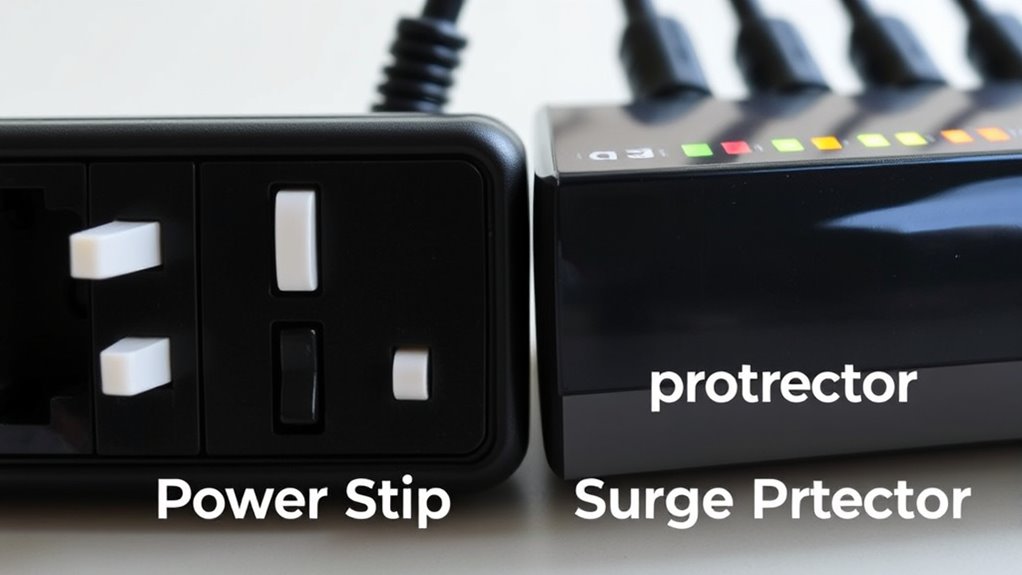
When deciding between power strips and surge protectors, it’s important to understand their differences and purposes. While both can expand your outlet options, they serve distinct functions. Power strips are mainly designed to give you more outlets, allowing you to connect multiple devices at once. Surge protectors, on the other hand, are built to shield your electronics from voltage spikes and power surges. Recognizing these differences helps you choose the right device for your needs and avoid damage to your equipment.
Power strips add outlets; surge protectors safeguard electronics from voltage spikes.
Energy efficiency is a key factor when evaluating surge protectors. Many models include features that minimize power wastage, such as automatic shutoff or energy-saving modes. This means you’re not only protecting your devices but also conserving electricity. Power strips typically lack these energy-conscious features; they simply distribute power without any additional functions. If you’re concerned about reducing your energy footprint, opting for a surge protector with energy-efficient design makes more sense. It ensures that your devices are protected without unnecessary energy drain, which can save you money over time.
Portability is another vital aspect. If you’re frequently on the move — whether for work, travel, or setting up different spaces — a portable design becomes essential. Many surge protectors and power strips are lightweight and compact, making them easy to carry. However, surge protectors tend to have features like built-in circuit breakers, which can add to their size and weight. Despite that, there are models specifically designed for portability, with slim profiles and easy-to-pack features. When choosing a device, consider how often you’ll need to relocate it. A portable surge protector allows you to enjoy both surge protection and convenience without sacrificing mobility.
In practical terms, if your goal is to extend your outlet options without much concern for voltage protection, a basic power strip might suffice. Just remember that these don’t offer surge protection, leaving your electronics vulnerable during voltage spikes. If you want to safeguard sensitive devices like computers, home theater systems, or gaming consoles, investing in a surge protector with a dedicated joule rating and energy-efficient features is wise. With the right device, you gain peace of mind knowing your equipment is protected from unexpected power fluctuations, especially during storms or electrical faults.
Additionally, understanding the contrast ratio of a surge protector’s design can influence its effectiveness in real-world scenarios, especially during power fluctuations. Ultimately, understanding the purpose and features of each device helps you make an informed choice. For everyday convenience, a simple power strip may be enough. But for safeguarding valuable electronics, a surge protector’s energy efficiency and portability options are worth considering. Recognizing these factors ensures you get the most out of your investment and keep your electronics safe and efficient.
Frequently Asked Questions
Can a Power Strip Also Protect Against Power Surges?
A power strip usually doesn’t protect against power surges unless it’s specifically labeled as a surge protector. Electrical safety is vital, so check the surge protector ratings before use. If it has built-in surge protection, it can shield your devices from voltage spikes. Otherwise, a regular power strip only provides extra outlets, not surge protection. Always verify the label to make certain your electronics stay safe during power fluctuations.
What Are the Safety Risks of Using Cheap Surge Protectors?
Think of cheap surge protectors as ticking time bombs. They pose serious electrical fire hazards because they often lack proper insulation and quality components. Using them also increases overloading risks, which can overload your circuits and cause sparks or fires. You might save a few bucks initially, but the danger of electrical fires and damage to your devices far outweighs the cost. Always choose high-quality surge protectors for safety.
How Long Do Surge Protectors Typically Last Before Replacement?
Surge protectors typically last around 3 to 5 years before needing replacement, depending on usage and power surges. The surge lifespan determines their protection duration, which diminishes over time as they absorb surges. You should replace your surge protector once it shows signs of wear, or if it’s been exposed to a major surge, to guarantee continuous protection for your devices. Regularly check for any damage or diminished performance.
Are All Power Strips Compliant With Safety Standards?
Not all power strips are compliant with safety standards. You should check for certifications like UL or ETL, which indicate adherence to electrical safety and regulatory standards. When shopping, look for labels that confirm these approvals, ensuring your devices are protected and reducing the risk of electrical hazards. Using compliant power strips helps keep your home safe, especially when multiple devices draw power simultaneously.
Do Power Strips With More Outlets Have Better Surge Protection?
Think of power strips with more outlets like a crowded highway; just because there are more lanes doesn’t mean cars move faster or safer. More outlets don’t guarantee better surge protection levels—it’s the quality of components that matters. Always check the outlet capacity and surge protection ratings. A higher number of outlets doesn’t equate to improved surge protection; focus on the specs to keep your devices safe.
Conclusion
Remember, appearances can be deceiving—what’s labeled as a surge protector isn’t always one. Always read the labels carefully to understand what you’re getting. While power strips are great for expanding outlets, surge protectors offer essential safety for your electronics. Don’t put all your eggs in one basket; choose the right device for your needs. As the saying goes, “Better safe than sorry,” so make informed choices to protect your valuable devices.